

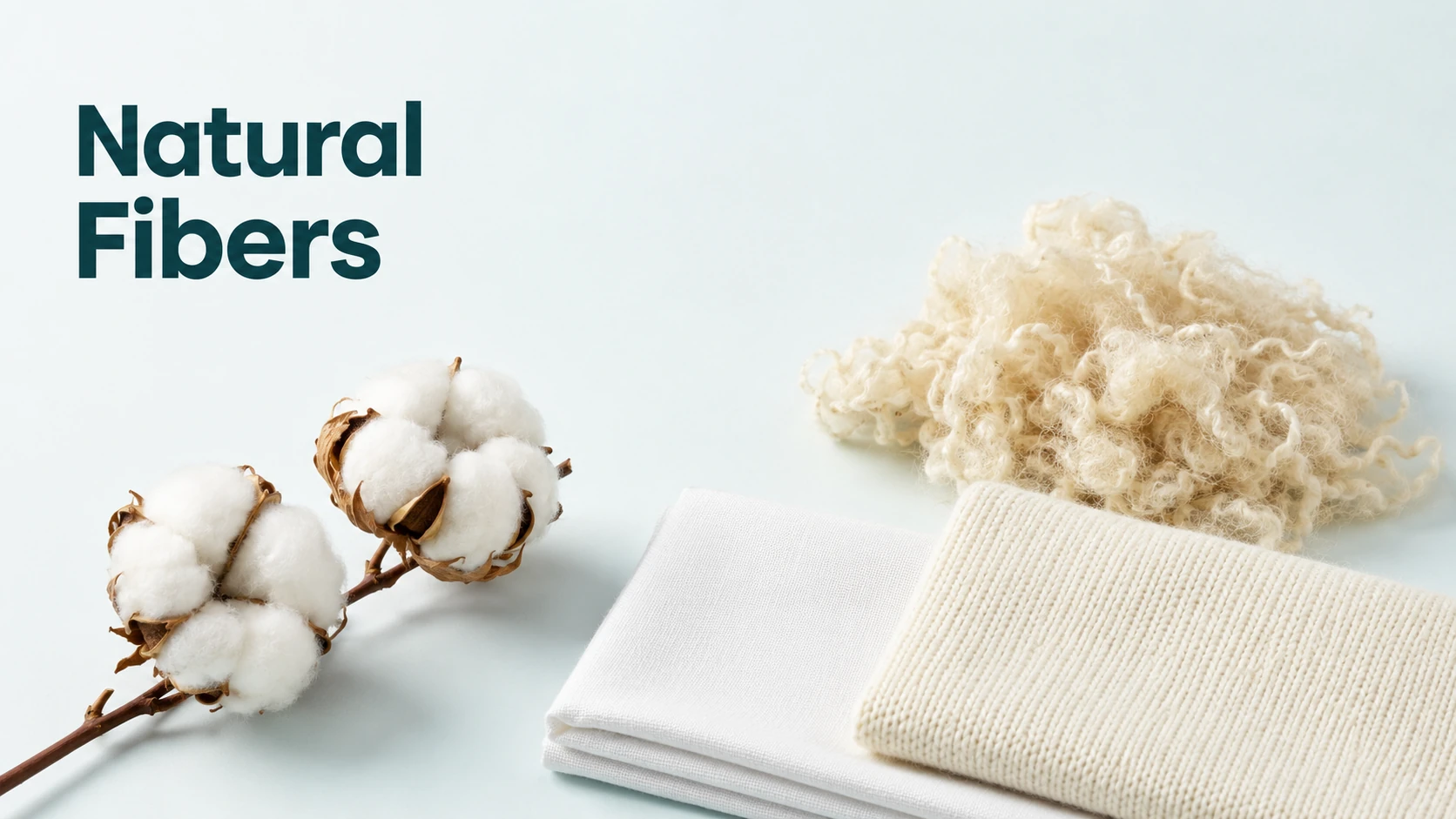
Natural fibers come directly from plants, animals, or the earth. We spin them into yarn without any chemical changes. Unlike synthetic plastics made from crude oil, biological sources provide all natural textiles.
You will find natural fabrics everywhere. From soft bed sheets to warm winter sweaters, the “Big Four” natural fabrics are cotton, linen, wool, and silk. Textile scientists divide these into two main groups: cellulose (plant-based) and protein (animal-based).
Plant-Based Fibers (Cellulose): Characteristics & Common Types
Plants build their cell walls using cellulose. This tough biological makeup gives plant fabrics a few universal traits. They soak up water easily, they wrinkle quickly because they lack bounce, and they survive high heat and friction. Farmers harvest these fibers from seed pods, stems, or leaves.
Cotton: The Most Common Seed Fiber
When people ask, “Is cotton natural or synthetic?” the answer is fully natural. The cotton plant grows soft fibers inside a protective seed pod. Cotton acts like a sponge. It quickly absorbs water, making it the breathable, soft fabric we rely on for t-shirts and heavy denim.
When you buy cotton, you should check the “staple” length. The staple is just the length of a single hair. Long-staple cotton (like real Egyptian or Pima) makes smoother, stronger yarns. It resists pilling much better than cheap, short-staple cotton.
Organic cotton is also better for sensitive skin. Conventional farmers spray cotton crops with heavy pesticides. Organic farmers grow cotton without these harsh chemicals. This chemical-free choice helps people with eczema or allergies.
Linen and Hemp: High-Strength Bast Fibers
Manufacturers extract “bast” fibers from the inner stem of a plant. The flax plant gives us linen, while the hemp plant provides hemp fabric. Yes, linen is a natural fibre. Its most amazing trait defies logic: water actually makes linen up to 20% stronger.
These stem fibers feel crisp and have zero stretch. Because the fibers cannot bounce back, linen creases the second you sit down. However, that stiff structure keeps the fabric away from your skin. This physical gap lets sweat evaporate rapidly, making linen the ultimate hot-weather fabric.
Jute, Sisal, and Kapok: Coarse Structural Fibers
You do not wear all plant fibers. Jute (used for burlap) and sisal (from agave plant leaves) are heavy-duty natural fibers. Because they contain rigid plant glue called lignin, they feel incredibly coarse. This toughness makes them perfect for rustic rugs and ropes.
What I’d check first: Keep your jute and sisal rugs strictly indoors. When heavy plant fibers absorb water, they release natural oils that smell incredibly sour and musty.
How to Wash Cellulose Fibers (And Why They Shrink)
Plant fabrics often shrink on laundry day. But the dryer heat does not cause all the damage. The shrinking actually starts in the washing machine due to hydrophilic swelling.
When water hits cotton or linen, the fibers swell like tiny sponges. This swelling releases the tight tension that the factory pulled into the yarn during weaving. Once that tension relaxes, the fibers physically contract and pull closer together, which is exactly why clothes shrink in the wash.
The Care Rule: Plant fibers offer rugged chemical durability. They easily survive the harsh alkaline pH of standard laundry detergents. They handle warm or hot water perfectly to remove heavy dirt. However, you must avoid high heat in the dryer to stop the relaxed fibers from locking into a shrunken state. You should tumble dry plant-based fabrics on low heat or hang them to dry.

Animal-Based Fibers (Protein): Characteristics & Common Types
Animals grow fibers out of protein, just like your own hair. These natural fibers act as nature’s ultimate climate regulators. They stretch easily, trap body heat, and demand completely different laundry rules compared to plants.
Wool, Cashmere, and Alpaca: Insulating Fleece Fibers
If you look at wool under a microscope, the surface looks like overlapping roof shingles. The fiber also features a natural wave called “crimp.” This crimp creates dead space in the yarn that traps tiny pockets of warm air next to your body. Furthermore, wool pulls moisture vapor away from your skin before you even sweat. This keeps you warm even when the garment feels damp.
Sheep provide standard wool. However, if wool feels unbearably itchy, you likely bought a garment with a high micron count. A high micron count means the individual hairs are too thick and rigid, so they poke your skin. Merino sheep grow wool with an ultra-fine micron count, which feels completely smooth. Luxury fibers like cashmere (from the undercoat of specific goats) and alpaca offer even finer hairs and superior warmth.
Is fleece a natural fiber? Traditionally, yes. Farmers shear natural wool fleece from a sheep. However, if you buy a “polar fleece” jacket at a sporting goods store, it is almost certainly synthetic polyester (plastic) made to mimic an animal’s coat.
Silk: The Continuous Natural Filament
Silk stands completely alone. Instead of spinning short hairs together, manufacturers unravel a single, continuous protein thread produced by the silkworm. Under a microscope, silk threads look like smooth, flat triangles. This flat shape reflects light like a tiny mirror, which gives silk its famous shine. Because the yarn contains no short ends poking out, it offers a totally frictionless drape that naturally repels dust and allergens.
How to Wash Protein Fibers (Why Heat and Enzymes Destroy Them)
You will ruin a wool sweater if you treat it like a cotton t-shirt.
Standard laundry detergents rely on harsh pH levels and protease enzymes to clean your clothes. Chemists design these enzymes specifically to digest protein-based stains like sweat, egg, and blood. Because nature makes wool and silk entirely out of protein, standard detergent cannot tell the difference between the stain and the fabric itself.
The Gray Area: Are Bamboo, Viscose, and Rayon Really Natural?
When you read clothing tags, you might wonder: is viscose natural? What about soft bamboo sheets or rayon dresses?
The fashion industry loves to blur the lines. Brands market these materials as “eco-friendly natural fabrics.” In reality, scientists place them in a distinct category called regenerated cellulose (semi-synthetics).
Here is how factories actually make them. The process starts with a natural material, usually bamboo stalks or wood pulp. However, workers dissolve that raw wood in harsh chemical solvents. This toxic bath creates a thick, gooey syrup. Machines then force that syrup through a showerhead-like tool into a chemical bath to harden it into a new thread. Because chemicals melt down and change the plant’s structure, these fabrics are man-made semi-synthetics. They sit right between pure natural cotton and pure plastic polyester.
Natural vs. Synthetic Fibers: The Performance Showdown
Biology creates natural fibers. The petroleum industry creates synthetics (like polyester, nylon, and acrylic).
Is nylon a natural fiber? No. Is polyester a natural fiber? No. Factories melt and shape them as liquid plastics. This chemical difference dictates exactly how a shirt feels on your body.
| Feature | Natural Fibers (Cotton, Wool) | Synthetic Fibers (Polyester, Nylon) |
|---|---|---|
| Breathability | High (Allows sweat vapor to escape) | Low (Traps body heat and moisture) |
| Odor Retention | Low (Resists bacterial buildup) | High (Prone to chronic “permastink”) |
| Wrinkle Resistance | Low (Requires ironing or steaming) | High (Plastic memory holds its shape) |
| Environmental Impact | Biodegradable & compostable | Sheds microplastics, takes centuries to degrade |
Breathability, Moisture Absorption, and Odor Retention
Natural fibers breathe. They absorb sweat away from your skin and let it evaporate into the air. This keeps you cool and dry. Most importantly, they do not bond easily with your body oils.
Synthetics repel water but attract oil. When you sweat in a synthetic polyester shirt, the plastic traps the moisture against your skin. It also acts like a magnet for your body oils. Over time, odor-causing bacteria anchor themselves to these plastics. They create a chronic “permastink” that you cannot wash out. If you struggle with body odor or body acne, you should switch from synthetic shirts to breathable natural fibers immediately.

Durability, Wrinkle Resistance, and Care Demands
Synthetics win the durability showdown. Because synthetic fibers act like plastics, they possess a memory. They bounce back into shape, resist stretching, and refuse to wrinkle. Natural fibers possess very little bounce. This lack of stretch explains exactly why your cotton button-down requires ironing. However, that same plastic nature means synthetic clothes will permanently melt if you touch them with a hot iron.
Environmental Impact: Biodegradability vs. Microplastics
If you want truly sustainable fabrics, you must look at their end-of-life cycle. Untreated natural fibers belong to a circular ecosystem. They break down fully in soil within a few months. Bugs and microorganisms literally eat them.
Synthetic fibers pollute the environment for centuries. Every single time you run a synthetic garment through your washing machine, the friction causes the fabric to shed microscopic plastic threads. These microplastics bypass water filters and flow directly into our oceans. According to a landmark global study by the International Union for Conservation of Nature (IUCN), washing synthetic textiles like polyester and nylon accounts for a staggering 35% of all primary microplastics polluting the world’s oceans today.
Certifications: How to Verify Truly Natural Fabrics
Just because a farmer grew a natural fabric does not mean the factory kept it free from pesticides or harsh dyes. You should never blindly trust marketing buzzwords. Look for these two trusted labels:
- GOTS (Global Organic Textile Standard): This proves the farmer grew the natural fiber organically without toxic pesticides. It also proves the factory met strict environmental rules.
- OEKO-TEX Standard 100: This label proves that independent labs tested the final garment. It guarantees the fabric contains no harmful levels of toxic chemicals or dangerous dyes.
How to Identify Natural Fibers Without a Tag (The Burn Test)
If you buy vintage clothes or cut the itchy tags out of your shirts, you face a tough challenge knowing what material you actually own. Textile professionals rely on a simple diagnostic called the burn test. This test reveals a fabric’s true chemical makeup instantly.
Natural Fiber Laundry Care Matrix (Quick Reference)
You can easily ensure your natural textiles last a lifetime when you respect their biology in the laundry room. Follow this simple care matrix based on the fabric families we covered above.
| Fiber & Examples | Safe Water Temp | Best Detergent | Optimal Drying |
|---|---|---|---|
| Plant (Cellulose) Cotton, Linen, Hemp | Warm to Hot | Standard heavy-duty detergent | Tumble dry low or line dry |
| Animal (Protein) Wool, Cashmere, Silk | Cold water only | pH-neutral, enzyme-free (Wool wash) | Reshape and dry flat on a towel |
| Semi-Synthetic Viscose, Rayon, Modal | Cold to Cool | Mild liquid detergent | Air dry or gentle low heat |
| Synthetic Polyester, Nylon, Acrylic | Cool to Warm | Standard detergent (Avoid softener) | Low heat tumble dry |
The Final Takeaway: Choosing and Caring for Natural Fibers
Ultimately, you prioritize skin comfort, breathability, and the environment when you choose natural fibers over plastic synthetics. They keep your skin healthier, they compost naturally, and they prevent microplastic pollution. However, natural fabrics demand a little more respect when laundry day rolls around. You will keep your natural textiles beautiful and soft for decades as long as you understand the basic difference between tough plant cellulose and delicate animal proteins—and adjust your water and detergent accordingly.
