


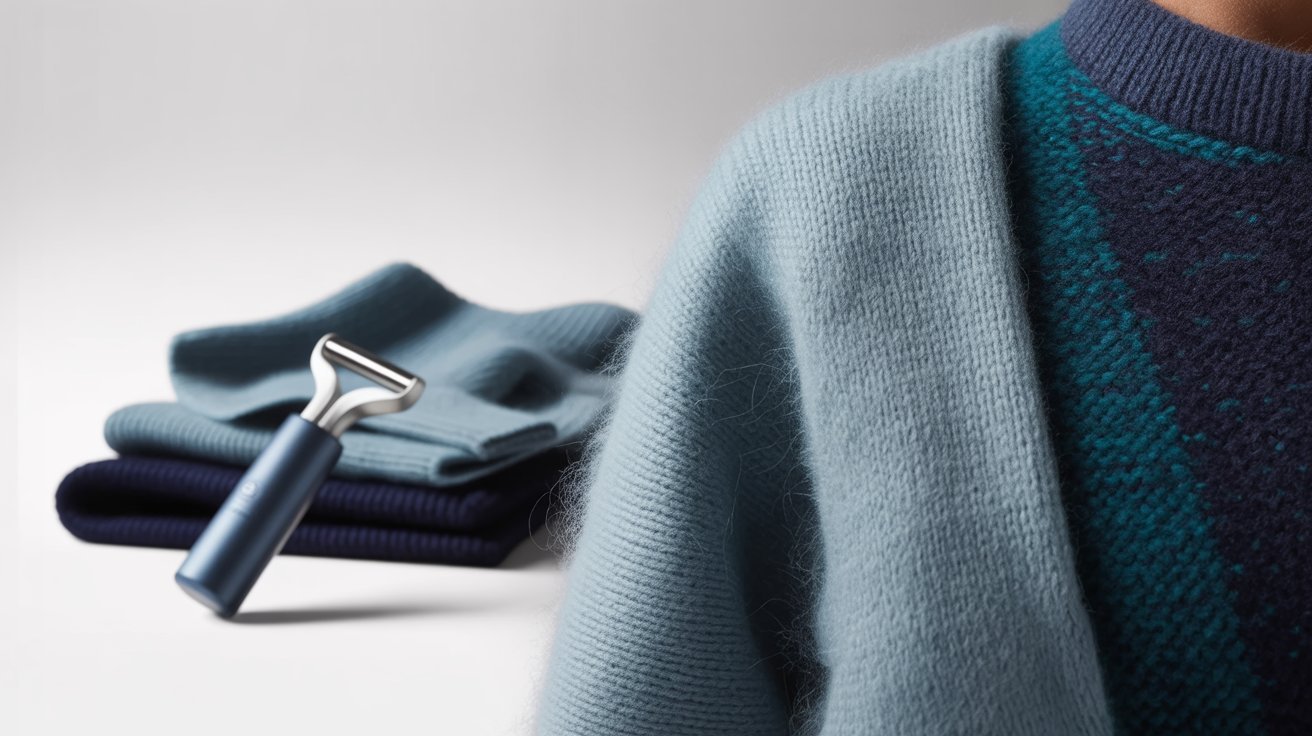
What causes pilling on clothes? Repeated friction brings loose fibers to the fabric surface. Those fibers rub together, tangle, and form small fuzzy balls called pills or bobbles.
Daily wear is the main trigger. However, fiber type, yarn structure, fabric construction, washing, drying, and garment design affect how quickly pills develop. Pilling is common and does not automatically mean an item is poor quality.
Fabric Pilling at a Glance
- What it is: Small balls of tangled fibers attached to a fabric surface.
- Main cause: Repeated rubbing and abrasion.
- Common areas: Underarms, cuffs, elbows, inner thighs, seat areas, sweater sides, and areas beneath bags or straps.
- Does it mean poor quality? Not always. The speed, severity, and location of the pilling matter.
- Best prevention: Reduce unnecessary rubbing and follow the garment’s care label during washing and drying.
What Is Fabric Pilling?
Fabric pilling is the formation of small fiber balls on clothing and other textiles. Unlike loose lint, pills remain connected to the material by one or more fibers.
Pilling often begins as light surface fuzz. Continued rubbing causes those raised fibers to wrap around one another and tighten into visible balls.
How Fabric Pills Form
The process usually happens in four stages:
- Fibers loosen or move toward the outer surface.
- Friction raises the fibers into fuzz.
- Continued rubbing tangles the fibers together.
- Some fibers remain attached and hold the pill in place.
The speed of this process depends on the fibers, yarn, fabric structure, surface finish, and amount of abrasion.
Pilling vs. Lint, Fuzz, Snags, and Peeling
These surface problems may look similar, but they are not the same.
| Surface Problem | What It Is | Usually Attached? |
|---|---|---|
| Pilling | Small balls made from tangled fibers | Yes |
| Lint | Loose fibers, hair, or debris resting on the material | Usually no |
| Fuzz | Raised fibers that have not formed tight pills | Partly |
| Snag | A yarn or thread pulled out of position | Yes |
| Peeling | A coating, print, or surface layer separating | Varies |
A lint roller may collect loose lint and detached fuzz. It usually cannot release pills that remain firmly attached.
What Causes Fabric Pilling?
Friction is the main cause of fabric pilling. Fiber properties, yarn structure, fabric construction, surface finish, and blends affect how easily pills form and how long they remain attached.
Repeated Friction and Abrasion
Clothing rubs against skin, other garments, furniture, bags, seat belts, desks, and chairs throughout the day.
A sweater may pill beneath the arms because its sleeves repeatedly touch the body. Leggings often pill between the thighs. A shirt may develop pills where it meets a waistband, backpack, or rough outer layer.
Even light contact can create visible wear when it happens in the same area every day.

Fiber and Yarn Structure
Shorter or less-secure fibers may move toward the surface more easily. Once exposed, they can catch and tangle during wear or laundering.
Fiber strength affects what happens next. Some weaker fibers may eventually break away. Stronger fibers may keep the pills attached for longer, making them more noticeable.
Yarn structure also matters. A firm, stable yarn may hold its fibers more securely. A soft or loosely twisted yarn may allow greater fiber movement.
These are general tendencies rather than fixed rules. No single fiber or yarn feature can predict pilling by itself.
Fabric Construction and Blends
Soft or loosely knitted fabrics allow more yarn and surface movement than many firm woven materials.
Brushed fabrics and fleece also expose more fibers because their surfaces are intentionally raised. That creates softness but gives friction more material to catch.
Blends may form persistent pills when one fiber moves toward the surface while a stronger fiber holds the tangled ball in place.
However, not every blend pills more than every single-fiber fabric. The complete combination of fibers, yarn, density, finish, and use determines the result.
Why High-Friction Areas Pill First
Pilling often appears around:
- underarms;
- cuffs and elbows;
- sweater sides;
- waistbands;
- inner thighs;
- knees and seat areas;
- shoulders beneath bag straps;
- areas touching desks or chairs.
Pilling limited to these contact zones is often a sign of normal wear rather than a fabric defect.
Why Do Clothes Pill After Washing?
Clothes may look more pilled after washing because movement, spinning, and contact with other garments bring loose fibers to the surface.
The washer may speed up the process, but it is not always where the wear began. Fibers may already have loosened during normal use.
Rough and Soft Items Were Washed Together
Towels, jeans, heavy sweatshirts, and garments with rough hardware can rub against softer fabrics.
Sort by fabric weight and surface texture, not only by color. Careful sorting and washing of different fabrics keeps lightweight clothing away from heavier and more abrasive items.
The Washer Was Overloaded
A tightly packed drum leaves less room for clothing to move freely. Garments may press, twist, and scrape against one another.
Crowding can also reduce rinsing performance. Detergent residue is not true pilling, but it can make a rough surface look and feel worse.
The Cycle Was Too Aggressive
Fast movement and high spin speeds increase contact between fabrics.
Choose the least abrasive cycle, temperature, and spin setting allowed by the care label. A program called “delicate” may behave differently between machines. The actual settings matter more than the program name.
The care label should override general washing advice because it reflects the item’s materials, dyes, finishes, and construction.
Fasteners Added Friction
Exposed zippers, hooks, hook-and-loop closures, metal decorations, and rough trims can scrape nearby clothing.
Secure suitable fasteners before washing. Turning an item inside out or using a mesh bag may reduce direct contact. However, neither step makes an unsuitable washing method safe.
Dryer Tumbling Added More Contact
A dryer repeatedly moves garments against the drum and one another. Soft knits, fleece, and already fuzzy surfaces may show more wear after this contact.
When the care label allows air-drying the garment, it avoids dryer tumbling. Air drying is not correct for every item, so follow the label for heat, hanging, or flat drying.
Which Fabrics Are Most Likely to Pill?
Soft, fuzzy, loosely constructed, and raised fabrics often show the most visible pilling.
Fiber content alone cannot predict performance. Yarn structure, density, finish, blending, and normal use also matter.
| Fabric or Construction | Typical Tendency | Why It May Pill |
|---|---|---|
| Acrylic | Often noticeable | Soft fibers may loosen while stronger fibers hold pills in place |
| Polyester | Possible and persistent | Strong fibers can keep tangled pills attached |
| Fleece | Often noticeable | Its raised surface exposes many fibers |
| Cotton knits | Possible | Flexible structures and shorter fibers may loosen |
| Viscose or rayon | Possible | Construction, blends, finish, and rubbing affect performance |
| Nylon blends | Possible | Strong synthetic fibers may retain pills |
| Wool and cashmere | Possible | Soft surface fibers face repeated contact |
| Loose knits | Often higher | Fibers and yarns have more room to move |
| Firm woven fabrics | Generally lower | Their surfaces usually hold fibers more securely |
Polyester and Acrylic
Polyester and acrylic can pill, especially when they have soft, knitted, brushed, or blended surfaces.
Strong fibers in some polyester fabrics may keep pills attached instead of allowing them to wear away. Following the label when washing polyester correctly can reduce avoidable laundry friction.
Acrylic may also develop visible pills. Its soft surface can release fibers, while stronger fibers keep the resulting balls attached.
Cotton
Cotton can pill, especially in soft jersey, sweatshirt fleece, and loosely knitted fabrics.
A firm woven cotton shirt may show less pilling than a soft cotton knit. Construction therefore matters as much as the fiber name.
Viscose and Rayon
Viscose and rayon can pill, but the risk varies by yarn, fabric structure, blend, surface finish, and use.
A smooth woven material may behave differently from a soft knit. Understanding viscose construction and care and broader rayon fabric behavior helps explain why similar-looking garments may wear differently.
Nylon Blends
Nylon is a strong synthetic fiber. As a result, it may help keep pills attached after surface fibers tangle around it.
The final result still depends on the other fibers, yarn, and construction in the blend. Understanding nylon fiber properties helps explain why nylon blends may behave differently from softer fabrics.
Wool and Cashmere
Wool and cashmere pill where their soft surface fibers experience repeated rubbing.
Pilling does not automatically mean the garment is defective. Fiber fineness, yarn structure, knitting, and daily use all influence the result. Following the care label when washing wool can reduce avoidable laundry abrasion.
Detailed wool-pilling care requires separate guidance because delicate knits may be damaged by aggressive handling.
Which Clothes and Areas Pill Most?
Pilling is most visible on soft garments and in areas that experience repeated movement.
| Item | Common Pilling Areas | Main Source of Contact |
|---|---|---|
| Sweaters and jumpers | Underarms, sides, cuffs, and elbows | Arm movement, layering, bags, and soft knits |
| Pants and leggings | Inner thighs, seat, and knees | Fabric-to-fabric rubbing and chairs |
| Blankets and throws | Main surface, edges, and contact zones | Body movement, furniture, and washing |
| T-shirts and shirts | Underarms, sides, and waist | Skin, layering, and waistbands |
| Sweatshirts and hoodies | Cuffs, sides, and pockets | Raised surfaces and repeated hand contact |
| Jackets and coats | Underarms, cuffs, and shoulders | Layering and bag straps |
| Socks | Heels, soles, and toes | Footwear pressure and walking |
Pants and leggings commonly pill between the thighs because the fabric surfaces rub during movement. Seat areas also face repeated contact with chairs.
Blankets often pill where they touch the body, sofa, mattress, or other bedding. Brushed and fleece surfaces may show greater change because more fibers are exposed.
Is Pilling a Sign of Bad Quality?
Pilling is not automatically a sign of poor quality. Even well-made clothing can pill when it is soft, brushed, knitted, or exposed to frequent rubbing.
It becomes more concerning when severe pilling develops quickly across areas that receive little contact. It may also be concerning when the fabric thins, stretches, sheds heavily, or loses its shape.
Pilling is more likely to be normal wear when it develops gradually around cuffs, underarms, inner thighs, or other contact points.
Weak surface stability is more likely when widespread pills appear after minimal use. Textile laboratories can also assess pilling resistance through controlled abrasion testing, although laboratory conditions cannot reproduce every real-life situation.
How to Reduce Fabric Pilling
You may not be able to prevent every pill, but reducing repeated contact can slow the process.
Reduce Rubbing During Wear
Notice where the garment touches bags, outer layers, seat belts, desks, and furniture.
Changing how an item is carried or layered may reduce concentrated pilling. Rotating frequently worn garments also prevents the same surface from facing constant abrasion.
Prepare Laundry Carefully
Before washing:
- turn suitable garments inside out;
- separate soft materials from towels and denim;
- secure zippers, hooks, and rough closures;
- avoid overloading the drum;
- use a mesh bag when appropriate.
These steps reduce unnecessary contact, but the garment’s care label still decides the correct washing method.
Follow the Care Label
Use the least abrasive washing and drying method permitted by the complete label.
Do not replace a hand-wash-only or dry-clean-only instruction with a general delicate-cycle recommendation. Follow the stated temperature, spin, and drying method.
Store Soft Garments With Less Contact
Fold knitwear when hanging could stretch it. Keep rough materials away from delicate surfaces, and do not store garments while damp or dirty.
For wool items, storing soft wool knitwear with proper support and space can help protect both shape and surface.
An “anti-pill” or “pill-resistant” claim means the material was designed or treated to improve resistance. It does not guarantee that pilling will never occur.
Can Fabric Pilling Be Removed?
Existing pills can often be reduced, but the safest method depends on the strength and construction of the material.
Do not yank firmly attached pills because this may pull the surrounding yarn. A few loose pills may be lifted carefully. More widespread pilling may require a suitable garment comb or guarded fabric shaver.
Test any tool on a hidden area. Stop if the surface starts to thin, snag, or distort.
Removing pills improves appearance, but it does not remove the friction or care conditions that caused them.
The Bottom Line
Understanding what causes pilling on clothes makes the problem easier to control. Repeated friction is the main trigger, while fibers, yarn, fabric construction, washing, drying, and daily use affect how quickly pills appear.
Pills that develop gradually in high-contact areas are often normal wear. Rapid, widespread pilling deserves closer attention, especially when the material also thins or loses shape.
Reduce unnecessary friction, separate soft and rough laundry, and let the care label guide washing and drying.
Sources
- Federal Trade Commission: Care Labeling Rule — current U.S. requirements for care instructions and relevant garment-care warnings. (Federal Trade Commission)
- ASTM D4970/D4970M-22(2026) — active Martindale test method for pilling resistance and related surface changes. (ASTM Store)
