


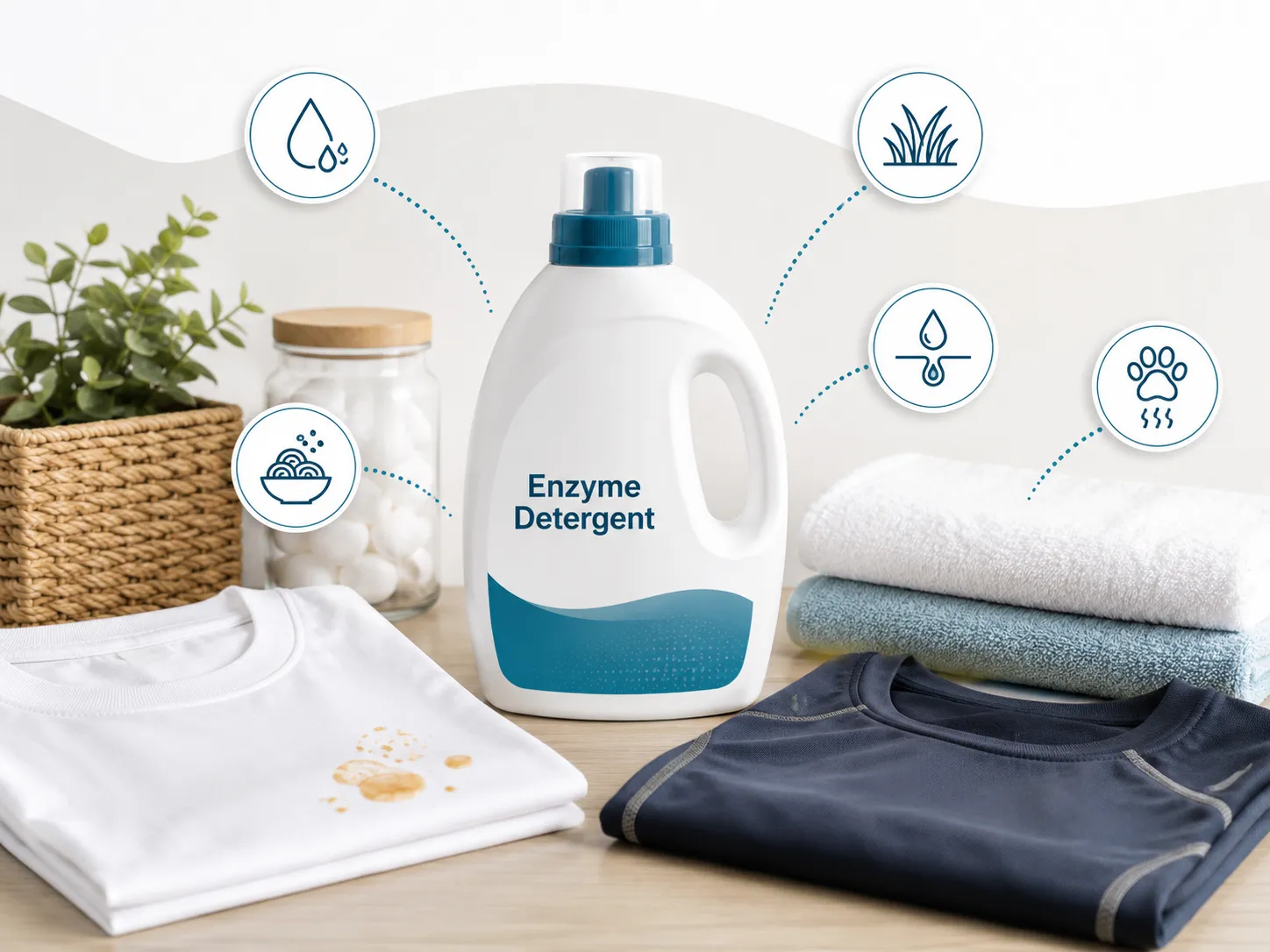
Enzyme laundry detergent helps break down stains and odors from sweat, food, blood, grass, body oil, and pet accidents. It uses cleaning enzymes that target stain residue so the wash can remove it more easily.
This type of detergent can be useful for stain-prone laundry, workout clothes, kids’ clothes, sheets, and washable pet bedding. But it is not right for every fabric or every laundry problem. This guide explains when to use it, when to avoid it, and how to choose a safe formula for your clothes.
Quick Takeaways
- Enzyme detergent helps remove organic stains and odors.
- It works well on sweat, food, grass, blood, body oil, and urine stains.
- Different enzymes target different types of residue.
- It is not always safe for wool, silk, cashmere, or delicate protein fibers.
- Many formulas work in cold or warm water, but the product label matters.
- Liquid formulas are easier to use for pretreating stains.
- It will not fix every issue, such as hard water, washer buildup, or detergent residue.
What Is Enzyme Laundry Detergent?
Enzyme laundry detergent is detergent that contains cleaning enzymes. These enzymes help break down stain residue into smaller pieces. Then the detergent, water, and washer movement help lift that residue away from the fabric.
Regular detergent can remove light soil, everyday dirt, and normal smells. An enzyme-based formula adds targeted help for stains that come from the body, food, plants, oils, or pets.
Not every detergent has enzymes. Some formulas are enzyme-free and are made for delicate fabrics, simple daily washing, or special fabric care.
This kind of detergent is best when you have real stains or odors. For lightly worn clothes, a regular mild detergent may be enough.
How Enzymes Work in Detergent
Enzymes work like stain helpers. They target certain types of residue and help break them apart.
Laundry stains are not all the same. Sweat, blood, body oil, food, grass, and urine leave different residue on fabric. One stain may contain protein. Another may contain oil or starch.
This is why some detergents use an enzyme blend. Each enzyme has a different job. After enzymes loosen the stain, surfactants in the detergent help wash it away.
Enzymes do not work like bleach. They do not whiten fabric by stripping color. They help break down stain material so it can rinse out more easily.

You do not need to memorize every enzyme name. But knowing the basics helps you choose a formula that fits the stain.
For example, protease is useful for protein stains. Lipase helps with oily marks. Amylase helps with starch-based food residue.
What Stains and Odors Does It Help Remove?
Enzyme detergent is best for organic stains and odors. These stains often come from the body, food, plants, or pets.
Sweat and Body Odor
Sweat odor often stays in underarms, collars, socks, and workout clothes. Body oil can also build up on sheets, pillowcases, and T-shirts.
An enzyme formula can help break down the residue behind these smells. If clothes still smell after washing, you may also need to check your detergent amount, washer cleanliness, and water temperature.
Blood, Egg, and Dairy Stains
Blood, egg, and dairy are protein-based stains. Protease enzymes can help break down this type of residue.
For blood stains, use cold water first. Hot water can make blood harder to remove. Treat the stain before drying, because heat can set the mark deeper into the fabric. A detergent made for blood-stain residue can help when regular washing does not fully lift the mark.
Food, Sauce, and Starch Stains
Food stains can contain protein, oil, starch, or all three. Sauce, gravy, rice, pasta, baby food, and ice cream can leave stubborn marks.
An enzyme blend can help because different enzymes target different parts of the stain.
Grass and Outdoor Stains
Grass stains can stick to kids’ clothes, sportswear, socks, and outdoor work clothes. Enzymes can help loosen the green organic residue before washing.
Pretreating often works better than putting the item straight into the washer.
Urine and Pet Odors
Urine and pet accidents can leave strong odor residue on washable fabrics. An enzyme-based detergent may help with pet bedding, towels, and some washable clothes.
Do not overpromise one wash. Cat pee, dog urine, and old urine smells can be stubborn. If the smell stays after washing, a deeper cat-urine odor process may be needed.
When Should You Use It?
Use this type of detergent when regular detergent does not handle stains or odors well.
It is a good choice for:
- sweaty workout clothes
- underarm odor
- food stains
- grass stains
- body oil on sheets
- pillowcase buildup
- washable pet bedding
- blood stains treated with cold water
- kids’ clothes with frequent stains
- towels or clothes with organic odor
It works best when it has time to touch the stain. For deep stains, pretreat the area first if the product label allows it.
When Should You Avoid It?
Enzyme detergent is useful, but it is not right for every item.
Use caution with:
- wool
- silk
- cashmere
- delicate protein fibers
- vintage clothing
- fragile fabric
- dry-clean-only clothes
- special-care garments
- labels that say mild detergent only
Wool and silk are protein fibers. Some enzymes may not be safe for them. If the care label recommends wool-safe detergent or gentle detergent, do not switch to an enzyme formula just because the stain looks tough.
Protect the fabric first. For wool items, proper wool-washing care is safer than using a stronger stain product without checking the label.
Who Should Choose Enzyme-Free Detergent Instead?
Enzyme-free detergent can be better for delicate laundry and simple everyday loads.
Choose enzyme-free detergent when washing:
- wool
- silk
- cashmere
- delicate clothes
- lightly worn clothes with no real stains
- baby clothes that call for gentle care
- garments labeled for mild detergent only
Some people also prefer fragrance-free or dye-free detergent for simple laundry. That is a personal preference, not a stain-removal rule.
If the fabric is delicate, use the safest product for the material.
An enzyme formula is not always “stronger” for everything. It is more targeted. It works best when the stain matches the enzyme action.
It also will not fix every laundry problem. Hard water, washer buildup, too much detergent, and poor rinsing can still leave clothes dull, stiff, or smelly.
Does It Work in Cold Water?
Many enzyme detergents can work in cold or warm water. The product label should tell you the best temperature.
Cold water is safer for protein stains like blood. Warm water may help body oil or greasy buildup if the care label allows it.
Avoid hot water on stains that may set with heat. This is especially important for blood, egg, dairy, and some food stains.
The safest rule is simple: check the clothing label and detergent label. Use the temperature that protects the fabric and fits the stain.
How to Know If Your Detergent Has Enzymes
Check the detergent label or product page. Look for enzyme-related words.
Common signs include:
- protease
- lipase
- amylase
- cellulase
- mannanase
- enzyme blend
- bio enzyme
- enzymatic formula
- stain-fighting enzymes
Some brands do not list every enzyme clearly. They may use phrases like “enzyme-based,” “bio enzyme,” or “helps break down stains.”
If the label says enzyme-free, then it does not use enzymes for stain removal.
Enzyme Cleaner vs Enzyme Detergent
Enzyme laundry detergent is made for washing clothes. It is added to the washer or used for pretreating fabric when the label allows it.
Enzyme cleaners are often made for surfaces, carpets, pet messes, or spot cleaning. They may not be safe for all clothing.
Always choose a product that matches the fabric and the job. Do not use a carpet cleaner or surface cleaner on clothes unless the label clearly says it is safe for laundry.
How to Choose the Right Formula
Choose based on your laundry problem, fabric type, and washer.
For blood, sweat, egg, or dairy stains, look for a stain-fighting formula that mentions protein stains or enzymes such as protease.
For body oil, greasy food, or collar buildup, look for a detergent that helps with oily residue.
For workout clothes or pet bedding, choose a formula that mentions odor, organic residue, or deep stain removal.
For HE washers, choose HE-safe detergent. HE washers need low-sudsing products. Too many suds can affect rinsing and washer performance.
For pretreating, liquid detergent is usually easier to use. You can apply a small amount to the stain if the label allows it.
For user preference, look for fragrance-free or dye-free options. Do not assume “natural” or “plant-based” means enzyme-free. Always check the label.
Match Your Stain to the Right Enzyme Formula
Different enzymes handle different stains — protein, oil, starch, and more. Answer a few quick questions and get a personalized enzyme detergent match for your fabric and laundry problem.
Find My Best Enzyme Detergent →
Liquid, Powder, Pods, and Sheets With Enzymes

Enzyme detergents come in different forms.
Liquid detergent is usually best for pretreating. It dissolves easily and can be applied to stains before washing if the label allows it.
Powder detergent can clean well, but it must dissolve fully. If powder stays on fabric, it may leave residue.
Pods are convenient, but they are less flexible for pretreating. You usually cannot measure a smaller amount or apply them directly to a stain.
Laundry detergent sheets are simple to use, but not all sheets contain enzymes. If you are choosing between formats, it helps to compare laundry detergent options by how they dissolve, dose, and handle stains.
How to Use It Correctly
Using this detergent the right way helps enzymes reach the stain before the wash removes loosened residue.
Follow these steps:
- Check the garment care label.
- Test dark or delicate fabric first.
- Pretreat stained areas if the detergent label allows it.
- Let the product sit for the recommended time.
- Wash with the right water temperature.
- Use the correct amount of detergent for the load size.
- Do not overload the washer.
- Check stains before drying.
Enzymes need contact time, so a quick wash may not remove deep stains. Avoid using too much detergent, because extra product can leave residue and make rinsing harder.
Final Takeaway
Enzyme laundry detergent is a smart choice when clothes have organic stains or odors from sweat, food, blood, grass, body oil, or urine. It works by using enzymes that help break stain residue into smaller pieces so the wash can remove it.
It is not the best choice for every fabric. Be careful with wool, silk, cashmere, dry-clean-only clothes, and delicate items. Check the care label, choose the right formula, use the right amount, and give stains enough contact time before washing.
Sources
- American Cleaning Institute — The Role of Enzymes in Detergent Products
https://www.cleaninginstitute.org/sites/default/files/documents/Enzymes-factsheet.pdf - BASF Care 360 — Enzymes Solutions for Laundry Care
https://care360.basf.com/emea/en/industries/home-care-and-i-i/Segements—Sustainable-Solutions/homecare/laundry/Enzymes-Solutions - The Woolmark Company — Best Detergent to Use When Washing Wool
https://www.woolmark.com/hk/care/best-detergent-when-washing-wool/ - University of Georgia Extension — Remove Stains From Blood
https://site.extension.uga.edu/textiles/care/stain-removal/remove-stains-from-blood/
