


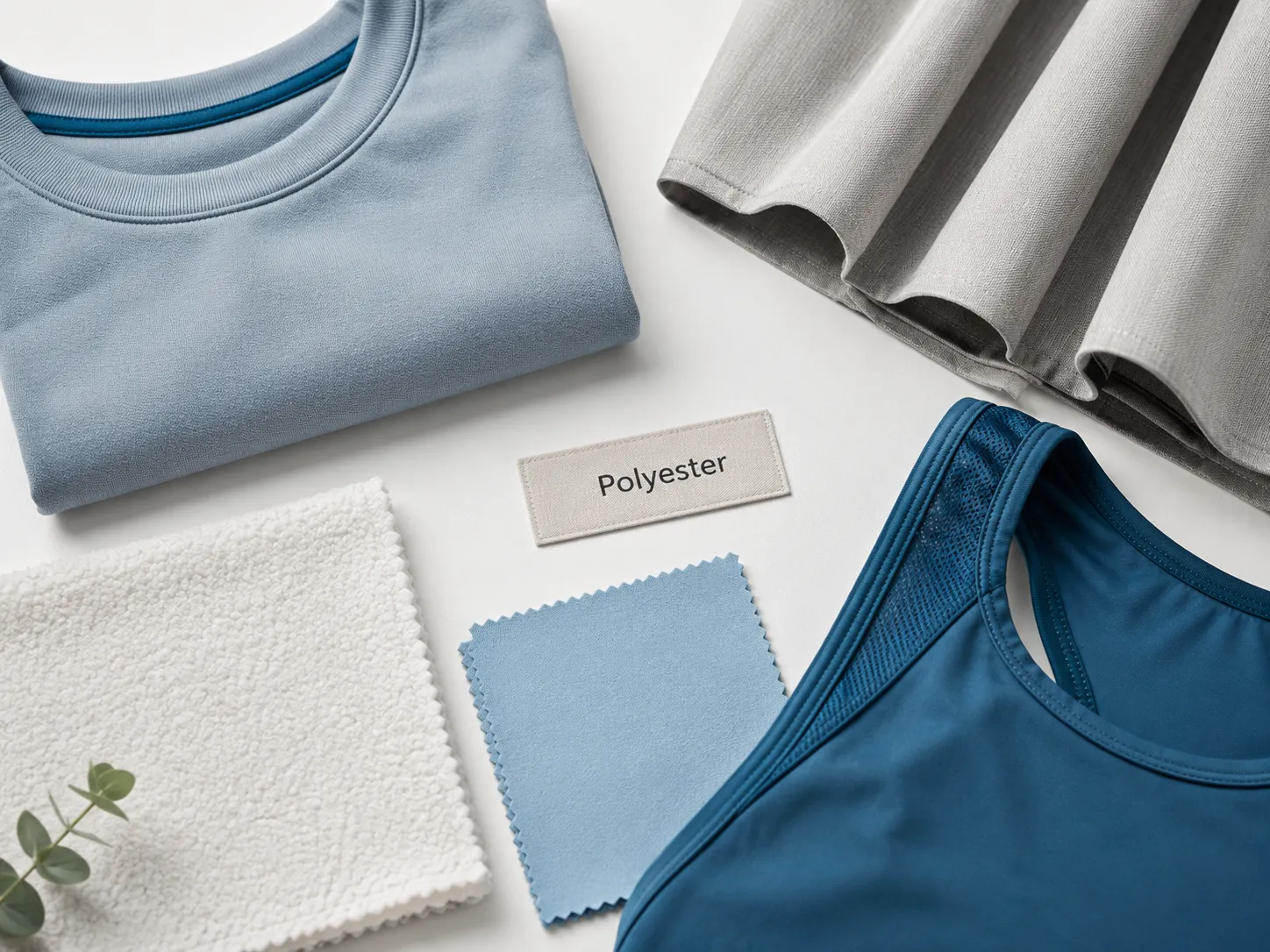
Polyester fabric is a synthetic material made from polyester fibers, and poly cloth usually means cloth made fully or partly from those fibers. Most everyday polyester comes from PET, a plastic-based polymer. This gives the material its durability, quick-drying performance, wrinkle resistance, affordability, and wide use in clothing, activewear, bedding, curtains, upholstery, and outdoor gear.
This material is useful, but it has trade-offs. The weave, finish, and blend can make it feel smooth, soft, silky, firm, warm, or fuzzy. Compared with cotton, it usually dries faster and resists shrinking, but it can feel less breathable, hold sweat odor, build static, pill over time, and react badly to high heat.
Quick Takeaways
- Polyester is a synthetic fabric, not a natural fiber.
- Poly cloth usually means polyester cloth or a polyester-based fabric.
- Most clothing polyester is made from PET, a plastic-based polymer.
- It is durable, quick-drying, wrinkle-resistant, versatile, and usually affordable.
- It is used in clothes, activewear, swimwear, outdoor gear, bedding, curtains, and upholstery.
- It can feel smooth, soft, silky, crisp, slippery, warm, fuzzy, or firm.
- Its main drawbacks are lower breathability, odor retention, static, pilling, heat sensitivity, and environmental concerns.
- Recycled polyester exists, but it is still a synthetic material.
What Is Polyester Fabric?
Polyester fabric is a synthetic textile made from polyester fibers. These fibers are turned into yarn, then woven or knitted into cloth.
It is a man-made material, not a natural fiber like cotton, linen, wool, or silk. Because of this, it behaves differently from many different fabric materials used in clothing and home textiles.
The material became popular because it is strong, easy to produce, and useful in many fabric styles. It can be made thin and smooth for shirts, soft and warm for fleece, fine and smooth for microfiber, or stretchy when blended with spandex.
You can find it in many everyday items. It appears in T-shirts, dresses, trousers, jackets, uniforms, gym clothes, swimwear, blankets, curtains, upholstery, and cleaning cloths.
The fabric may be 100% polyester or part of a blend. A blended fabric can include cotton, rayon, wool, spandex, or other fibers to change comfort, stretch, weight, and care needs.
What Does Poly Cloth Mean?
Poly cloth usually means polyester cloth or fabric made mainly from polyester fibers. “Poly” is a short form often used for polyester in fabric labels, product descriptions, and textile listings.
However, poly cloth does not always mean 100% polyester. It may also describe a polyester blend. For example, a shirt may contain polyester and cotton, while activewear may contain polyester and spandex.
Because of this, the care label matters. A 100% polyester shirt may behave differently from a cotton-polyester blend or a polyester-spandex fabric. The blend can change softness, stretch, breathability, shrinkage, and how different fabrics should be washed.
Two fabrics can both say polyester on the label but feel completely different because the weave, weight, finish, and blend are different.
What Is Polyester Made Of?
Most polyester used in clothing is made from PET, which stands for polyethylene terephthalate. PET is a plastic-based polymer made through a chemical process.
In simple words, polyester is a man-made fiber. It does not come from plants or animals. It does not come from cotton plants, flax plants, sheep, or silkworms.
Because PET is plastic-based, polyester is often described as a plastic-based fabric. Most regular polyester is made from petroleum-based ingredients.
Some polyester is recycled. Recycled polyester may come from recycled PET bottles or other recycled PET sources. This can reduce the need for new raw material, but the fabric is still synthetic.
There are also plant-based versions, but they are less common in everyday clothing. Most polyester clothes and home textiles are still made from standard synthetic polyester.
How Is Polyester Made?
Polyester production can be complex, but the basic idea is simple.
First, manufacturers process raw materials into a polyester polymer. Then they melt the polymer and push it through tiny spinneret holes. This process forms long filaments.
Next, manufacturers cool, stretch, and spin those filaments into yarn. Machines then weave or knit the yarn into fabric.
Textile finishers may dye, brush, soften, print, coat, or blend the material with other fibers. These finishing steps help create different textures, weights, and performance features.
This process allows polyester to become smooth dress fabric, stretchy activewear, fuzzy fleece, fine microfiber, thick upholstery fabric, or lightweight outdoor material.
That is why two items can feel very different, even when both labels say “polyester.”

Most polyester fabric starts as PET-based material that is formed into fibers, spun into yarn, and woven or knitted into cloth.
Key Characteristics
| Characteristic | What It Means |
|---|---|
| Durable | Resists regular wear and tearing. |
| Wrinkle-resistant | Keeps shape better than many natural fabrics. |
| Quick-drying | Does not hold much water. |
| Moisture-wicking | Can move sweat across the surface in activewear designs. |
| Affordable | Usually costs less than many natural fibers. |
| Versatile | Can be made smooth, soft, shiny, fuzzy, or firm. |
| Shrink-resistant | Usually shrinks less than cotton. |
| Heat-sensitive | High heat can damage or melt fibers. |
| Static-prone | Can cling in dry air. |
| Odor-holding | Can trap body oil and sweat smell. |
These characteristics explain why polyester is used so often. It is strong, easy to shape, and simple to care for in many cases.
However, the same properties can also create problems. Since the material does not absorb water like cotton, it dries fast but may hold oily body residue. Since it is heat-sensitive, it should not be dried or ironed with high heat unless the care label allows it.
Moisture-wicking means the fabric can move sweat across the surface so it dries faster. It does not mean the fiber absorbs moisture like cotton.
Common Types of Polyester
Polyester is not just one fabric. It includes different forms, fiber sizes, finishes, and sources.
PET Polyester
PET polyester is the most common type. It is used in clothing, packaging, home textiles, and many everyday products.
Most polyester shirts, jackets, uniforms, bedding blends, curtains, and upholstery fabrics are made from PET-based fibers. If a clothing label simply says “polyester,” it usually refers to PET polyester.
Microfiber Polyester
Microfiber polyester is made from very fine fibers. It often feels smooth, soft, and lightweight.
You may see it in cleaning cloths, sheets, towels, bedding, and some soft clothing. Microfiber can feel more absorbent on the surface because the fibers are very fine, but it is still synthetic polyester.
Recycled Polyester
Recycled polyester is made from recycled PET sources. It is often used in activewear, jackets, bags, fleece, shoes, and clothing lines that want to reduce the use of virgin material.
The main difference is the source of the raw material. Recycled polyester does not always feel different from regular polyester. It can still hold odor, react to high heat, and shed tiny fibers during washing.
PCDT Polyester
PCDT polyester is less common than PET. It is often used when more elasticity or heavier-duty performance is needed.
Most everyday clothing labels do not mention PCDT. For normal shoppers, PET and polyester blends are usually more relevant.
Plant-Based Polyester
Plant-based polyester is made partly from plant-derived inputs. It is less common than standard petroleum-based polyester.
This type may reduce the use of fossil-based ingredients, but it should still be judged by the fabric label, care instructions, and how the item performs.
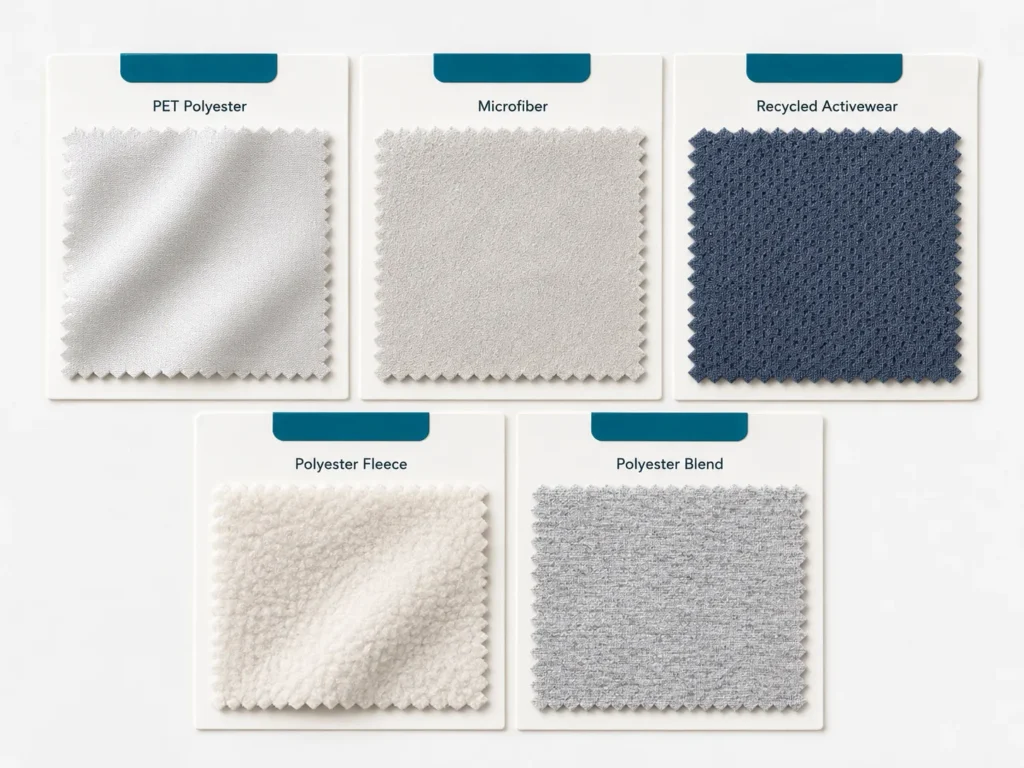
Polyester can appear as smooth PET fabric, fine microfiber, recycled polyester, warm fleece, or blended clothing material.
Everyday Uses
Many industries use polyester because it is durable, affordable, and easy to make in different textures.
Clothing and Apparel
You can find it in T-shirts, dresses, skirts, trousers, underwear, sleepwear, jackets, and uniforms. Many everyday clothes use this fiber because it helps garments resist wrinkles and dry faster.
Activewear and Swimwear
Brands widely use the material in gym shirts, leggings, sports jerseys, swimwear, base layers, and workout clothes. Fabric engineers can design it to move moisture across the surface and dry quickly.
Outdoor and Gear
Outdoor items often use polyester because it is lightweight and less absorbent than many natural fibers. Common examples include windbreakers, backpacks, tents, sleeping bags, rain-resistant gear, and outdoor clothing.
Home Textiles
At home, polyester appears in bedding, pillow covers, curtains, upholstery, rugs, blankets, fleece throws, and furniture fabrics. It helps these items last longer and resist wrinkles.
Industrial and Packaging Uses
Outside clothing and home items, polyester can be used in ropes, belts, films, packaging, bottles, and other industrial products. These uses are not the main focus for fabric care, but they show how flexible the material is.

What Does It Feel Like?
Polyester does not have one single feel. It changes based on the weave, knit, thickness, finish, and blend.
Thin polyester can feel smooth, light, and slightly silky. Some dress fabrics feel crisp or slippery. Fleece feels soft, warm, and fuzzy. Microfiber feels very fine and smooth.
Cheaper polyester may feel shiny, stiff, or plasticky. Higher-quality versions can feel softer and more comfortable.
Blends also change the texture. Polyester-cotton can feel softer and more natural. Polyester-spandex feels stretchier. Polyester fleece feels warmer and thicker.
The finish matters too. Brushed polyester feels softer, while tightly woven fabric may feel firmer and warmer.
100% Polyester vs Polyester Blends
Not all polyester items behave the same way. The blend can change comfort, stretch, breathability, shrinkage, and care needs.
| Fabric Type | What It Means |
|---|---|
| 100% polyester | Durable, quick-drying, less absorbent, and may feel less breathable. |
| Polyester-cotton | Softer and usually more breathable than pure polyester. |
| Polyester-spandex | Stretchy and flexible for activewear and fitted clothing. |
| Polyester fleece | Soft, warm, and more likely to pill with wear. |
| Polyester microfiber | Fine, smooth, and often soft to the touch. |
| Polyester-wool blend | Warmer, more structured, and often easier-care than pure wool. |
A 100% polyester shirt may dry fast but hold odor more easily. A cotton-polyester shirt may feel softer and more breathable .A polyester-spandex item usually stretches because of the spandex, not because of polyester alone.
Always check the label before washing or drying. A blend may need different care than pure polyester.
Pros of Polyester Fabric
Polyester has many benefits, which is why brands use it in so many clothes and home products.
The fabric handles regular wear well and dries faster than many natural fabrics because it does not absorb much water. It also resists wrinkles, which makes it useful for travel clothes, uniforms, and easy-care items.
Its lower cost makes it common in budget clothing, bedding, curtains, and upholstery.
Shape retention helps clothes look smoother after washing and wearing. Its versatility also allows manufacturers to make it into many textures, from soft fleece to smooth dress fabric.
For activewear, brands often choose polyester because they can make it lightweight and moisture-wicking. This helps workout clothes dry faster after sweating.
Drawbacks of Polyester Fabric
Polyester also has real downsides.
It usually breathes less naturally than cotton or linen. This can make it feel warm, especially in tight, thick, or poorly ventilated clothing.
The fabric can also hold odor. Body oil and sweat residue may cling to the fibers, especially in gym clothes and synthetic base layers. This is why some workout shirts smell again after washing.
Dry air can make the material cling to the body or attract lint.
Fleece, lower-quality blends, and high-friction areas may develop small fabric balls over time.
High heat creates another risk. Hot dryers, hot irons, or high washing temperatures can damage, melt, scorch, or distort the fibers.
Most polyester also comes from fossil-based materials, and washing synthetic fabrics can release tiny microfibers.
Is Polyester Breathable?
Polyester can feel lightweight, but it usually breathes less naturally than cotton or linen.
That does not mean every item feels hot. Thin, mesh, loose-knit, or moisture-wicking versions can feel more comfortable. Many activewear brands design polyester fabrics to move sweat away from the skin and dry quickly.
However, quick drying is not the same as natural airflow. A gym shirt may dry fast but still trap body oil and odor. Thick fleece or tightly woven fabric can feel warm because less air moves through it.
Breathability depends on fabric weight, weave, knit, finish, and blend. A thin mesh may feel airy, while heavy upholstery fabric or fleece will feel much warmer.
Does Polyester Hold Odor?
Polyester can hold odor more than some natural fibers. This is most common in activewear, gym shirts, tight tops, and base layers.
The reason is that polyester is hydrophobic. This means it does not absorb water easily. It can dry quickly, but oily body soil and sweat residue may cling to the fiber surface.
Over time, this buildup can create odor that returns after washing. Fabric softener, too much detergent, and poor rinsing can make the issue worse because they may leave a coating on the material.
If polyester clothes smell after washing, the problem is often buildup. Better rinsing, the right detergent amount, lower heat, and proper washing methods can help.
Does It Shrink, Stretch, or Wrinkle?
Polyester usually resists shrinking better than cotton. It also resists wrinkles, which is one reason it is common in travel clothing and uniforms.
Still, the fabric is not heat-proof. High dryer heat or a hot iron can damage the fibers. The item may melt, scorch, wrinkle badly, or lose shape if exposed to too much heat.
Stretch depends on structure and blend. Knit polyester may have some give. Woven polyester may not stretch much. If the label says polyester-spandex, the stretch mostly comes from spandex.
Blends can behave differently. A polyester-cotton blend may shrink less than pure cotton, but it can still shrink slightly depending on heat and cotton content, especially if the laundry routine already causes shrinking problems in clothes.
Polyester vs Cotton
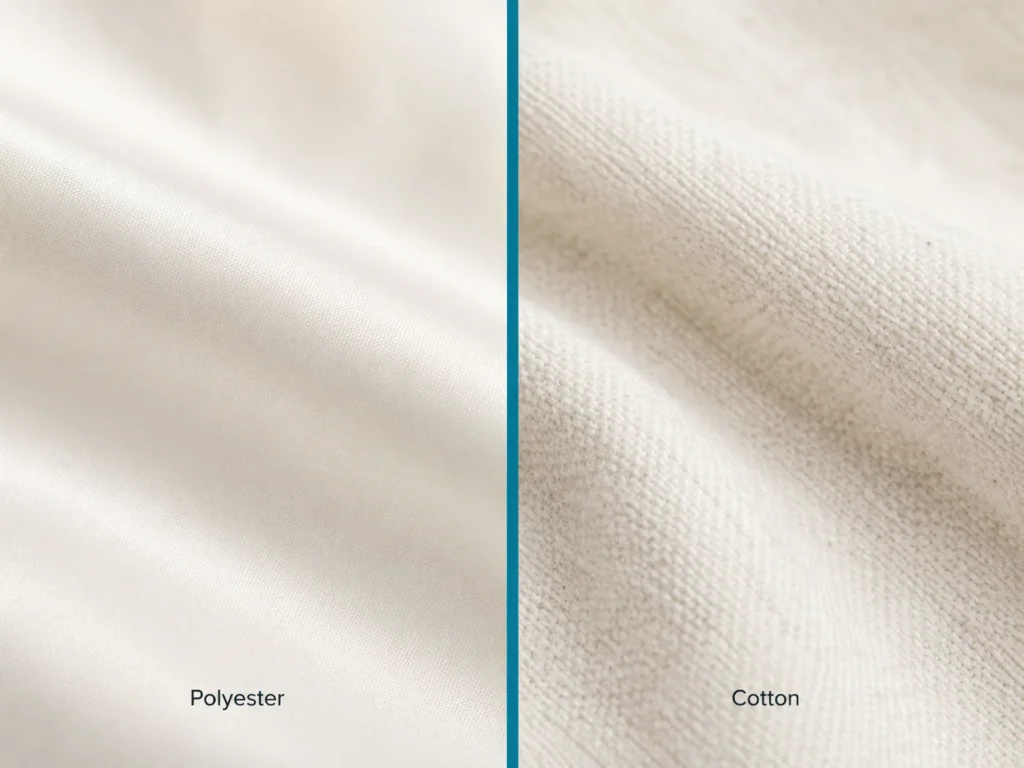
Polyester often feels smoother and dries faster, while cotton usually feels softer, more natural, and more breathable.
Polyester and cotton are both common in clothing, but they behave differently. This is why it helps to compare fabrics by source, feel, breathability, drying speed, and care needs before choosing a garment.
| Feature | Polyester | Cotton |
|---|---|---|
| Source | Synthetic | Natural |
| Breathability | Usually lower | Usually higher |
| Drying speed | Faster | Slower |
| Wrinkle resistance | Better | Wrinkles more easily |
| Odor behavior | Can hold smell | Usually easier to freshen |
| Feel | Smooth or synthetic | Soft and natural |
| Heat safety | Sensitive to high heat | Usually more heat-tolerant |
| Shrinkage | Usually lower | Can shrink more |
Polyester is often better for quick drying, wrinkle resistance, and activewear. Cotton is often better for softness, airflow, and a natural feel.
A cotton-polyester blend can give some benefits of both. It may feel softer than pure polyester and wrinkle less than pure cotton. If you are comparing synthetic clothing materials, polyamide and polyester can also feel different in stretch, softness, breathability, and activewear performance.
Is Polyester a Good Fabric?
Polyester can be a good fabric when it matches the job.
| Best For | Not Best For |
|---|---|
| Activewear and swimwear | Maximum natural breathability |
| Travel clothes and uniforms | A soft natural fiber feel |
| Fleece and outerwear | Heavy odor-prone use without proper washing |
| Curtains and upholstery | High-heat laundry habits |
| Budget clothing | Fully biodegradable fabric needs |
| Wrinkle-resistant clothes | Luxury softness unless the fabric is high quality |
It works well for activewear, outerwear, uniforms, travel clothes, fleece, curtains, upholstery, and budget clothing. It is also useful when you want something quick-drying, durable, and low-maintenance.
However, it may not be the best choice for very hot weather, heavy sweating, luxury softness, or people who prefer natural fibers.
Quality matters. A cheap polyester shirt may feel shiny or plasticky, while a better fabric can feel soft, smooth, and comfortable.
The weave, blend, thickness, and finish matter just as much as the fiber name.
Environmental Impact
Manufacturers usually make polyester from petroleum-based materials. Because of that, the fabric has environmental concerns.
It does not biodegrade like cotton, linen, wool, or silk. Synthetic fibers can stay in the environment for a long time.
Washing synthetic fabrics can also release microfibers. These tiny fibers can move through wastewater and add to microplastic pollution.
Recycled polyester can reduce the need for virgin raw materials. However, it does not remove every concern. The fabric still comes from synthetic fibers, and it can still shed tiny fibers.
A practical approach is to buy better-quality items when possible, wash them carefully, avoid unnecessary high heat, and keep garments in use longer.
Basic Care Notes
Polyester is usually easy to care for, but high heat is the main risk.
Check the care label before washing. Many polyester clothes do well in cold or warm water. Use the right detergent amount, and avoid overloading the washer so the fabric can rinse well.
Dry on low heat or air dry when possible. Avoid high dryer heat and hot irons unless the care label clearly allows them. For more detailed fabric-safe steps, use a proper method for washing polyester safely
Treat stains and odors before drying. Heat can make some marks and smells harder to remove later.
For workout clothes, avoid heavy fabric softener because it can leave a coating that traps odor and affects moisture-wicking performance.
Final Takeaway
Polyester fabric, also called poly cloth in some product descriptions, is a common synthetic material made mostly from PET. It is popular because it is durable, affordable, quick-drying, wrinkle-resistant, and useful in many types of clothing and home textiles.
Its main drawbacks are lower natural breathability, odor retention, static, pilling, heat sensitivity, and environmental concerns. The best choice depends on the fabric type, blend, weave, comfort needs, and how you plan to wear, wash, and care for it.
Sources
European Environment Agency — Microplastics From Textiles
https://www.eea.europa.eu/en/analysis/publications/microplastics-from-textiles-towards-a-circular-economy-for-textiles-in-europe
Use for: synthetic textile washing, microfiber shedding, and microplastic pollution context.
Textile Exchange — Polyester
https://textileexchange.org/polyester/
Use for: polyester being durable, crease-resistant, quick-drying, widely used in clothing, home furnishings, footwear, and synthetic fiber production context.
University of Georgia Extension — Understand Your Fibers
https://site.extension.uga.edu/textiles/textile-basics/understand-your-fibers/
Use for: polyester care, wrinkle resistance, care-label guidance, stain treatment, and low-temperature ironing.
Applied and Environmental Microbiology — Microbial Odor Profile of Polyester and Cotton Clothes
https://pmc.ncbi.nlm.nih.gov/articles/PMC4249026/
Use for: polyester odor retention compared with cotton after wear.
