


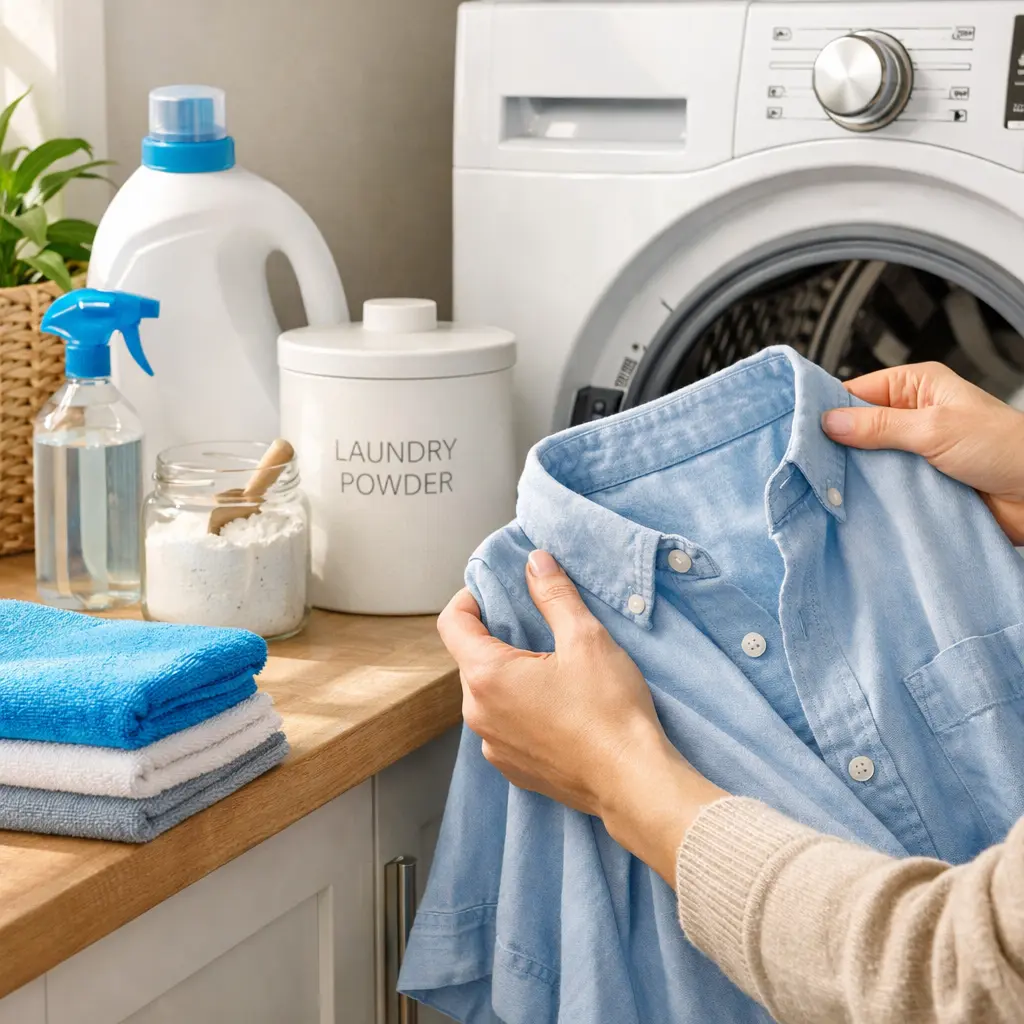
If your shirts still smell like BO after washing, the problem is usually trapped sweat residue, body oils, deodorant buildup, or poor rinsing. To learn how to remove body odor from clothes, treat the smelly areas before washing, especially the underarms, collars, waistbands, and tight synthetic areas.
Extra detergent alone will not fix deep odor. In fact, too much detergent can leave residue that traps sweat smell. This guide explains how to pre-treat odor zones, use enzyme detergent safely, handle underarm odor, wash gym clothes, avoid dryer heat, and stop the smell from coming back.
Why Body Odor Stays in Clothes After Washing
Body odor forms when sweat, skin oils, and bacteria leave odor residue in fabric. This residue can stay in underarms, collars, waistbands, and tight-fitting areas.
Normal detergent may remove surface dirt but leave some odor behind. This is more common when:
- the washer is overloaded
- too much detergent is used
- clothes are not rinsed well
- deodorant buildup is trapped in the underarm area
- synthetic fabric holds body oils
More detergent does not always help. In fact, extra detergent can leave a film on fabric. That film can trap sweat smell and make clothes smell stale after washing.
Underarm odor is often the hardest to remove. Sweat, sebum, deodorant, and antiperspirant residue can create a waxy layer that holds BO smell.
Choose the Right Treatment First
Use this table before washing. It keeps the process simple and helps you avoid over-treating the wrong fabric.
| Problem | Best First Step | Use With Care |
|---|---|---|
| Light sweat smell | Turn inside out and wash with enzyme detergent. | Do not overload the washer. |
| Strong underarm odor | Pre-treat armpits before washing. | Test dark fabrics first. |
| Clothes still smell after washing | Rewash in a smaller load with extra rinse. | Avoid dryer heat. |
| Waxy deodorant buildup | Pre-treat underarms and gently loosen residue. | Do not scrub delicate fabric. |
| Synthetic odor | Use odor detergent and skip fabric softener. | Avoid high heat. |
| Cotton perspiration odor | Pre-treat and wash warm if the label allows. | Check the care label. |
| Delicate fabric odor | Use gentle care or professional cleaning. | Avoid strong soaks. |
Use the gentlest method that matches the odor level and fabric type.
Before You Treat Smelly Clothes
Check the care label first. It tells you the safe water temperature, wash cycle, and drying method.
Then turn the clothes inside out. Sweat and body oils collect on the side that touches your skin. This is especially important for shirts, undershirts, socks, base layers, and workout clothing.
Focus on the areas that smell most:
- underarms
- collars
- necklines
- waistbands
- bra bands
- socks
- tight synthetic areas
If the fabric is dark, delicate, or new, test any treatment on a hidden seam first. This matters before using vinegar, oxygen bleach, laundry sanitizer, or a strong pretreatment.
Do not put smelly clothes in the dryer. Heat may make leftover odor harder to remove. If the smell remains after washing, air dry the item and treat it again.
How to Remove Body Odor From Clothes: Best Method
This method works for most washable clothes with body odor, BO smell, or sweat smell after washing.
Step 1: Turn Clothes Inside Out
Turn the clothing inside out before pretreating or washing. This exposes the fabric surface that holds sweat, body oils, and deodorant residue.
Step 2: Pre-Treat Odor Zones
Apply a small amount of enzyme detergent or odor-removing detergent directly to the smelly areas. Focus on underarms, collars, and waistbands.
Gently work it in with your fingers or a soft brush. Do not scrub hard. Rough scrubbing can stretch knits, fade fabric, or damage fibers.
Let it sit for 10 to 20 minutes before washing.
Step 3: Soak Strong Odor if the Label Allows It
For strong BO smell, soak washable clothes before washing. Use cool or warm water based on the care label.
A diluted white vinegar soak can help reduce stale sweat odor. Soak for 20 to 30 minutes, then rinse lightly before washing.
Use vinegar carefully. Avoid it on wool, silk, delicate fabrics, unstable dyes, elastic-heavy items, and dry-clean-only clothes.
For very stubborn odor in durable washable fabrics, color-safe oxygen bleach may help if the care label allows it. Do not use oxygen bleach on wool, silk, leather, or fabrics that warn against it.
Step 4: Wash in a Smaller Load
Wash odor-prone clothes in a smaller load. Clothes need space to move so water and detergent can reach the underarm areas. Use the correct detergent amount for the load because more detergent is not always better.
Use enzyme detergent or odor-removing detergent. Use the correct amount for the load. More detergent is not always better.
Choose the warmest water allowed by the care label. Warm water can help remove body oils from durable fabrics. Cold water is safer for dark colors, many synthetics, and delicate items.
Use an extra rinse if the clothes often smell stale or feel coated.
Step 5: Check Before Drying
After washing, smell the underarm areas before drying. If the odor remains, do not use dryer heat.
Air dry the item and repeat the pretreatment before washing again. Once the smell is gone, dry the clothes fully before storing them.
How to Remove Underarm Odor From Shirts
Underarm odor needs direct treatment. A normal wash may not remove buildup from the armpit area.
Turn the shirt inside out. Check the underarms. If the fabric feels stiff, waxy, or coated, deodorant or antiperspirant residue may be holding the odor.
Apply enzyme detergent directly to the underarms. Let it sit for 10 to 20 minutes. Then wash the shirt with the warmest water allowed by the care label.
For cotton shirts, a baking soda paste may help loosen underarm buildup. Mix baking soda with a little water. Apply it to the armpit area for a short time, then rinse before washing.
Do not use baking soda paste on wool, silk, delicate fabrics, or unstable dyes. It can be too harsh for some materials.
For white cotton shirts, color-safe oxygen bleach may help with deep odor and yellow underarm buildup if the label allows it. Avoid chlorine bleach unless the care label clearly says it is safe.
How to Get Sweat Smell Out of Gym Clothes
Many activewear items are made from polyester, nylon, or spandex blends. These fabrics can hold body oils and sweat smell even when they look clean.
Wash sweaty clothing soon after wearing it. If you cannot wash it right away, let it dry before putting it in the hamper. Damp clothes in a pile can develop stronger odor.
Turn the item inside out. Pre-treat the smelliest areas with enzyme detergent. Then wash with a normal amount of detergent.
Avoid fabric softener on activewear. It can coat synthetic fibers and trap sweat odor. It can also reduce moisture-wicking performance.
Use cold or warm water based on the care label. Air dry when possible. High heat can damage elastic and may lock in odor if the smell is not fully gone.
What to Do If Clothes Still Smell After Washing
If clothes still smell after washing, do not repeat the same wash routine. Find the cause first.
| Problem | Likely Cause | Best Fix |
|---|---|---|
| Smell remains in underarms | Deodorant and sweat buildup | Pre-treat underarms before washing. |
| Clothes smell stale | Detergent residue | Use less detergent and add an extra rinse. |
| Odor returns when worn | Old body oils left in fabric | Use enzyme pretreatment. |
| Synthetic clothes smell fast | Oil trapped in fibers | Avoid fabric softener and high heat. |
| Whole load smells bad | Washer residue or poor rinsing | Clean the washer and wash smaller loads. |
If one item smells, treat that item. If the whole load smells, check the washer and detergent routine.
If only one shirt smells, treat that item directly. If many clothes smell bad, check your washer, detergent amount, and drying routine.
Why Clothes Smell Fine Until You Wear Them Again
Some clothes smell clean after washing but smell like BO again later. This happens when heat, moisture, and body movement reactivate odor residue left in the fabric.
The shirt may smell fine when it is dry and cool. But once your body warms it, old sweat residue and body oils can release odor again.
This is common in:
- polyester shirts
- undershirts
- work uniforms
- tight cotton shirts
- shirts with old underarm buildup
To fix it, pre-treat before washing. Do not rely on fragrance or extra detergent. The goal is to remove residue, not cover the smell.
Fabric-Safe Adjustments
Use the right method for the fabric. Strong treatments that work on cotton may damage delicate materials.
| Fabric Type | Better Method | Avoid |
|---|---|---|
| Cotton shirts | Pre-treat underarms and wash warm if the label allows. | Dryer heat before odor is gone. |
| Polyester | Use enzyme detergent, extra rinse, and air drying. | Fabric softener and high heat. |
| Nylon/spandex | Use a gentle cycle, odor detergent, and air drying. | Hot water and harsh soaks. |
| Wool | Use wool-safe cleaning only. | Vinegar soaks, oxygen bleach, and hot water. |
| Silk | Use delicate care or professional cleaning. | Baking soda paste and strong pretreatments. |
Cotton can usually handle stronger odor treatment than delicate fabrics. Always follow the care label first.
Laundry Mistakes That Keep Body Odor Trapped
Small laundry mistakes can keep BO smell in clothes.
Using Too Much Detergent
Extra detergent can leave residue. That residue can trap body oils and sweat smell. Use the right amount for the load.
Overloading the Washer
A packed washer cannot clean well. Clothes need space for water, detergent, and rinsing.
Skipping Pretreatment
Deep underarm odor needs direct contact with detergent before washing. A normal cycle may not be enough.
Using Fabric Softener on Synthetic Clothes
Fabric softener can coat polyester and activewear. This can trap odor and reduce moisture-wicking performance, especially when you are trying to remove odor from clothes instead of cover it.
Drying Before the Odor Is Gone
Do not tumble dry clothes that still smell. Heat may make the odor harder to remove.
Leaving Sweaty Clothes Damp
Do not leave damp, sweaty clothing in a closed hamper. Hang it to dry first if you cannot wash it right away.
How to Prevent Body Odor From Coming Back
The best way to prevent body odor in clothes is to stop residue from building up.
Wash sweaty clothes soon after wearing them. If you cannot wash them right away, hang them to dry before putting them in the hamper.
Turn odor-prone clothes inside out before washing. This helps detergent reach the side that touched your skin.
Use enough detergent, but not too much. If clothes feel stiff, coated, or stale, reduce detergent and use an extra rinse.
Avoid fabric softener on polyester, activewear, and moisture-wicking fabrics. Use an odor-removing detergent instead.
Do not store clothes until they are fully dry. Even slight dampness can lead to sour or musty odor, so air drying clothes properly matters when odor keeps returning.
For shirts that often smell in the underarms, pre-treat them every few washes. This helps stop deodorant buildup from becoming harder to remove.
Also, clean your washer regularly. A dirty washer can add odor back to clothes, especially in cold-water loads and high-efficiency machines.
Conclusion
Body odor in clothes usually comes from residue that a normal wash leaves behind. Treat the areas that touch your skin, use the right amount of detergent, rinse well, and keep clothes out of the dryer until the smell is gone. Once the odor is removed, dry sweaty clothes before the hamper, avoid fabric softener on synthetics, and clean your washer regularly. That gives you a better chance of removing the odor instead of just covering it for one wash.
