

Quick Answer: How to Wash Linen
- Wash linen on a gentle cycle using cold or lukewarm water.
- Use mild detergent and avoid bleach or fabric softener.
- Air dry or tumble dry on low heat.
- Remove items while slightly damp to reduce wrinkles.
Linen is a natural fabric made from flax fibers. It is strong, breathable, and highly absorbent, making it popular for clothing, bedding, and table linens. Many people love linen because it keeps you cool in summer and adds a relaxed, elegant touch to home textiles. However, linen requires careful washing and drying to maintain its softness, shape, and durability.
Fortunately, washing linen does not have to be complicated. By following simple steps such as using gentle detergent, selecting the right water temperature, and air drying properly, you can keep linen clothing, sheets, and tablecloths in excellent condition. For a broader overview of washing settings across materials, see our guide on compare washing methods across fabric types. This guide explains everything you need to know to wash linen safely, remove stains, prevent damage, and make your linen items last longer.
Why Linen Needs Special Care Before Washing
Linen fibers are strong but sensitive to high heat and harsh chemicals.Like wool, linen fibers can react negatively to excessive heat and friction; see our guide on how to wash wool properly for comparison. Hot water and aggressive washing can damage fibers and cause shrinkage. Therefore, gentle washing helps linen keep its shape and softness. Linen fibers are hollow and highly absorbent, which makes them breathable but also more responsive to heat exposure and mechanical agitation during washing..
Can You Wash Linen in a Washing Machine?
Yes, most linen items are machine washable. Always check the care label first.
How Do You Wash Linen Safely?
To wash linen safely, start by checking the care label and separating items by color and weight. Use a gentle cycle with cold or lukewarm water, add a mild liquid detergent, and avoid bleach or heavy fabric treatments. After washing, remove linen promptly, reshape it while damp, and air dry or tumble dry on low only if the care label allows it.
Machine Wash vs Hand Wash Linen
Machine washing works well for most linen items. However, delicate or loosely woven pieces benefit from hand washing.Unlike polyester, which tolerates more mechanical movement, linen benefits from reduced agitation during washing.
When Hand Washing Is Better
Hand wash thin garments, embroidered linen, or lightweight fabrics to prevent damage.
How to Wash Linen Properly Step by Step
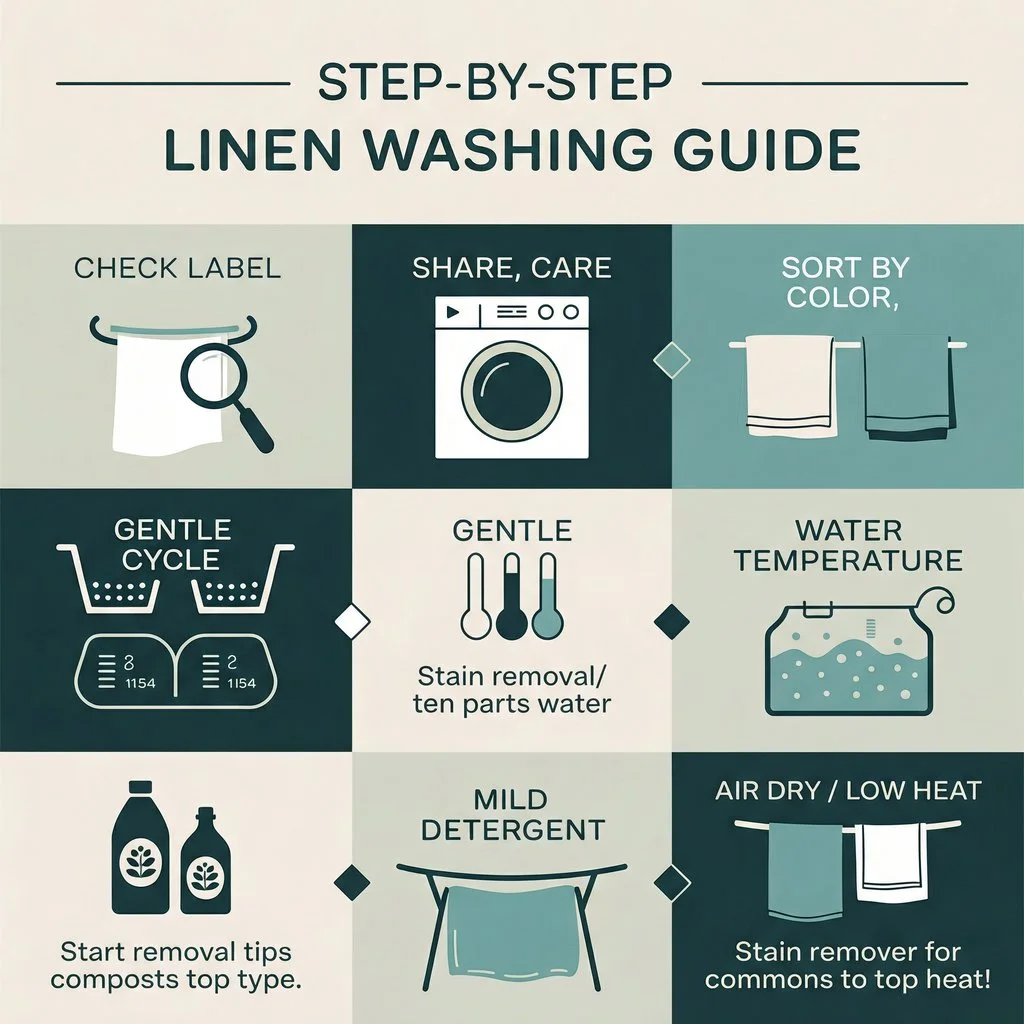
Step 1 — Check the Care Label
Always read washing instructions before cleaning linen.
Step 2 — Sort by Color and Fabric Weight
Separate light and dark colors. Also wash heavy items separately from lighter ones.
Step 3 — Choose the Right Cycle for Linen Washing
Use the gentle or delicate cycle to reduce fiber stress.
Step 4 — Select Proper Water Temperature
Cold or lukewarm water is usually the safer choice for linen. Hot water can shrink linen, particularly when the fabric is also exposed to agitation or excessive drying heat.
Step 5 — Use Gentle Detergent
Use mild detergent without bleach or strong chemicals.
Step 6 — Avoid Overloading the Washer
Linen needs space to move freely in the washer.
Best Detergents and Products for Linen
Choose mild liquid detergents that rinse easily.
Ingredients to Avoid When Washing Linen
Avoid bleach, optical brighteners, and harsh chemicals because they weaken fibers.
Is Fabric Softener Safe for Linen?
No. Fabric softener coats fibers and reduces absorbency.
Linen Washing Temperature Guide
| Linen Item | Recommended Water Temperature |
|---|---|
| Linen Clothing | Cold or lukewarm |
| Linen Sheets | Cold or warm |
| Table Linens | Warm if heavily soiled |
| Delicate Linen | Cold only |
How to Dry Linen Without Shrinking
Proper drying prevents shrinkage and excess wrinkles.
Air Drying Linen
Air drying is the safest option. Hang or lay items flat.
Tumble Dry Linen on Low Heat Safely
Use low heat and remove items while slightly damp.
Prevent Shrinkage While Drying Linen
Avoid high heat, which causes shrinkage.
Ironing and Wrinkle Management for Linen
Wrinkles are normal in linen and part of its relaxed look.
How to Iron Linen Properly
Iron while slightly damp using medium heat and steam.
Removing Wrinkles Without Ironing
Hang linen in a steamy bathroom to relax wrinkles naturally.
How Often Should You Wash Linen Items?
Washing Linen by Item Type
Linen Sheets and Bedding
Wash linen sheets and bedding on a gentle cycle with cold or lukewarm water, and avoid overloading the washer so the fabric can move freely. This helps reduce stress on the fibers and makes rinsing more effective.
Linen Clothes
Turn linen garments inside out before washing to reduce surface friction and help protect the outer fabric. Use a gentle cycle with cold or lukewarm water, especially for lighter or more delicate pieces.
How to Wash Linen Pants
Linen pants should be washed gently to reduce shrinkage, fading, and knee-area distortion. Turn them inside out before washing, use cold or lukewarm water, and choose a gentle cycle with mild liquid detergent. Avoid overloading the washer, because friction can make linen pants wrinkle more and lose shape faster.
After washing, remove the pants promptly and reshape the waistband, seams, and legs while they are still damp. Air drying is usually the safest option. If you use a dryer, keep it on low heat only and remove the pants while slightly damp to help prevent excessive wrinkling.
Linen Tablecloths and Napkins
Pre-treat stains before washing, especially food, oil, or drink marks that can set into linen if left too long. Wash on a gentle cycle with mild detergent, and avoid harsh scrubbing that can weaken the fibers.
Linen Curtains and Home Textiles
Wash linen curtains and other home textiles seasonally or whenever they become dusty, dull, or musty. Use a gentle cycle or hand wash if needed, and avoid over-drying to help the fabric keep its shape.
Stain Removal Guide for Linen
| Stain Type | Removal Tip |
|---|---|
| Oil or Grease | Apply baking soda before washing |
| Wine | Rinse immediately with cold water |
| Sweat | Use mild detergent pre-treatment |
| Food | Gently blot before washing |
Common Linen Washing Problems and Fixes
| Problem | Solution |
|---|---|
| Linen feels stiff | Use less detergent and air dry |
| Linen shrinks | Gently reshape while damp |
| Odor remains | Rewash and dry completely |
| Excess wrinkles | Remove quickly after drying |
Common Linen Washing Mistakes to Avoid
- Using hot water
- Overloading the washer
- Using bleach
- Over-drying fabric
- Using fabric softener
Linen Care Basics
Good linen care comes down to three things: gentle washing, controlled drying, and less heat. Linen can usually handle regular home washing, but it responds poorly to harsh detergents, hot water, over-drying, and aggressive agitation. The best routine is to wash it gently, reshape it while damp, and avoid unnecessary heat whenever possible.
This matters because linen fibers can wrinkle, stiffen, or shrink when treated too roughly. A simple care routine helps linen stay softer, cleaner, and easier to manage over time.
Expert Tips to Make Linen Last Longer
- Linen softens naturally with washing.
- Wash new linen separately to prevent dye transfer.
- Store linen in cool, dry spaces.
- Avoid plastic storage containers for long periods.
- Wash and fully dry linen before seasonal storage.
FAQs About Washing Linen
No. Hot water may shrink linen.
Linen may shrink slightly during early washes but then stabilizes.
Yes, but home washing is usually safe.
Yes. Linen becomes softer with washing.
