


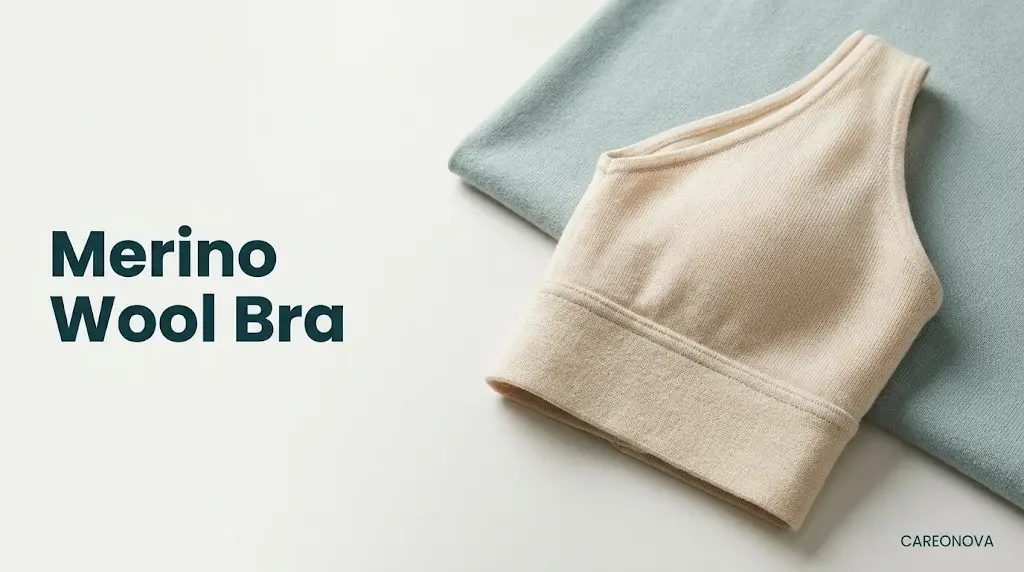
A merino wool bra is a soft, knitted bra made from ultrafine merino sheep wool, usually blended with nylon and elastane. People choose it because wool absorbs sweat vapor, balances body temperature, and resists odor across multiple wears. Still, it is not magic. Most merino bras offer light-to-medium support rather than firm compression, and they need gentle laundry care to keep their shape.
- Blends outperform 100% wool for fit: Most merino bras combine 80%–85% ultrafine wool with nylon and elastane so the band recovers its shape and resists friction holes.
- Great with vapor, slower when drenched: Merino absorbs moisture vapor and resists multi-day odor, but dries slower than thin polyester once soaked in heavy cardio sweat.
- Light-to-medium support ceiling: Soft wool knits excel for travel, daily wear, yoga, and hiking, but rarely match synthetic sports bras for high-impact running or fuller busts.
- Gentle care protects both fibers: Wash cool with a protease-free wool wash and dry flat—enzymes weaken wool keratin, while dryer heat destroys the elastane band.
What Is a Merino Wool Bra?
Most people hear the word "wool" and picture a thick, scratchy winter sweater. Merino underwear feels completely different because mills spin it from much thinner natural fibers. That fine structure lets the knit sit right against sensitive chest skin.
Why Fine Merino Feels Soft Against Skin
Wool comfort depends on fiber width, measured in microns (one-millionth of a meter). According to sensitive-skin research from The Woolmark Company, prickle usually happens when coarse fibers wider than 30 to 32 microns poke the skin. That scratchy feeling is physical irritation, not a true wool allergy for most people.
Base-layer merino wool measures under 19.5 microns. Ultrafine merino under 18.5 microns bends softly on contact instead of poking back. Even so, no wool bra feels itch-free for everyone. Commercial scouring removes almost all natural lanolin from finished garments, so true lanolin reactions are rare; when irritation does occur, it more often comes from coarser fiber ends, dye finishes, detergent buildup, or tight seams and elastic.
Why Most Merino Bras Are Not 100% Wool
Many shoppers look for a 100% merino wool bra to avoid synthetic fibers completely. Because of that, online reviews often complain when a bra tag reads 80% to 85% wool. That blend is actually smart textile engineering, not a shortcut.
Pure merino wool lacks strong elastic memory. Under daily band tension, 100% wool stretches out quickly and wears thin where straps rub against your skin. To solve this, makers either spin fine merino around a thin nylon filament (core-spun yarn) or knit merino over a hidden nylon-and-elastane frame (plated knit). Soft wool still sits next to your skin, while the hidden synthetic core keeps the bra from bagging out.
- Merino-nylon-elastane blends (80%–85% merino, 10%–15% nylon, 3%–5% elastane): Hold band shape better, resist friction holes, and handle daily movement and travel well.
- 100% pure merino: Appeals to plastic-free shoppers and feels soft for loose lounging or cold-weather layering, but relaxes faster and needs heavier fabric to last.

How Merino Bras Handle Sweat, Heat, and Odor
Wool marketing often promises a bra that stays bone-dry and fresh forever. Real fiber physics tell a more useful story. Understanding the difference between sweat vapor and liquid sweat helps you know what to expect.
Moisture Vapor vs. Heavy Sweat
Wool is a hygroscopic fiber, meaning its inner core pulls sweat vapor out of the air near your skin. Wool textile research shows the fiber can absorb up to 35% of its own dry weight in water vapor before feeling damp. As a result, a merino wool bra cuts down that sticky, clammy chill during walks, travel days, or cool-weather hikes.
Heavy cardio works differently. Once liquid sweat drenches the knit, water lingers inside the fiber core longer than it does on thin polyester. It still feels warmer than wet cotton, but it will not flash-dry on a humid summer run.
Also watch for the Synthetic Underband Trap. Many merino bras use a nylon or polyester elastic band along the ribcage for stretch. That synthetic band traps liquid sweat right under your bust, so dampness or redness there often comes from the elastic—not the wool cups.
In steady daily wear or cool hikes, merino buffers sweat vapor inside its fiber core before droplets form on your skin, preventing chilly clamminess. During intense cardio, however, pooled liquid sweat saturates the core and evaporates slower than on smooth synthetic activewear.
Summer Wear and Multi-Day Odor Control
You can wear a merino bra in summer if you pick the right fabric weight. Textile makers measure knit weight in GSM (grams per square meter). A lightweight 150 GSM single-layer knit breathes well in July heat, while a double-layer 200+ GSM style traps noticeably more warmth.
Odor resistance is where merino truly stands out. The fiber does not "kill bacteria" like a disinfectant. Instead, it keeps the skin surface drier so odor-causing bacteria grow slower, and sulfur-rich keratin proteins inside the yarn lock away odor molecules until you wash the garment. In controlled fabric testing cited by The Woolmark Company, wool textiles retained 66% less body-odor intensity than polyester and 28% less than cotton—though real-world bra freshness still depends on whether the underband and cup pads are synthetic.
Support, Fit, and Padding Limits
A merino wool bra can replace your everyday bralette and handle trail days with ease. However, soft natural knits stretch more under bounce than engineered synthetic activewear. Knowing those limits up front saves you from buying the wrong style.
Everyday Wear, Sports, and Fuller Busts
Unlike more structured bra styles built with rigid cups or molded bands, seamless pull-on bralettes shine for daily comfort, one-bag travel, lounging, yoga, walking, and hiking. Cut-and-sew merino sports bras with racerbacks and wider bands add stability for moderate movement. Still, most wool sports bras top out at low-to-medium impact.
If you run or wear a D+ cup, manage your expectations carefully. Many brands sell "busty" merino bralettes with wider straps and taller front panels. Those details improve coverage and comfort, but they still rely on stretchy knit fabric rather than firm bounce-control engineering. For high-impact workouts, only hybrid styles with built-in synthetic support panels come close to a true running bra.
Plus-size wearers should also watch band width and sizing availability. Narrow knit underbands tend to roll on curvier torsos, and extended cup-and-band sizing remains limited across most merino brands. Check two small wardrobe details as well: high-coverage busty styles often peek above V-neck shirts, and even "seamless" knit bralettes sometimes leave a faint top-edge line under thin, tight T-shirts.
| Bra Construction | Support Ceiling | Best Activities |
|---|---|---|
| Seamless pull-on bralette | Light support | Daily wear, travel, lounging, walking, yoga |
| Wide-strap double-layer ("busty" cut) | Light to moderate containment | Everyday fuller-bust wear, hot yoga, hiking, layering |
| Cut-and-sew merino racerback | Moderate support | Day hikes, backpacking, cycling, studio workouts |
| Hybrid merino with synthetic panels | Medium to high support | Trail running, gym cardio, higher-bounce workouts |
Modesty and the Foam Pad Trade-Off
Most merino bras come unlined, which leaves shoppers worried about nipple show-through under fitted tops. Adding standard padding creates what textile pros call the Foam Pad Paradox. Removable polyurethane foam cups block airflow, soak up sweat, hold gym odor, and twist inside the wash—undoing the main reasons you bought wool.
Compare the four common modesty setups before choosing:
- Unlined single-layer knit: Coolest and fastest to dry, with minimal nipple concealment under thin shirts.
- Double-layer merino front: Adds modest smoothing and gentle hold using only breathable wool, though it feels slightly warmer in peak summer.
- Removable foam pads: Give the smoothest T-shirt shape, but trap heat and require separate washing so odors do not linger.
- Non-PUL merino wool inserts: Washable wool pads (without waterproof plastic backing) breathe far better than foam and resist smell, though any extra layer still adds slight warmth on hot days.
Clasps, Underwires, and Nursing Fit
Pull-on merino bras feel sleek, but a hook-and-eye clasp brings two real advantages. It saves you from wrestling a damp bra over your head, and it lets you tighten the band one notch as the elastane relaxes over time. True underwire or push-up merino bras stay rare because shoppers buy soft wool knits for flexible comfort rather than rigid shaping.
Ultrafine seamless merino also works well as a nursing bra or sensory-friendly option. The soft knit buffers dampness from small milk leaks and reduces chafing on tender skin. Just keep in mind that frequent washing from daily leaks wears out plastic nursing clips and delicate wool blends faster than light everyday use.
Merino Wool vs. Cotton, Synthetic, and Bamboo Bras
No single bra fabric wins every situation. Comparing merino side by side against cotton, synthetic activewear, and bamboo or lyocell helps you pick the right drawer staple for each day.
| Fabric | Odor & Moisture | Support & Bounce | Drying & Care |
|---|---|---|---|
| Merino Blend | High odor control; warm with vapor, heavier if soaked | Low to medium (daily, travel, hiking) | Moderate dry; enzyme-free cool wash, dry flat |
| Cotton | Moderate odor control; feels cold and heavy when wet | Low (stretches easily when damp) | Slow dry; tolerates easy regular washing |
| Synthetic (Nylon/Poly) | Traps odor fast; wicks liquid sweat, cool when damp | High (best compression and bounce hold) | Fastest dry; air-dry to protect elastic |
| Bamboo / Lyocell | Moderate odor control; cool and silky, clings if wet | Low to light (soft everyday drape) | Slow to moderate dry; gentle wash, air-dry |
Which fabric fits your routine best?
- Pick merino wool for travel, multi-day wear, cool-weather layering, hiking, and odor control without plastic stink.
- Pick cotton or bamboo/lyocell for budget-friendly daily wear, easy hot washing (cotton), or a cool, silky feel in humid summers (lyocell).
- Pick nylon/polyester synthetics for high-impact running, fuller-bust bounce control, and fast drying during drenched workouts.
Merino bras also cost noticeably more upfront than basic cotton or synthetic styles. That higher price pays off when you value multi-day travel wear and fewer washes, not if you mainly need firm compression for daily running.
What to Check on a Merino Bra Label
You do not need brand hype to spot a well-made bra. Spend 30 seconds scanning the product page or hangtag for five concrete details:
- Micron rating: Look for 17.5 to 18.5 microns for sensitive chest skin; skip coarse blends if the brand hides its fiber fineness.
- Fabric weight (GSM): Choose around 150 GSM for summer heat and layering, or 200+ GSM (or double-layer fronts) for warmth and extra modesty.
- Fiber blend: Aim for roughly 80% to 85% merino paired with nylon and 3% to 5% elastane if you want lasting band recovery.
- Underband construction: Check whether soft merino wraps the elastic band or bare synthetic elastic sits directly against your ribs.
- Wool certifications: Labels like ZQ Merino or the Responsible Wool Standard (RWS) verify animal welfare and farm traceability—they are ethical standards, not durability grades.
How to Wash and Protect a Merino Wool Bra
Casual online advice often claims you can toss a merino wool bra into any regular wash and dryer cycle without trouble. It may survive a few rounds, but harsh laundry habits quietly destroy the elastic long before the wool looks worn. Always check your garment's sewn-in care symbols first, and keep basic rules for washing different fabrics in mind when sorting delicates.
How Often to Wash It
For everyday wear or travel, you can usually wear a merino bra two to four times between washes. Hang it or lay it flat in open air for 24 hours between uses so trapped sweat vapor evaporates and the knit recovers its shape.
Still, do not push airing too far. Wash the bra right away after heavy salty sweat, sunscreen, or heavy deodorant use. Even if the wool smells fresh, dried body salts stiffen the elastic band, and unwashed skin oils attract clothes moths.
Safe Washing and Drying Steps
Follow these five steps to protect both the keratin wool fibers and the stretchy elastane band:
- Prep the bra first: Pull out removable foam pads to wash separately, and fasten any hook-and-eye clasps so metal hooks cannot snag the knit.
- Choose an enzyme-free detergent: Use a mild, pH-neutral wool wash free of protease enzymes. Many standard enzyme laundry detergents use protease to digest protein stains, so check the ingredient label—protease slowly eats away at wool keratin fibers. Never use chlorine or oxygen bleach on wool.
- Wash cool and gently: Slip the bra into a mesh lingerie bag. Wash in a cool water temperature (up to 86°F / 30°C) on a gentle or wool cycle—or hand wash lightly without rubbing—and skip fabric softener. Hot water and rough agitation cause felting, which locks wool scales together and permanently shrinks and stiffens the knit.
- Press water out with a towel: Never wring or twist wet wool. Instead, roll the bra inside a clean dry towel and press gently to lift out excess water.
- Dry flat away from heat: Reshape the cups and lay the bra flat on a dry towel or rack. Never hang it by wet straps or toss it into a hot tumble dryer.
Protease enzymes in many everyday detergents break down wool keratin fibers, causing thinning and tiny pinholes over time. Tumble dryer heat weakens the elastane yarns inside the band, leaving your bra stretched out long before the wool wears through.
Troubleshooting Common Problems and Storage
When a merino bra fails early, the cause almost always traces back to heat, friction, or detergent chemistry:
- Stretched-out band: Usually caused by dryer heat breaking down elastane fibers or hanging a heavy wet bra by its straps.
- Tiny pinholes: Commonly caused by protease detergents thinning the yarn over time, sharp zippers or unfastened clasps snagging the knit, or clothes moth larvae.
- Sudden scratchiness: Often triggered by alkaline detergent buildup or rough agitation raising microscopic scales on the wool fibers.
- Safe off-season storage: Wash the bra completely clean before storing wool off-season, since moth larvae target unwashed sweat and skin oils. Keep it dry inside a breathable cotton bag or drawer—never sealed plastic—and use natural cedar as a mild deterrent rather than a cure for an active infestation.
A merino wool bra earns its price when you match it to the right job. Choose a fine, blended knit in the right weight for your climate, stay realistic about impact support and padding, and wash it cool without enzymes or dryer heat. Treated well, a single versatile bra can handle years of travel, daily wear, and trail days with far less laundry.
