

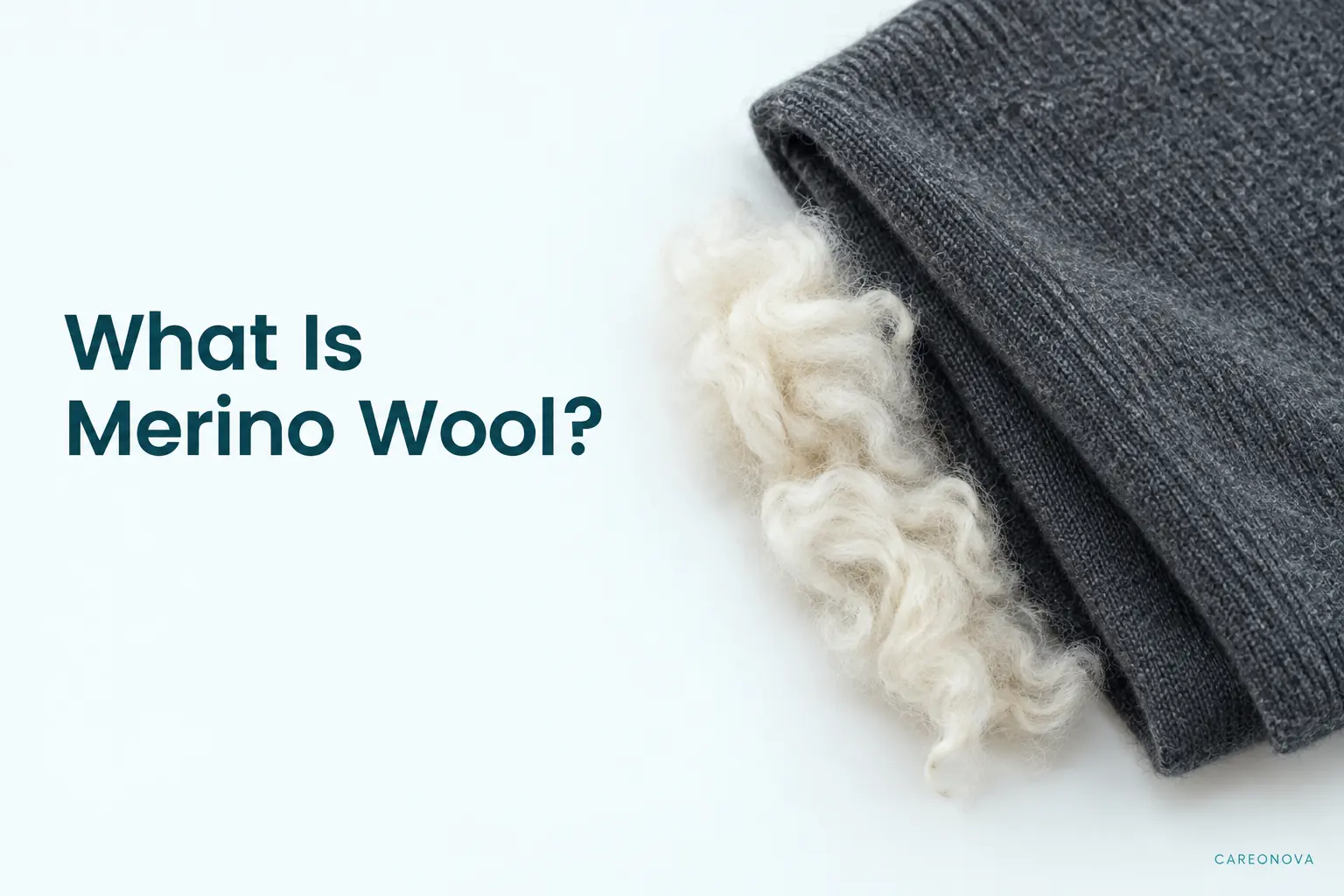
When buyers ask what is merino wool, they are looking for the difference between a premium base layer and a standard sweater. Merino wool is a natural protein fiber sheared from Merino sheep, known for its fine fiber diameter, natural elasticity, and vapor-wicking capabilities. It is 100% natural keratin protein. It contains no synthetic materials or chemical blends. The fiber provides high odor control and temperature management compared to cotton or polyester. These performance benefits come with higher production costs and specific laundering needs.
Key takeaways
- Merino wool is a natural protein fiber from Merino sheep.
- It measures 15 to 22 microns thick, which allows it to bend against the skin instead of itching.
- It naturally regulates body temperature and traps odor-causing bacteria.
- 100% merino tears under high friction, making nylon blends a better choice for activewear.
Where merino wool comes from: the sheep and the fleece
The Merino breed adapted over centuries to survive both high-altitude cold and arid heat. Spanish breeders developed the sheep in the 12th century. Modern commercial supply originates primarily in Australia and New Zealand.
The sheep produce a heavy, dense fleece containing high concentrations of lanolin, a protective natural wax. This lanolin repels exterior water and dirt while the fleece is on the animal. Textile mills wash the wax out during the commercial scouring process before spinning the yarn.
The softness equation: why merino does not itch
A single micron equals 1 one-thousandth of a millimeter. Coarse fibers thicker than 25 microns resist pressure and prick surface nerves on human skin, causing itching and irritation.
Human hair measures 60 to 100 microns thick. Many traditional coarse wools measure 30 to 40 microns, while merino wool measures between 15 and 22 microns. These fine merino fibers bend flat against the skin under contact. This mechanical deflection eliminates the prickle effect common in thick wool garments. For older or coarser items, specific conditioning methods explain how to stop wool from itching.

Pros and cons of merino wool
Pros:
- Does not itch or prick the skin
- Resists odor for multiple days of wear
- Cools the body in summer and traps heat in winter
- Self-extinguishes if exposed to fire
Cons:
- Expensive to produce and buy
- Prone to tearing and pilling under heavy friction
- Shrinks permanently if washed in hot water or machine dried
The merino wool grading system
The textile industry grades merino wool based on exact fiber diameter. Brands often print these classifications on garment tags to justify premium prices.
- Ultrafine (Under 15.5 microns): The rarest and most expensive grade. Manufacturers use it for luxury knitwear and high-end next-to-skin garments.
- Superfine (15.6 to 18.5 microns): The standard for premium performance base layers. It provides maximum comfort with moderate durability.
- Fine (18.6 to 19.5 microns): The most common grade for high-quality outdoor clothing. It balances next-to-skin comfort with better tear resistance.
- Medium (19.6 to 22.9 microns): Used for heavier mid-layers, sweaters, and socks where fabric structure matters more than total softness.
- Strong (23+ microns): Reserved for heavy outerwear, durable blankets, and rugs.
How merino wool regulates temperature in hot and cold weather
Cold weather insulation: crimp and dead air space
Merino fibers contain up to 40 natural waves per inch. This physical structure is called crimp. Crimp creates millions of microscopic dead-air pockets inside the knit, which trap radiant body heat and slow heat transfer in freezing environments.
Hot weather cooling: moisture vapor management
The fiber is hygroscopic. Its hydrophilic interior absorbs up to 30% of its weight in perspiration vapor before the fabric feels damp to the touch, and then releases this vapor into the external environment through evaporative cooling. This cycle stabilizes the skin microclimate in high heat. The hydrophobic exterior scales shed light drizzle. The fabric will eventually soak through in continuous rainfall.
The science of odor resistance: keratin and bacteria
Natural keratin protein chains absorb volatile fatty acids from sweat and chemically bind them within the fiber core. By moving sweat away as vapor, the fabric deprives skin bacteria of the liquid moisture they need to feed and multiply.
Polyester fibers attract body oils and lock in odor-causing bacteria. Merino releases its bound odor molecules only when submerged in water during washing.
Natural safety traits: fire resistance and UV protection
Merino requires a high oxygen environment to burn, featuring a Limiting Oxygen Index of 25% and an ignition threshold near 570°C. The fabric chars and self-extinguishes upon flame contact, meaning it does not melt or drip onto the skin. The dense cellular structure absorbs ultraviolet radiation. Unbleached merino provides natural UPF ratings between 30 and 50+.
The physical limitations of merino wool
Friction, pilling, and tensile weakness
Fine 17-micron fibers break under continuous mechanical friction. Backpack straps, bicycle saddles, and inner-thigh rubbing wear through pure merino quickly. Broken fiber ends twist together on these high-friction zones and form small surface pills.
Saturation drying speed and shrinkage risks
Wool retains moisture longer than polyester when fully submerged or soaked by heavy rain. Heat and machine agitation lock the microscopic fiber scales together, permanently reducing the garment size. You can prevent this irreversible damage if you know how to wash a wool sweater properly. Wet wool hung on a hanger permanently stretches out under the weight of the water.
Why brands blend merino with nylon, Tencel, and elastane
Manufacturers blend merino wool with other fibers to alter its physical performance. 100% merino works for low-friction use, but specific blends target different climates and activities.
Core-spun nylon for durability
Textile mills spin a continuous synthetic filament and wrap raw merino fibers around it to create a core-spun yarn. The core is usually 10% to 15% nylon. The skin touches only pure merino for softness and odor absorption, while the inner nylon filament provides tensile and tear strength. Choose core-spun blends for hiking socks, running shorts, and travel trousers.

Merino and Tencel for hot weather
Tencel (lyocell) is a wood-pulp fiber that feels cool to the touch. Blending 50% merino with 50% Tencel creates a fabric that dries faster than pure wool. This blend feels cooler in humid summer climates while retaining moderate odor resistance.
Merino and elastane for shape retention
Pure merino has natural mechanical stretch but poor elastic recovery. Adding 2% to 5% elastane (spandex) prevents bagging in the knees and elbows of form-fitting base layers.
Merino and polyester for budget activewear
Budget brands mix merino with bulk polyester to lower costs. A 50/50 blend increases durability and dry time, but it severely reduces the fabric’s ability to resist odor.
Fabric weight guide: choosing the right GSM
Grams per square meter (GSM) measures the mass and density of knit fabric. Matching the wrong GSM to your activity causes severe overheating or inadequate insulation.
| Fabric weight (GSM) | Classification | Temperature range | Primary garments and activities |
|---|---|---|---|
| 120 to 150 GSM | Ultralight | Best for 18°C to 30°C (64°F to 86°F) | Summer running t-shirts, hot-weather hiking tops, underwear |
| 160 to 200 GSM | Lightweight | Best for 5°C to 18°C (41°F to 64°F) | Three-season base layers, travel shirts, light everyday long sleeves |
| 240 to 280 GSM | Midweight to Heavyweight | Best for -10°C to 5°C (14°F to 41°F) | Cold-weather ski thermals, winter running tights, heavy active layers |
| 300+ GSM | Outerwear | Best for Below -10°C (Below 14°F) | Heavy mid-layer hoodies, expedition garments, winter coats |
Real-world layering scenarios
Matching the GSM to the environment prevents sweat accumulation and cold exposure.
- Summer trail running: Choose a 120 GSM to 150 GSM t-shirt blended with Tencel. This weight maximizes moisture evaporation and prevents overheating in direct sun.
- Multi-day travel: Choose a 150 GSM to 200 GSM 100% merino long-sleeve shirt. This weight handles air-conditioned airplanes and warm city streets while resisting odor for a full week of wear.
- Winter skiing: Choose a 250 GSM base layer worn under a waterproof shell. The heavier weight traps radiant heat during static chairlift rides and wicks sweat during active downhill runs.

Merino wool compared to traditional wool, cotton, and polyester
Every fabric has specific physical limits. Base your purchase on dry time, odor retention, and friction resistance.
| Property | Merino wool | Traditional wool | Cotton | Polyester | Cashmere |
|---|---|---|---|---|---|
| Fiber diameter | 15 to 22 microns | 30 to 45 microns | 15 to 20 microns | Synthetic continuous | 14 to 19 microns |
| Skin comfort | Soft; does not itch | Prickly and abrasive | Soft and smooth | Smooth to slick | Exceptionally soft |
| Odor resistance | High (multiple days) | High (multiple days) | Low (retains sweat) | Very low (bacterial buildup) | Moderate to high |
| Saturation dry time | Moderate | Slow | Very slow | Very fast | Slow |
| Abrasion durability | Low to moderate | Very high | Moderate | Exceptionally high | Very low |
| Flame behavior | Self-extinguishes | Self-extinguishes | Burns rapidly | Melts and drips | Self-extinguishes |
Environmental impact and biodegradability
Merino wool is a renewable resource. A single sheep produces a new fleece every year.
The natural fiber is completely biodegradable. When buried in soil, natural keratin proteins break down in 3 to 4 months. The decomposition process releases nitrogen, sulfur, and magnesium back into the earth, acting as a slow-release fertilizer.
Synthetic fabrics like polyester and nylon take hundreds of years to degrade in landfills. They also shed microplastics into the water supply during machine washing. Untreated merino wool sheds organic material that naturally dissolves in marine environments.
Why merino wool costs more than standard fabrics
Harvesting and processing animal fibers requires intense manual labor and specialized machinery.
Shearers harvest the fleece by hand. A skilled shearer processes one sheep at a time, creating significant manual labor costs compared to automated synthetic extrusion.
A Merino sheep produces 4 to 5 kg of raw fleece per year. This raw fleece contains heavy amounts of dirt, burrs, and grease. The commercial scouring process washes these contaminants away. A 5 kg raw fleece often yields only 2.5 kg of usable fiber.
Textile mills then comb the scoured wool. They separate the long, fine fibers from the short, coarse hairs. Discarding the coarse fibers reduces the total yield a second time. Spinning fragile 17-micron fibers into stable weaving yarns requires specialized machinery and runs much slower than standard textile manufacturing. The combination of low yield and slow processing drives the final retail price.
Ethical sourcing: finding mulesing-free wool
Some farmers surgically remove skin strips from sheep breeches to prevent blowfly flystrike. This process is called mulesing. It is often performed without anesthesia.
Buyers can check garment tags for specific animal welfare certifications. The Responsible Wool Standard (RWS) is an international voluntary standard managed by Textile Exchange. It audits farms to verify mulesing-free animal welfare, sustainable grazing practices, and supply chain tracking. Over 4,500 businesses globally are certified to the RWS. ZQ Merino is managed by The New Zealand Merino Company. It is a New Zealand certification requiring verified animal welfare, land sustainability, and living-wage worker practices.
Checklist: what to look for on the tag
- Activity match: Check the GSM (150 for summer, 250 for winter).
- Durability: Look for “core-spun” or a 10% to 15% nylon blend if buying socks or hiking gear.
- Ethics: Look for the Responsible Wool Standard (RWS) or ZQ Merino logo to ensure mulesing-free sourcing.
How to care for merino wool garments
Washing rules
Do: Wash inside out in cold water (30°C or colder) on a gentle cycle.
Do: Use a mild, enzyme-free detergent.
Do: Lay flat on a clean towel to dry.
Do Not: Use heat or a tumble dryer. Hot dryers cause irreversible felting shrinkage.
Do Not: Hang wet garments on a hanger. The weight of the water will stretch the knit.
Do Not: Use standard laundry detergents containing protease enzymes. They chemically digest wool proteins.
Follow the complete steps on how to wash merino wool to prevent permanent damage.
Final thoughts
Merino wool bridges the gap between natural comfort and technical performance. Its unique micron structure and vapor-wicking core explain why it outranks cotton and standard synthetics for travel and outdoor wear.
While the upfront cost is high and the fabric requires careful laundering, proper selection solves these drawbacks. Matching the right GSM weight and choosing core-spun nylon blends ensures your garments last for years of active use.
