


THE COMPLETE GUIDE
How to Measure Your Bra Size Correctly
A clear bra measurement starts with a level tape, consistent positioning, and relaxed posture. Follow these steps to measure your bust and underbust, understand the results, and assess how a bra fits.
How to measure your bust and underbust
Use a soft, flexible tape measure and take your readings in a relaxed position. The tape should lie flat against your body, stay parallel to the floor, and follow the same path around your back and front. Measure directly on the body or over a thin, unpadded layer.
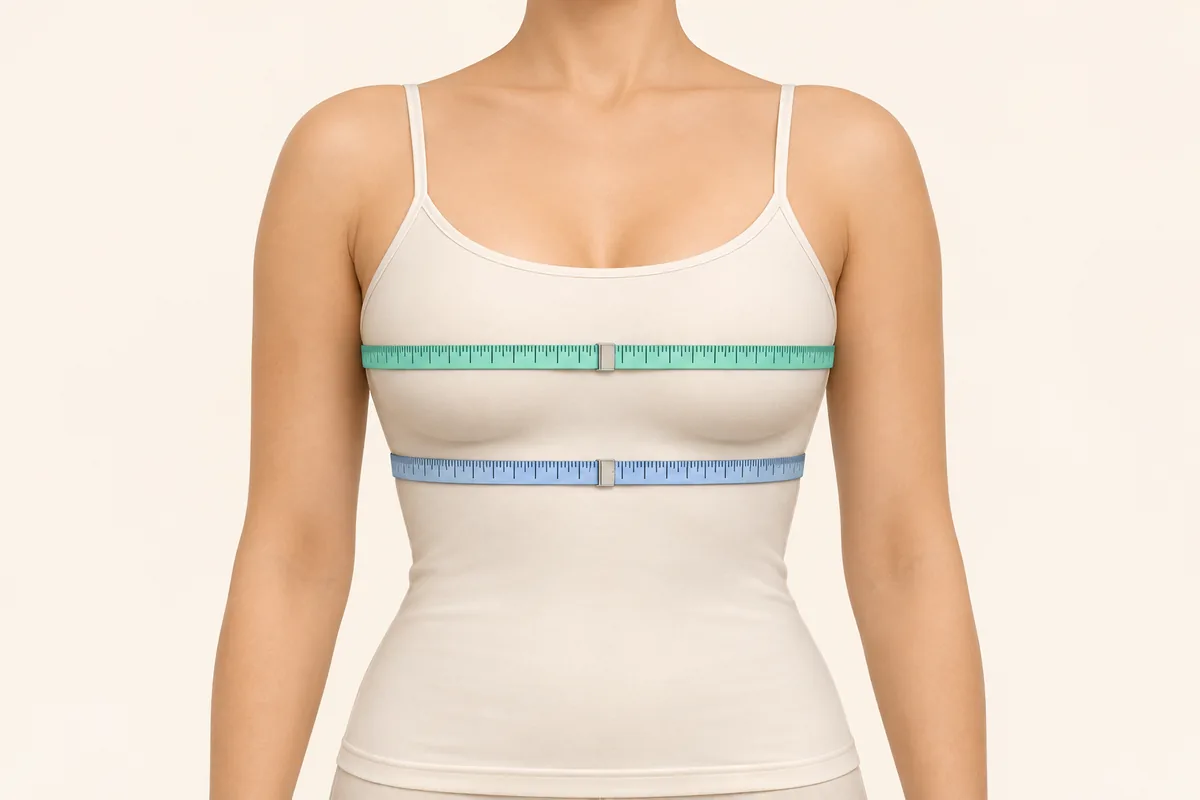
1. Measure your snug underbust
Place the tape directly beneath your breasts, where the lower edge of a bra band normally sits. Keep it level around your rib cage and pull it comfortably firm. It should touch your body without digging into your skin or making breathing uncomfortable.
Record the measurement before rounding. For the Advanced calculator, take loose, snug, and tight readings separately, using the same tape position.
2. Measure your standing bust
Wrap the tape around the fullest part of your bust while standing naturally. Keep it parallel to the floor across your back. It should rest against the body without flattening or squeezing breast tissue.
Let your arms rest naturally while checking the tape position. A mirror can help you confirm that the tape is level all the way around.
3. Repeat any uncertain reading
Repeat a measurement if the tape slips, twists, or feels uneven. Small differences can occur because of breathing, posture, tape tension, and reading precision. Keep your breathing natural and use the same measuring path each time.
Quick vs. Advanced bra measurement calculator
Quick mode uses two measurements: snug underbust and standing bust. It provides a straightforward comparison between the two circumferences.
Advanced mode records six measurements. It adds loose and tight underbust readings to show the tape-tension range, then adds leaning and lying bust readings to show how posture changes the bust circumference.
| Measurement | How to take it | What it helps review |
|---|---|---|
| Loose underbust | Tape rests gently below the breasts. | Relaxed circumference. |
| Snug underbust | Tape is firm but comfortable. | Consistent reference measurement. |
| Tight underbust | Firmest comfortable tape tension. | Underbust tension range. |
| Standing bust | Stand naturally; measure the fullest point. | Upright bust circumference. |
| Leaning bust | Lean forward comfortably. | Posture-related difference. |
| Lying bust | Lie comfortably on your back. | Posture-related difference. |
For Advanced underbust readings, the expected order is loose ≥ snug ≥ tight. If the order is reversed, check that the tape stayed in the same position and that each reading used the intended tension.
Standing, leaning, and lying bust measurements can differ because breast tissue shifts with posture and gravity. A difference does not automatically mean that one reading is wrong.
How to understand your bra measurements
The basic numerical comparison is the bust circumference minus the underbust circumference. Both values must use the same unit.
This difference is a measurement, not a cup letter by itself. A cup-letter result depends on the sizing method and its defined intervals. Likewise, an underbust measurement is not automatically the labeled band number.
Inches and centimeters
Careonova supports both inches and centimeters. The conversion is exact: 1 inch = 2.54 centimeters. Multiply inches by 2.54 to convert to centimeters; divide centimeters by 2.54 to convert to inches.
Why can posture change bust measurements?
Breast tissue moves with posture and gravity. A leaning measurement may differ from a standing measurement, while a lying measurement may differ again. The Advanced profile keeps these readings separate so you can see the variation rather than assuming they should match.
What do mean and median show?
The mean is the average of the standing, leaning, and lying bust readings. The median is the middle value after those three readings are ordered. They are useful summaries for reviewing the measurements, but neither should be treated as a universal sizing formula.
How to check whether a bra fits
Body measurements are a starting point, but they cannot confirm how a particular bra will fit. Bra shape, wire placement, cup depth, band elasticity, fabric recovery, and garment construction all affect comfort and support.
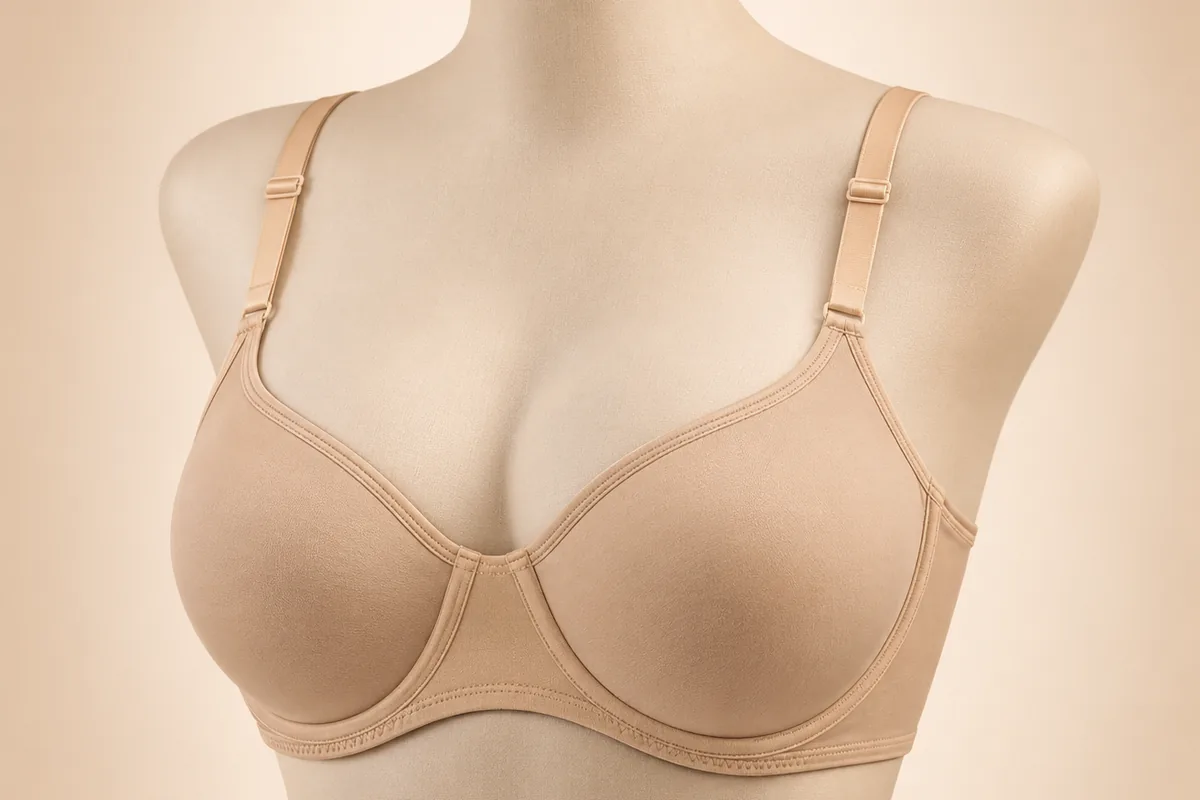
Band
The band should sit level around the torso without riding up or creating painful pressure.
Cups
Look for overflow, persistent gaps, wrinkling, or pressure along the cup edge.
Center front
For many underwire styles, check whether the center section sits close to the sternum.
Underwire
Where present, the wire should follow the breast root rather than resting on breast tissue.
Straps
Straps should stay in place without digging into the shoulders.
Movement
Raise your arms, sit, stand, and walk to see whether the bra shifts or becomes uncomfortable.
Check the fit while moving as well as when standing still. If a problem persists, consider both size and shape rather than assuming that changing the size alone will solve it.
Why bra sizes can vary between brands
US and UK labels share the idea of a band number and cup letter, but their cup-letter sequences and labeling conventions are not always identical. Some manufacturers also use their own charts and fit allowances.
Do not assume that a label in one country converts directly to the same letter in another. When shopping, check the size chart for the specific brand and garment. The same label can also feel different because cup shape, wire width, fabric stretch, and construction vary.
Why fabric stretch and construction matter
Two bras with similar labels can feel different because fabric and garment construction affect how the bra moves and recovers. Stretch is not the same as recovery: a fabric may extend under tension but fail to return toward its earlier dimensions.
Elastane (also called spandex) adds stretch and recovery to many fitted garments. Learn more in Careonova’s guide to spandex and elastane, or explore the fabric material guide for a broader look at textile properties.
Common bra measurement mistakes
- Measuring over thick clothing: use a thin layer or measure directly on the body.
- Letting the tape slope: check that it is horizontal across your back and front.
- Pulling too tightly: use the intended tension without causing discomfort.
- Holding your breath: breathe normally while measuring.
- Mixing units: enter every reading in the selected unit.
- Rounding too early: record the tape reading first.
- Expecting posture readings to match: standing, leaning, and lying readings can naturally differ.
Frequently asked questions
How do I calculate my bra size from measurements?
Measure your underbust and the fullest part of your bust. Their difference is one measurement used in cup-sizing systems, but converting it into a cup letter and band label requires a defined sizing method. Use the calculator to compare your measurements and check the garment-specific size chart when shopping.
What measurements do I need for a bra size calculator?
Quick mode uses snug underbust and standing bust. Advanced mode adds loose and tight underbust, plus leaning and lying bust measurements.
Can I use the calculator in centimeters?
Yes. Choose centimeters from the unit selector. If you change units after entering values, the calculator converts the existing measurements.
Why are my standing and leaning bust measurements different?
Breast tissue changes position with posture and gravity. Leaning forward can produce a different circumference from standing upright. Keep the tape level and use the same measuring path.
Is the bust-minus-underbust difference my cup size?
No. It is a raw measurement difference. A cup letter requires a defined sizing system and interval mapping; it should not be guessed from the difference alone.
Why does the same bra size fit differently between brands?
Brands can use different patterns, cup shapes, wire widths, fabrics, and grading rules. Check the brand’s garment-specific chart and assess the fit rather than relying only on the label.
How often should I measure?
Repeat measurements when your body measurements change, your bras stop fitting comfortably, or you notice a consistent change in fit. Use the same tape position and technique when comparing readings.