

Nylon fiber is one of the most common synthetic fibers used in clothing and everyday products. You may find it in activewear, swimwear, socks, jackets, bags, ropes, carpets, and sewing thread.
This material is strong, light, smooth, and quick-drying. However, many people do not know what it is made from or how it becomes fabric.
This guide explains what nylon fiber is, where it comes from, what its monomer is, how it becomes nylon thread or nylon cloth, and how to care for nylon clothes without damaging them.
Quick Answer
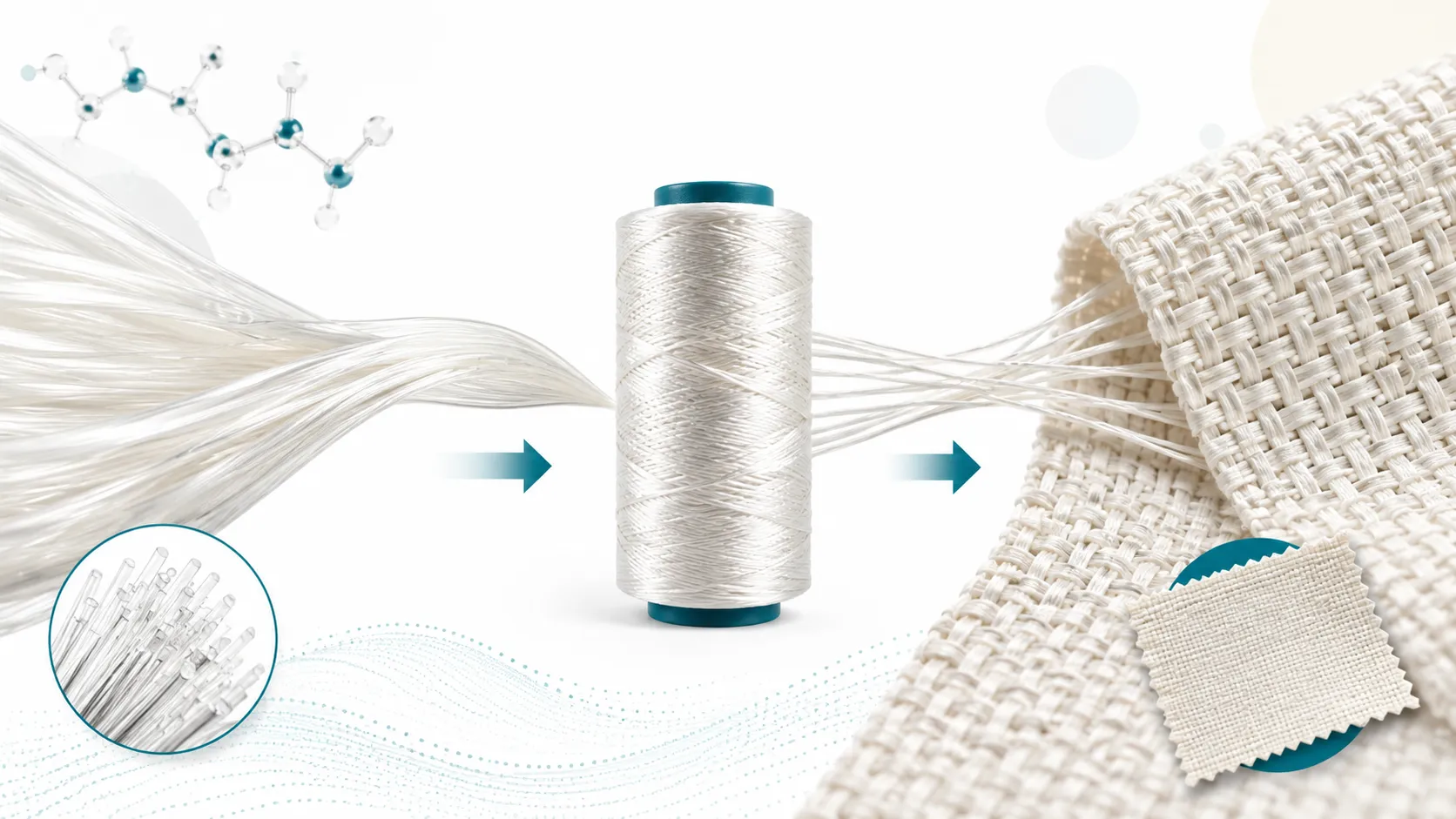
Nylon fiber is a synthetic polyamide fiber made from chemical building blocks called monomers. These monomers usually come from petroleum-based chemical feedstocks. They form polymer chains, which are melted and spun through spinnerets into fine filaments. These filaments can become nylon thread, yarn, fabric, or cloth.
Key Facts About Nylon Fiber
| Key Point | Simple Answer |
|---|---|
| Fiber type | Synthetic polyamide fiber |
| Main source | Petroleum-based chemical feedstocks |
| Nylon 6 monomer | Caprolactam |
| Nylon 6,6 monomers | Hexamethylenediamine and adipic acid |
| Common forms | Nylon thread, yarn, cloth, and fabric |
| Main care rule | Avoid excessive heat |
What Is Nylon Fiber Made From?
Nylon fiber is made from synthetic polymers called polyamides. A polymer is a long chain made from smaller chemical units. These smaller units are called monomers.
So, this fiber is not made from another fiber. It is made from chemical monomers that join together to form nylon polymer.
This is important because many people ask, “what fibre is nylon made from?” The correct answer is:
Nylon is not made from a natural fibre. Nylon is made from chemical monomers that form a synthetic polyamide polymer.
After the polymer is made, it is melted and spun into thin strands. These strands become nylon fiber.
Because this material is made by chemical processing, it is called a synthetic fiber. Other synthetic fibers include polyester, acrylic, and spandex.
What Is the Source of Nylon Fiber?
The usual source of nylon fiber is petroleum-based chemical feedstocks. These raw materials often come from petroleum or crude oil.
If you are asking what is the source of nylon fibre, the simple answer is petroleum-based chemical feedstocks.
That does not mean the finished fabric is made directly from oil. First, crude oil is refined. Then chemical feedstocks are produced. These feedstocks are used to make nylon monomers. After that, the monomers are joined into nylon polymer.
So, the simple answer is:
The source of nylon fiber is usually petroleum-based chemical feedstocks.
This is why it is not classed as a natural fiber. Cotton comes from a plant. Wool comes from sheep. Silk comes from silkworms. Nylon comes from chemical processing.
Some newer types can use recycled or partly bio-based sources. However, most nylon used in clothing and textiles is still made from petroleum-based materials.
What Is the Monomer of Nylon Fiber?
The monomer of nylon fiber depends on the type.
There is not only one kind of nylon. The two most common types are Nylon 6 and Nylon 6,6, also written as Nylon 66.
Monomers of Common Nylon Types
| Nylon Type | Monomer or Monomers | Simple Meaning |
|---|---|---|
| Nylon 6 | Caprolactam | Made from one main monomer |
| Nylon 6,6 / Nylon 66 | Hexamethylenediamine + adipic acid | Made from two monomers |
| Nylon 11 | 11-aminoundecanoic acid | Less common in clothing; often linked to castor-oil-based feedstocks |
| Nylon 12 | Laurolactam or related C12 monomers | More common in technical uses |
Science Made Simple
Think of nylon like a chain. The monomers are the small links. When many links join together, they form a long polymer chain. That chain becomes nylon polymer. The polymer is then melted and spun into thin fibers.
For most readers, the two most important answers are:
- Nylon 6 is made from caprolactam.
- Nylon 6,6 is made from hexamethylenediamine and adipic acid.
A monomer is like a small link in a chain. When many monomers join together, they form a long polymer chain. That polymer chain becomes nylon.
So, when someone asks “what is the monomer of nylon fibre,” the best answer is:
Nylon 6 uses caprolactam. Nylon 6,6 uses hexamethylenediamine and adipic acid.
Nylon 6 vs Nylon 6,6
Nylon 6 and Nylon 6,6 are both synthetic polyamide fibers. They are similar, but they are not exactly the same.
They have different chemical building blocks. They also behave slightly differently in heat, strength, and use.
| Feature | Nylon 6 | Nylon 6,6 |
|---|---|---|
| Main building block | Caprolactam | Hexamethylenediamine + adipic acid |
| Fiber family | Polyamide | Polyamide |
| Common use | Apparel, yarn, molded parts | Strong textiles, carpets, industrial uses |
| Heat behavior | Lower melting point than Nylon 6,6 | Higher melting point than Nylon 6 |
| Care note | Avoid excessive heat | More heat-resistant, but still avoid strong dryer heat |
Nylon 6 is common in many textile and plastic uses. Nylon 6,6 is often used where more strength and heat resistance are needed.
However, both types are still synthetic fibers. Both should be protected from strong heat during washing, drying, and ironing.
How Is Nylon Fiber Made?
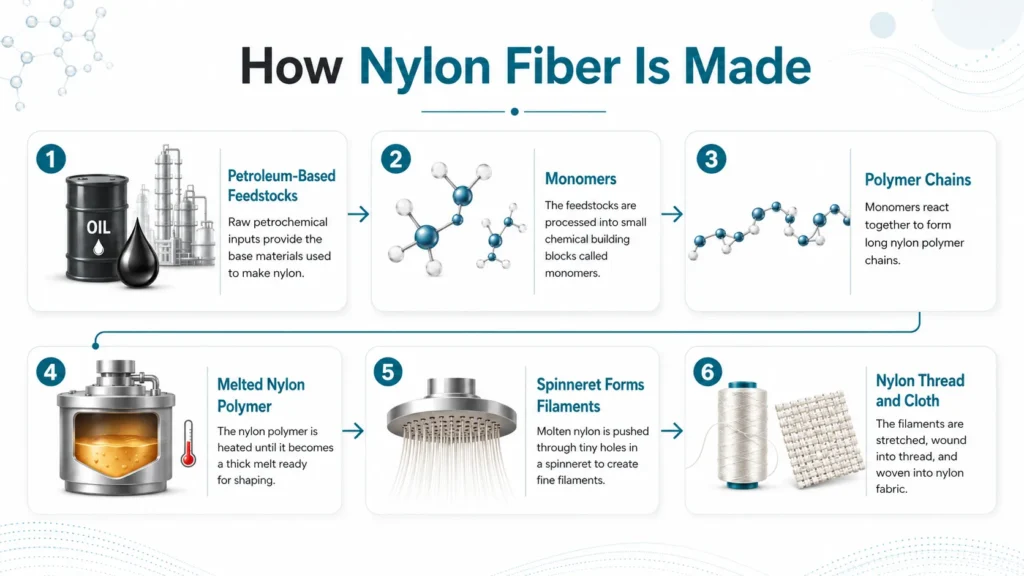
Nylon fiber is made through several steps. The process starts with chemical raw materials and ends with fine filaments.
Here is the process in simple steps:
- Petroleum-based raw materials are processed.
- Chemical monomers are produced.
- The monomers join together through polymerization.
- This forms long polyamide chains.
- The nylon polymer is melted.
- The melted polymer is pushed through spinnerets.
- Thin filaments come out.
- These filaments are cooled and stretched.
- The filaments become nylon fiber.
- The fiber can become nylon yarn, thread, fabric, or cloth.
A spinneret works like a showerhead with very tiny holes. The melted polymer passes through these holes and comes out as thin strands.
After that, the strands are stretched. This helps improve strength and shape. Then they can be twisted into yarn or thread.
Finally, the yarn can be woven or knitted into nylon cloth.
Nylon Fiber vs Nylon Thread vs Nylon Cloth
Many people use these words in the same way. However, they do not mean exactly the same thing.
| Term | Meaning |
|---|---|
| Nylon fiber | A fine synthetic filament made from nylon polymer |
| Nylon yarn | A continuous strand made from nylon filaments |
| Nylon thread | Nylon yarn or filament used for sewing, stitching, or weaving |
| Nylon cloth | Fabric made by weaving or knitting nylon yarn |
| Nylon fabric | A general textile material made from nylon fibers |

So, nylon fiber is the basic strand. Nylon thread is made from nylon fibers. Nylon cloth is made when yarn or thread is woven or knitted into fabric.
Also, “nylon clothe” is usually a spelling mistake. The correct word is nylon cloth if you mean fabric. Use nylon clothes if you mean garments.
Examples:
- This bag is made from nylon cloth.
- These nylon clothes dry quickly.
- This jacket uses strong nylon thread.
What Are the Properties of Nylon Fiber?
Nylon fiber has several useful properties. This is why it is used in clothing, bags, ropes, carpets, and many daily products.
It Is Strong
This synthetic fiber is known for strength. It can handle pulling, stretching, and daily wear better than many delicate fibers.
This is one reason it is used in ropes, bags, jackets, and outdoor gear.
It Is Lightweight
The material is strong but still light. This makes it useful for travel clothing, windbreakers, bags, tents, and activewear.
It Feels Smooth
Nylon usually has a smooth surface. This gives many fabrics a sleek feel. It also helps reduce friction in some clothing items.
It Has Good Elasticity
Nylon can stretch and recover better than many natural fibers. This makes it useful in socks, tights, swimwear, and sportswear blends.
It Dries Quickly
This fiber does not absorb water like cotton. As a result, it often dries faster after washing.
This is useful for swimwear, rain jackets, and activewear.
It Can Build Static
Because the fiber is synthetic, it can build static. Static may make clothing cling to the body.
Dry air and strong dryer heat can make this worse.
It Can Pill
The material is strong, but it can still pill when rubbed against rough surfaces. Pilling happens when tiny fiber balls form on the fabric surface.
Friction, rough washing, and mixed loads can increase pilling.
It Is Heat Sensitive
Nylon is a thermoplastic fiber. This means excessive heat can affect its shape and surface.
For this reason, nylon clothes should not be dried or ironed on strong heat unless the care label clearly allows it.
What Is Nylon Used For?
Nylon fiber has many uses. It is popular because it is strong, light, flexible, and quick-drying.
Clothing and Fashion
Nylon is often used in:
- activewear
- swimwear
- stockings
- tights
- socks
- jackets
- underwear blends
- windbreakers
- sports clothing
Nylon clothes are common because they are light, smooth, and durable. They can also stretch well when blended with spandex.
Home and Everyday Items
This fiber is also used in many household items, such as:
- bags
- umbrellas
- carpets
- upholstery
- toothbrush bristles
- luggage
- curtains
- cleaning brushes
It works well in these items because it can handle friction and regular use.For softer home textiles, you may also see textured fabrics like chenille fabric used in upholstery, throws, and cushions.
Technical and Industrial Uses
Nylon thread and nylon fiber are also used in stronger applications.
Examples include:
- ropes
- cords
- tents
- parachutes
- fishing lines
- nets
- machine parts
- tire cords
- industrial fabrics
These uses depend on nylon’s strength, flexibility, and abrasion resistance.
Is Nylon Natural or Synthetic?
It is not a natural fiber like:
- cotton
- wool
- silk
- linen
It is also not semi-synthetic like rayon. Rayon starts from plant cellulose, then goes through chemical processing. Nylon does not start as plant cellulose. It is made from chemical monomers.
So, the simple answer is:
Nylon is a fully synthetic fiber from the polyamide family.
This is why it behaves differently from cotton or wool in the wash. It absorbs less water, dries faster, and can react badly to excessive heat.
Nylon vs Polyester: What Is the Difference?
Nylon and polyester are both synthetic fibers. They are both used in clothing, bags, and home textiles. However, they are not the same.
| Feature | Nylon | Polyester |
|---|---|---|
| Fiber family | Polyamide | Polyester |
| Source | Usually petroleum-based | Usually petroleum-based |
| Feel | Smooth, strong, slightly stretchy | Smooth and shape-retaining |
| Water behavior | Absorbs slightly more moisture than polyester | More water-resistant |
| Common uses | Swimwear, stockings, ropes, bags | Shirts, fleece, sportswear, bedding |
| Care issue | Heat sensitivity, static, pilling | Odor retention, oily stains, static |
Nylon is often softer and stretchier. Polyester often holds shape well and resists moisture more strongly.
Both fibers can trap odor when used in tight activewear. Also, both can build static and may need gentle washing.
How Nylon Fiber Behaves in Clothes
Nylon behaves differently from natural fibers.
Cotton absorbs more water. Wool has a natural scale-like structure. Silk is delicate and protein-based. Nylon is synthetic, smooth, and low-absorbent.
Because of this, nylon clothes often dry quickly. They also feel light on the body.
However, this fabric can hold sweat odor when body oils, detergent residue, or bacteria stay on the surface. This is more common in tight activewear and synthetic blends.
Static can also build up in dry air or after hot tumble drying.
Friction is another issue. If the fabric rubs against rough garments, zippers, bags, or hard surfaces, it may pill or look worn.
So, this fiber is strong, but it still needs proper care. Good washing habits help protect the fabric surface.
How to Wash and Care for Nylon Clothes
Nylon is easy to wash, but it needs the right temperature, detergent amount, and drying method.
Always check the care label first. Some nylon clothes are blended with spandex, cotton, rayon, or other fibers. The blend can change how the garment should be washed.
Best Washing Temperature for Nylon
Use cool or warm water for most nylon clothes.
Cool water helps protect the fabric surface. It also reduces the risk of heat damage. Warm water can help remove sweat, body oil, and light residue.
Avoid hot water unless the care label says it is safe.
Hot water may affect shape, finish, or stretch. This is especially important for nylon blends.
Best Detergent for Nylon
Use a mild laundry detergent. Also, avoid using too much detergent.
Too much detergent can leave residue on nylon fabric. This residue may make clothes feel stiff or smell less fresh after washing.
For sweaty garments, wash them soon after wearing. Letting sweat dry deeply into the fabric can make odor harder to remove.
Use the correct dose of detergent based on load size and soil level. More detergent does not always mean cleaner clothes.

Can Nylon Go in the Dryer?
Some nylon clothes can go in the dryer on low heat. However, air drying is usually safer.
This fiber is heat sensitive. Strong dryer heat can damage the fiber, affect shape, or change the fabric surface.
Caution
Avoid high-temperature drying unless the care label clearly allows it. Nylon is a thermoplastic fiber, so excessive heat can affect the garment’s shape, texture, and surface finish.
If you use a dryer, choose low heat or air-dry mode. Remove the item while it is still slightly damp if needed.
Do not use high-temperature drying unless the care label clearly says it is allowed.
How to Reduce Static and Pilling
To reduce static and pilling, wash nylon clothes gently.
Try these steps:
- Turn nylon clothes inside out.
- Use a gentle cycle.
- Wash with similar fabrics.
- Avoid rough items like jeans, towels, or clothes with zippers.
- Do not overload the washer.
- Air dry when possible.
- Avoid strong dryer heat.
These steps reduce friction. Less friction means less pilling and better fabric appearance.
Care Label Translation for Nylon
If your label says nylon or polyamide, use a gentle care routine.
Wash in cool or warm water. Use mild detergent. Avoid strong dryer heat. Reduce friction by washing nylon items with similar fabrics.
This material is strong, but excessive heat and rough washing can affect its shape, texture, and surface finish over time.
If the garment is a blend, follow the safest care method for the most delicate fiber in the blend.
Common Mistakes With Nylon Fabric
Nylon is durable, but the wrong care routine can damage it.
Here are common mistakes to avoid.
Using Strong Dryer Heat
This is one of the biggest mistakes. The fabric can react badly to excessive heat. It may lose shape, texture, or smoothness.
Ironing Directly on High Heat
Do not iron nylon on a hot setting. If ironing is allowed, use low heat and a pressing cloth.
Washing With Rough Fabrics
Rough loads can increase pilling. Avoid washing nylon with towels, denim, or heavy garments.
Using Too Much Detergent
Too much detergent can leave residue. This can make clothes smell dull or feel coated.
Using Chlorine Bleach Without Checking the Label
Chlorine bleach can damage some fabrics and blends. Always check the care label first.
Ignoring Blends
Many nylon clothes are not 100% nylon. They may include spandex, rayon, cotton, or polyester. Always care for the most delicate fiber in the blend.
Is Nylon Sustainable?
Nylon has environmental concerns.
Most nylon is made from petroleum-based materials. Most conventional nylon is also not readily biodegradable under normal environmental conditions. In addition, fabrics made from this synthetic fiber can shed tiny particles during washing.
These tiny particles are often called microfibers. They can enter wastewater if not filtered.
However, the material is also durable. An item that lasts for years may create less waste than a weak item that wears out quickly.
Recycled nylon is another option. It can be made from pre-consumer waste, fabric scraps, or post-consumer sources. This may reduce the demand for new petroleum-based raw materials.
Still, recycled nylon does not solve every issue. Proper care is also important.
To reduce impact:
- buy better-quality garments
- wash only when needed
- use gentle cycles
- avoid high friction
- repair items when possible
- keep garments longer
- choose recycled nylon when suitable
A longer garment life is one of the simplest ways to reduce textile waste.
Quick Summary
Nylon fiber is a synthetic polyamide fiber. It is usually made from petroleum-based chemical feedstocks.
The monomer depends on the type. Nylon 6 is made from caprolactam. Nylon 6,6 is made from hexamethylenediamine and adipic acid.
Nylon fiber can become nylon thread, yarn, fabric, or cloth. It is strong, light, smooth, elastic, and quick-drying.
However, the material can build static, pill from friction, and react badly to excessive heat. For best care, wash nylon clothes in cool or warm water and avoid strong dryer heat.
FAQs About Nylon Fiber
What is nylon fiber?
Nylon fiber is a synthetic polyamide fiber. It is made from chemical monomers that join into long polymer chains. These chains are melted and formed into fine filaments. The filaments can become nylon thread, yarn, fabric, or cloth.
What is the source of nylon fiber?
The usual source of nylon fiber is petroleum-based chemical feedstocks. These feedstocks are processed into chemical monomers. Then the monomers are joined together to make nylon polymer.
What is the monomer of nylon fiber?
The monomer depends on the nylon type. Nylon 6 is made from caprolactam. Nylon 6,6 is made from hexamethylenediamine and adipic acid. These monomers form long polyamide chains.
What fiber is nylon made from?
Nylon is not made from another fiber. It is made from chemical monomers that form a synthetic polyamide polymer. That polymer is then turned into nylon fiber through melting, spinning, cooling, and stretching.
Is nylon natural or synthetic?
Nylon is synthetic. It is not natural like cotton, wool, silk, or linen. It is also not semi-synthetic like rayon. Nylon is made through chemical polymerization.
What is nylon thread?
Nylon thread is a strong thread made from nylon filaments or yarn. It is used for sewing, stitching, upholstery, bags, outdoor gear, and other items that need strength and flexibility.
What is nylon cloth?
Nylon cloth is fabric made from nylon yarn or thread. The yarn can be woven or knitted to create different fabric types. Nylon cloth is often used in jackets, bags, tents, swimwear, and activewear.
Is nylon good for clothing?
Yes, nylon can be good for clothing. It is strong, light, smooth, and quick-drying. It is common in swimwear, activewear, stockings, socks, and jackets. However, it should be protected from excessive heat.
Does nylon shrink?
Nylon is less likely to shrink like cotton, but strong heat can still affect its shape, surface, and fit. Blends may react differently, especially if they contain spandex, rayon, or cotton.
Can nylon clothes go in the dryer?
Some nylon clothes can go in the dryer on low heat. However, air drying is safer. Avoid strong heat because nylon is a thermoplastic fiber and can be damaged by high-temperature drying.
Is nylon the same as polyester?
No. Nylon and polyester are both synthetic fibers, but they belong to different fiber families. Nylon is a polyamide. Polyester is a polyester fiber. They feel and behave differently in clothing and laundry.
Is nylon sustainable?
Nylon is not considered highly sustainable because it is usually petroleum-based and not readily biodegradable under normal environmental conditions. It can also shed synthetic microfibers. However, recycled nylon and longer garment use can reduce some environmental impact.
