


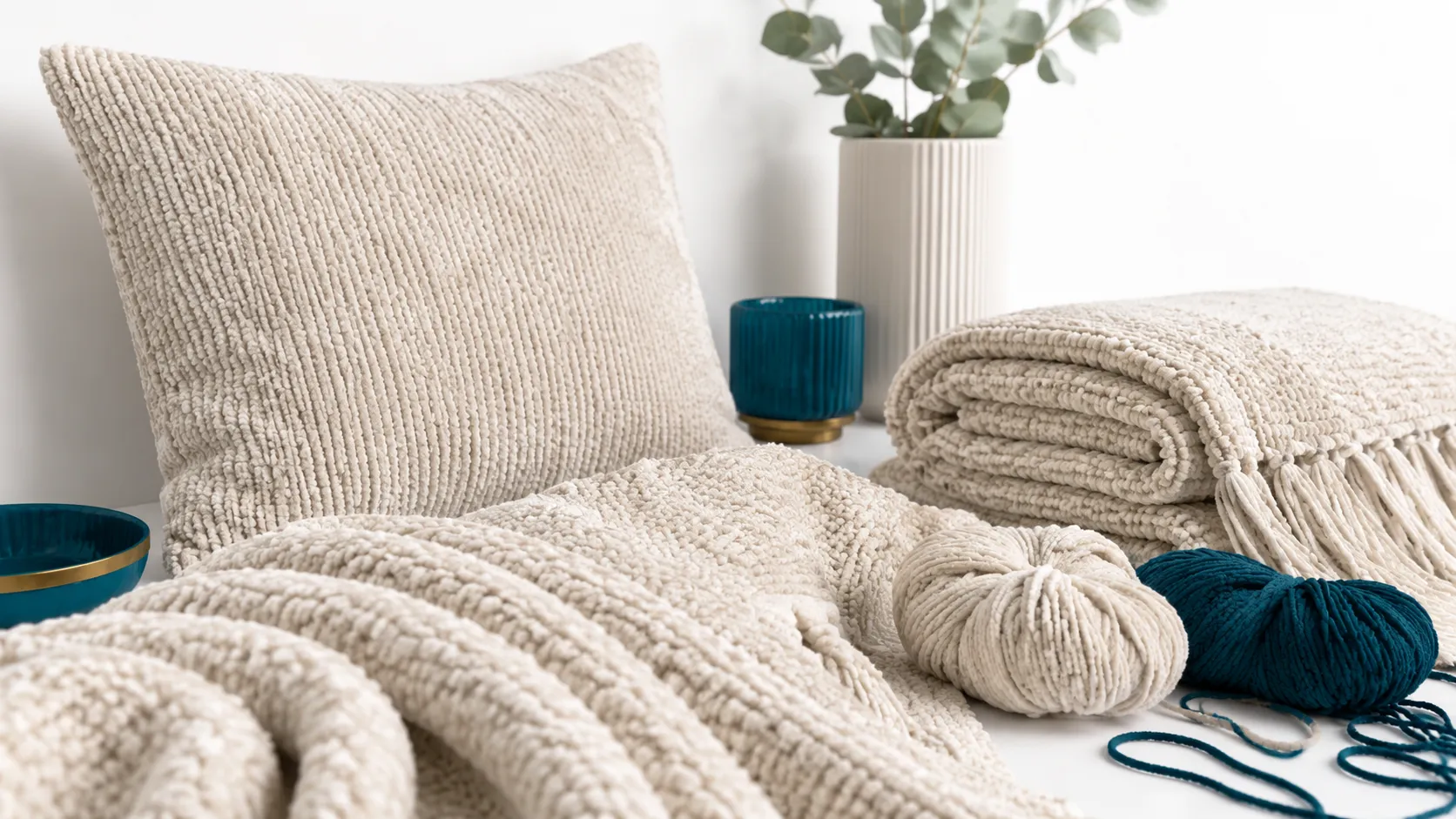
If you are asking what is chenille fabric, it is a soft, fuzzy textile made with raised-pile yarn. Chenille is not one specific fiber. It can be made from cotton, polyester, rayon, acrylic, wool, or a blend.
The fiber and construction affect how the material feels and performs. Some chenille is thick and durable enough for sofas, while other types are lighter and better for blankets or clothing. Its raised surface gives it a plush feel, but it can also pill, shed, snag, or flatten with use.
This guide explains how chenille is made, its main types, common uses, benefits, drawbacks, sofa suitability, and cleaning needs. It also shows what to check before buying so you can choose the right fabric for your home or clothing.
Quick Facts About Chenille
| Question | Direct answer |
|---|---|
| What is chenille? | A fuzzy pile yarn and the fabric made with it. |
| Is chenille a fiber? | No. It describes a yarn and fabric construction. |
| Is it natural or synthetic? | It can be natural, synthetic, regenerated, or blended. |
| What is it made from? | Cotton, polyester, rayon, acrylic, wool, silk, or blends. |
| What does it feel like? | Soft, plush, fuzzy, and textured. |
| Is it durable? | It depends on the fiber, construction, pile stability, and intended use. |
| Can it be washed? | Some products can. The care label or upholstery code controls. |
What Is Chenille Fabric?
Chenille fabric is a woven or knitted textile made with fuzzy chenille yarn.
Merriam-Webster defines chenille as both a protruding-pile yarn and a pile-face fabric made with that yarn. In simple terms, short fibers extend from the center of the yarn. These fibers create the soft, caterpillar-like surface.
The name comes from the French word for caterpillar.
Chenille does not identify a raw fiber. Instead, it describes how the yarn and surface are formed. Two products can both be called chenille but perform very differently.
One may be a dense polyester sofa fabric. Another may be a light cotton blanket. Their softness, strength, washability, and pilling risk will not be the same.
Is Chenille a Yarn, Fabric, or Fiber?
Chenille can describe both a yarn and a finished fabric. It is not a fiber type.
Chenille yarn has a fuzzy pile that extends from a central core.
Chenille fabric is made by weaving or knitting that yarn.
Cotton, polyester, rayon, acrylic, and wool are fiber types. Chenille describes the structure created with those fibers.
Knowing that a product is chenille does not tell you whether it is washable, natural, synthetic, or suitable for heavy use. You must also check its fiber content and product specifications.
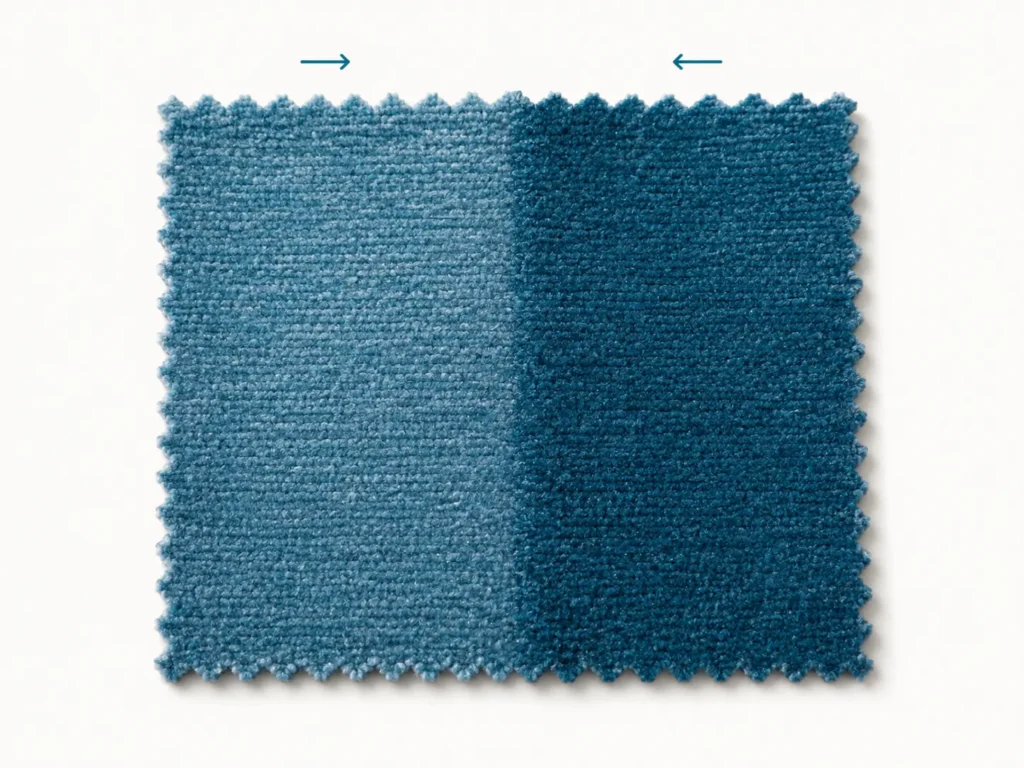
Why Does Chenille Change Color When Brushed?
The raised pile lies in a certain direction. Brushing it changes how the fibers reflect light.
As a result, one part of the material may look darker or lighter than another. This effect is called shading or pile direction.
Shading is common in raised-pile textiles. It is not always a stain, fade mark, or defect.
What Is Chenille Made Of?
Chenille can be made from natural fibers, synthetic fibers, regenerated cellulose, or blends.
The central yarn and the raised pile may contain the same fiber. They can also contain different materials.
| Fiber | Typical qualities | Common uses | Main care concern |
|---|---|---|---|
| Cotton | Soft, breathable, and absorbent. | Blankets, robes, bedding, and décor. | Can shrink or shed if washed incorrectly. |
| Polyester | Resilient and less absorbent. | Sofas, chairs, cushions, and curtains. | Heat or unsuitable cleaners can affect the finish. |
| Rayon or viscose | Soft, smooth, and often lustrous. | Clothing and decorative textiles. | Can distort or develop marks when wet. |
| Acrylic | Lightweight, warm, and wool-like. | Throws, sweaters, and décor. | Can pill under repeated friction. |
| Wool | Warm, insulating, and resilient. | Clothing, blankets, and upholstery. | Often needs careful cleaning. |
| Blends | Combine qualities from two or more fibers. | Upholstery and general home use. | Care depends on the complete blend and finish. |
Is Chenille Natural or Synthetic?
Chenille can be natural, synthetic, regenerated, or blended. The term describes the construction, not the source of the fiber.
Cotton and wool are natural fibers. Polyester and acrylic are synthetic. Rayon or viscose is a regenerated cellulose fiber.
Many products contain blends. For example, a fabric may combine cotton for softness with polyester for added resilience.
Is Chenille Cotton or Polyester?
Chenille can be cotton, polyester, or a blend of both. It can also contain rayon, acrylic, wool, silk, or other fibers.
The word chenille does not identify the composition. Check the product label for the exact percentages.
How Is Chenille Yarn Made?
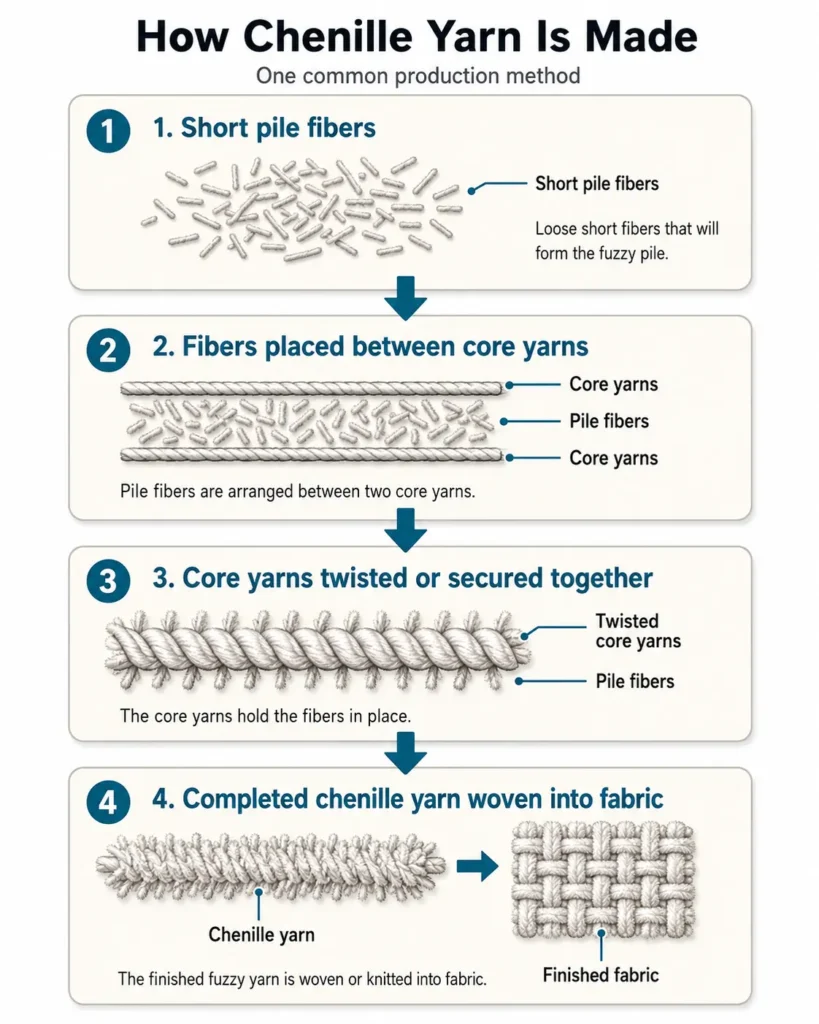
Manufacturers can create chenille yarn in more than one way.
In one common method, they secure short pile fibers between core yarns. The core yarns are then twisted together. This holds the short fibers in place while allowing them to extend from the center.
The basic process is:
- Short fibers are arranged between core yarns.
- The core yarns are secured or twisted together.
- The fibers project from the center.
- The finished yarn is woven or knitted into fabric.
Pile length, yarn quality, weave density, backing, and finishing all affect the result.
A tightly made upholstery textile can behave very differently from a soft garment knit. Neither woven nor knitted construction is automatically better. The quality and intended use matter more.
What Does Chenille Feel Like?
Chenille often feels soft, plush, warm, and slightly fuzzy.
Its raised pile creates more surface depth than a smooth woven textile. Some versions look matte. Others have a soft luster.
The exact feel depends on:
- Fiber content
- Pile length
- Pile density
- Fabric weight
- Weave or knit structure
- Surface finish
Cotton-rich versions often feel soft and absorbent. Polyester styles can feel smoother and less absorbent. Rayon can add drape and luster.
Heavy upholstery material usually feels denser than chenille used in sweaters or blankets.
Types of Chenille Fabric
Chenille can be grouped in several ways, just like other fabric material types.
By Fiber
Common fiber-based types include:
- Cotton chenille
- Polyester chenille
- Rayon or viscose chenille
- Acrylic chenille
- Wool chenille
- Blended chenille
By Construction
The yarn can be used in:
- Woven fabrics
- Knitted fabrics
- Backed upholstery fabrics
- Decorative or patterned textiles
By Intended Use
Products are also designed for different uses, such as:
- Upholstery
- Blankets and bedding
- Rugs and curtains
- Clothing and accessories
A chenille sweater should not be judged or cleaned like a sofa covering.
Chenille Fabric Pros and Cons
The material has a soft feel and rich texture. It also has limits that buyers should understand.
| Advantages | Disadvantages |
|---|---|
| Soft and comfortable. | Raised fibers can snag. |
| Warm with visible texture. | Some versions pill or shed. |
| Available in many fibers and weights. | The pile can flatten in high-contact areas. |
| Suitable for furniture and home textiles. | Cleaning needs vary by product. |
| Creates depth and natural pile shading. | Some fibers can shrink or distort when wet. |
| Dense surfaces can disguise small debris. | Hair and dust can settle into the pile. |
| Some upholstery blends offer good resilience. | Strong sunlight can fade some colors. |
Chenille is not automatically durable because it feels thick. A thick pile can still be loosely secured.
It is also not always difficult to clean. Some blankets and removable covers are washable.
The product specification matters more than the fabric name alone.
What Is Chenille Used For?
Chenille is used in furniture, home textiles, clothing, and accessories.
Upholstery and Furniture
Common furniture uses include:
- Sofas
- Armchairs
- Dining chairs
- Ottomans
- Benches
- Headboards
Upholstery versions are often dense and heavy. They can also include a backing or performance finish.
Home Textiles
The material is also used for:
- Blankets
- Throws
- Pillows
- Bedspreads
- Curtains
- Rugs
Some items can be washed at home. Others need spot cleaning or professional care.
Clothing and Accessories
Lighter versions are used for:
- Sweaters
- Cardigans
- Scarves
- Robes
- Jackets
- Hats
- Bags
Garment fabrics are often softer and more flexible than upholstery materials.
Is Chenille Good for Sofas?
Chenille can be a good sofa fabric when its construction and performance match the needs of the home.
It provides a soft seating surface and visible texture. It is also available in many colors and weights.
However, not every chenille sofa will offer the same durability.
Benefits of Chenille Upholstery
The fabric can provide:
- A soft and warm feel
- Rich surface texture
- Comfortable seating
- Many color options
- A casual or formal appearance
Possible Drawbacks
Raised fibers can catch on claws, jewelry, zippers, and rough objects.
The pile can flatten on seats, armrests, and front edges. Some products also pill under repeated friction.
Hair, dust, and crumbs can settle into the surface. Strong sunlight can fade some fibers and dyes.
Chenille is not automatically stain-resistant. Spill absorption depends on the fiber, finish, pile, and cleaning code.
What to Check Before Buying a Chenille Sofa
Review:
- Full fiber composition
- Intended-use rating
- Fabric weight
- Pile density
- Weave stability
- Backing
- Abrasion result
- Pilling result
- Seam-slippage result
- Colorfastness
- Cleaning code
- Removable covers
- Warranty
The Association for Contract Textiles warns that abrasion scores should not be used as a complete prediction of service life. A high rub count does not guarantee that a fabric will resist pilling, fading, seam failure, or poor cleaning.
Always order a swatch when possible. View it in daylight and indoor light. Rub it gently and check how easily hair or lint sticks to the surface.
Does Chenille Pill, Shed, Snag, or Shrink?
These problems can occur, but they do not affect every product in the same way.
Does Chenille Pill?
Some versions pill when friction causes loose surface fibers to tangle into small balls
Pilling risk can increase with:
- Repeated rubbing
- Loose surface fibers
- Weak yarn construction
- Certain soft blends
- Unsuitable washing
A well-made upholstery fabric with a strong pilling rating should perform better than a loose decorative textile.
Does Chenille Shed?
New blankets or clothing can release a small amount of loose fiber.
Heavy or continued shedding can point to weak pile stability, wear, damage, or improper washing.
Pet hair and household lint can become trapped in chenille’s raised pile, which may look like shedding even when the fabric itself is not losing fibers. For washable chenille clothing or blankets, removing loose fur before washing can help keep it from spreading through the load; use these methods to remove dog hair from clothes.
Does Chenille Snag?
The raised pile can catch on:
- Pet claws
- Rings
- Bracelets
- Zippers
- Rough shoes
- Sharp furniture edges
Dense, tightly made upholstery can be less vulnerable than loose or highly textured fabric. Still, no raised-pile material should be described as claw-proof.
Does Chenille Flatten?
Repeated pressure can compress the pile.
This often happens on sofa seats, armrests, and front edges. The area can then look smoother or darker.
Gentle pile lifting can help in some cases. Only use a method approved by the manufacturer.
Does Chenille Shrink?
Chenille has no single shrinkage rate. The same factors that cause clothes and washable fabrics to shrink—fiber content, construction, water temperature, agitation, finishing, and drying heat—also affect chenille.
Is Chenille Suitable for Pets and Children?
Chenille can work in a family home, but the household’s needs should guide the choice.
Homes With Pets
The soft surface can be comfortable. Yet claws can catch the raised pile.
Pet hair can also settle into the fabric. A dense upholstery grade with removable covers can be easier to manage than a loose decorative style.
Test a swatch before buying. Check whether claws, lint, and hair catch easily.
Homes With Children
The material can feel soft and inviting. Spills are the main concern.
Look for:
- A suitable cleaning code
- Stable construction
- Removable covers
- Clear stain-care instructions
- Good pilling performance
A performance finish does not guarantee easy cleaning. Review the manufacturer’s care guidance before buying.
How to Clean Chenille Fabric
Follow the product’s care label or upholstery cleaning code. As with washing different fabric types, there is no universal cleaning method for every chenille item.
Can Chenille Be Machine Washed?
Some clothing, blankets, and removable covers can be machine washed. The label must allow it.
When machine washing is permitted:
- Use the recommended water temperature.
- Select a gentle cycle.
- Use a mild detergent.
- Avoid overloading the machine.
- Reduce strong agitation.
- Reshape the item after washing.
- Dry it as directed.
- Avoid high heat unless the label permits it.
Do not assume that every chenille product is washable.
How to Clean Chenille Upholstery
For furniture:
- Vacuum gently with an upholstery attachment.
- Blot fresh spills instead of rubbing them.
- Check the manufacturer’s cleaning code.
- Test approved products in a hidden area.
- Avoid soaking the fabric.
- Keep moisture out of the cushion filling.
- Use a qualified cleaner when the label requires one.
Common upholstery codes include:
- W: Spot clean with an approved water-based method.
- S: Spot clean with an approved water-free solvent.
- W-S: Use an approved water-based or solvent-based spot-cleaning method.
- X: Vacuum or brush only unless the manufacturer gives other instructions.
Cleaning-code systems can vary. The furniture maker’s instructions take priority.
Rayon, Wool, and Delicate Chenille
Delicate fabrics can weaken, distort, shrink, or develop marks when cleaned incorrectly.
Some products need hand washing, dry cleaning, or professional treatment.
Cleaning Mistakes to Avoid
Avoid:
- Hard scrubbing
- Rough brushing
- Untested stain removers
- Soaking upholstery
- High drying heat
- Washing without checking the label
- Pulling pills off by hand
Strong rubbing can disturb the pile and leave an uneven surface.
Chenille vs. Velvet, Bouclé, and Microfiber
These materials differ in surface structure, texture, and care needs
| Fabric | Surface | Main advantage | Common limitation |
|---|---|---|---|
| Chenille | Fuzzy pile formed by chenille yarn. | Soft, warm, and textured. | Can pill, snag, shed, or flatten. |
| Velvet | Dense, upright cut pile. | Smooth and rich appearance. | Can crush or show pressure marks. |
| Bouclé | Looped or curled yarn surface. | Bold decorative texture. | Loops can catch and collect debris. |
| Microfiber | Very fine, usually synthetic fibers. | Often practical and easy to maintain. | Usually has less surface depth. |
Chenille suits rooms where softness and warmth are priorities.
Velvet offers a smoother and more formal look. Bouclé creates a bold, looped texture. Microfiber is often the more practical choice when simple maintenance matters most.
Actual performance still depends on the exact product.
What to Check Before Buying Chenille
Use this final checklist:
- Check the full fiber percentages.
- Confirm whether the product is woven, knitted, or backed.
- Review its intended use.
- Check pilling, abrasion, and seam performance.
- Read the cleaning code.
- Consider pets, children, and sunlight.
- Order a swatch.
- Review the warranty.
Select the fabric by its full specification, not by softness or color alone.
Conclusion
Chenille is a fuzzy pile yarn and the fabric made with it. It is a construction, not one specific fiber.
The material can contain cotton, polyester, rayon, acrylic, wool, or a blend. Its composition and construction affect its softness, durability, pilling risk, and cleaning needs.
When deciding what chenille fabric is best for your home, check the label, performance information, cleaning code, and physical swatch.
A well-chosen product can work well for sofas, blankets, clothing, curtains, and other décor.
