

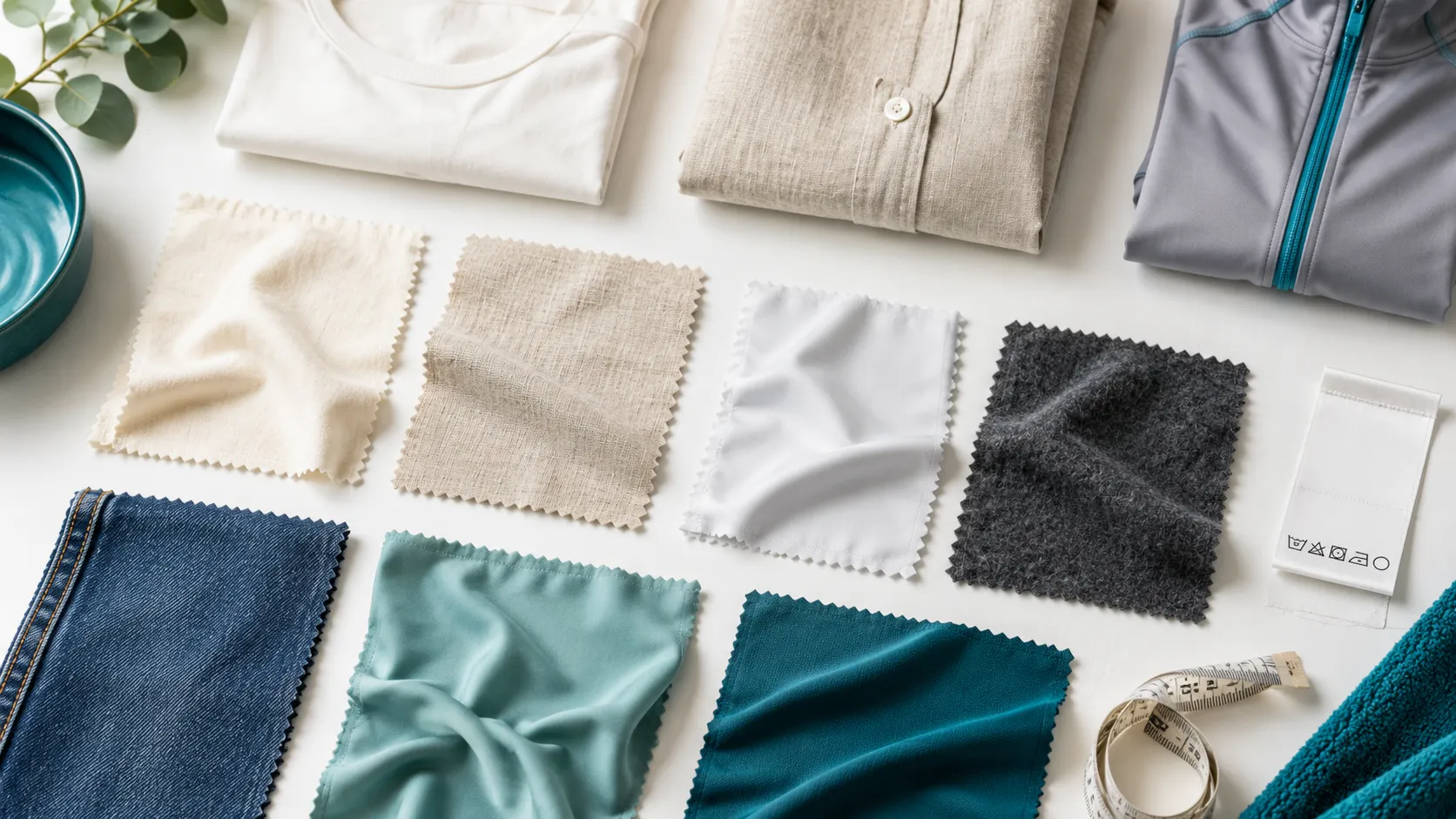
Not all fabrics feel, wash, or wear the same way. Some fabrics feel soft. Some breathe better. Some dry fast. Some shrink, wrinkle, or hold odor after washing.
This fabric comparison guide helps you compare clothing materials before you buy, wear, wash, or dry them. Use it when you are checking a clothing label, shopping online, or trying to choose between two fabrics.
The best fabric depends on the use. Cotton and linen are better for breathability. Polyester and nylon are better for durability and quick drying. Rayon and viscose are better for soft drape. Wool and cashmere are better for warmth. Blends are useful when you want comfort, stretch, and easier care in one fabric.
Quick Fabric Comparison Chart
This chart gives you a simple clothing material comparison before you choose a fabric.
| Fabric | Best For | Feel | Breathability | Care Level | Main Weakness |
|---|---|---|---|---|---|
| Cotton | Daily wear, shirts, underwear | Soft and natural | Good | Easy to medium | Can shrink |
| Pima cotton | Premium basics, soft shirts | Very soft and smooth | Good | Easy to medium | Costs more |
| Polyester | Activewear, easy-care clothes | Smooth and light | Low to medium | Easy | Can hold odor |
| Nylon or polyamide | Sportswear, swimwear | Smooth and flexible | Low to medium | Easy | Can trap heat |
| Rayon | Dresses, shirts, soft clothing | Smooth and drapey | Good | Medium | Can shrink |
| Viscose | Dresses, blouses, light clothing | Soft and flowy | Good | Medium | Needs gentle care |
| Linen | Summer clothes | Crisp and cool | Very good | Medium | Wrinkles fast |
| Wool | Sweaters, coats, winter wear | Warm and textured | Medium | Gentle care | Can shrink or felt |
| Cashmere | Premium sweaters | Very soft and warm | Medium | Delicate | Expensive and delicate |
| Acrylic | Budget sweaters | Soft and wool-like | Low | Easy | Can pill and feel less natural |
Best Fabric by Need
Use this table when you want a fast answer.
| Need | Better Fabric Choices |
|---|---|
| Breathability | Linen, cotton, rayon, viscose |
| Durability | Polyester, nylon, polyamide |
| Warmth | Wool, cashmere, fleece |
| Softness | Pima cotton, modal, viscose, cashmere |
| Easy care | Polyester, nylon, cotton blends |
| Fast drying | Polyester, nylon, polyamide |
| Soft drape | Rayon, viscose, acetate |
| Stretch | Elastane, spandex, Lycra blends |
How to Compare Fabrics by Comfort, Care, and Performance
A good fabric comparison should not only explain what each fabric is. It should explain how the fabric feels, washes, dries, stretches, and lasts.
Here are the main fabric differences to check.
Comfort and Skin Feel
Comfort matters because fabric sits against your skin.
Cotton, pima cotton, viscose, modal, and cashmere often feel soft. Wool can feel warm, but some wool may feel itchy. Polyester and nylon can feel smooth, but they may feel less breathable in hot weather.
Ask these questions:
- Does the fabric feel soft or rough?
- Is it smooth, crisp, warm, cool, or stretchy?
- Is it comfortable for sensitive skin?
- Will it feel good during long wear?
For everyday clothing, comfort is often more important than strength. For gym clothes or outdoor wear, stretch and drying speed may matter more.
Breathability and Heat
Breathability means how well air moves through the fabric. A breathable fabric can help your body feel cooler.
Cotton, linen, rayon, and viscose are often better for warm weather. Polyester, nylon, and acrylic may feel warmer because they do not always allow as much airflow.
This breathable fabric comparison matters most for summer clothes, gym clothes, underwear, and sleepwear.
Breathability can change based on:
- Fabric weight
- Weave or knit
- Garment fit
- Fiber blend
- Moisture control
A loose cotton shirt can feel cooler than a thick tight cotton shirt. A lightweight polyester mesh shirt can breathe better than a heavy polyester hoodie.
Stretch and Movement
Stretch matters for activewear, leggings, joggers, fitted tops, underwear, and sports clothing.
Some fabrics stretch naturally. Others need elastane, spandex, or Lycra added to them.
Polyester, nylon, and polyamide are often used in stretch clothing because they work well with elastane. Cotton can stretch too, but it may lose shape faster if it does not have a stretch fiber blended in.
Look for these words on fabric labels:
- Elastane
- Spandex
- Lycra
- Stretch blend
- Nylon blend
- Polyester blend
If you want movement, choose a fabric with good stretch recovery. This means the fabric stretches and then returns to its shape.
Durability and Pilling
Durability means how long a fabric lasts. It also includes how well it handles rubbing, washing, and daily wear.
Polyester and nylon are often strong and long-lasting. Cotton is comfortable, but it may wear down faster in high-friction areas. Wool can last a long time with proper care. Cashmere is soft and warm, but it is more delicate.
Pilling happens when tiny fiber balls form on the fabric surface. Sweaters, acrylic, polyester blends, wool blends, and soft knits can pill over time.
If you want a durable fabric, check:
- Fiber strength
- Fabric thickness
- Weave or knit quality
- Care instructions
- Pilling risk
Shrinkage and Washing Risk
Some fabrics shrink more than others. This fabric shrinkage comparison matters when you plan to machine wash or tumble dry clothes.
Cotton, linen, rayon, viscose, and wool can shrink if washed or dried the wrong way. Polyester and nylon usually shrink less, but high heat can still damage them.
To reduce shrinking:
- Read the care label.
- Wash in cold or warm water.
- Avoid high dryer heat.
- Air dry delicate clothes.
- Do not twist rayon, viscose, wool, or cashmere.
- Reshape delicate items while damp.
If the item is expensive or delicate, treat it gently the first time you wash it.
Odor and Moisture
Some fabrics absorb moisture. Some move sweat away from the body. Some hold odor more than others.
Cotton absorbs sweat, but it can stay wet longer. Polyester dries fast, but polyester activewear can hold body odor when sweat, body oils, and detergent residue build up. Nylon and polyamide activewear can also hold odor.
Wool is often better at resisting odor buildup than many synthetic activewear fabrics. Still, results depend on the garment, sweat level, washing routine, and fiber blend.
For gym clothes, look for:
- Moisture-wicking fabric
- Quick-drying fabric
- Polyester blends
- Nylon blends
- Odor-control finishes
For daily comfort, cotton, linen, rayon, and viscose may feel better in heat.
Natural vs Synthetic vs Semi-Synthetic Fabrics
You do not need to become a textile expert. But it helps to know the three main fabric groups.
| Fabric Group | Examples | Usually Best For | Watch Out For |
|---|---|---|---|
| Natural fabrics | Cotton, linen, wool, cashmere, silk | Comfort, breathability, warmth | Shrinking, wrinkling, careful washing |
| Synthetic fabrics | Polyester, nylon, polyamide, acrylic, elastane | Durability, stretch, quick drying | Heat, odor, lower airflow |
| Semi-synthetic fabrics | Rayon, viscose, modal, lyocell, acetate | Softness, drape, smooth feel | Shrinking, weaker wet strength, gentle care |

Natural Fabrics
Natural fabrics come from plants or animals.
Cotton and linen come from plants. Wool and cashmere come from animals. These fabrics are often popular for comfort, airflow, and warmth.
Natural fabrics are not always easy-care. Cotton and linen can shrink. Wool and cashmere need gentle care. Linen wrinkles fast.
Synthetic Fabrics
Synthetic fabrics are man-made. Polyester, nylon, polyamide, acrylic, elastane, and spandex are common synthetic fibers.
These fabrics are often strong, light, quick-drying, and easy to wash. They are common in activewear, outdoor clothing, swimwear, and budget sweaters.
The downside is comfort. Some synthetic fabrics can feel hot or hold odor after sweating.
Semi-Synthetic Fabrics
Semi-synthetic fabrics start from plant-based cellulose, but they go through heavy processing. Rayon, viscose, modal, lyocell, and acetate are common examples.
These fabrics often feel soft, smooth, and drapey. They are common in dresses, blouses, shirts, and light clothing.
The main issue is care. Rayon and viscose can shrink, wrinkle, or lose shape if washed too harshly.
Best Fabrics by Use
The best fabric depends on how you will use it. A good summer fabric may not be the best winter fabric. A good gym fabric may not be the softest fabric for daily wear.
| Use Case | Better Fabric Choices | Why |
|---|---|---|
| Hot weather | Cotton, linen, rayon, viscose | They feel cooler and more breathable |
| Activewear | Polyester, nylon, polyamide, elastane | They stretch, dry fast, and handle movement |
| Winter clothing | Wool, cashmere, fleece, acrylic | They help hold warmth |
| Easy washing | Polyester, nylon, cotton blends | They are lower maintenance |
| Soft daily wear | Cotton, pima cotton, modal, viscose | They feel soft against the skin |
| Drapey clothing | Rayon, viscose, acetate | They hang and flow well |
| Durable clothing | Polyester, nylon, wool blends | They handle more wear |
Best Fabrics for Hot Weather
For hot weather, choose fabrics that feel light and allow airflow.
Cotton, linen, rayon, and viscose are common choices. Loose clothing also helps. A breathable fabric can still feel hot if the garment is tight or thick.
Best for summer:
- Linen shirts
- Cotton T-shirts
- Viscose dresses
- Rayon blouses
- Lightweight cotton blends
Best Fabrics for Activewear
For activewear, you need stretch, sweat control, and fast drying.
Polyester, nylon, polyamide, and elastane blends are common in gym clothes. These fabrics help the garment move with your body. They also dry faster than cotton.
Cotton can feel soft, but it holds sweat. That can make it feel heavy during workouts.
Best for gym clothes:
- Polyester-spandex blends
- Nylon-spandex blends
- Polyamide blends
- Moisture-wicking fabrics
Best Fabrics for Winter
For winter, warmth matters most.
Wool and cashmere are strong choices because they help insulate the body. Fleece and acrylic can also feel warm, but they are synthetic. Cashmere feels softer than many types of wool, but it is more delicate and costly.
Best for cold weather:
- Wool sweaters
- Cashmere sweaters
- Fleece jackets
- Wool coats
- Acrylic knitwear for budget options
Best Fabrics for Easy Washing
If you want low-maintenance clothing, choose fabrics that usually handle machine washing better.
Polyester, nylon, and cotton blends are often easier to wash than wool, cashmere, rayon, or viscose.
Easy-care fabrics are useful for:
- School clothes
- Work uniforms
- Gym clothes
- Travel clothing
- Kids’ clothing
- Daily basics
Still, always check the care label. Fabric blends can change how a garment should be washed.
How to Read a Clothing Fabric Label
A clothing label tells you what the garment is made from and how to care for it. This is important when you compare fabrics online or in a store.

Check these parts of the label:
| Label Detail | What It Means |
|---|---|
| Fiber content | The fabric mix, such as 100% cotton or 60% cotton and 40% polyester |
| Blend percentage | How much of each fiber is used |
| Stretch fiber | Elastane, spandex, or Lycra added for stretch |
| Shell fabric | The main outside fabric |
| Lining | The inside fabric, which may need different care |
| Washing instruction | Machine wash, hand wash, or dry clean |
| Drying instruction | Tumble dry, low heat, air dry, or lay flat to dry |
A 100% cotton shirt may feel more breathable, but it may shrink more. A cotton-polyester blend may be easier to wash, but it may not feel as natural. A small amount of elastane can make jeans, underwear, or activewear more flexible.
Popular Fabric Comparisons
These guides help you compare fabrics in more detail. Your Fabric Comparisons category includes planned articles for polyamide vs polyester, pima cotton vs cotton, rayon vs cotton, rayon vs polyester, viscose vs cotton, cotton viscose fabric, cashmere vs wool, and several clothing comparisons.
| Care Question | Usually Better | Be Careful With |
|---|---|---|
| Easy machine washing | Polyester, nylon, cotton blends | Wool, cashmere, viscose |
| Less shrinkage | Polyester, nylon | Cotton, rayon, viscose, wool |
| Faster drying | Polyester, nylon, polyamide | Cotton, wool |
| Less odor retention | Cotton, wool, linen | Polyester activewear |
| Gentle care needed | Cashmere, wool, viscose, rayon | High heat and rough washing |
Polyamide vs Polyester
Polyamide and polyester are both synthetic fabrics. They are common in activewear, swimwear, jackets, and performance clothing.
Polyamide often feels smooth and flexible. Polyester is usually durable, quick-drying, and common in sportswear. Both can hold heat and odor, depending on the fabric construction.
For a full breakdown, read the guide to polyamide vs polyester.
Pima Cotton vs Cotton
Pima cotton is a higher-quality type of cotton. It usually has longer fibers than regular cotton. This can make it feel softer, smoother, and stronger.
Regular cotton is more common and usually cheaper. Pima cotton is often used in premium T-shirts, sheets, underwear, and basics.
For a full breakdown, read the guide to pima cotton vs cotton.
Rayon vs Cotton
Rayon and cotton can both feel comfortable, but they act differently.
Cotton feels natural, breathable, and familiar. Rayon has a smoother drape. For washing, cotton is often easier to handle. Rayon may need gentler washing because it can shrink or lose shape.
Rayon vs Polyester
Rayon is soft and drapey. Polyester is stronger and easier to care for.
Rayon often feels more breathable and natural on the skin. Polyester often lasts longer, dries faster, and resists wrinkles better. However, polyester activewear can hold odor when sweat and residue build up.
For a full breakdown, read the guide to rayon vs polyester.
Viscose vs Cotton
Viscose and cotton are both popular in everyday clothing. Cotton feels soft and natural. Viscose feels smooth, light, and flowy.
Cotton is often easier to wash. Viscose can feel cooler and drape better, but it may shrink or lose shape if washed with too much heat or friction.
Cashmere vs Wool
Cashmere and wool are both warm natural fibers. Cashmere usually feels softer and lighter. Wool is often stronger and more affordable.
Cashmere works well for premium sweaters and scarves. Wool works well for sweaters, coats, socks, and winter layers.
For a full breakdown, read the guide to cashmere vs wool.
Clothing Item Comparisons
Some articles in this hub compare clothing items, not just fabric fibers. These guides help when two garments look similar but have different fit, fabric, use, or care needs.
| Clothing Comparison | Main Difference |
|---|---|
| Sweater vs sweatshirt | A sweater is usually knitted. A sweatshirt is usually casual fleece or jersey fabric. |
| Joggers vs sweatpants | Joggers are usually more fitted. Sweatpants are usually more relaxed. |
| Hoodie vs jacket | A hoodie is casual and soft. A jacket is usually outerwear. |
| Camisole vs tank top | A camisole is often lighter and more fitted. A tank top is usually more casual. |
Sweater vs Sweatshirt
A sweater is usually knitted and often made from wool, cotton, acrylic, or blends. A sweatshirt is usually made from cotton fleece, polyester fleece, or fabric blends.
Sweaters often look dressier. Sweatshirts feel more casual and sporty.
For a full breakdown, read the guide to sweater vs sweatshirt.
Joggers vs Sweatpants
Joggers usually have a tapered fit and elastic cuffs. Sweatpants are often looser and more relaxed.
Joggers can work for casual outfits and light activity. Sweatpants are often better for lounging and comfort.
For a full breakdown, read the guide to joggers vs sweatpants.
Hoodie vs Jacket
A hoodie is usually a soft casual garment with a hood. A jacket is usually outerwear made for warmth, wind, rain, or style.
Some zip hoodies can act like light jackets, but they are not always made for bad weather.
For a full breakdown, read the guide to hoodie vs jacket.
Camisole vs Tank Top
A camisole is usually lighter, softer, and more fitted. It may have thin straps. A tank top is usually more casual and may have wider straps.
Camisoles are often used as layering pieces. Tank tops are often used for casual wear, workouts, or warm weather.
For a full breakdown, read the guide to camisole vs tank top.
Fabric Care Comparison

Fabric care matters because the wrong wash or drying method can damage clothes.
Some fabrics can handle regular washing. Others need cold water, gentle cycles, air drying, lay-flat drying, or dry cleaning.
| Care Question | Usually Better | Be Careful With |
|---|---|---|
| Easy machine washing | Polyester, nylon, cotton blends | Wool, cashmere, viscose |
| Less shrinkage | Polyester, nylon | Cotton, rayon, viscose, wool |
| Faster drying | Polyester, nylon, polyamide | Cotton, wool |
| Less odor retention | Cotton, wool, linen | Polyester activewear |
| Gentle care needed | Cashmere, wool, viscose, rayon | High heat and rough washing |
Which Fabrics Are Easiest to Wash?
Polyester, nylon, and cotton blends are often easier to wash. They can usually handle machine washing better than delicate fabrics.
Still, check the label. A fabric may be easy to wash, but the garment may have trims, linings, prints, dyes, or finishes that need special care.
Which Fabrics Need Gentle Care?
Wool, cashmere, silk, rayon, and viscose need more care.
These fabrics may shrink, stretch, wrinkle, or lose shape if washed too roughly. Use cold water, gentle cycles, mild detergent, and air drying when needed.
Which Fabrics Shrink Most?
Cotton, linen, rayon, viscose, and wool are more likely to shrink than polyester or nylon, especially when exposed to hot water, high dryer heat, or rough washing.
To reduce shrinkage:
- Wash in cold water.
- Use gentle cycles.
- Avoid high dryer heat.
- Air dry when possible.
- Reshape delicate items while damp.
Which Fabrics Hold Odor?
Polyester and some synthetic activewear fabrics can hold body odor. This is common in gym clothes.
To reduce odor:
- Wash sweaty clothes soon.
- Do not overload the washer.
- Use the right amount of detergent.
- Avoid too much fabric softener on activewear.
- Air dry fully before storing.
Which Fabrics Dry Fastest?
If you want a fabric that dries fast, polyester, nylon, and polyamide are usually better choices than cotton or wool.
Fast-drying fabrics are useful for workouts, travel, swimwear, rain, and frequent washing.
How to Choose the Right Fabric
There is no single best fabric for every person. The right choice depends on your climate, comfort needs, washing habits, and how you plan to wear the clothing.
Choose Cotton or Linen If You Want Breathability
Cotton and linen are good for daily wear and hot weather. They feel natural and allow more airflow than many synthetic fabrics.
Choose them for:
- T-shirts
- Shirts
- Summer dresses
- Underwear
- Casual wear
Choose Polyester or Nylon If You Need Durability
Polyester and nylon are useful when clothing needs to last, stretch, or dry fast.
Choose them for:
- Activewear
- Swimwear
- Jackets
- Travel clothing
- Gym clothes
Choose Rayon or Viscose If You Want Soft Drape
Rayon and viscose work well when you want clothing that feels smooth and hangs nicely.
Choose them for:
- Dresses
- Blouses
- Flowy tops
- Lightweight pants
- Soft fashion pieces
Choose Wool or Cashmere If You Need Warmth
Wool and cashmere are good for cold weather. Wool is often more durable. Cashmere is softer and more premium.
Choose them for:
- Sweaters
- Scarves
- Coats
- Winter layers
- Warm socks
Choose Blends If You Want Balance
Fabric blends can combine the best parts of different fibers.
Examples:
- Cotton-polyester for easier care
- Cotton-spandex for stretch
- Wool-nylon for strength
- Nylon-spandex for activewear
- Cotton-viscose for softness and drape
Blends are common because one fiber can improve what another fiber lacks.
Final Answer: Which Fabric Is Best?
The best fabric depends on what you need.
Choose cotton or linen if you want breathability. Choose polyester or nylon if you want durability and quick drying. Choose rayon or viscose if you want soft drape. Choose wool or cashmere if you want warmth. Choose blends if you want balanced comfort, stretch, and care.
Before you buy, check the fabric label. Before you wash, check the care label. That simple step can help you avoid shrinking, fading, odor buildup, pilling, and fabric damage.
Fabric Comparison FAQs
What is the best fabric for everyday clothes?
Cotton is one of the best fabrics for everyday clothes because it feels soft, breathable, and natural. Pima cotton, modal, viscose, and cotton blends can also work well for daily wear.
Which fabric is most breathable?
Linen is one of the most breathable fabrics. Cotton, rayon, and viscose are also good choices for warm weather. Breathability also depends on fabric weight, weave, and clothing fit.
Which fabric is easiest to wash?
Polyester, nylon, and cotton blends are usually easier to wash than wool, cashmere, rayon, or viscose. Always check the care label before washing.
What fabric shrinks the most?
Cotton, linen, rayon, viscose, and wool can shrink, especially with hot water or high dryer heat. Polyester and nylon usually shrink less.
Are natural fabrics better than synthetic fabrics?
Natural fabrics are often better for comfort and airflow. Synthetic fabrics are often better for durability, stretch, and quick drying. The better choice depends on how you will use the clothing.
Are rayon and viscose the same?
Rayon is a broad fabric family. Viscose is a type of rayon. Both are semi-synthetic fabrics made from cellulose. They often feel soft and drapey, but they need careful washing.
Which fabric is best for activewear?
Polyester, nylon, polyamide, and elastane blends are common choices for activewear. They stretch, dry fast, and handle movement better than many natural fabrics.
Which fabric holds odor the most?
Polyester can hold body odor more than many natural fabrics, especially in gym clothes. Nylon and polyamide activewear can also hold odor if sweat, body oils, and detergent residue build up.
