


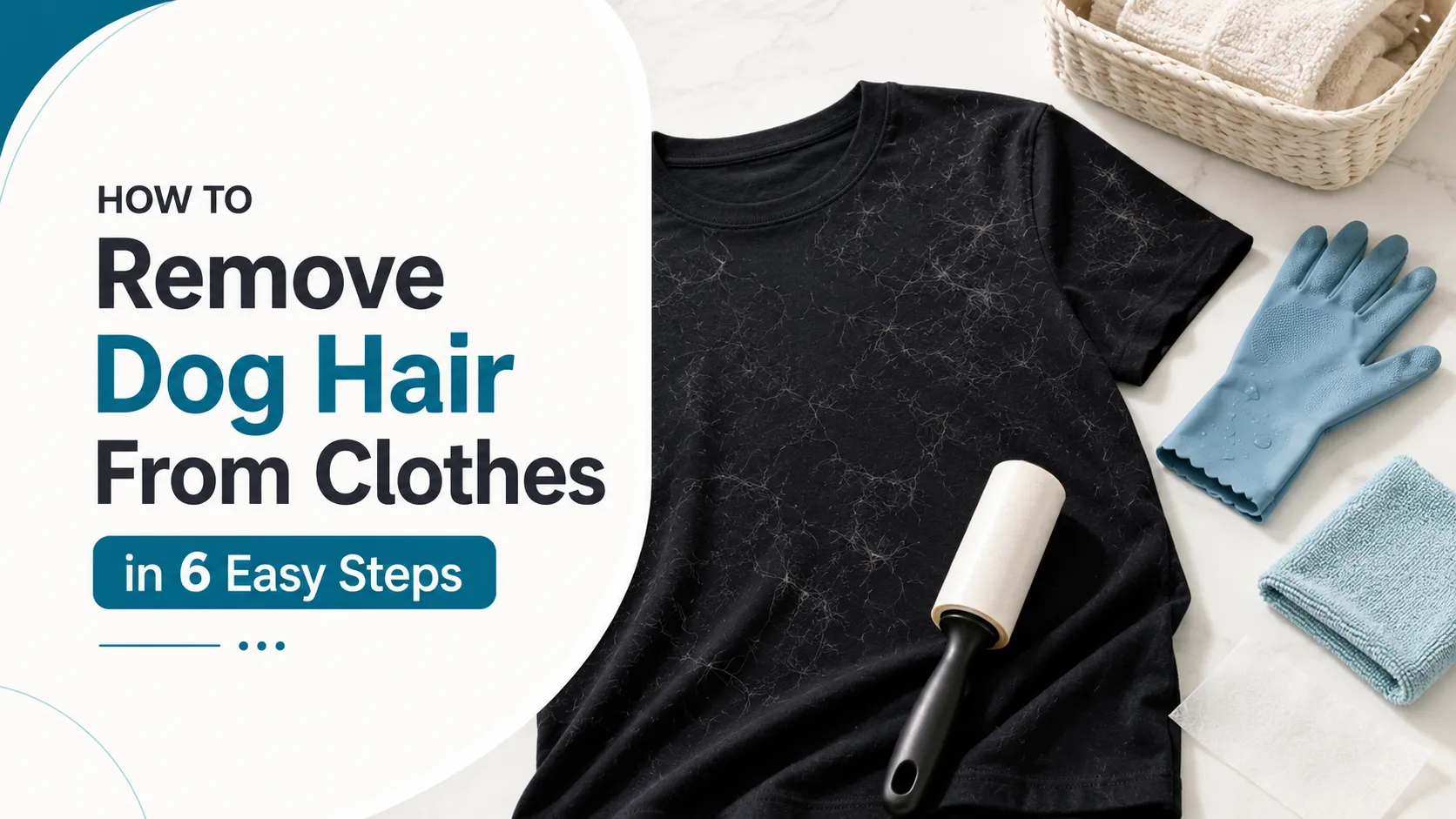
Learning how to remove dog hair from clothes starts before laundry, not after the wash is done. Dog hair can be frustrating, especially on black shirts, work pants, leggings, fleece, bedding, and blankets. A lint roller can help with surface hair, but it is not always enough when loose fur sticks deeper into fabric.
Pet hair can cling because of static, friction, and fabric texture. Some hair may also stay on clothes after washing if the load is too full or the lint trap is not clean. These steps also work for most pet hair, including cat hair, as long as the fabric can handle the method. This guide shows what to do before washing, during laundry, after washing, and after drying so your clothes come out cleaner.
Key Takeaways
- Remove loose fur before washing.
- Use a lint roller, tape, damp glove, or microfiber cloth for fast fixes.
- Shake clothes outside before washing and after drying.
- Use a short dryer cycle only if the care label allows it.
- Clean the dryer lint trap before and after pet-hair loads.
- Wash pet bedding separately from regular clothes.
- Keep black clothes away from pets until you wear them.
- Use gentle tools on sweaters, wool, and loose knits.
- Do not overload the washer.

A simple routine helps remove dog hair before it spreads through the washer and dryer.
Why Dog Hair Sticks to Fabric
Dog hair sticks to fabric because of static cling, friction, and fabric texture. When clothing rubs against furniture, bedding, or your pet, loose fur can grab onto the fibers.
Some fabrics hold more hair than others. Fleece, leggings, sweaters, activewear, and textured fabric can trap hair deeper. Black clothes also show light-colored fur more clearly, so even a small amount can make clean clothes look dirty.
Short, stiff hairs can poke into woven fabric. Longer hair may clump together and roll off more easily, but it can still stick when static is high.
Dry air can make the problem worse. Static pulls lint, dander, and fine hairs back onto clothing even after you brush them off. This is why washing alone may not remove heavy pet hair, especially if the clothes were not shaken or brushed first.
Fast Fixes When You Need Clean Clothes Now

Sometimes you do not have time for a full laundry routine. You just need the hair off your shirt, pants, or jacket before leaving the house.
Lint Roller or Tape
A lint roller is the fastest tool for surface hair. Roll it over the fabric in short strokes. Replace the sticky sheet when it stops picking up hair.
If you do not have a lint roller, use packing tape or masking tape. Press the sticky side on the fabric, then lift it away.
Avoid strong tape on wool, sweaters, or loose knits. It can pull fibers and make the fabric look fuzzy.
Damp Rubber Glove
A damp rubber glove works well when hair is stuck to fabric. Lightly wet the glove, then move your hand over the clothing in one direction. The hair should gather into small clumps.
This method is useful for black clothes, hoodies, fleece, and thicker fabrics. Do not rub hard on delicate items.
Damp Microfiber Cloth
A damp microfiber cloth can pick up fine hair that a roller misses. Wring the cloth well before using it. It should be damp, not wet.
Wipe the fabric gently. This is helpful for small leftover hairs on shirts, pants, bed sheets, and blankets.
Dryer Sheet or Anti-Static Spray
Dryer sheets can help reduce static, which makes loose hair easier to remove. Rub one lightly over dry clothing when hair keeps clinging back.
If the care label allows dryer use, a short low-heat cycle with a dryer sheet can help move loose hair into the lint trap. Use fragrance-free options if you have sensitive skin or wash pet bedding often.
You can also use an anti-static spray if the fabric allows it. Test it on a hidden area first, especially on dark or delicate clothing.
Before Laundry: Remove Loose Hair First
The biggest mistake is putting heavily covered clothes straight into the washer. The machine may not remove all the hair. It can also move fur to other items in the same load.
Start by shaking the clothes outside. This removes loose hair before it reaches the washer. Then use a lint roller, reusable brush, damp glove, or microfiber cloth on the worst areas.
For nicer clothing, turn the item inside out before storing or washing. This can help protect the outer surface from more hair and lint.
If the care label allows it, run the clothes through a short dryer cycle before washing. Use air fluff, no heat, or low heat based on the fabric. Skip this step for items that should not be tumble dried.
Clean the lint trap before and after the cycle. Heavy hair buildup can reduce airflow and may leave hair on the next load.
Do not overload the washer. Clothes need room to move so hair can release from the fabric.
During Washing: Help Hair Release From Fabric
Washing can help remove pet hair, but it works better when the load is prepared first. If possible, wash heavily covered items separately from regular clothes.
Use the water level and cycle that fit the fabric. Clothes need enough water and movement to loosen hair. A packed washer makes the problem worse because fabric rubs together and traps more lint.
An extra rinse can help when hair or lint remains. It gives the washer one more chance to move loose particles away from the fabric.
Some people use white vinegar to reduce static in laundry. Use it only if the care label and washer manual allow it. Do not use vinegar on every load, and never mix it with bleach.
Wash pet bedding, couch covers, and blankets separately. These items often carry much more hair than shirts or pants.
Why Clothes Still Have Hair After Washing
Clothes can still have hair after washing for several reasons. The most common reason is that too much loose fur went into the washer.
Another reason is overloading. When the washer is too full, clothes cannot move freely. Hair stays trapped between fabric layers.
Static can also pull hair back onto clothing. This is common with synthetic fabrics, fleece, leggings, and activewear.
Pet bedding can transfer hair to regular clothes. If you wash a dog blanket with black shirts or work pants, the hair can spread through the whole load.
A full lint trap, dirty washer drum, or clogged filter can also make the issue worse. Hair needs somewhere to go. If the machine is already full of lint and fur, your clothes may come out looking dirty again.
After Washing: What to Do Before You Rewash
If clothes still have hair after washing, do not rewash them right away. First, check how much hair is left.
Shake the damp clothes gently outside or over a laundry area. If the care label allows tumble drying, place the items in the dryer for a short cycle. Clean the lint trap first.
Check the lint trap halfway through if the load has a lot of pet hair. This helps the dryer keep collecting loose hair.
After drying, use a lint brush, roller, or damp glove on any remaining spots. Rewash only if the load is still heavily covered.
This saves time and prevents extra wear on the fabric.
After Drying: Remove Leftover Hair and Static
Dry clothes are easier to clean with tools. If the hair is on the surface, use a lint roller or reusable lint brush.
If the hair is stuck, use a damp rubber glove. Move the glove in one direction so the hair gathers together.
For fine leftover hair, use a damp microfiber cloth. Wipe lightly so you do not leave the fabric wet.
If static is the reason hair keeps sticking, rub the garment with a dryer sheet or use dryer balls in the next load. Dryer balls may reduce static and help items separate, but they should not replace lint rollers, brushes, or lint-trap cleaning.
For black clothes, do the final hair removal right before you leave the house.
Best Tools by Situation
| Situation | Best Tool | Avoid |
|---|---|---|
| Leaving the house | Lint roller or tape | Wetting delicate fabric. |
| Fine hair remains | Damp microfiber cloth | Soaking the garment. |
| Hair is stuck | Damp rubber glove | Rough scrubbing. |
| Black clothes | Reusable lint brush | Wearing before cleaning. |
| Static cling | Dryer sheet or dryer balls | Avoid heavy fragrance if sensitive. |
| Bedding | Dryer cycle and lint trap | Overloading the washer. |
| Delicate knits | Gentle lint brush | Avoid strong tape or pulling. |
Black Clothes Need a Different Routine
Black clothes show dog hair more than lighter colors. Even a small amount of fur can make clean clothes look dirty.
Keep black shirts, pants, dresses, and work clothes away from pets. Store them in a closet, drawer, garment bag, or covered laundry area.
Put black clothes on right before leaving the house. If you wear them around pets first, they may collect hair before you even step outside.
Use a lint brush or roller as the final step. Keep one in your car, bathroom, work bag, or near the door.
If static is a problem, use a dryer sheet or anti-static spray if the fabric allows it. Test first on a hidden area.
Fleece, Leggings, and Activewear Hold Hair Longer
Fleece can trap hair deep in its soft surface. A normal lint roller may only remove the top layer. Use a rubber glove or reusable lint brush before washing.
Leggings and activewear often attract hair because of static. Brush them before laundry and avoid overloading the washer.
Do not use fabric softener on activewear unless the label says it is safe. It can leave buildup and affect stretch or sweat-wicking.
Dryer balls may help reduce static in some loads. Check the care label first, and use low heat or air dry when needed.
Sweaters and Delicate Clothes Need Gentle Care
Sweaters, wool, and loose knits need softer handling. Strong tape and rough rollers can pull fibers or make the fabric look fuzzy.
Use a gentle lint brush or a lightly damp hand. Move slowly and do not pull hard.
For wool or delicate knits, follow the care label. Do not soak a garment just to remove hair unless the label says washing is safe.
If the item is expensive or fragile, remove hair by hand with a gentle brush. For dry-clean-only clothes, ask a cleaner before using water or sprays.
Bedding, Blankets, and Pet Laundry

Wash pet bedding separately and clean the lint trap after pet-hair loads.
Sheets, blankets, and pet bedding can hold a lot of fur. If you wash them with regular clothes, the hair can spread to the whole load.
Shake bedding outside before washing. For heavy bedding, a vacuum upholstery attachment can remove loose fur before the item goes into the washer.
If the fabric allows it, run blankets or sheets through a short dryer cycle first. Clean the lint trap before and after.
Wash pet bedding separately from clothes, towels, and workwear. Use an extra rinse if hair or lint remains.
After washing heavy pet-hair loads, check the washer drum. Wipe away loose hair before starting the next load.
Keep Pet Hair Out of the Washer and Dryer
Pet hair can build up in laundry machines over time. It may collect in the washer drum, washer filter, dryer lint trap, or around seals.
Remove as much hair as possible before washing. This protects both your clothes and your machine.
Do not overload the washer. A full load gives hair fewer places to move away from fabric.
Clean the dryer lint trap before and after drying pet-hair loads. Heavy buildup can reduce airflow and may leave hair on the next load.
If your washer has an accessible filter, check it based on the manual. Do not open a filter unless you know how your machine drains.
Run a washer cleaning cycle if you notice hair, lint, or odor buildup. Wipe the drum and door area after washing pet bedding or blankets.
What Not to Do With Hair-Covered Clothes
Do not wash heavily covered clothes without removing loose hair first.
Do not overload the washer. This can trap hair in the fabric.
Do not use strong tape on wool, sweaters, or loose knits.
Do not ignore the lint trap after drying pet-hair loads.
Do not wash pet bedding with black work clothes or nice outfits.
Do not use fabric softener on activewear if the label warns against it.
Do not store clean black clothes where pets sleep or sit.
Do not expect one wash cycle to remove heavy hair from fleece, blankets, or bedding.
How to Keep Dog Hair Off Clothes Longer
You cannot stop all dog hair, but you can control how much reaches your clothes. Brush your dog often, especially during shedding season, and wash pet bedding on a routine so loose fur does not keep spreading to blankets, clothes, and furniture.
Keep closet doors closed and store clean clothes in drawers, garment bags, or covered baskets. Wear house clothes when you are home with pets, then change into nicer clothes right before leaving. Vacuum near closets, laundry baskets, and bedding, and keep lint rollers near the door, in the car, or in your bag for quick cleanup.
Careonova Laundry Note
This guide focuses on washable clothing and home laundry methods. For dry-clean-only, wool, silk, leather, or delicate garments, follow the care label or ask a professional cleaner.
Bottom Line: Remove Hair Before It Reaches the Washer
The best way to remove dog hair from clothes is to remove loose fur before washing, reduce static, and use the right tool for the fabric. Washing alone will not always remove hair from black clothes, fleece, leggings, sweaters, bedding, and blankets.
For quick fixes, use a lint roller, tape, damp glove, or microfiber cloth. For laundry loads, shake items first, avoid overloading the washer, clean the lint trap, and wash pet bedding separately. This routine keeps clothes cleaner and helps stop hair from spreading through the washer and dryer.
