

You’re holding the perfect summer shirt or a set of cooling bed sheets, and the fabric tag forces a decision: rayon vs. cotton. While both are plant-based and incredibly soft, treating them the same is a mistake that ruins thousands of garments every day.
Cotton is a rugged, natural workhorse that actually gets stronger in the washing machine. Rayon is a silky, semi-synthetic luxury that easily shrinks and warps if washed incorrectly. Whether you are shopping for everyday apparel or trying to survive a humid summer, here is the exact breakdown of how they compare—and which fabric is actually worth your money.
The Quick Answer: What is the Core Difference?
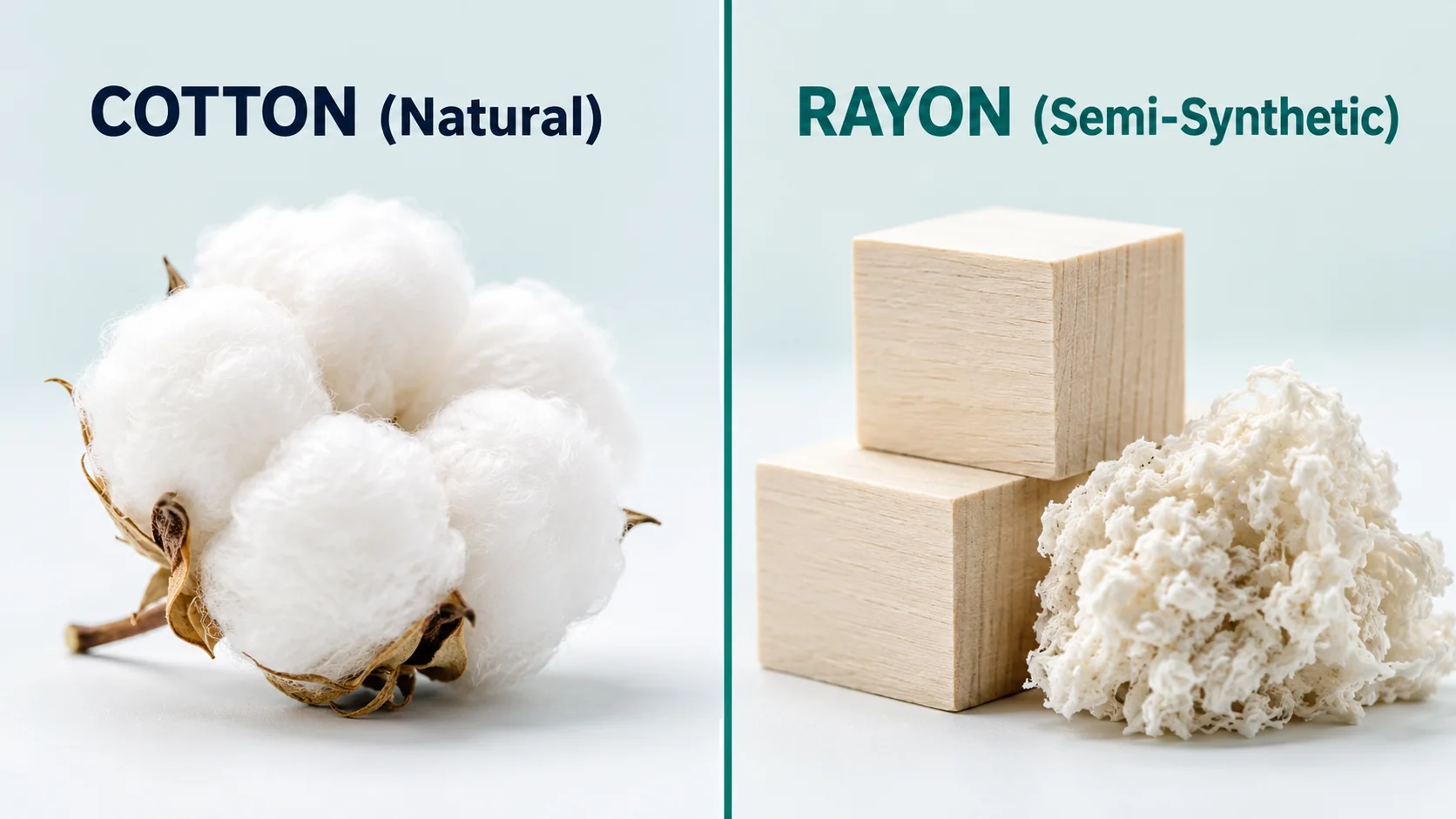
If you are comparing rayon vs cotton, the core difference comes down to their origin and structural integrity. Cotton is a 100% natural agricultural fiber that is highly durable, naturally breathable, and gets stronger when exposed to water. Rayon is a semi-synthetic fabric manufactured by chemically processing natural wood pulp. While rayon beautifully mimics the silky drape and cooling touch of luxury fabrics, it requires much gentler care because it loses significant tensile strength when wet.
Key Takeaways
- The Sweet Spot: A 50/50 cotton-rayon blend gives you the structural stability and easy care of cotton, combined with the luxurious softness of rayon.
- The Origin Difference: Cotton is a 100% natural plant fiber. Rayon is a semi-synthetic fiber made by chemically processing natural wood pulp.
- The Water Rule (Care): Cotton gets stronger when wet and handles the washing machine beautifully. Rayon loses up to 50% of its strength when wet, making it highly prone to shrinking and warping without gentle care.
- The Climate Rule: Choose rayon for a breezy, cooling sensation in dry heat. Choose cotton for breathable, sweat-evaporating comfort in humid heat.
- Look & Feel: Cotton provides a crisp, durable structure that softens over time. Rayon provides an instant heavy, silky, and fluid drape.
- Tag Translation: If your clothing or bed sheet tag says Viscose, Modal, Lyocell, Tencel, or “Bamboo,” you are buying a type of rayon.
| Feature | 100% Cotton | Standard Rayon (Viscose) |
|---|---|---|
| Origin | Natural plant fiber | Semi-synthetic (wood pulp) |
| Softness & Drape | Crisp, structured, softens over time | Instantly soft, heavy, flowing drape |
| Breathability | Excellent (allows evaporative cooling) | Good (but can trap moisture in high humidity) |
| Dimensional Stability | High (retains shape well) | Low (prone to warping and shrinking) |
| Wet Strength | Gains strength when wet | Loses up to 50% of its strength |
| Cost | Moderate to high | Low to moderate |
What is Cotton? (The Natural Workhorse)
Cotton is an agricultural crop harvested from the protective, fluffy seed pods (bolls) of the cotton plant. Because it is a purely natural fiber, it requires very little chemical intervention to become a textile. The raw fibers are simply cleaned, combed to align the threads, and spun into yarn.
This straightforward mechanical process preserves the plant’s natural cellular structure. Cotton fibers are naturally hollow, acting like microscopic sponges that allow air to circulate freely. This is why cotton remains the global standard for breathable, durable, and highly absorbent textiles. Whether woven tightly into rigid denim or loosely into a summer gauze, cotton relies on its natural plant mechanics to regulate temperature.
Sustainability Note: While it is a natural material, standard commercial cotton farming is heavily resource-intensive, requiring massive amounts of water and pesticides. If eco-impact is a primary concern, look for Certified Organic Cotton, which relies on rain-fed farming and eliminates harsh agricultural chemicals, making it an excellent match if you already wash with plant-based detergents.
What is Rayon? (The Semi-Synthetic Silk)
To understand if rayon is a type of cotton, you have to look at the chemistry of its manufacturing process. Rayon is not cotton, nor is it a pure synthetic like petroleum-based polyester. Textile scientists categorize it as a “regenerated cellulose” fiber.
Manufacturers take natural wood pulp—often harvested from fast-growing pine, beech, or bamboo trees and break it down using chemical solvents. This turns the wood into a viscous liquid, which is then extruded through microscopic holes (spinnerets) into a chemical bath that hardens the liquid into solid, continuous filaments. Because rayon starts with organic material but requires heavy industrial chemistry to become a fabric, it perfectly bridges the gap between natural breathability and synthetic smoothness. Knowing how to wash different fabrics in this category is essential, as semi-synthetics behave uniquely in water.
Performance Breakdown: Cotton vs. Rayon
Softness, Feel, and Skin Sensitivity
If you are wondering whether rayon feels like cotton, the answer depends entirely on how the fabric falls against the body. Standard cotton has a crisp, structured hand-feel. It naturally holds its shape, which is why a cotton button-down shirt looks sharp and tailored. It is also inherently hypoallergenic, making it the top recommendation by dermatologists for individuals dealing with eczema or severe skin sensitivities.
Rayon is engineered to mimic silk, meaning it behaves completely differently. It feels incredibly smooth, slick, and cool to the touch right off the hanger. Instead of holding a rigid shape, rayon is heavy and fluid; it drapes, swings, and flows over the contours of the body. While it is generally very safe for the skin, individuals with extreme chemical sensitivities occasionally report reactions to the residual manufacturing treatments on lower-quality viscose.
The Climate Test: Which is Better for Summer?
Because both fabrics are fundamentally plant-based (cellulose), they are both highly breathable. However, their specific moisture-management mechanics dictate how they perform in different summer climates. Both fabrics are highly hydrophilic (water-loving), but they process that water differently.

| Climate Type | The Winner | The Science Behind It |
|---|---|---|
| Dry Heat (e.g., Arizona) | Rayon | Rayon feels instantly cool against the skin. In dry climates, the moisture it absorbs evaporates rapidly, creating a breezy, cooling effect. |
| Humid Heat (e.g., Florida) | Cotton | Cotton absorbs sweat into the core of the fiber while allowing air to pass through. Rayon holds sweat on the surface, causing it to become heavy and clammy. |
Durability, Pilling, and Dimensional Stability
Cotton is the undisputed winner for longevity and structural integrity. Its staple fibers are naturally resilient, withstanding years of friction, stretching, and aggressive washing. While 100% cotton does wrinkle, it possesses excellent dimensional stability—meaning it handles a hot iron effortlessly and bounces back to its original shape.
Rayon is a much more delicate textile. It lacks dimensional stability, meaning it wrinkles heavily and permanently creases if not steamed properly. Furthermore, standard viscose rayon is highly prone to pilling (those tiny, annoying fuzzballs) under heavy friction. The fibers break down faster over time if subjected to rough wear, such as the friction between your thighs or the rubbing of a heavy backpack strap.
The Best of Both Worlds: Cotton-Rayon Blends
Textile manufacturers often weave cotton and rayon yarns together to engineer a fabric that solves the inherent weaknesses of each individual fiber. A 50/50 cotton-rayon blend has become the gold standard for premium everyday apparel, particularly in high-end t-shirts and loungewear.
In a blended fabric, the cotton acts as the structural skeleton. It provides durability and stops the rayon from drastically shrinking or warping in the wash. At the same time, the rayon adds a silky, luxurious drape that keeps the cotton from feeling stiff, while adding a subtle sheen that elevates the look of the garment. If you want the breezy drape of rayon but refuse to hand-wash your clothes, a cotton-rayon blend is the perfect compromise.
Buying Guide: How to Choose the Right Fabric
For Everyday Clothing (T-Shirts and Jeans)
For clothing that takes a beating, cotton is superior. It is the backbone of jeans, standard t-shirts, and heavy workwear because you can wear it hard, sweat in it, and wash it frequently without fear of destroying it. Rayon should be reserved for “statement” garments where movement and aesthetic flow are the primary goals—think summer maxi dresses, wide-leg resort trousers, and breezy Hawaiian-style blouses.
For Babies and Sensitive Skin (The “Bamboo” Sleepwear Boom)
Parents often see premium baby sleepers and swaddles marketed as “viscose from bamboo.” While these rayon garments are incredibly soft, stretchy, and cooling against sensitive baby skin, they come with a major practical trade-off: laundry limitations. Babies make frequent messes like formula or milk spills that often require hot water and heavy-duty stain removers to sanitize. Cotton can withstand high-heat sanitizing cycles and aggressive scrubbing to remove stains.
For Bedding and Sheets
The battle for the best bed sheets comes down to whether you are a hot sleeper who sweats, or a hot sleeper who just wants a cool surface.
- Choose Cotton: Percale woven cotton sheets are crisp, highly breathable, and feel like standard luxury hotel bedding. They allow body heat to escape efficiently, making them the best choice if you actively sweat at night.
- Choose Rayon: Rayon sheets—which are almost always marketed online as “Bamboo sheets,” even though the FTC strictly requires them to be labeled as rayon—are incredibly silky, heavy, and cool to the touch. They drape heavily over your body. If you want a slick, cooling sensation against your skin, buy rayon.
Price & Value: Which is Cheaper?
In general, standard viscose rayon is cheaper to produce than high-quality cotton. Because rayon is manufactured in a controlled factory setting using fast-growing wood pulp, it entirely bypasses the unpredictable agricultural costs, land requirements, and weather dependencies of cotton farming. Rayon is heavily utilized in the fast-fashion industry because it offers consumers a high-end, silk-like appearance at a fraction of the cost of premium long-staple cotton or actual silk.
The “Wet Strength” Warning: Washing and Care
If you have ever wondered why rayon shrinks so aggressively, it all comes down to the physics of water and fiber tension. During the manufacturing process, rayon fibers are stretched tightly. When rayon gets wet, those fibers swell massively and become incredibly weak.
Always check your garment’s care label. While cotton can comfortably handle warm water, heavy agitation, and tumble drying, 100% rayon garments must be treated like delicate silk. They should almost always be washed on a cold, delicate cycle (or hand-washed), and then laid flat to dry so the weight of the water doesn’t stretch them out of shape.
Final Verdict: Which Should You Choose?
Neither fabric is universally “better”—they are distinct materials engineered for entirely different purposes. Choose cotton when you need a low-maintenance, highly durable, and structured fabric that breathes beautifully in humid, sweaty conditions. Choose rayon when you want luxurious softness, elegant, fluid drape, and cooling comfort in dry climates as long as you are willing to give it the careful, gentle washing it requires to survive.
