


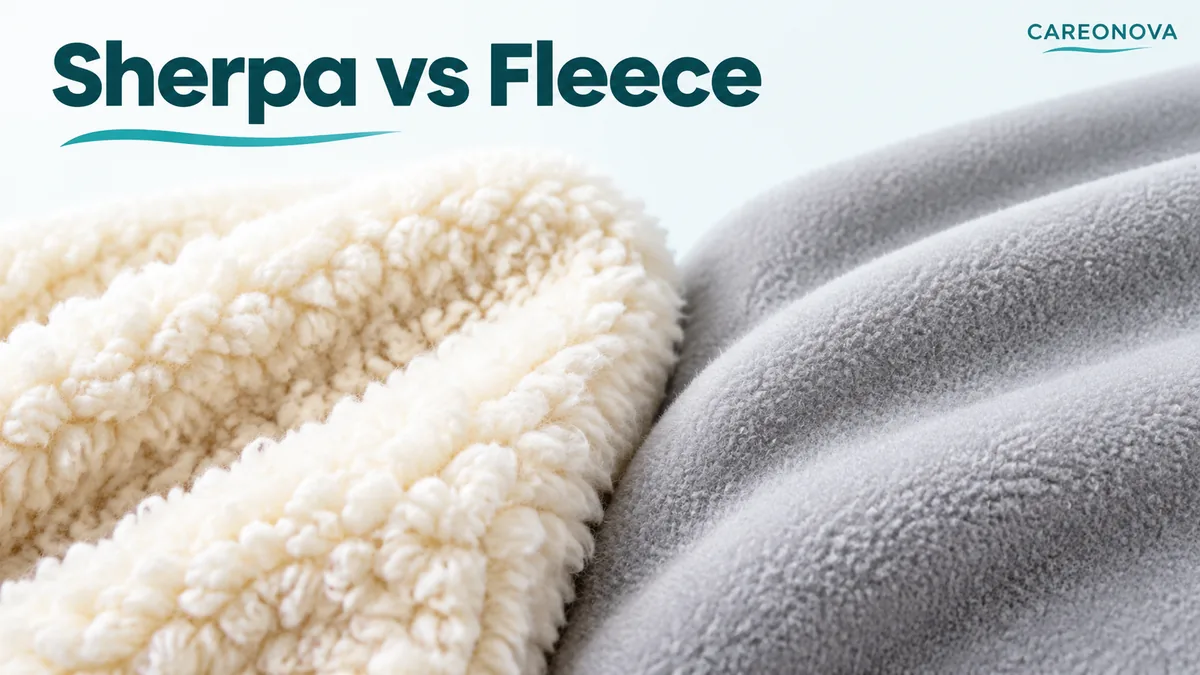
Sherpa and fleece are popular choices for winter clothing, blankets, and comfortable everyday layers. Both are soft and insulating, but they have noticeably different textures. Sherpa has a thick, curly surface resembling sheep’s wool, while conventional fleece usually has a smoother, brushed finish.
Sherpa often feels warmer than lightweight fleece because its raised fibers create pockets that trap still air. That does not make it the warmer option in every situation, though. A heavyweight fleece garment can provide more insulation than a thin Sherpa lining.
The difference matters when choosing a blanket, winter jacket, or outdoor layer. Your decision should depend on the fabric’s construction, weight, and intended use rather than its name alone.
What Is the Difference Between Sherpa and Fleece?
The most noticeable difference is the surface texture. Sherpa has a deep, curly pile, while conventional fleece typically has a shorter, more uniform brushed surface.
Their construction also affects how they feel, retain warmth, and perform during everyday use.
| Feature | Sherpa | Conventional Fleece |
|---|---|---|
| Texture | Fluffy and wool-like | Smooth and brushed |
| Surface | Curly, raised pile | Shorter, more uniform pile |
| Warmth | Often feels warmer in lightweight comparisons | Depends on weight and construction |
| Feel | Thick and plush | Soft and generally less bulky |
| Weight | Often thicker | Available in lightweight and heavyweight options |
| Breathability | Varies with pile and backing | Many performance versions allow airflow |
| Common uses | Blankets, jacket linings, slippers | Jackets, hoodies, blankets, outdoor layers |
These differences are typical rather than universal. A dense, heavyweight garment may perform very differently from a lightweight version of the same material.
What Is Sherpa Fabric?
Sherpa is a textile style recognized by its thick, curly surface, which resembles the appearance of sheep’s wool. It is commonly used in winter clothing and home textiles because of its soft texture and plush appearance.
Most commercially available Sherpa fabric is made from polyester, although fiber blends are also available. Its name describes its characteristic appearance rather than guaranteeing a particular composition.
The raised fibers create a high-pile surface. The spaces within this structure can hold still air, contributing to insulation.
Common applications include:
- Winter jacket linings and collars.
- Hoodies and sweatshirts.
- Blankets and throws.
- Slippers and indoor footwear.
- Winter loungewear and accessories.
Some products have a fluffy outer surface and a smooth knitted backing. This construction provides the characteristic plush feel while giving the material a more stable reverse side.
What Is Conventional Fleece?
In apparel, conventional fleece generally refers to a soft textile with a brushed or raised surface. Polyester is widely used because it can produce lightweight fabrics that retain warmth without the weight of many traditional wool garments.
Its appearance and performance vary according to the manufacturing process, fiber composition, thickness, and finishing.
Common varieties include:
- Microfleece: A lightweight option used for thin layers and comfortable clothing.
- Polar fleece: A widely used synthetic fabric with a soft, raised surface.
- Midweight fleece: A weight category commonly used in everyday jackets and sweatshirts.
- Heavyweight fleece: A thicker construction designed to provide additional insulation.
Microfleece and polar fleece describe fabric types or product categories, whereas midweight and heavyweight describe relative weight. They should not be treated as interchangeable classifications.
For a practical example, Polartec’s fleece range illustrates how different fabric weights and constructions are designed for different insulation requirements.
Is Sherpa a Type of Fleece?
In clothing and textile retail, Sherpa is commonly marketed as a type of fleece. The distinction is that fleece describes a broader range of fabric constructions, while Sherpa refers to a particular wool-like, high-pile appearance.
The difference becomes clearer when separating three textile terms:
| Term | Meaning | Example |
|---|---|---|
| Fiber | Raw material used to make textiles | Polyester, cotton, wool |
| Fabric | Material produced from fibers or yarns | Knitted polyester textile |
| Surface construction | Physical appearance and structure | Brushed surface or curly pile |
Two fabrics can contain identical polyester fibers but look and feel completely different because of their construction and finishing.

Which Is Warmer: Sherpa or Fleece?
Sherpa often feels warmer than lightweight fleece because its raised pile creates spaces that can trap still air. This helps provide insulation and gives the material its thick, cozy feel.
Heavyweight fleece can be equally warm or warmer than a lightweight Sherpa fabric. Actual insulation depends on several factors:
- Thickness and loft: The depth and structure of the raised fibers influence how much air the material can hold.
- Fabric weight: A heavier construction may provide more insulation, although weight alone does not determine warmth.
- Density: The arrangement of fibers affects the fabric’s thermal and airflow properties.
- Backing: Additional layers can change insulation and comfort.
- Garment construction: Fit, layering, and outer-shell protection also affect how much warmth is retained.
For example, a thick winter jacket with a suitable outer shell and a fleece midlayer may provide better protection in cold, windy conditions than a lightweight Sherpa hoodie.
The useful distinction is that Sherpa often provides a plush, cozy feel, while performance fleece is available in a wider range of weights for different layering needs.
How Do the Two Materials Compare in Everyday Use?
Warmth is only part of the decision. Comfort, airflow, drying behavior, and resistance to surface wear also matter.
Softness and Comfort
Sherpa has a fluffy, textured surface that feels particularly plush. This makes it popular for blankets, slippers, and clothing intended for relaxation.
The brushed surface of conventional fleece feels smoother and is generally less bulky. It may be more comfortable when worn underneath another garment.
Neither is automatically softer. Fiber quality, finishing, and pile density all influence the final feel.
Breathability
Many performance fleece fabrics are designed to allow airflow and release excess heat, making them suitable for walking, hiking, and other activities.
Dense Sherpa constructions can restrict airflow more than lightweight performance fabrics, particularly when they have a substantial backing. The actual difference depends on the individual product.
If you need clothing for physical activity, look for specifications relating to breathability and moisture management rather than assuming that every product in a particular fabric category will perform the same way.
Weight and Drying Time
Lightweight fleece is generally less bulky than thick Sherpa and can be convenient for layering and travel.
Drying time depends on the amount of material, fiber composition, pile density, backing, and moisture retained during washing. A thick Sherpa blanket may take longer to dry than a lightweight fleece garment, but this is not a universal rule.
The construction of the complete product matters more than its label.
Durability and Surface Wear
Both materials can develop surface problems with repeated use and washing.
Sherpa may lose its original appearance through:
- Flattened or matted pile.
- Fiber shedding.
- Friction-related surface wear.
Conventional fleece may develop:
- Pilling.
- Abrasion.
- Loose fibers.
- Changes in softness.
These problems are different:
Pilling occurs when loose fibers become tangled and form small balls on the fabric surface; friction is one of the common causes of surface pilling.
Shedding happens when fibers detach from the material.
Matting occurs when raised fibers become compressed or tangled, reducing their original fluffy appearance.
The durability of either material depends on fiber quality, yarn construction, density, finishing, and maintenance. Neither should automatically be considered more durable without comparing the actual products.
Which Is Better for Blankets, Jackets, and Everyday Clothing?
The best choice depends on where and how the material will be used.
Blankets
Sherpa blankets are popular for their thick, plush surface. They are particularly suitable for people who prefer a fluffy texture when relaxing on a sofa or in bed.
Conventional fleece blankets offer more variety in weight and texture. Lightweight options are easier to fold and carry, while thicker versions can provide substantial warmth.
| Consideration | Sherpa Blanket | Fleece Blanket |
|---|---|---|
| Feel | Thick and plush | Smooth and soft |
| Warmth | Cozy, depending on construction | Varies with weight |
| Bulk | Often thicker | Available in lighter options |
| Storage | Can take up more space | Lightweight options fold easily |
| Maintenance | Care needed to preserve the pile | Depends on construction and label |
Some blankets combine both materials, using a fluffy surface on one side and a smoother one on the other. These reversible designs provide two different textures in a single product.
Jackets and Hoodies
Sherpa is frequently used as an interior lining, collar, or outer surface in winter clothing. Its raised pile provides a cozy feel and contributes to insulation.
Conventional fleece is often used throughout jackets, pullovers, and hoodies. Its range of weights makes it suitable for everyday clothing and outdoor layering.
Consider the construction rather than the product name:
- Sherpa-lined jackets: Suitable when a plush, warm interior is preferred.
- Fleece jackets: Available in different weights for everyday wear and layering.
- Sherpa hoodies: Often thicker and more textured.
- Fleece hoodies: Commonly available in smoother, lighter constructions.
A Sherpa-lined jacket is not necessarily made entirely from that material. It may have a separate outer shell and an interior lining.

The outer layer is particularly important in bad weather. Neither material should automatically be considered waterproof or windproof. Those properties depend on additional fabrics, membranes, and coatings.
Activewear and Outdoor Layering
Lightweight performance fleece is generally the more practical option for activewear.
Its relatively low bulk and availability in breathable constructions make it suitable for hiking, walking, and exercise in cool weather.
Sherpa is usually less convenient for high-movement activities because its thicker pile can feel bulky and retain more heat.
A practical outdoor layering system typically includes:
- A base layer to manage moisture next to the skin.
- An insulating midlayer to retain warmth.
- An appropriate outer shell to protect against wind and rain.
The right combination depends on weather conditions, activity level, and the specifications of each garment.
What Is Sherpa Made Of?
The name Sherpa does not guarantee a particular fiber composition. Many commercially available products are made from polyester, although blends and other combinations are possible.
The same applies to conventional fleece. Polyester is common, but the actual composition varies between products.
Is Sherpa Fleece Polyester?
Most commonly available Sherpa is made from polyester or polyester blends. Polyester can be processed into a soft, raised surface that gives the material its characteristic appearance.
Not every product is 100% polyester. Some contain other fibers or use a different material for the backing.
When buying clothing or household textiles, check the fiber-content label instead of relying on the product name.
A label might identify a product as:
- 100% polyester.
- 80% polyester and 20% cotton.
- A different polyester and other-fiber blend.
The percentages depend on the individual product.
How to Identify Good Fabric Quality
The material name alone cannot establish whether a product is well made. Examine its construction and available specifications before purchasing.
Pay attention to:
- Surface consistency: Look for an even pile without noticeable thin patches.
- Backing: Check whether the reverse side feels stable and securely constructed.
- Fiber retention: Look for excessive loose fibers or visible shedding.
- Density: Compare how substantial the material feels for its intended use.
- Stitching: Inspect seams and the attachment of any lining.
- Fiber composition: Read the label rather than relying on marketing descriptions.
- Care requirements: Check whether the recommended maintenance is practical for you.
A thicker fabric is not necessarily better. The appropriate construction depends on whether you need a lightweight layer, a warm lining, or a substantial blanket.
Does GSM Determine Warmth?
GSM stands for grams per square meter. It measures the weight of fabric per unit of area and is commonly used to describe textile weight.
A higher GSM indicates a heavier fabric, but it does not automatically mean better insulation.
Two materials with similar GSM values can have different thermal properties because of differences in pile height, loft, density, backing, and construction.
Use GSM as one comparison point, not as a standalone measure of warmth.
How to Wash and Care for These Fabrics
Proper maintenance helps preserve softness, appearance, and useful life. Washing instructions can vary with fiber composition, dyes, finishes, and backing materials, so always check the manufacturer’s care label and follow its washing and drying symbols.
Washing Instructions
If machine washing is permitted, follow the recommendations for washing different fabrics, particularly when choosing the appropriate cycle and temperature. These practices can help reduce unnecessary wear:
- Separate soft garments from rough items such as denim and heavy towels.
- Secure zippers, hooks, and hook-and-loop fasteners.
- Use the washing cycle and temperature recommended on the label.
- Choose a suitable detergent.
- Avoid overcrowding the washing machine.
Rough surfaces and fasteners can create friction, which may contribute to pilling and damage.
Avoid fabric softener if the manufacturer advises against it. Some performance garments have specific care requirements to preserve their intended moisture-management properties.
How to Keep Sherpa Fluffy
The raised pile can become flattened through repeated friction, compression, or excessive heat.
To maintain its texture:
- Follow the recommended washing temperature.
- Avoid unnecessary friction during washing.
- Do not use high dryer heat unless the care label permits it.
- Air-dry or lay the item flat when recommended.
- Avoid compressing the pile unnecessarily during storage.
If the surface becomes slightly flattened, allow the item to dry completely before gently separating the fibers with your fingers. A soft brush may be suitable for some products, but use one only if the manufacturer’s instructions permit it.
Aggressive brushing can pull out fibers and damage the surface.
Pilling, Shedding, and Drying Problems
Turn garments inside out when appropriate, secure rough fasteners, and avoid unnecessary friction to reduce pilling.
Some loose lint may appear when a new pile fabric is first handled or washed. Persistent or excessive shedding is a different matter and may indicate poor fiber retention or surface wear.
Dryer suitability also varies. Some polyester-based products tolerate low-temperature tumble drying, while others require air drying or flat drying. Excessive heat can affect synthetic fibers, distort the backing, or flatten the pile.
The risk of polyester shrinkage is generally lower than with some natural-fiber fabrics, but blends and finishing treatments can behave differently. Follow the care label rather than applying one washing or drying method to every product.
How Does Sherpa Compare With Other Similar Fabrics?
Several materials have a soft, raised surface and can look similar at first glance. Their composition and construction help distinguish them.
Sherpa vs Shearling
Sherpa and shearling have a similar wool-like appearance, but they are different materials.
Sherpa is a textile style commonly made from synthetic fibers such as polyester. Genuine shearling is sheepskin that has been tanned with the wool still attached.
| Feature | Sherpa | Genuine Shearling |
|---|---|---|
| Material | Commonly synthetic textile | Genuine sheepskin |
| Surface | Wool-like pile | Natural wool |
| Backing | Fabric backing | Leather or suede side |
| Weight | Varies by construction | Often heavier |
| Care | Depends on textile composition | Requires specialized leather and sheepskin care |
The two are not interchangeable. Check the product description carefully, especially when buying items advertised as faux shearling.
Sherpa vs Microfleece and Polar Fleece
Microfleece is a lightweight option commonly used for thin layers and comfortable clothing. Polar fleece is a widely used synthetic textile with a soft, raised surface and different available weights.
Sherpa has a deeper, curlier appearance, while these other constructions generally have a more uniform surface.
The practical distinction is their intended use. Lightweight versions are useful for layering, whereas Sherpa is commonly selected for its distinctive texture and cozy appearance.
Sherpa vs Plush Fleece
Plush fleece describes a soft textile with a fuller or longer-pile surface. Its exact appearance and construction can vary between manufacturers.
Sherpa usually has a curly, wool-like texture, while plush fleece may have a more uniform, velvety surface.
| Feature | Sherpa | Plush Fleece |
|---|---|---|
| Appearance | Curly and wool-like | Soft and plush |
| Texture | Distinctive raised pile | Often fuller and more uniform |
| Construction | Typically high-pile | Varies by product |
| Common uses | Jacket linings, blankets, winter clothing | Blankets, toys, clothing, soft furnishings |
| Warmth | Depends on pile and density | Depends on thickness and construction |
Neither is automatically warmer or softer. Fiber composition, pile structure, weight, and backing determine the actual performance.
Choose the first when you prefer a wool-like texture; the second may suit you better if you want a smoother, plush surface.
Final Verdict: Which One Should You Choose?
Sherpa is a good choice when softness, a fluffy appearance, and a cozy feel are your main priorities. It works particularly well in blankets, jacket linings, and comfortable winter clothing.
Conventional fleece is often more practical when you need a range of weights, smoother textures, and versatile options for everyday layering or outdoor activities.
The best choice depends on the actual product rather than its label. Compare the fabric weight, pile structure, fiber composition, backing, and care requirements before making a decision.
A well-constructed garment in either material can provide excellent comfort and warmth when used for the right purpose.
