


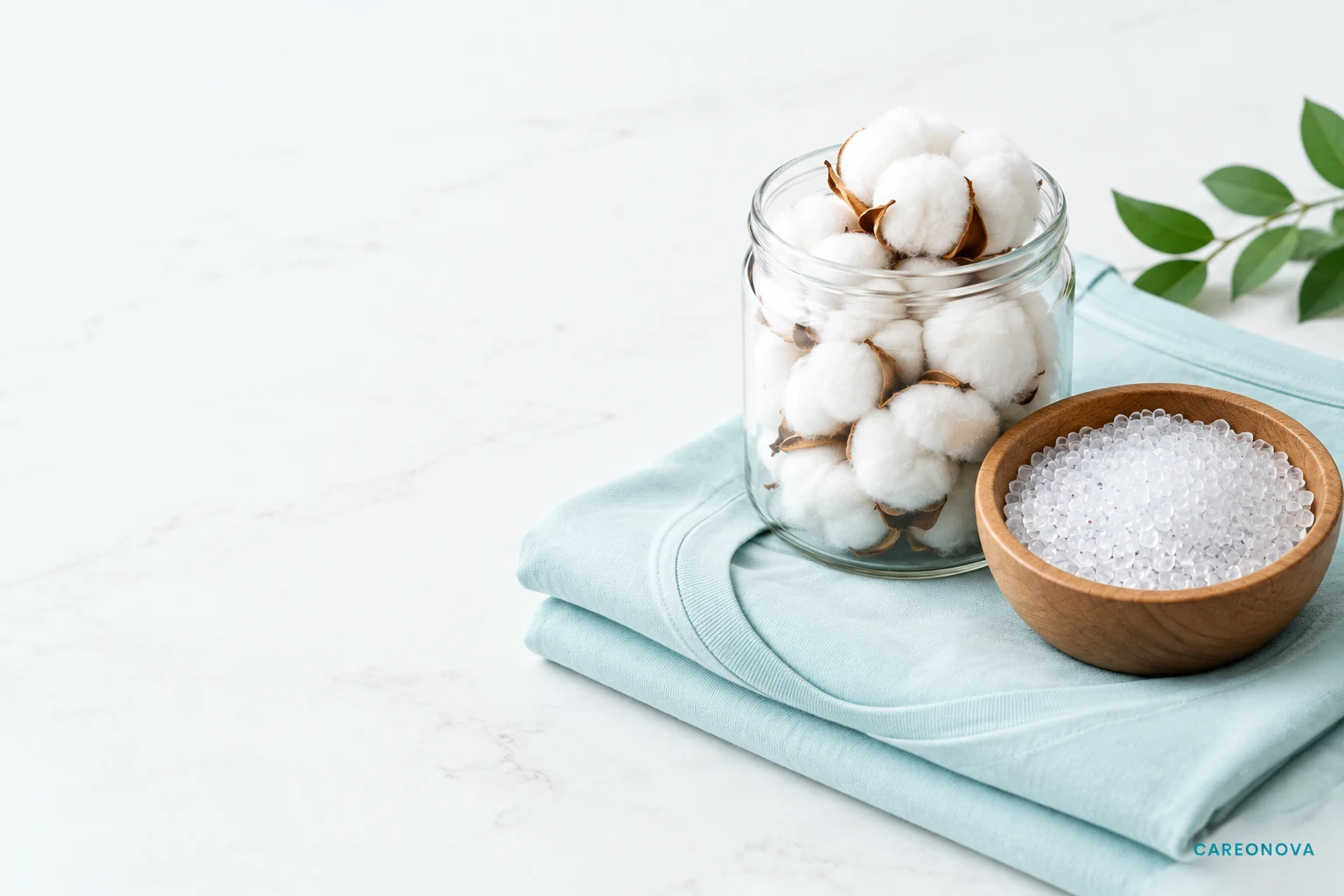
Cotton is a natural plant fiber composed entirely of cellulose. Farmers harvest it from the protective bolls of the cotton plant, clean the fibers, and spin them into yarn. Polyester is a synthetic plastic fiber. Chemical plants refine petroleum into polyethylene terephthalate, melt it into a liquid, and push it through microscopic holes to create long plastic threads. When weighing polyester vs. cotton, the right choice depends on the specific mechanical requirements of the garment or textile.
Quick comparison: core differences at a glance
The fundamental differences between these two materials stem directly from their origins as either a natural plant or a synthetic plastic.
| Feature | Cotton | Polyester |
|---|---|---|
| Source material | Plant fiber (cellulose) | Petroleum (synthetic plastic) |
| Moisture behavior | Absorbs water (hydrophilic) | Repels water (hydrophobic) |
| Breathability | High | Low (unless knit into an open mesh) |
| Durability | Moderate (fades and shrinks) | High (maintains shape and color) |
| Odor retention | Low (washes clean) | High (binds chemically to body oils) |
| Price | Moderate to high | Low |
How the fibers handle sweat and heat
The most critical difference between these two textiles is their physical reaction to water. This single mechanical trait dictates how the fabric performs against human skin during temperature changes.

Cotton absorbs moisture (hydrophilic)
Cotton pulls liquid directly into the core of its fibers. The cellulose structure contains chemical hydrogen bonds that actively attract water molecules. A standard cotton t-shirt easily absorbs 24 to 27 times its own weight in water.
In a dry environment, this absorption cools the skin. The fabric pulls a small amount of sweat away from the body and allows it to evaporate into the air.
During intense physical exertion, this mechanism fails. The cotton fibers reach their maximum absorption capacity and swell. The fabric becomes heavy, damp, and clings to the skin. The trapped water blocks all airflow, eliminating the body’s ability to cool itself.
Polyester wicks moisture (hydrophobic)
Polyester completely repels water. The smooth plastic surface of the fiber cannot absorb moisture into its core.
Fabric engineers use this hydrophobic property to create moisture-wicking garments. They knit the plastic fibers with microscopic channels on the surface. When you sweat, capillary action forces the liquid along these channels, moving it away from the skin to the outer face of the fabric.
Once the sweat reaches the outside of the shirt, it spreads out over a large surface area. This wide distribution allows the water to evaporate rapidly into the air, keeping the skin dry.
Clothing choices: workouts, seasons, and daily wear
The physical properties of the fiber dictate exactly where and when you should wear it. Matching the fabric to the physical environment prevents severe discomfort and regulates your body temperature.
Workouts and athletic wear
Polyester prevents skin chafing and keeps sweat off the body. The smooth synthetic fibers glide over the skin even during repetitive motions like running or cycling. The wicking action actively pulls heavy sweat away from the body.
Cotton stays wet and causes severe friction. A wet cotton shirt loses its smooth texture and creates drag against the skin. Repeated rubbing from wet cotton causes raw skin, blisters, and bleeding during long workouts. Cotton also causes post-workout chills. The heavy, wet fabric rapidly drains heat from the body the moment physical exertion stops.
Hot summer days
Cotton provides the best breathability for casual, low-sweat summer days. The open structure of spun cotton yarn allows continuous air circulation. This natural venting works perfectly in 30 degree Celsius heat when the body produces minimal sweat.
Standard woven polyester traps body heat. A basic polyester shirt blocks airflow and holds hot air close to the skin.
Engineered open-mesh polyester cools the body during outdoor summer sports. Manufacturers knit athletic polyester with thousands of visible holes. This structure forces airflow while maintaining the fabric’s ability to aggressively push sweat to the surface.
Cold winter weather
Cotton flannel provides dry indoor warmth. Manufacturers brush the surface of the cotton fabric with fine metal brushes. This process raises tiny fibers that trap small pockets of warm air against the skin. Because these natural fibers retain ambient moisture, you should prevent mold on clothes by ensuring they are completely dry before packing them away for the summer.
Polyester fleece traps body heat and performs flawlessly in wet winter conditions. The synthetic fibers maintain their loft and structural integrity even when exposed to heavy rain or snow. Polyester insulation layers continue to hold warm air against the body at 90 percent humidity.
Socks and underwear
Cotton is the standard requirement for daily underwear. Natural airflow prevents yeast, fungi, and harmful bacterial growth in sensitive areas. Synthetic underwear often traps heat and moisture, creating the exact dark, damp environment that causes skin infections.
Polyester blends dominate athletic socks. Running and hiking generate extreme friction inside a shoe. Polyester fibers slide smoothly against the interior of the shoe, reducing the sheer forces that cause blisters. The hydrophobic fibers also push foot sweat up to the ankle for evaporation, though treating these trapped proteins occasionally requires an enzyme laundry detergent to prevent long-term buildup.
Bedding: sheets, comforters, and pillows
Home textiles require a different set of performance metrics than clothing. When comparing polyester vs. cotton sheets, a good night of sleep relies heavily on the fabric’s ability to manage ambient heat and long-term surface friction.
Sleep temperature
Human core body temperature drops by 1 to 2 degrees during sleep. The body vents this excess heat into the surrounding environment.
Cotton sheets allow this heat to escape. A cotton percale weave creates a crisp, open grid that facilitates continuous air circulation. This prevents night sweats and keeps the sleeping environment thermally neutral.
Polyester microfiber sheets trap ambient body heat. The synthetic fibers block the vented body heat and reflect it back toward the sleeper. This creates a hot, uncomfortable microclimate under the blanket.
Texture and pilling
Cotton fibers snap cleanly in the wash and soften over time. Friction from moving bodies slowly breaks the microscopic ends of the cotton yarn. These broken plant fibers wash away in the laundry, leaving a smoother fabric surface.
Polyester fibers are tough plastics. Broken polyester fibers stay firmly attached to the main threads in the sheet. As they rub against each other, these broken strands tangle into hard, abrasive knots called pills. These pills create a rough, scratchy sleeping surface that permanently damages the texture of the sheet.
Skin health, allergies, and odor
The chemical makeup of the textile determines how it interacts with the human biome. Certain fibers actively harbor odor-causing bacteria, while others soothe inflamed skin.
Sensitive skin and allergies
Cotton is naturally hypoallergenic. Dermatologists recommend 100 percent cotton for patients managing eczema, psoriasis, and contact dermatitis. Unbleached, undyed cotton contains zero synthetic chemicals and allows inflamed skin to breathe and heal.
Polyester irritates sensitive skin. Manufacturers use disperse dyes to color the plastic fibers. These heavy chemical finishing agents can leach out of the fabric when exposed to warm human sweat. The chemicals enter the skin barrier and trigger allergic reactions and severe itching.
The odor trap (oleophilic fibers)
Polyester is oleophilic. It repels water but aggressively attracts and binds to body oils.
Human apocrine glands release sweat mixed with sebum (oil). The polyester fibers lock onto this oil chemically. Micrococcus bacteria naturally live on human skin. These bacteria migrate into the fabric, feed on the trapped body oil, and produce thioalcohols. Thioalcohols produce the sharp, foul odor associated with dirty gym clothes.
A standard washing machine cycle uses water and mild detergent. This combination fails to penetrate the chemical bond between the polyester plastic and the body oil. The shirt exits the washing machine smelling clean due to artificial fragrances, but the oil and bacteria remain trapped inside. The odor returns immediately when the body warms the fabric.
Cotton releases body oils easily. The hydrophilic plant fibers allow water and detergent to penetrate completely, washing away the sebum and bacteria in a single standard cycle.
Durability, shrinkage, and laundry care
How you wash and dry these fabrics directly determines their lifespan. Natural cellulose and synthetic plastics react completely differently to water temperature and mechanical agitation.
Shrinkage and shape retention
Cotton shrinks in hot water and wrinkles easily. Manufacturers stretch cotton yarns tightly during the spinning process. When exposed to hot water and agitation in a washing machine, the fibers swell and the mechanical tension relaxes. The garment pulls inward upon drying, resulting in 3 to 5 percent shrinkage.
Polyester holds its shape and provides high dimensional stability. Manufacturers heat-set the synthetic fibers at the factory. The fabric remembers this exact dimension and will never shrink, warp, or stretch out of shape during standard home washing.
Heat sensitivity and washing rules
Cotton handles high heat with ease. You can wash white cotton sheets in 90 degree Celsius water to sanitize them, though water this hot will cause extreme shrinkage unless the fabric is factory pre-shrunk. You can iron cotton on the highest heat setting to remove deep wrinkles.
Polyester melts at high temperatures. Washing polyester in boiling water or drying it on high heat permanently damages the fibers. Ironing polyester on a high setting glazes the fabric, leaving a shiny, melted mark on the surface. Polyester requires cold water washes and low-heat tumble drying.
📌 Quick Care Rules
- 100% Cotton: Safe for hot water and high-heat ironing. Expect 3 to 5 percent shrinkage unless the tag specifies it is pre-shrunk.
- 100% Polyester: Use cold water and low tumble dry settings. Never iron on high heat or the plastic fibers will melt and glaze.
- Cotton-Poly Blends: Default to the polyester rules (cold water, low heat) to protect the synthetic core of the thread.
Price and budget differences
Plain polyester is highly inexpensive. The global commodity price for raw polyester is roughly 1 dollar per kilogram. The fast synthesis process allows factories to produce millions of yards continuously.
Conventional cotton carries a moderate price. It requires massive tracts of agricultural land, seasonal labor for harvesting, and complex milling processes to remove seeds and debris.
Long-staple cottons carry a high price premium. Pima, Supima, and Egyptian cotton varieties grow only in specific, controlled climates. They possess unusually long individual fibers. Spinners weave these long fibers into exceptionally smooth, strong, and luxurious threads that cost significantly more to produce and buy.
The cotton-polyester blend
Textile engineers create 50/50, 60/40, and 80/20 blends to combine the best mechanical traits of both materials.
A standard 60/40 blend often features a strong polyester core wrapped in soft cotton threads. This gives the garment the comfortable hand-feel of cellulose against the skin. The internal plastic core provides high tensile strength, stops the garment from shrinking in the wash, and prevents the dye from fading in the sun. Blends dominate the market for everyday hoodies, school uniforms, and durable workwear.
Specialized uses: printing and sewing
Commercial garment manufacturing and home crafting require strict material matching. Using the wrong fiber ruins expensive equipment and wastes materials.
Custom shirt printing
Cotton is strictly required for direct-to-garment (DTG) printing and traditional screen printing. The water-based inks used in these machines bond chemically with natural cellulose fibers. The ink absorbs into the shirt and creates a permanent, soft image.
Polyester is strictly required for dye sublimation printing. This process uses high heat to turn solid ink into a gas. The heat simultaneously forces the microscopic pores of the plastic polyester fibers to open. The gas permeates the open plastic pores. As the fabric cools, the pores close, locking the ink permanently inside the plastic fiber. This process fails completely on cotton.
Sewing machine thread
Polyester thread stretches 15 to 20 percent before snapping. This elasticity makes it the standard choice for modern sewing machines running at high speeds. It holds tension well and prevents seam blowouts on fitted clothing.
Cotton thread yields only 2 to 3 percent stretch before breaking. It snaps easily under high tension. Tailors use cotton thread specifically for quilting and for sewing garments intended for piece-dyeing. Because the cotton thread absorbs dye at the exact same rate as the cotton fabric, the final garment shows a uniform color.
How to test unlabeled fabric at home
Clothing tags often fade or rip off. You can identify the exact fiber content of an unmarked piece of fabric using 2 basic physical tests.
The water drop test
Lay the fabric flat on a table. Drop 1 milliliter of water onto the surface and observe the timeline.
Water absorbs instantly into 100 percent cotton. The drop disappears into the fabric in under 1 second, leaving a dark, wet spot.
Water beads perfectly on the surface of 100 percent polyester. The liquid sits on top of the fabric for over 60 seconds without penetrating the weave.

The burn test
Hold a loose thread with metal tweezers over a metal bowl. Light the end of the thread with a flame.
Cotton burns quickly with a bright yellow flame. It smells exactly like burning paper. When the flame extinguishes, it leaves a soft, crumbly grey ash.
Polyester shrinks rapidly away from the flame. It melts rather than burns. It smells sharp and chemical. When it cools, it leaves a hard, round, black plastic bead that you cannot crush with your fingers.
💡 Careonova Expert Tip: Burn Test Safety
Always perform the burn test outdoors or over a metal sink using tweezers. Because polyester is a synthetic plastic, it melts into hot, sticky liquid beads that cause severe burns if they touch your skin.
Environmental tradeoffs
Cotton production uses 10,000 liters of water to produce 1 kilogram of fabric. Conventional farming requires massive land usage and applies heavy volumes of chemical pesticides to protect the crops. The material biodegrades completely when buried in a landfill.
Polyester production relies entirely on petroleum extraction. It uses minimal water during the manufacturing process and requires zero agricultural land.
Polyester sheds microplastics constantly. A standard home washing machine cycle flushes up to 700,000 microscopic plastic fibers into the local water supply. These fibers pass through municipal filtration systems, enter the oceans, and take centuries to decompose.
Cotton-polyester blends pose the most significant environmental challenge at the end of their life cycle. Mechanical recycling facilities cannot separate the natural and synthetic fibers. Separating the blend requires heavy chemical solvents, making commercial recycling economically unviable.
Summary: which fabric should you buy?
Match the fabric to the specific mechanical requirements of the item. When deciding between polyester vs. cotton, follow these baseline rules:
- Buy 100 percent cotton for: Bed sheets, pillowcases, daily underwear, casual summer shirts, baby clothing, and items for sensitive skin.
- Buy 100 percent polyester for: Gym clothes, running socks, swimwear, winter fleece jackets, and outdoor athletic gear.
- Buy blends for: Everyday hoodies, medical scrubs, work uniforms, and durable casual wear requiring low maintenance.
Conclusion
Choosing between Polyester vs. Cotton comes down to managing moisture and heat. Standard cotton fails in the gym, and basic polyester fails in bed. By matching the physical mechanics of the fiber to your daily environment, your clothing and bedding will perform exactly as expected.
