


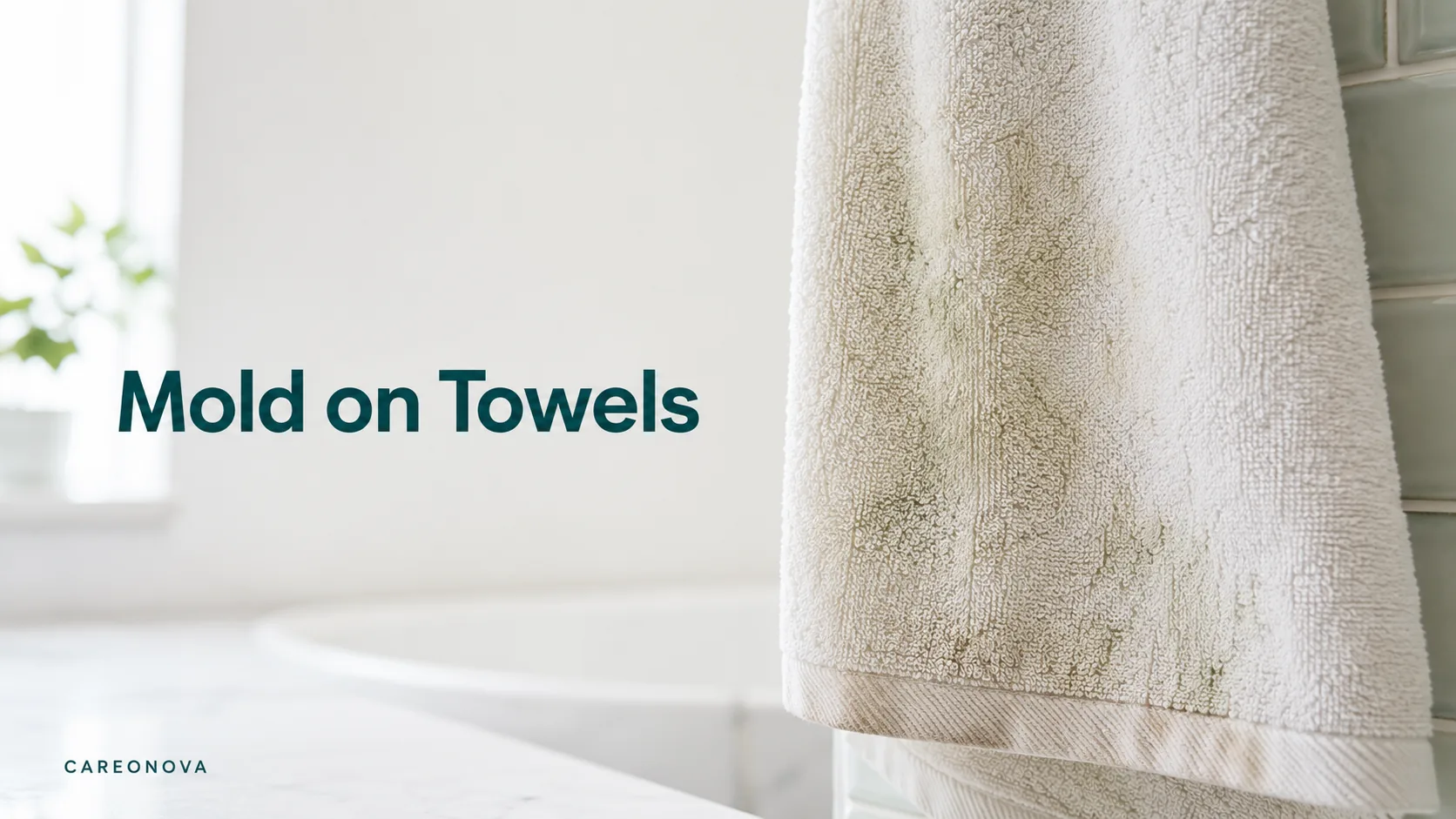
There is nothing worse than stepping out of a clean shower only to dry off with a towel that smells sour, musty, or damp. Mold on towels usually develops when moisture stays trapped in the fabric for too long. Damp bathrooms, poor airflow, slow drying, detergent buildup, and washing machine residue all contribute to mold, mildew, and musty odors.
The best solution is to identify the problem first, clean the towel using a targeted laundry method suitable for its material, and fix the moisture conditions that caused it.
Why Do Towels Get Moldy?
Towels get moldy when moisture, warmth, and limited airflow create conditions where fungal spores thrive. Because manufacturers design towels to be highly absorbent, and you use them repeatedly while damp, they are far more vulnerable than other household fabrics.
The most common causes include:
Towels Stay Damp for Too Long
The main reason towels develop mold or mildew is prolonged moisture. After a shower or bath, towels absorb a massive amount of water. If you leave them folded, bunched up on the floor, or tossed into a laundry basket while still wet, the trapped moisture cannot evaporate.
Good drying habits include:
- Hanging towels fully open instead of folded over tightly.
- Allowing airflow between towels on the rack.
- Making sure towels are 100% dry before folding them for storage.
Bathroom Humidity Slows Drying
Bathrooms naturally contain heavy moisture from showers, steam, and warm air. If your bathroom has poor ventilation, towels remain damp much longer than expected. Limited airflow, not using an exhaust fan, or keeping bathroom doors closed after showers all trap humidity.
Washing Machine Residue Can Affect Towels
Sometimes the towel is not the only source of the problem. A washing machine with heavy internal buildupcontributes to odors returning immediately after laundry cycles. Detergent residue, fabric softener buildup, and moisture trapped inside the drum or rubber seals transfer mildew smells directly back onto your clean towels.
Too Much Detergent or Fabric Softener
Using extra laundry products does not improve cleaning; it actually makes mold problems worse. Excess detergent leaves a sticky residue inside the towel fibers, while fabric softener coats the fibers in a waterproof waxy layer. This buildup destroys the towel’s absorbency and traps moisture and body oils, creating a perfect feeding ground for odors.
Is It Mold, Mildew, or Just a Musty Smell?
A towel that smells bad does not always have visible mold. Your first step is identifying exactly what type of problem you are dealing with.
| Problem | What It Usually Means |
|---|---|
| Musty smell | Dampness, detergent buildup, moisture trapped in fibers, or early microbial growth without visible spots. |
| Mildew | Surface fungal growth that may appear as white, gray, or powdery patches on damp fabric. |
| Mold | More established growth that may appear as dark spots, fuzzy patches, or spreading discoloration. |

What Does Mold on Towels Look Like?
Mold on towels appears as spots, patches, discoloration, or fuzzy growth on the surface. The exact appearance depends on your towel’s color, the fabric construction, and how long the moisture issue has been present.
Black Spots on Towels
Black spots are the most common reason people search for mold on towels. While dark marks usually indicate mold growth, they can also be leftover permanent mold staining from a previous, already-dead mold colony.
If you wash the towel properly but the black marks remain without any accompanying smell, the fabric may just be permanently stained rather than actively harboring live mold.
Pink or Orange Spots on Towels
Pink or orange stains are another common bathroom towel concern, but they are rarely mold. In damp environments, a type of bacteria called Serratia marcescens creates pink or reddish discoloration on wet surfaces. You will often see this bacteria growing in shower grout, and it easily transfers to damp towels left on the floor or tub edge.
Can Moldy Towels Be Saved?
You can save most moldy towels if the problem is limited to a musty smell, light mildew, or small areas of surface growth. However, if the fibers are rotting or the smell survives multiple deep cleans, it is time to throw the towel away.
| Towel Condition | Recommended Action |
|---|---|
| Musty smell but no visible spots | Deep clean the towel and improve drying habits. |
| Small mildew patches or light discoloration | Treat and wash according to the care label. |
| Black spots with strong odor | Clean carefully and evaluate whether the towel is still usable. |
| Mold returns after cleaning | Check moisture sources or consider replacing the towel. |
How to Remove Mold From Towels Step by Step
To permanently remove mold and mildew, you must move beyond generic washing and use specific chemical treatments based on the towel’s color and material.
Always check your towel’s care label before using high heat or strong chemical cleaners.
Step 1: Remove Loose Mold Safely
If your towel has thick, visible, fuzzy growth, take the towel outside immediately. Shake off the loose debris carefully so you do not spread active mold spores around your indoor air or other laundry. Never aggressively brush dry mold inside your home.
Step 2: The Vinegar and Baking Soda Wash (For Musty Smells)
If your towels have that classic sour, musty smell, standard detergent will not fix it. You need to strip the built-up detergent and kill the odor-causing bacteria using a two-step acid and base routine.
- The Vinegar Wash: Place the smelly towels in the washing machine. Add one cup of distilled white vinegar directly to the drum. Do not add any laundry detergent. Run a full cycle on the hottest water setting the fabric allows.
- The Baking Soda Wash: Leave the towels in the machine. Sprinkle half a cup of baking soda directly over the wet towels. Run a second full cycle on the hottest water setting.
- Dry Completely: Immediately transfer the towels to the dryer and dry them completely on medium-high heat.
Step 3: Oxygen Bleach (For Colored Towels & Spots)
If your colored towels have visible mildew or pink bacteria spots, vinegar may not be strong enough.
- Fill a tub or basin with hot water and dissolve a scoop of powdered oxygen bleach (like OxiClean).
- Submerge the towels and let them soak for 2 to 4 hours.
- Transfer them to the washing machine and wash normally with a high-quality enzyme detergent. Oxygen bleach is color-safe but highly effective at lifting biological stains.
Step 4: Chlorine Bleach (For White Towels & Stubborn Black Mold)
For pure white cotton towels heavily infested with black mold spots, chlorine bleach is the strongest option. Wash the towels on a hot cycle with your regular detergent and the recommended dose of liquid chlorine bleach.
Safety Warning: Never mix chlorine bleach with vinegar or ammonia. Combining these common household cleaners creates highly toxic, dangerous chemical gases.
(Note: If the mold has spread beyond your towels to your wardrobe, check out our complete guide to removing mold on clothes for fabric-specific treatments).
Step 5: Heavy-Duty Laundry Stripping
If your towels still feel stiff, heavy, or smell bad after the vinegar wash, they likely suffer from severe hard-water and fabric softener buildup. You will need to perform a deep “laundry strip” using a bathtub soak of Borax, washing soda, and heavy-duty laundry detergent to pull the trapped residue out of the deep terry loops.
Does Towel Material Affect Mold and Odor?
Yes, the material and the thickness of the towel completely dictate its mold risk.
In the textile industry, towel thickness is measured in GSM (Grams per Square Meter). Heavy, plush luxury towels (600–900 GSM) hold massive amounts of water and take hours to dry, making them a high risk for mold. Lightweight, waffle-weave, or Turkish towels (300–400 GSM) dry incredibly fast, making them practically immune to everyday mildew.
| Towel Material | How It Behaves | Care Consideration |
|---|---|---|
| Cotton terry towels | Highly absorbent with thick loops that can hold moisture longer. | Need good airflow and complete drying. |
| Microfiber towels | Lightweight synthetic fibers with different moisture behavior. | Avoid residue buildup and follow washing instructions. |
| Bamboo blend towels | Soft and absorbent depending on the fiber blend. | Follow manufacturer care recommendations. |
| High-GSM towels | Thicker and more plush, but often slower to dry. | Need extra drying time and airflow. |
How to Prevent Mold From Coming Back on Towels
Cleaning removes the current problem, but preventing repeated damp conditions is what keeps towels fresh over time. To stop the sour smell from returning, adopt these strict laundry rules:
- Dry Towels Completely After Every Use: Hang towels spread out on a bar, not bunched up on a hook. Never throw a damp towel into a laundry hamper.
- Ditch the Fabric Softener: Stop using liquid fabric softener and dryer sheets on your towels entirely. They coat the fibers, ruin absorbency, and trap the moisture that feeds mold.
- Reduce Bathroom Moisture: Run your bathroom exhaust fan for at least 30 minutes after every shower, and leave the bathroom door open to let the steam escape.
- Leave the Washer Door Open: After transferring your towels to the dryer, always leave your washing machine door wide open so the interior drum can dry out, preventing machine-based mold.
The Bottom Line
Mold on towels is almost always a symptom of a larger moisture problem. Thick towel fibers, humid bathrooms, slow drying, detergent buildup, and poor laundry habits all contribute to those stubborn musty smells and black spots.
By identifying the issue, stripping the fabric with vinegar and baking soda, and stopping the use of fabric softeners, you can easily restore your towels. With proper drying and better moisture control, your towels will stay fresh, fluffy, and odor-free for years.
