


Introduction
If you’re wondering why your washing machine smells bad, you’re not alone. You open the door expecting a clean scent, but instead notice a musty, sour, or mildew odor. When this happens, many people assume something is broken. In most cases, the issue is not mechanical failure — it’s residue and moisture buildup inside the machine.
In appliance maintenance testing, washer odors consistently trace back to trapped moisture, detergent accumulation, or mold growth in hidden areas like the drum, gasket, or drain system. Once these sources are identified and corrected, the smell usually resolves. Identifying the root cause is the first step to fixing it permanently.
Quick Answer
A washing machine smells bad because moisture, detergent residue, mold, or bacteria build up inside the drum, gasket, filter, or drain hose. Cleaning these areas and improving drying habits usually removes the odor permanently.
Why Your Washing Machine Smells Bad
Bacteria thrive in warm, wet environments. The most common causes are:
- Moisture trapped inside the drum
- Mold and mildew buildup
- Too much detergent or fabric softener
- Using only cold or short wash cycles
- Leaving wet clothes in the washer too long
Over time, soap residue and stagnant water create a musty odor that spreads to laundry.
Common Smell Types and What They Mean
Different smells indicate different problems. Knowing the smell helps you diagnose and fix it faster.
| Smell Type | Likely Cause | Where to Check |
|---|---|---|
| Musty or Mildew | Mold or bacteria | Drum, rubber seal |
| Mold Smell | Trapped moisture | Door gasket, drum folds |
| Sewage / Rotten Egg | Drainage issue | Drain hose, pipes |
| Sour / Chemical | Too much detergent | Detergent drawer, drum residue |
If you have a front loader, follow our detailed guide on how to remove front load washer smells for targeted cleaning steps.
Why Your Clothes Smell Bad Even After Washing
Even after washing, clothes may smell due to:
- Bacteria surviving cold or quick cycles
- Dirty washer drum or gasket
- Clothes sitting wet too long
- Dryer locking in odors
Rewashing often doesn’t solve the underlying problem.
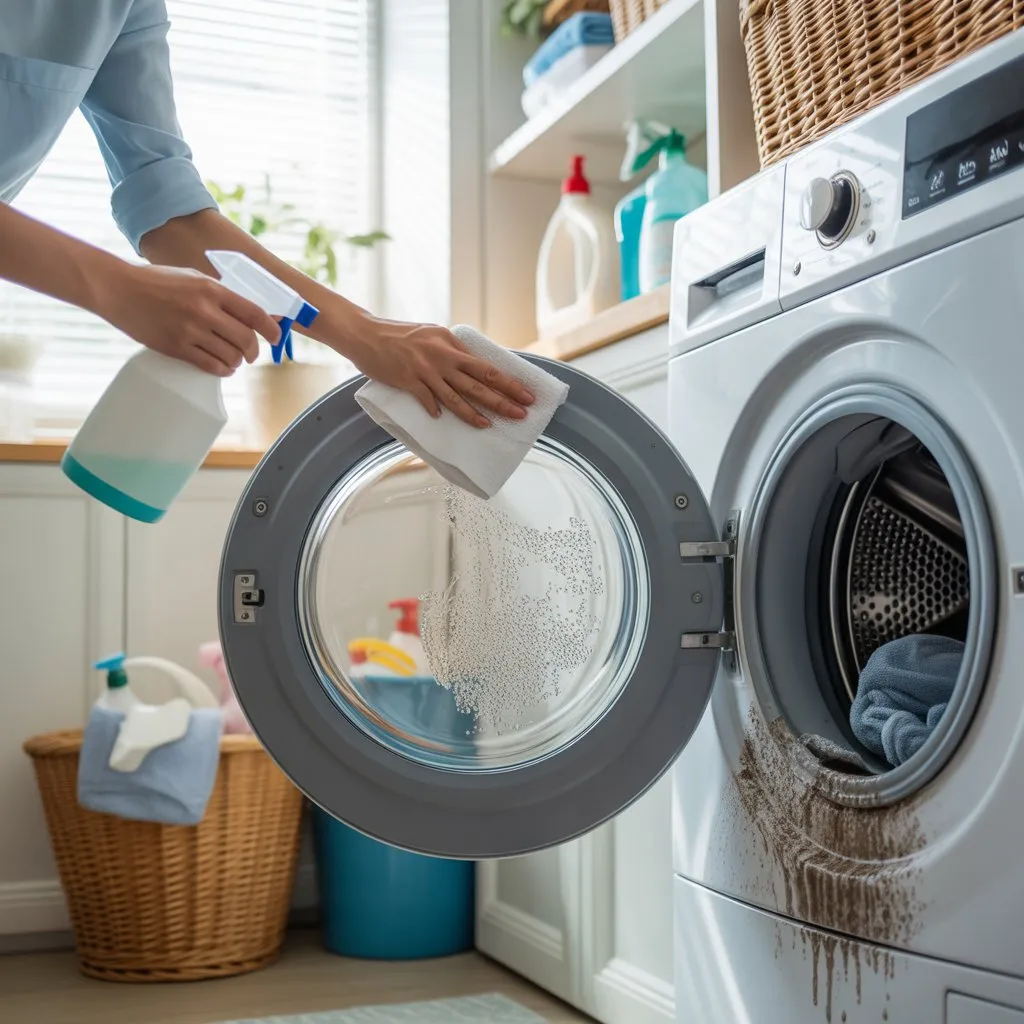
How to Clean a Smelly Washing Machine
Follow this focused cleaning checklist:
- Run an empty hot cycle using a washer cleaner tablet (recommended) or white vinegar for light buildup.
- Wipe and dry the rubber seal (front-load washers).
- Remove and clean the detergent drawer.
- Check and clean the pump filter.
- Leave the washer door and drawer open to dry fully.
For a complete step-by-step cleaning guide, see our detailed washing machine cleaning tutorial.
Can Vinegar or Baking Soda Remove Washer Odors?
- Vinegar: Removes light smells and soap residue.
- Baking Soda: Neutralizes odors.
- Important: Do not mix vinegar and baking soda in the washer.
- For heavy mold or strong odors, a commercial washer cleaner works best.
Persistent Smell Solutions
If odors return after cleaning:
- Check for blocked drain hose or clogged pump filter
- Inspect plumbing for sewer gas leaks
- Run a monthly hot wash cycle
- Ensure washer door and gasket dry fully after every use
💡 Tip: Persistent odor after proper cleaning may indicate a drain or plumbing issue. Professional inspection may be necessary in rare cases.
Maintenance Checklist for Fresh-Smelling Washer
Weekly:
- Wipe gasket and door edges
- Leave washer door open after use
Monthly:
- Run a hot cycle with vinegar or commercial cleaner
- Clean detergent drawer and filter
Quarterly / Seasonal:
- Deep clean rubber seal and drum
- Check hoses and drain for blockages
How to Stop Your Washing Machine From Smelling Again
- Leave the door open after each wash
- Use less detergent, especially HE detergent
- Run hot washes periodically
- Dry the rubber seal and detergent drawer
- Clean the filter regularly
Quick Tip: Consistent habits are more effective than repeated cleans.
Key Takeaways
- Moisture and residue cause most washing machine smells.
- Different smells indicate different problems.
- Regular cleaning works only when paired with better habits.
- Most odors are common and easily fixable.
Conclusion
Most washing machine odors are maintenance-related rather than mechanical failures. When moisture control, proper detergent dosing, and routine cleaning are handled consistently, odor problems rarely return. Preventive habits are more effective than repeated deep cleans.
Frequently Asked Questions (FAQ)
Moisture allows mold and mildew to grow inside the washer, especially around seals, drum, and detergent drawer.
The odor comes from bacteria or residue inside the washing machine that transfers to the laundry.
Gently scrub with a mild cleaner and dry completely to prevent regrowth.
