


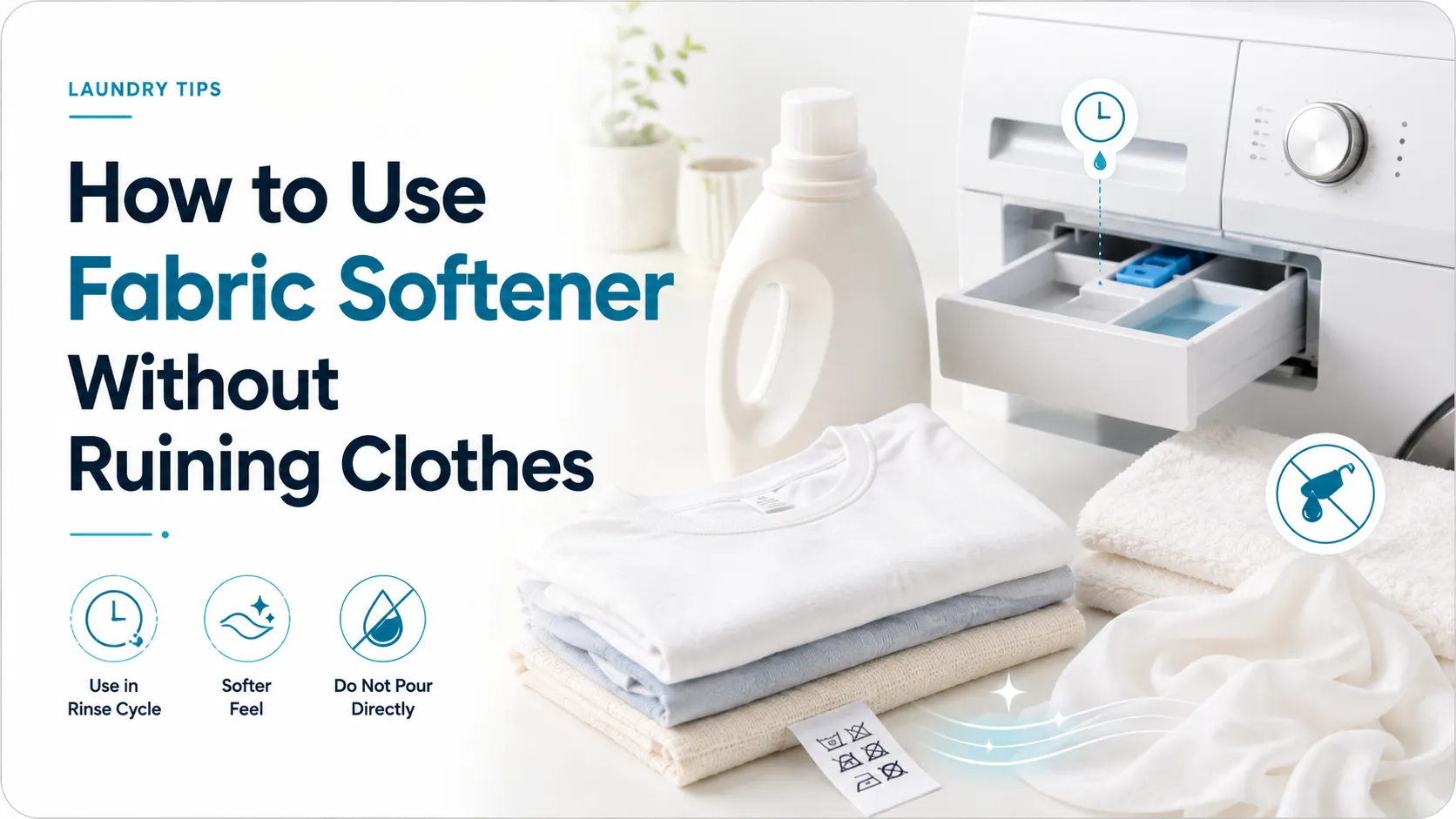
Fabric softener can make laundry feel smoother, reduce static cling, and leave clothes with a fresh scent. But it works best when it is used at the right time in the wash cycle. If you add too much, pour it directly on fabric, or use it on the wrong items, it can leave residue on fabric fibers and affect how your clothes feel after washing.
This guide explains how to use fabric softener safely in different washing machines, including front-load, top-load, HE washers, and machines without a dispenser. You will also learn how much to use, when to add it during the rinse cycle, and which fabrics are better without it, such as towels, baby clothes, microfiber, activewear, wool, and water-resistant clothing.
How to Use Fabric Softener Without Ruining Clothes
Fabric softener can make clothes feel smoother, reduce static, and add a fresh scent. But it is easy to use it the wrong way. Too much can leave residue. Adding it at the wrong time can waste the product. Using it on the wrong fabric can also reduce absorbency, stretch, or moisture control.
This guide explains how to use fabric softener safely. You will learn where to put it, when to add it, how much to use, and which clothes are better without it.
- Use fabric softener during the rinse cycle, not the main wash.
- Add it to the softener dispenser if your washer has one.
- If there is no dispenser, dilute it and add it during the final rinse.
- Do not pour the liquid directly on clothes.
- Skip it on towels, baby clothes, activewear, microfiber, wool, and water-resistant fabrics.
What Fabric Softener Does—and What It Does Not Do
Fabric softener is a laundry additive. It is used after detergent has done the cleaning work. Its job is to make some fabrics feel smoother and softer.
It can also help reduce static cling. This is why many people use it on some synthetic clothes, bedding, and everyday laundry. Many liquid softeners also leave a scent on clothes.
But it does not clean clothes. It does not remove sweat, dirt, stains, body oil, or odor by itself. That is the job of laundry detergent.
The product works by leaving a light conditioning layer on fabric fibers. This layer can make clothes feel soft. But the same coating can also cause problems on some items.
It can make towels less absorbent. It can block moisture-wicking fabrics. It can also leave residue in the washer if too much is used.
That is why this product should be used with care. It can help some loads, but it is not needed for every wash.
How to Use Fabric Softener in Different Washing Machines

The right method depends on your washing machine. Some washers have a built-in dispenser. Some do not. The main rule is the same in both cases: the softener should reach clothes during the rinse cycle.
Before using it, check the garment care label. If the label says not to use softener, skip it. This matters most for towels, sportswear, baby clothes, flame-resistant sleepwear, wool, microfiber, and water-resistant items.
Do not add softener with detergent unless your washer manual says it is safe. Detergent is used during the wash cycle. Softener works later, after most detergent has been rinsed away.
Front-Load Washer
Most front-load washers have a detergent drawer with separate compartments. One is for detergent. One may be for bleach. One is usually marked for fabric softener.
Pour the measured amount into the softener compartment before starting the wash. Do not add it to the detergent section. The washer will release it during the rinse cycle.
Stay below the MAX line. If you overfill the compartment, the liquid may release too early or leave residue.
Top-Load Washer With Dispenser
Some top-load washers have a softener dispenser in the center agitator. Others have a small softener cup or tray.
Measure the liquid first. Then pour it into the dispenser before starting the cycle. The washer will release it at the right time.
Do not pour it straight onto dry clothes. Direct contact can leave blue, gray, greasy, or waxy marks.
Top-Load Washer Without Dispenser
If your washer has no dispenser, you need to add the product by hand during the final rinse.
Wait until the washer reaches the rinse cycle. Dilute the liquid in water first. Then pour it into the rinse water, not directly onto the clothes.
This step matters because thick liquid softener can stain fabric if it touches clothes directly.
HE Washer
High-efficiency washers use less water. This means too much laundry product can leave more residue.
Use the marked softener compartment. Follow the amount listed on the bottle or washer manual. Never go above the MAX line.
If clothes feel waxy, heavy, or coated after washing, you may be using too much.
Hand Washing
You can use a small amount when hand washing, but only after the item has been cleaned.
Wash the item first with the right detergent. Rinse out the detergent. Then add a small amount of softener to clean rinse water. Mix it well before adding the fabric.
Let the item sit briefly, then drain or rinse based on the care label. Do not pour the liquid directly onto delicate fabric.
Where to Put Fabric Softener
Use this table as a simple guide.
If you are not sure where it goes, check your washer drawer or manual. Do not guess and place it in the detergent slot.
How Much Fabric Softener to Use
The best amount depends on the product, washer size, and load size. Always start with the bottle instructions. Then use less if your load is small or delicate.
When learning how to use fabric softener, remember this rule: more is not better. Too much can leave a coating that feels waxy or greasy. It can also make the washer smell over time.
If clothes feel heavy, slippery, or dull after washing, reduce the amount next time. You can also run a rinse cycle without softener to remove extra residue.
When to Use Fabric Softener
Use this product when softness and static control matter more than absorbency or fabric performance.
It can work well on some everyday clothes, casual cotton items, and bedding if the care label allows it. It may also help with static on some synthetic fabrics.
Good items for light or occasional use include:
- Cotton shirts
- Casual pants
- Some sheets
- Pillowcases
- Everyday bedding
- Static-prone clothes
- Older clothes that feel rough
Use it lightly. You do not need it in every load.
If your clothes already feel soft, smell clean, and dry well, you may not need this extra laundry step at all.
Can You Use Fabric Softener on Polyester?
You can use a small amount on some basic polyester clothes if the care label allows it. But skip it on performance polyester, sportswear, leggings, gym shirts, and moisture-wicking items.
Many activewear fabrics are made to move sweat away from the skin. A softening coating can block that function and trap odor.
When Not to Use Fabric Softener
Some fabrics work better without it. The coating that makes clothes feel smooth can block the way certain fabrics are meant to work.
This is the most important part of using it safely.
The easiest rule is simple. If the fabric is made to absorb, wick, repel water, stretch, or protect, skip fabric softener.
Should You Use Fabric Softener on Towels?
It is better to skip it on towels most of the time.
Softener can make towels feel fluffy at first. But with repeated use, it can coat the fibers. This can make towels less absorbent.
If your towels feel stiff, softener may not be the real fix. Stiff towels often come from too much detergent, hard water, overloading, or high dryer heat.
Try these steps instead:
- Use less detergent.
- Do not overload the washer.
- Run an extra rinse if towels feel soapy.
- Shake towels before drying.
- Dry on medium heat instead of very high heat.
- Skip softener for several washes.
If you still want to use it on towels, use a small amount and do it rarely. Do not use it in every towel load.
Can You Use Fabric Softener on Baby or Newborn Clothes?
It is better to skip regular scented softener on baby and newborn clothes.
Baby skin can be sensitive. Fragrance, dye, and residue may bother some babies. Some children’s sleepwear also has flammability requirements or care labels that warn against treatments that may affect flame resistance.
Always follow the garment label, especially for pajamas and sleepwear.
For baby laundry, use a gentle detergent and rinse well. Avoid extra products unless the care label and your child’s skin can handle them.
If you need softer baby clothes, try these safer habits first:
- Use the right amount of detergent.
- Do not overload the washer.
- Choose an extra rinse.
- Dry on gentle heat.
- Avoid heavy-scent products.
Soft clothes are nice, but clean and residue-free clothes matter more for babies.
Can You Use Fabric Softener as Detergent?
No, fabric softener cannot be used as detergent.
Detergent cleans clothes. It removes sweat, dirt, food stains, body oil, and odor. Softener does not do that. It is added later to condition fabric.
If you accidentally used softener instead of detergent, do not dry the clothes yet. Rewash the load with laundry detergent. Skip extra softener in that second wash.
Drying the load before rewashing can make stains and residue harder to remove.
Fabric Softener vs Dryer Sheets vs Dryer Balls
Fabric softener is one option, but it is not the only way to soften laundry or reduce static on clothes. Dryer sheets work during drying, while dryer balls mainly improve movement and airflow, so the best option depends on the problem you are trying to solve.
Liquid softener works in the washer. Dryer sheets work in the dryer. Dryer balls work by helping clothes move and separate while drying.
If you want less residue, wool dryer balls are often a better choice than liquid softener or dryer sheets.
Do You Need Dryer Sheets If You Use Fabric Softener?
Usually, no. You do not need dryer sheets if you already used liquid softener in the wash.
Both products can leave a coating on fabric. Using both in the same laundry routine may add too much scent or residue. This can be a problem for towels, activewear, baby clothes, and sensitive skin.
Choose one based on your goal. Use liquid softener if you want softness during the rinse cycle. Use dryer sheets if your main issue is static in the dryer. Use wool dryer balls if you want a lower-residue option.
What to Use Instead of Fabric Softener
You have other ways to make laundry feel softer without using softener in every load.
Wool Dryer Balls
Wool dryer balls help separate clothes in the dryer. This can reduce drying time and help clothes feel less stiff. They do not leave the same type of coating as liquid softener.
Use Less Detergent
Too much detergent can make clothes feel stiff or rough. It can also leave residue. Try using a little less detergent, especially in HE washers.
Add an Extra Rinse
If clothes feel heavy or soapy, an extra rinse can help. This is useful for towels, bedding, and baby clothes.
Do Not Overload the Washer
Clothes need space to move. If the washer is packed too tightly, detergent and rinse water cannot move well. This can leave clothes stiff or dull.
Dry Clothes the Right Way
High heat can make some fabrics feel rough. Use the right heat setting for the fabric. Shake clothes before drying or hanging them.
Use Vinegar Carefully
Some people use white vinegar in the rinse cycle as a softener alternative. Use it with care. Check your washer manual first, and do not mix vinegar with bleach.
Vinegar is not needed in every load. Use it only when it makes sense for the fabric and washer.
Fabric Softener Mistakes and How to Fix Them

Most problems come from timing, amount, or fabric choice.
If you see stains from softener, do not put the item in the dryer. Heat can set stains. Pretreat the spot, then rewash the item with detergent.
If your washer smells, remove and rinse the dispenser if your model allows it. Then run a washer cleaning cycle based on your machine manual.
Bottom Line: Use Fabric Softener Selectively
Fabric softener can be useful for everyday laundry when you want a softer feel, less static, or a light scent. But it should not be used in every load. Add it during the rinse cycle, use the washer’s softener dispenser when available, measure it carefully, and avoid direct contact with clothes. Skip it on towels, baby clothes, activewear, microfiber, wool, and water-resistant fabrics because the softening coating can reduce absorbency, block moisture-wicking, affect stretch, or leave buildup on delicate fibers.
