


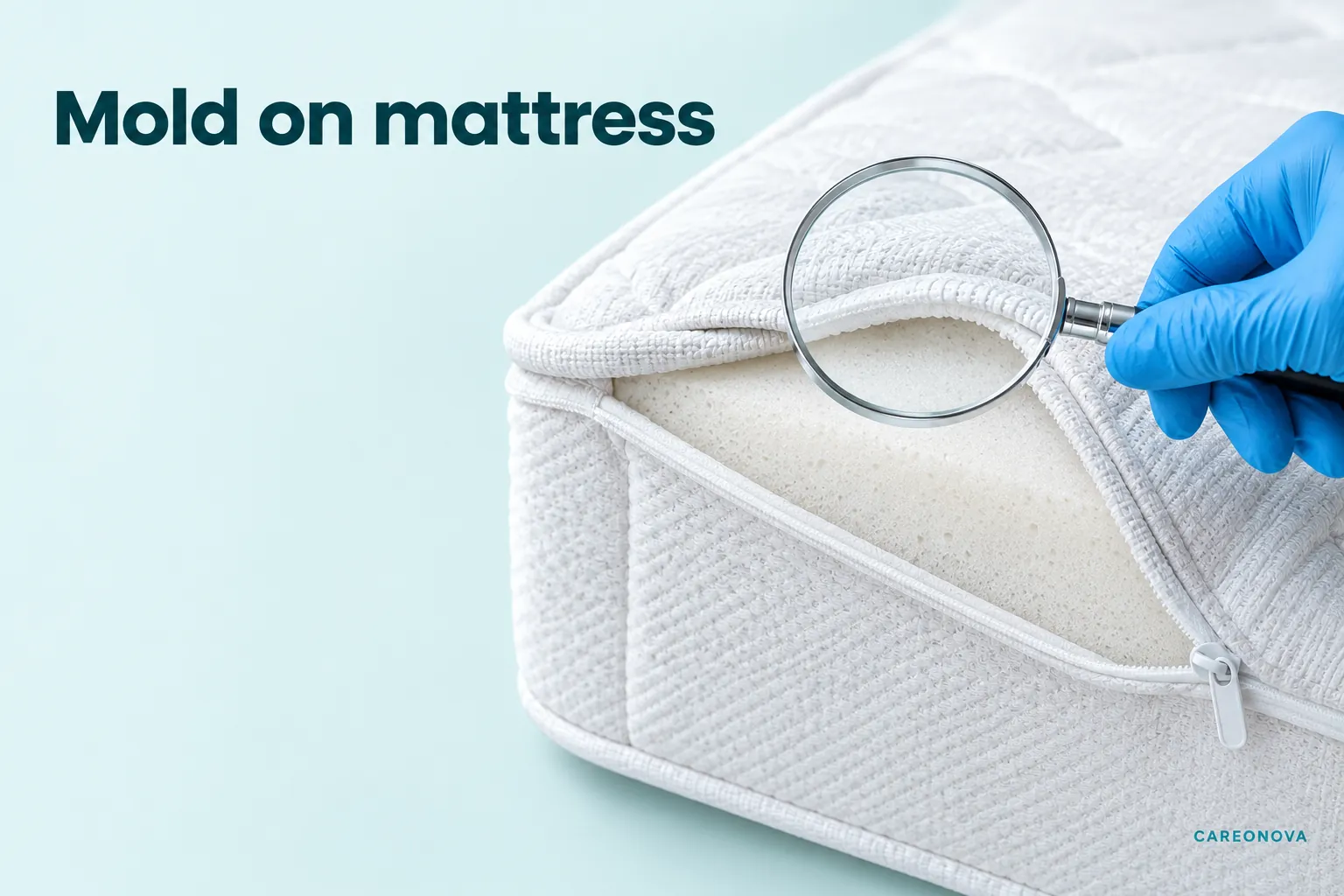
Finding mold on a mattress does not automatically mean you have to throw the bed away, but you must act quickly. If the mold is caught early and sits only on the outer fabric cover, you can safely clean it with low-moisture treatments. However, if the fungal spores have penetrated deep into the memory foam core, the mattress becomes a permanent health hazard and must be discarded.
This guide explains how to identify, triage, and treat the issue without ruining your bed.
Key Takeaways
- Check the core foam: Surface fabric can be cleaned, but mold inside the foam ruins the mattress.
- Skip the bleach: Use 70% isopropyl alcohol to kill spores without leaving moisture behind.
- Spray a cloth, not the bed: Mist cleaner onto a towel to protect the porous foam from liquid damage.
- Inspect the bottom: Mold usually forms underneath the mattress due to trapped condensation.
- Elevate the bed: Prevent regrowth by using a slatted frame with a 6-inch air gap.
Early-Stage Identification: What Mattress Mold Looks Like
Before attempting to clean your bed, you need to confirm that the spots are active fungal growth rather than harmless cosmetic issues.
Early-stage vs. advanced mold growth
The symptoms of early-stage mold in a mattress usually start with a faint, musty odor before any visible spots appear. When they do surface, early fungal colonies form as tiny pinpoint dots measuring less than a millimeter across. If left untreated, these dots merge into fuzzy or velvety patches as the mold feeds on organic material, like dead skin cells and the cotton fibers of your mattress cover.

What mold colors mean (Black, White, Pink, and Blue/Green)
Mold on a mattress can appear in several colors depending on the specific organism and the environment in your bedroom.
- Black or brown: Usually Aspergillus or Cladosporium. These are the most common dark spots found growing underneath the bed.
- White: Early powdery mildew spreading across the top surface, often looking like a light dusting of flour.
- Blue or green: Often Penicillium, which looks similar to the mold that grows on old bread.
- Pink: While frequently called pink mold, pink stains on bed sheets and mattresses are usually Serratia marcescens, a bacteria that thrives on sweat and saliva rather than a true fungus.
Common Mold Lookalikes on Beds
Before you throw anything away, verify that the spots are actually fungal. Many fabric issues and pests mimic mold, leading to unnecessary panic.
Black fluff, sweat rings, and bed bug spots
Fabric pilling, which looks like black fluff on a mattress, sits loosely on the fabric surface due to friction and can be easily plucked off. Sweat stains create a flat yellowish-brown ring, known as a tide-mark, where the moisture dried into the fabric. If you suspect pests, remember that bed bug fecal specks bleed into the fibers like an ink pen and will smear rust-red when wiped with a damp cloth.
Use this comparison table to safely diagnose the marks on your bed:
| Mark Type | Visual Appearance | Texture / Fabric Behavior | Damp Smear Test Result |
|---|---|---|---|
| Early Mold | Fuzzy or powdery pinpoint dots | Adheres to fibers, slightly raised | Smears dark brown/black or green |
| Fabric Lint (Fluff) | Dark grey or black fuzz | Loose on surface, plucks off easily | Lifts off completely, no smear |
| Bed Bug Feces | Sharp black dots (marker bleed) | Soaks flat into cotton threads | Smears rust-red (digested blood) |
| Sweat / Sebum | Yellow or brown rings | Dries flat, leaves stiff borders | Does not smear |
The Triage Test: Can Your Mattress Be Saved?
The most critical factor in treating a moldy mattress is determining how deep the roots, called mycelia, have traveled into the bed.
The difference between surface fabric and core foam
The outer cover of your bed, known as the ticking, is a woven fabric. If mold forms here, you can often treat it like a heavy stain. However, the inside of your bed is made of open-cell polyurethane or memory foam. Foam is highly porous and acts like a giant sponge. Once fungal roots penetrate this foam matrix, surface sprays cannot reach them, and the bed cannot be sanitized safely.
The “zipper and seam” diagnostic test
To find out if your foam is compromised, unzip the removable cover or pull back a deep corner seam. Look past the outer fabric and examine the internal foam layers.
- Keep and clean if: The mold is only on the outer cotton or polyester cover, you caught it early, and the foam underneath remains pristine white or yellow.
- Throw away if: The mold has penetrated the foam, the mattress feels permanently damp, or you experience respiratory allergy flare-ups when laying on it.
Note: If you discover core foam damage, you will likely need to purchase a replacement out of pocket. Most mattress warranties explicitly void coverage for mold, as manufacturers classify it as an environmental or user-care issue rather than a structural defect.
Why Mold Grows Under the Mattress (The Physics of Condensation)
Most people find mold under the mattress rather than on top of it. This happens because of a simple thermal reaction between your body heat and the foundation your bed rests on.

Body heat, cold floors, and the dew point
The average human body releases half a pint to a full pint of moisture every night. Because heat naturally moves toward cold, this 98°F water vapor travels downward through the mattress. When that warm vapor hits a cold floor, the temperature drops below the dew point. The vapor turns into trapped liquid condensation, creating a damp microclimate for spores to germinate.
High-risk bed foundations
Sleeping directly on the floor is the fastest way to grow mold on the bottom of a mattress. Solid plywood decks and divan bases with non-breathable vinyl covers carry the exact same risk. These surfaces block airflow, acting as a vapor barrier that traps condensation and forces moisture back into the bottom fabric.
How to Remove Surface Mold from Mattress Fabric (Low-Moisture Protocol)
If your mattress passed the triage test and the foam is clean, you can eradicate the surface spores using a low-moisture chemical treatment.

Why you should never use bleach or dish soap on foam
Many online cleaning guides suggest treating mattress mold with warm soapy water or bleach. This is dangerous advice for foam products. Dish soap is a humectant; it leaves sticky residues that draw moisture from the air, feeding future mold colonies. Furthermore, bleach does not eradicate mold on porous fabrics efficiently. It degrades synthetic textile fibers and introduces excess water, which eventually soaks into the foam core and causes immediate mold regrowth.
The 5-step isopropyl alcohol cleaning method
To kill the mold safely, use 70% isopropyl alcohol. It penetrates the fungal cell walls, denatures the mold proteins, and evaporates rapidly to keep the underlying foam dry.
- Wear protective gear: Put on an N95 mask and nitrile gloves before disturbing the spores.
- Vacuum the surface: Use a vacuum with a HEPA filter to pull up loose spores. Turn off the spinning brush roll to avoid launching spores into the bedroom air.
- Apply the alcohol: Mist 70% isopropyl alcohol lightly onto a clean microfiber cloth. Never pour or spray liquids directly onto the mattress.
- Blot the fabric: Firmly press and blot the affected fibers. Do not scrub, as this pushes spores deeper into the weave. Let the alcohol sit for 15 minutes to take effect.
- Lift the remaining stain: If dark cosmetic spots remain, treat the discoloration with an enzyme laundry detergent mixed with a few drops of cold water. Dab gently until the organic pigments lift, then blot completely dry.
Drying, Sanitization, and Long-Term Prevention
Killing the mold is only half the solution. You must change the bedroom environment to stop the spores from returning next season.
The 6-inch air gap rule for bed frames
Elevate your mattress at least 6 inches off the floor to provide passive airflow. Use a wooden or metal slatted bed frame where the slats are spaced no wider than 2.5 to 3 inches apart. This gap allows convective moisture transfer, letting the nightly condensation evaporate away from the bottom of the bed harmlessly.
Managing bedroom humidity and airflow
Mold spores require a relative humidity of over 55% to germinate. You can halt colonization by keeping your ambient room humidity between 30% and 50%. Use a hygrometer to track moisture levels, run a dehumidifier during wet seasons, and keep bedroom doors open to allow cross-ventilation. If you are struggling with broader moisture issues in the home, applying humidity control in the bedroom and regularly checking for mold on sheets will help protect your bedding investments long-term.
What to do next
Dealing with mattress mold comes down to a strict safety boundary. If you catch it early on the outer fabric and treat it with a low-moisture alcohol method, your bed can be fully restored. However, if you ever doubt whether the mold has reached the internal foam, always err on the side of caution. No amount of surface cleaning can decontaminate open-cell foam, and your respiratory health is always worth more than the cost of a replacement mattress.
