


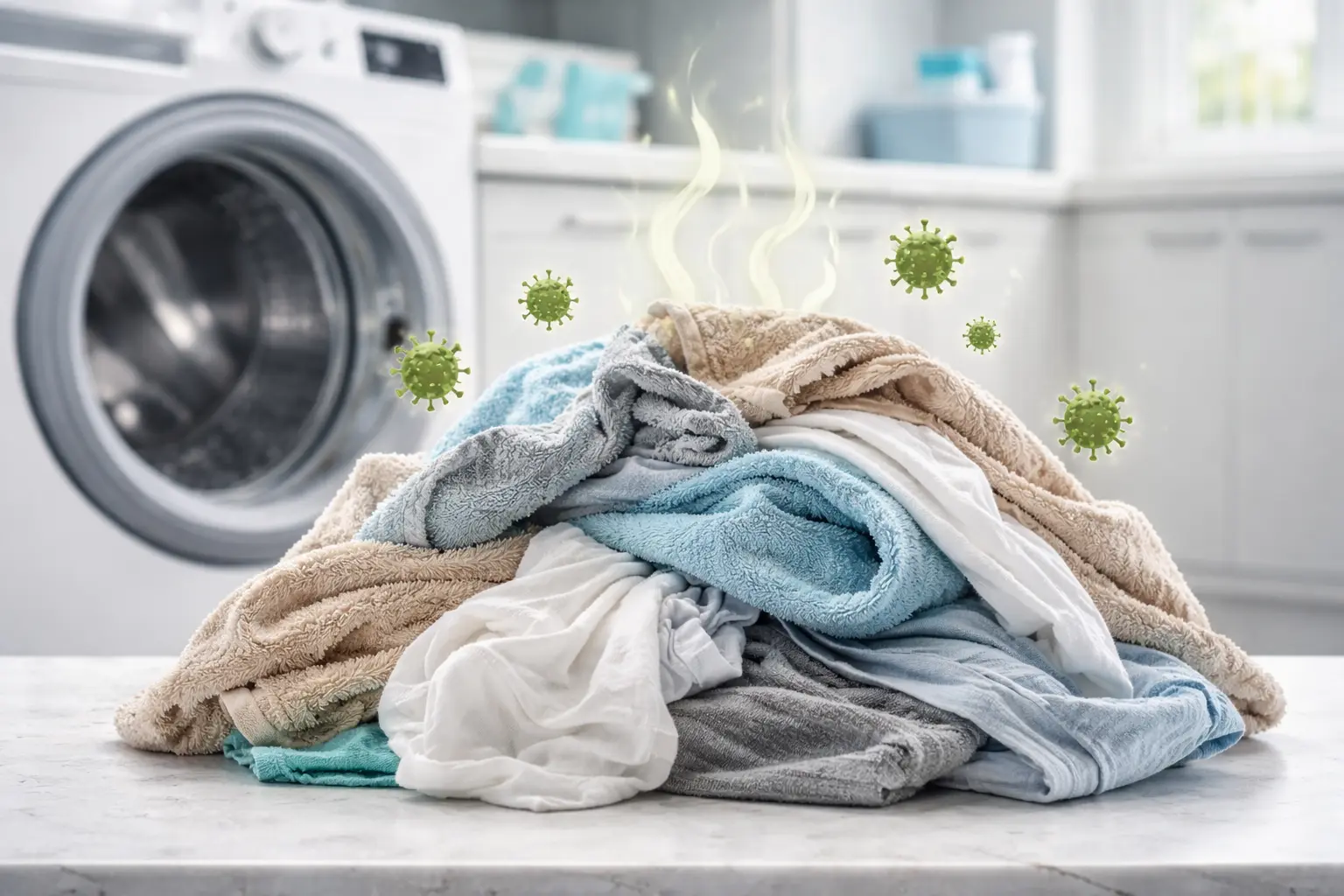
Wet laundry can start smelling sour, musty, or like a wet towel when damp fabric holds odor for too long. Your clothes may seem fine when dry, but once they get wet again from rain, sweat, humidity, slow drying, or being left in the washer, the smell can come back.
This is different from clothes that smell bad as soon as the wash cycle ends. Here, the problem is moisture reactivating odor inside the fabric or laundry staying damp too long.
Most cases are fixable with better rinsing, faster drying, and cleaner storage habits. The goal is simple: remove odor buildup, dry the fabric fully, and stop dampness from bringing the smell back.
Key takeaway
Wet clothes smell usually happens when damp fabric reactivates trapped odor. The fix is to remove buildup, rinse well, dry fully, and stop clothes from sitting damp too long.
Why Wet Clothes Smell
Wet clothes smell because damp fabric can hold odor-causing buildup. This may include sweat, body oils, detergent residue, minerals from water, or bacteria-like odor trapped in the fibers. When the fabric gets wet again, the smell becomes easier to notice.
Slow drying makes the problem worse. Towels, hoodies, jeans, workout clothes, bedding, and thick cotton can hold moisture longer than lightweight fabrics. If they sit damp in a washer, dryer, hamper, gym bag, or humid room, the odor can build quickly.
Poor airflow is another common reason. Clothes need moving air to dry properly. If wet laundry is packed too closely on a rack or left in a closed room, moisture stays around the fabric and the smell gets stronger.
Why Clothes Smell Fine Dry but Bad When Damp
If clothes smell clean when dry but stink when damp, the odor was already in the fabric. Moisture simply brings it back.
This often happens with clothes that have absorbed sweat, body oil, or old damp odor over time. Synthetic workout clothes can be especially stubborn because they often hold body oils more tightly than plain cotton.
This damp-reactivation smell may show up when:
- clothes get wet in the rain
- towels are used after a shower
- workout clothes become sweaty again
- jeans or hoodies dry too slowly
- clothes are stored slightly damp
- indoor drying happens without enough airflow
Do not cover the smell with perfume or fabric spray. That only masks the odor. The better fix is to rewash if needed, rinse well, and dry the fabric fully.
How to Get Rid of Wet Clothes Smell
To get rid of wet clothes smell, rewash smelly items if they are sour or musty, use the right amount of detergent, rinse well, and dry the fabric completely with strong airflow.
Rewash Sour or Musty Wet Clothes
If clothes smell sour, musty, or like wet towels, rewash them before drying or storing. Drying smelly clothes may leave the odor in the fabric.
Use the right amount of detergent for the load size. More detergent does not always mean cleaner clothes. Too much can leave residue behind and make odor easier to trap.
Do not overload the washer. Clothes need space for water and detergent to move through the fibers. Always check the care label before using warm water, high dryer heat, or any odor-removal booster.
Add an Extra Rinse When Needed
An extra rinse helps remove leftover detergent, loosened odor, and residue from the fabric. This is useful for towels, hoodies, gym clothes, and items that still feel stiff, slippery, or heavily scented after washing.
If the fabric still smells after a normal wash, better rinsing may help more than adding extra detergent.
Dry Clothes Fully and Quickly
Drying is where many wet odor problems start. Clothes should not be folded, stored, or placed in a hamper while still damp.
Dry outside when possible, or use a dryer, fan, open window, or dehumidifier indoors. If air drying, space clothes apart so air can move between layers. Thick areas like seams, waistbands, cuffs, pockets, and towel folds need extra time.
Can You Remove Wet Clothes Smell Without Washing?
If the clothes only smell slightly damp, airing them with strong airflow may help. Hang them in a dry, ventilated space until they are fully dry.
But if the smell is sour, musty, or like wet towels, airing alone is not enough. Rewash the clothes before drying or storing them.
Wet Clothes Smell by Situation
Wet clothes smell can show up in different ways. Use the situation to choose the right fix.
| Situation | What it usually means | What to do |
|---|---|---|
| Clothes were left wet too long | Damp fabric had time to develop sour or musty odor. | Rewash, rinse well, and dry right away. |
| Clothes smell fine dry but stink when damp | Moisture is reactivating trapped odor in the fibers. | Rewash if needed and dry with stronger airflow. |
| Clothes smell like wet dog | Odor may be trapped in thick fabric, towels, synthetics, or damp machine areas. | Rewash separately and dry fully. |
| Wet towel smell spreads to clothes | Damp towels or washcloths transferred odor to the load. | Wash towels separately and dry them completely. |
| Clothes smell wet after drying | Some areas may still be damp. | Dry again and check seams, pockets, and folds. |
| Wet clothes make the room smell | Too much damp laundry is drying in a closed or humid room. | Use a fan, open windows, or a dehumidifier. |
| Clothes get wet outside and smell later | Rain, sweat, humidity, or outdoor odor reactivated fabric smell. | Let them dry fully, then rewash if odor remains. |
How Long Can Wet Clothes Stay Before Smelling?
Wet clothes should be moved to drying as soon as possible. As a practical rule, try to remove laundry from the washer within 30 minutes after the cycle ends.
If wet clothes sit for a short time and still smell clean, you may be able to dry them right away. But if they smell sour, musty, or like wet towels, rewash them first.
If clothes were left wet overnight, rewash them. Even if they look clean, the odor can stay inside the fibers.
How fast wet clothes start to smell depends on humidity, fabric thickness, room temperature, washer cleanliness, and airflow. Thick towels and hoodies usually smell sooner than thin shirts because they hold more moisture.
Why Clothes Smell Like Wet Dog
Clothes can smell like wet dog when damp fabric holds trapped odor. This can happen after rain, sweating, slow drying, or washing thick items that do not dry fully.
If clothes smell like wet dog after washing, check both the fabric and the drying process. The smell may come from thick towels, synthetic clothing, damp seams, or items that stayed wet too long.
To remove wet dog smell from clothes, rewash the items separately, rinse well, and dry them completely. Check thick parts of the garment before storing. If the dryer or laundry room smells damp too, fix the moisture issue before drying another load.
Wet Towel Smell in Clothes
Wet towel smell often starts with towels, washcloths, cleaning rags, or gym clothes that stayed damp too long. Once that odor gets into a mixed load, lighter clothes can pick it up too.
Wash damp towels and rags separately from normal clothes. Use the right detergent amount, avoid overloading, and dry towels fully before putting them in a closet, basket, or cabinet.
If your clothes keep smelling like wet towels, check your hamper habits. A damp towel sitting in a basket with dry clothes can make the whole load smell before wash day.
Wet Clothes Smell After Drying
If clothes smell wet after drying, they may not be fully dry. This is common with towels, jeans, hoodies, bedding, waistbands, cuffs, and pockets.
Dry the clothes again with better airflow. If you air dry indoors, spread items apart and avoid stacking damp fabric. Use a fan or dehumidifier if the room feels humid.
If you use a dryer, make sure clothes come out fully dry, not warm and slightly damp. Clean the lint trap and make sure air can move properly through the dryer vent.
Never store clothes that feel even a little damp. Damp storage can turn a light wet smell into a stronger musty odor.
How to Prevent Wet Clothes Smell
Prevention is easier than removing odor later.
Remove laundry soon after the wash cycle ends. If you forget a load and it smells sour, rewash it instead of drying it.
Use the correct detergent amount. Too much detergent can leave residue, especially in high-efficiency machines or hard water.
Do not overload the washer or dryer. Clothes need space to rinse and dry properly.
Dry clothes completely. For indoor drying, leave space between garments and use airflow. A fan, open window, or dehumidifier can help in humid rooms.
Keep hampers dry. Do not throw wet towels, sweaty gym clothes, rain-soaked clothes, or damp rags into a closed basket. Let them dry first if you are not washing them right away.
Store only fully dry clothes. If fabric feels cool, heavy, or damp in seams or folds, give it more drying time.
When This Is Not Just a Wet Clothes Problem
This page is for odor that appears when clothes are wet, damp, slow-dried, or left wet too long.
If clothes already smell bad immediately after washing, before they sit damp or dry, the cause may be different. That usually points to a wash-process issue such as poor rinsing, detergent buildup, washer odor, or hard water. In that case, use a separate guide focused on why clothes smell after washing.
This split matters because the fix is different. Wet clothes smell is mostly about damp fabric, drying speed, and odor reactivation. After-washing smell is more about what happened during the wash cycle.
Know the difference
If clothes smell bad immediately after the wash cycle, the issue may be the washer, detergent, or rinse process. For that problem, read the guide on why clothes smell after washing.
Conclusion
Wet clothes smell happens when moisture reactivates odor trapped in fabric or when laundry stays damp too long. The fix is not to cover the smell with fragrance. The fix is to rewash sour or musty items, rinse well, and dry clothes completely with strong airflow.
For wet towel smell, wet dog smell, clothes left wet too long, or clothes that smell bad only when damp, focus on moisture control first. Dry clothes faster, keep hampers dry, avoid storing damp fabric, and give thick items enough time to dry all the way through.
Most wet smell out of clothes can be removed when you control residue, moisture, airflow, and storage.
