

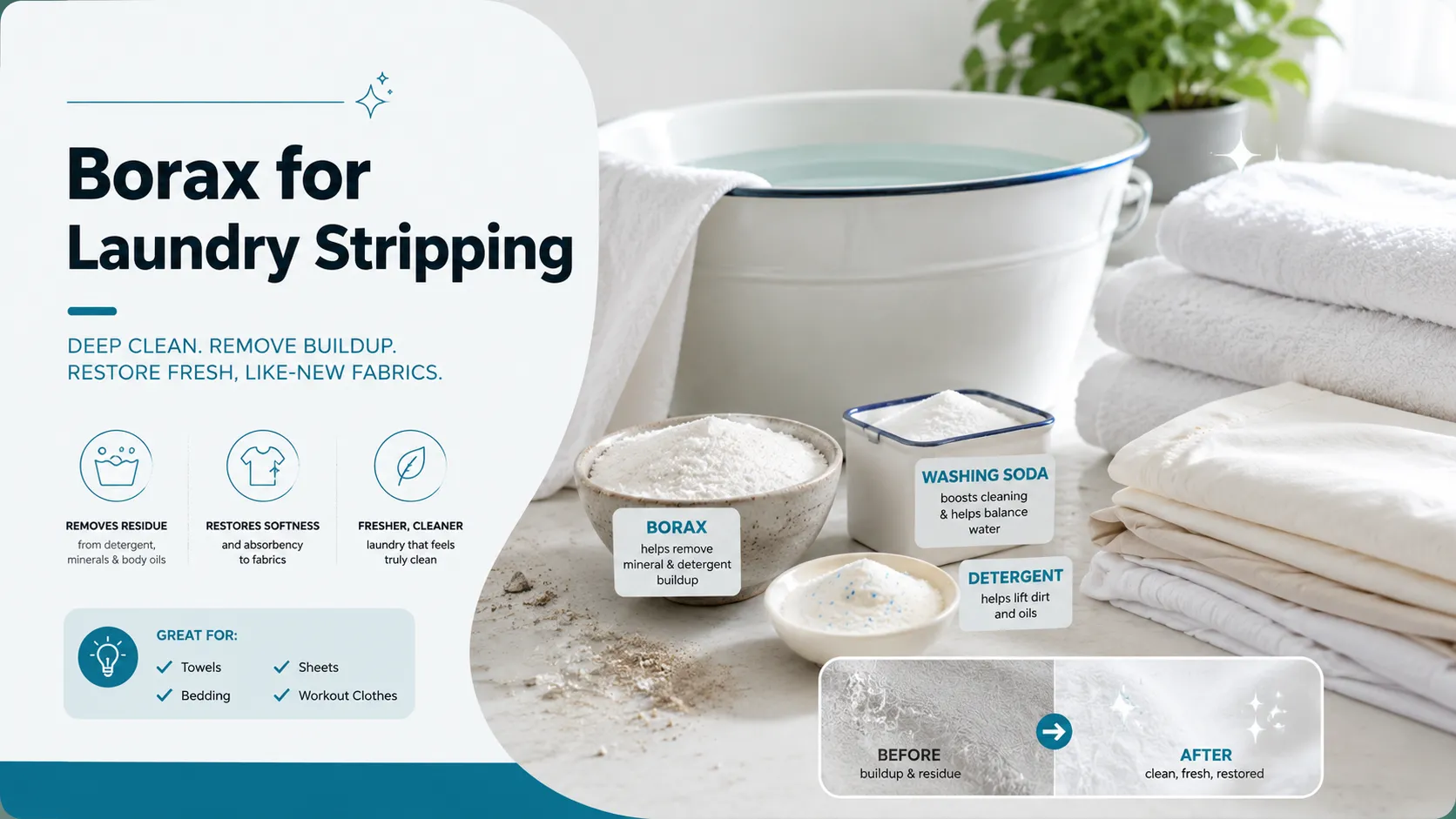
Borax for laundry stripping can help when towels, sheets, or washcloths still feel stiff, waxy, musty, or dull after a normal wash. It is used in a hot-water soak with washing soda and powdered detergent to pull out detergent residue, fabric softener film, body oils, and hard water minerals that can build up inside fabric over time.
But this method is not for every laundry problem. It works best on sturdy white or light cotton items that can handle hot water. In this guide, you will learn what borax does for laundry, the safe stripping recipe, which fabrics to avoid, why the water turns brown, and when a simple borax wash is better than full laundry stripping.
Quick Takeaways
- Borax helps loosen residue and hard water buildup during laundry stripping.
- The common recipe uses 1 part borax, 1 part washing soda, and 2 parts powdered detergent.
- For a bathtub or large basin, use 1/4 cup borax, 1/4 cup washing soda, and 1/2 cup powdered detergent.
- It works best on white or light cotton towels, sheets, and washcloths.
- Avoid dark, delicate, stretchy, foam-filled, down-filled, or cold-wash-only items.
- Laundry stripping removes buildup, not set-in stains.
- Use it only occasionally, not every week.
What Does Borax Do For Laundry?

Borax for laundry works as a laundry booster. It is not a detergent by itself, but it can help detergent clean better in some situations.
One of its main jobs is helping with hard water. Hard water contains minerals that can make detergent less effective. Over time, those minerals can make towels feel stiff, sheets smell stale, and clothes look dull even after washing.
Borax can help soften wash water, loosen some residue, reduce musty smells, and support brighter-looking whites. In a normal wash, many people use about 1/2 cup borax, but always follow the product label and your washer instructions.
A normal borax wash is much milder than full laundry stripping. Use a regular wash for light odor or hard water issues. Save stripping for heavy buildup on safe fabrics.
What Does Borax Do In Laundry Stripping?
Borax for laundry stripping helps the hot soak work better. It supports the mix by softening water and helping loosen old residue from the fabric.
It does not work alone. The classic stripping mix uses several parts together:
- Borax helps soften water and loosen mineral buildup.
- Washing soda boosts the cleaning power of the soak.
- Powdered detergent breaks down body oils, soil, and laundry residue.
- Hot water helps dissolve buildup and move it out of the fabric.
This is why stripping can make towels feel less waxy and sheets smell fresher. It is also why the method can be too harsh for delicate items.
Borax Laundry Stripping Recipe
Use this recipe for a full bathtub or large basin. For a smaller bucket, reduce the amounts but keep the same ratio.
| Ingredient | Bathtub Amount | Role |
|---|---|---|
| Borax | 1/4 cup | Helps soften water and loosen residue. |
| Washing soda | 1/4 cup | Boosts the cleaning power of the soak. |
| Powdered detergent | 1/2 cup | Breaks down oils, soil, and laundry buildup. |
| Hot water | Enough to cover laundry | Helps dissolve and release trapped residue. |
The simple ratio is:
1 part borax + 1 part washing soda + 2 parts powdered detergent
Do not add extra borax just to make the soak stronger. More powder does not always mean cleaner laundry. Too much can leave residue behind or make the soak harsher than needed.
Borax Safety Note
Borax should be handled with care. Do not eat it, inhale the dust, or leave it where children or pets can reach it.
If your skin is sensitive, wear gloves when mixing or handling the soak. Rinse stripped laundry well after soaking so the cleaning solution does not stay in the fabric.
Do not add random cleaners to a borax laundry stripping soak. Avoid mixing in bleach, ammonia, vinegar, or other cleaning products unless the product label clearly says it is safe.
How To Strip Laundry With Borax

Laundry stripping works best on items that are already washed. That may sound strange, but the goal is not to remove fresh dirt. The goal is to pull out residue that regular washing may leave behind.
Step 1: Start With Clean Laundry
Wash the towels or sheets first. Do not strip items that are muddy, greasy, or covered in fresh stains.
If you see stains, treat them before washing. Laundry stripping is not a stain treatment.
Step 2: Fill A Tub Or Large Basin With Hot Water
Use the hottest water allowed by the care label. Hot water helps dissolve residue and move the cleaning mix through the fabric.
Do not use hot water on anything labeled cold wash only.
Step 3: Dissolve The Powders First
Add borax, washing soda, and powdered detergent to the hot water. Stir until the powders dissolve.
This helps the solution spread evenly. Powder clumps may sit on fabric and work unevenly.
Step 4: Add Laundry And Submerge It Fully
Add towels, sheets, or other safe washable items. Push them under the water so they are fully covered.
Do not overfill the tub. The water needs room to move through the fabric.
Step 5: Soak For 4 To 5 Hours
Let the laundry soak for 4 to 5 hours. Stir it once in a while.
The water may turn gray, brown, or cloudy as residue, body oils, minerals, and soil move out of the fabric.
Step 6: Drain The Water
Drain the water. Press out extra water from the laundry, but do not twist or pull the fabric too hard.
Dark water does not always mean hidden dirt. It can also come from minerals, old product buildup, or dye bleeding.
Step 7: Rinse And Wash Again
Rinse the laundry well. Then run a wash cycle with no detergent or only a very small amount.
The goal is to remove leftover stripping solution from the fabric.
Step 8: Dry According To The Care Label
Dry towels and sheets the way the care label allows. Avoid high heat on anything that may shrink, weaken, or lose shape.
Should You Use Borax In The Wash Or Do Full Laundry Stripping?
Not every laundry problem needs a full stripping soak. Sometimes a regular wash with borax is enough.
| Laundry Problem | Borax In Regular Wash | Full Laundry Stripping |
|---|---|---|
| Slight musty smell | Yes | Usually not needed. |
| Towels feel stiff or waxy | Maybe | Yes, if buildup is heavy. |
| White towels look dingy | Yes | Maybe, if regular washing does not help. |
| Sheets smell stale after washing | Yes | Maybe, if residue is likely. |
| Clothes have stains | No | No. Treat stains first. |
| Dark clothes look dull | Be careful | No. Dye can bleed. |
| Activewear smells | Maybe | Usually avoid. |
| Fabric feels coated from softener | Maybe | Yes, on safe fabrics. |
A regular borax wash is better for light odor, mild dinginess, or hard water issues. Full laundry stripping is better for heavy buildup on sturdy fabrics.
If towels smell bad every week, stripping is not the real fix. The problem may be too much detergent, fabric softener, dryer sheet film, a dirty washer, poor rinsing, or towels staying damp too long.
What Can You Strip With Borax?
Laundry stripping with borax works best on fabrics that can handle hot water, soaking, and alkaline cleaning ingredients.
| Item | Strip With Borax? | Why |
|---|---|---|
| White cotton towels | Yes | They handle hot water and buildup removal well. |
| Light cotton sheets | Usually | Good for body oils and detergent residue. |
| White washcloths | Yes | Often collect soap, oils, and minerals. |
| Light cotton T-shirts | Maybe | Only if the care label allows hot water. |
| Dark clothes | No | Dye can bleed in hot water. |
| Wool | No | Hot alkaline soaking can damage fibers. |
| Silk | No | Too delicate for this process. |
| Spandex-heavy activewear | Avoid | Heat and alkalinity can weaken stretch. |
| Memory foam pillows | No | Foam can trap solution and lose shape. |
| Down pillows | No | Can damage fill and structure. |
| Cold-wash-only items | No | Hot water can shrink or damage them. |
Check the care label before stripping anything. If the label says cold water, delicate wash, dry clean only, or no soaking, skip the stripping soak.
What Should You Never Strip With Borax?
Avoid using borax laundry stripping on delicate, stretchy, dark, or heat-sensitive items.
Do not strip:
- Wool
- Silk
- Leather trim
- Dark or bright-colored clothes
- Bras and delicate underwear
- Spandex-heavy activewear
- Memory foam
- Down pillows or comforters
- Anything labeled cold wash only
Hot water and alkaline ingredients can fade dye, weaken elastic, shrink fibers, or leave delicate items misshapen.
Does Borax Laundry Stripping Remove Stains?
Borax laundry stripping is not mainly for stains. It removes buildup.
That buildup may include detergent residue, fabric softener film, dryer sheet coating, body oils, hard water minerals, and trapped soil. When that residue comes out, towels or sheets may look brighter and feel fresher.
Set-in stains need separate treatment. Do not rely on stripping for oil stains, dye transfer, rust marks, food stains, or old sweat stains. Treat stains first, then wash as usual.
Why Does The Water Turn Brown?
The brown or gray water is one reason laundry stripping became popular. It looks dramatic, but it can be misunderstood.
Dirty-looking water can come from:
- Detergent residue
- Fabric softener buildup
- Dryer sheet film
- Body oils
- Skin oils
- Hard water minerals
- Trapped soil
- Dye bleeding from colored fabrics
Brown water does not always mean your laundry was full of hidden dirt. Sometimes it means old detergent, minerals, softener film, or loose dye came out during the soak.
This is why you should not strip dark clothes. The color in the water may be fabric dye, not dirt.
Common Borax Laundry Stripping Mistakes
Laundry stripping is simple, but small mistakes can make it less safe or less useful.
| Mistake | Why It Is A Problem | Better Fix |
|---|---|---|
| Using too much borax | Can leave residue or feel harsh. | Follow the recipe. |
| Stripping too often | Can wear fabrics down. | Use only occasionally. |
| Mixing whites and colors | Dye can bleed in hot water. | Strip whites and lights separately. |
| Using liquid detergent | May not work as well in classic stripping. | Use powdered detergent. |
| Using bleach detergent | Can be too harsh. | Use plain powdered detergent. |
| Stripping delicate fabrics | Can damage fibers. | Check the care label first. |
| Skipping the final rinse | Leaves cleaning solution behind. | Rinse and wash after soaking. |
| Using the washer for the soak | Some washers are not made for long chemical soaks. | Use a tub or basin unless your washer manual allows it. |
The biggest mistake is treating laundry stripping like a normal laundry routine. It is a deep-clean method, not something your laundry needs every few days.
How Often Should You Strip Laundry With Borax?
Laundry stripping with borax should be occasional. For most homes, stripping towels or sheets once or twice a year is enough if buildup is heavy.
You may not need it at all if your laundry already smells fresh, rinses well, and feels clean after washing.
If towels or sheets need stripping often, look for the real cause. Common causes include:
- Too much detergent
- Fabric softener buildup
- Dryer sheet film
- Hard water
- Washer overload
- Poor rinsing
- A dirty washer
- Towels staying damp in the hamper
Fixing these problems will help more than stripping the same laundry again and again.
How To Stop Laundry Buildup From Coming Back
The best way to avoid laundry stripping is to stop buildup before it gets heavy.
Use less detergent than you think you need. Too much detergent can stay in fabric and make towels feel stiff or coated.
Avoid fabric softener on towels. It can leave a film that reduces absorbency and traps odor. Dryer sheets can cause a similar problem.
Do not overload the washer. Laundry needs space to move, rinse, and release soil.
Use an extra rinse if towels feel coated or if you have hard water. Clean your washer regularly so old residue does not keep moving back into your laundry.
Let towels dry fully before they go into the hamper. Damp towels can develop musty smells fast, even if they were washed well.
Find My Buildup-Preventing Detergent
Using the wrong amount or type of detergent is one of the biggest causes of residue and stiffness in towels and sheets. Answer a few quick questions and find a detergent that fits your water, machine, and fabric — so you strip less often.
Find My Buildup-Preventing Detergent →
Final Verdict: Should You Use Borax For Laundry Stripping?
Borax for laundry stripping is useful when towels, sheets, or sturdy washable fabrics have real buildup from detergent residue, fabric softener film, hard water minerals, body oils, or musty smells. It works best as an occasional deep-clean method with washing soda, powdered detergent, and hot water, but it should not be used on every load or every fabric. Avoid delicate, dark, stretchy, foam-filled, down-filled, or cold-wash-only items. For light odor, mild dinginess, or hard water issues, a normal wash with borax may be enough; save full laundry stripping for heavy buildup on safe fabrics.
