


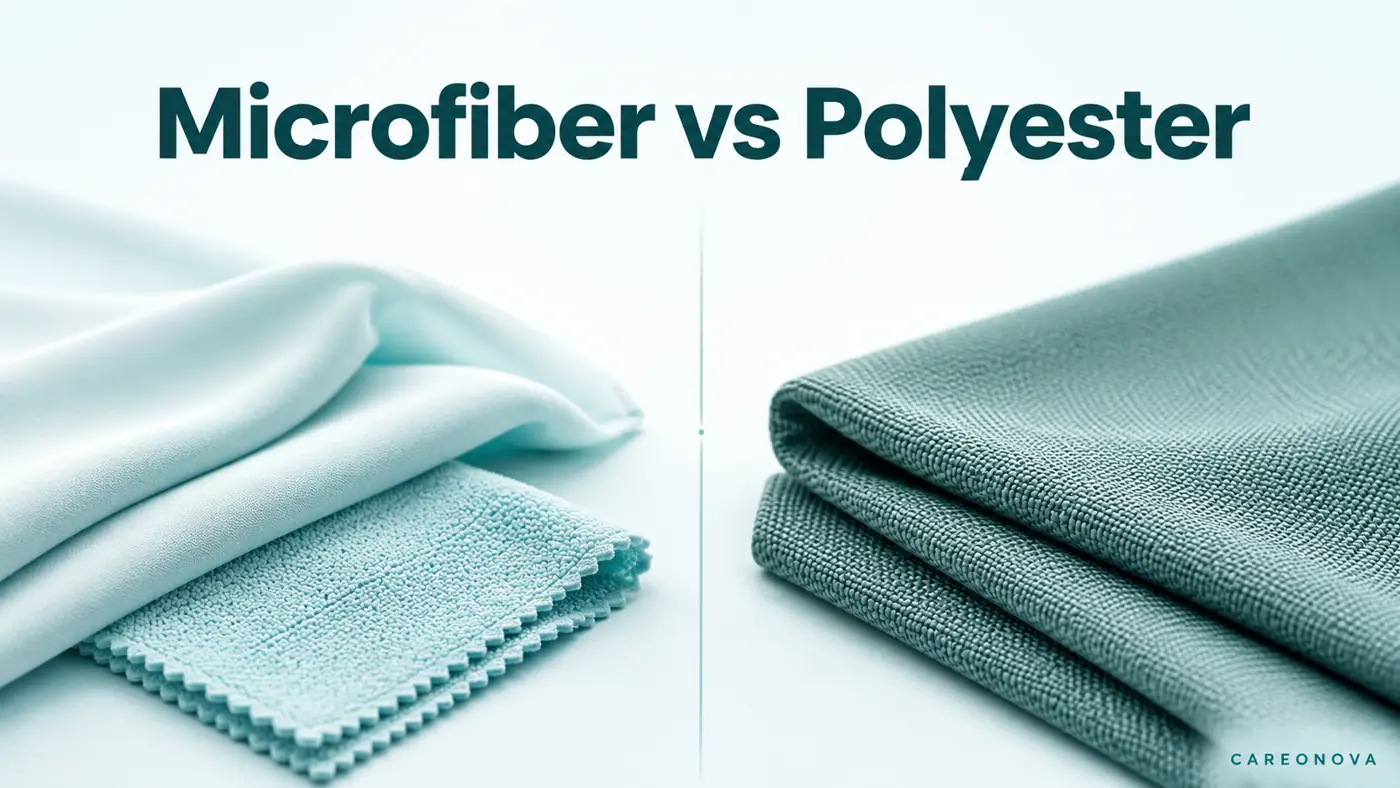
Most microfiber originates from polyester, but the two are not exactly the same thing. The difference comes down to what each term describes: polyester refers to the chemical fiber material, while microfiber refers to the extreme fineness and physical structure of those fibers.
This distinction matters because fiber structure fundamentally alters how a fabric feels, handles moisture, dries, and performs in real-world products. A standard polyester winter jacket and a microfiber bed sheet may come from the exact same synthetic family, yet they deliver completely different textures and practical purposes.
So, which is better: microfiber or polyester?
The answer depends entirely on what you need. Microfiber is the superior choice when luxurious softness, a smooth texture, and high surface absorbency matter most. Standard polyester, on the other hand, is commonly selected when rugged durability, shape retention, and heavy-duty abrasion resistance are the priorities.
Are Microfiber and Polyester the Same?
No. Microfiber and polyester are closely related, but they describe different characteristics of a textile.
To put it simply:
- Polyester tells you what chemical makes up the fiber.
- Microfiber tells you how fine the manufacturer spun those fibers.
Many commercial microfiber products actually contain a blend of polyester and polyamide (nylon). The term microfiber does not describe a completely different chemical compound; rather, it describes a highly specialized, ultra-fine fiber structure engineered to drastically change how the fabric behaves.
Polyester Fabric?
Polyester serves as a synthetic textile fiber utilized widely across the globe. Chemical plants typically extrude it from polyethylene terephthalate (PET), a petroleum-based polymer that creates incredibly strong and dimensionally stable filaments.
Polyester became an industry staple because it provides several practical benefits:
- High tensile durability
- Excellent wrinkle resistance
- Quick drying times
- Superior shape retention
- Resistance to shrinking and stretching
- High affordability
Thanks to these robust properties, brands heavily utilize standard polyester in:
- Everyday clothing and sportswear
- Outdoor awnings and fabrics
- Heavy-duty upholstery
- Luggage and backpacks
However, the word “polyester” alone does not tell you exactly how a fabric will feel against the skin. Two polyester fabrics can behave entirely differently based on fiber size, yarn construction, weave density, and chemical finishing.
What Is Microfiber Fabric?
Microfiber refers to extremely fine synthetic fibers. When textile mills weave these together, they create fabrics with an incredibly smooth surface and a massive surface area.
The name derives purely from its microscopic architecture. In most consumer goods, manufacturers create microfiber by splitting standard polyester fibers into even smaller, microscopic strands.
Because of this unique engineering, consumers heavily favor microfiber for:
- Premium cleaning cloths
- Quick-dry towels
- Bed sheets and pillowcases
- Plush blankets
- Soft household textiles
The sheer volume of fibers explains why microfiber feels so distinct. By packing millions of ultra-fine fibers into a single square inch, manufacturers create countless contact points. This ultimately results in a buttery-soft texture and enhanced surface performance that standard fabrics simply cannot match.
Microfiber Polyester vs Regular Polyester: What Actually Changes?

If most microfiber originates from polyester, why does it perform so differently? The answer lies fundamentally in the engineering of the surface area.
Microfiber utilizes filaments that factories split during manufacturing to create a microscopic, star-shaped structure, whereas standard polyester fibers remain thick, round, and smooth.
| Feature | Regular Polyester | Polyester Microfiber |
|---|---|---|
| Fiber Structure | Standard synthetic thickness | Ultra-fine, split fibers (< 1 denier) |
| Surface Feel | More structured and rigid | Exceptionally soft and smooth |
| Texture | Can feel firm or slick | Often feels silky, plush, or suede-like |
| Surface Area | Lower | Massively higher |
| Common Uses | Outerwear, upholstery, sportswear | Bed sheets, bath towels, cleaning cloths |
The difference is not that one is “real polyester” and the other is not. Regular polyester prioritizes structural strength and abrasion resistance, while polyester microfiber prioritizes softness, fluid drape, and tactile comfort.
Polyester vs Microfiber: Key Differences
| Category | Microfiber | Polyester |
|---|---|---|
| What it describes | Extremely fine fiber architecture | The raw synthetic fiber material |
| Typical composition | Polyester-polyamide blends | Commonly 100% PET polymer |
| Feel | Luxuriously soft and smooth | Highly variable depends on construction |
| Durability | Good, but susceptible to heat | Exceptional; highly abrasion-resistant |
| Drying speed | Very fast | Very fast |
| Surface performance | High absorbency due to fine fibers | Hydrophobic (repels water natively) |
| Common uses | Sheets, towels, cleaning cloths | Clothing, upholstery, outdoor fabrics |
A fabric’s final characteristics depend heavily on yarn structure, weave pattern, and finishing processes. Even though a microfiber bed sheet and a heavy-duty polyester windbreaker may share the same chemical DNA, designers engineer them for entirely different environments.
Which Fabric Feels Softer: Microfiber or Polyester?
For consumer apparel and bedding, microfiber consistently feels softer than standard polyester.
Because microfiber features incredibly fine filaments, it creates a flexible, fluid surface with millions of tiny touchpoints. This mimics the feel of luxury natural fibers like high-thread-count cotton or silk, which is why it dominates the market for bed sheets, pillow covers, and soft household textiles.
Of course, the label alone does not determine softness. A premium, well-woven standard polyester can feel better than a cheaply manufactured, low-density microfiber. Nevertheless, when comparing high-quality versions of both, microfiber will always win the softness test.
Which Fabric Handles Heat and Moisture Better?
This remains one of the most highly debated topics when comparing these two fabrics. Neither fabric is automatically “cooler,” as the weave ultimately dictates performance.
Weave density and fabric thickness control heat and moisture management. Since both materials are synthetic plastics, they are natively hydrophobic, meaning they resist absorbing water directly into the fiber core.
Despite this, a tightly woven microfiber sheet has so many densely packed fibers that it restricts airflow, often trapping body heat. Conversely, brands frequently knit standard polyester athletic shirts with an open structure to allow maximum airflow and rapid sweat evaporation.
Moisture Handling and Absorbency: Microfiber vs Polyester
Microfiber performs brilliantly in situations where surface contact and moisture capture prove vital. The fine fiber structure acts like a microscopic net, capturing dust, allergens, and liquid spills with ease. As a result, it is the undisputed champion for automotive detailing, glass polishing, and household cleaning.
Standard polyester manages moisture quite differently. In performance activewear, for example, standard polyester wicks sweat away from the skin. It then pushes that moisture to the surface of the garment to evaporate quickly, rather than holding onto it like a cleaning cloth would.
Durability and Lifespan: Microfiber vs Polyester
If you prioritize maximum durability and survival under harsh conditions, standard polyester holds the clear advantage.
Polyester provides robust resistance to stretching, heavy friction, and repeated washing. It forms the backbone of uniforms, outdoor gear, and heavy upholstery precisely because it can take a beating without losing its shape.
While microfiber also offers high durability, its microscopic fibers remain much more delicate. Microfiber can easily melt or warp if exposed to high heat in a dryer, and its tiny fibers may snag on rough surfaces. Furthermore, heavy friction and repeated washing cause these fabrics to shed microscopic plastic fibers into the wastewater. Ultimately, manufacturers design it around a balance of tactile comfort and surface performance rather than maximum abrasion resistance.
Microfiber vs Polyester for Different Uses
Instead of asking which fabric is universally better, it is much more useful to compare them by their intended application.
Bedding
Consumers heavily favor microfiber for sheets because it provides a silky texture, extreme wrinkle resistance, and highly affordable pricing. On the other hand, commercial environments (like budget hotels or dorms) often select standard polyester bedding for its unyielding durability and long-term shape retention.
Cleaning Products
Microfiber serves as the global standard for cleaning applications. Due to its split-fiber design, it creates unmatched surface contact to trap microscopic dirt particles. This is an area where microfiber holds a definitive, scientifically proven advantage over standard polyester.
Clothing
Polyester remains one of the most common fibers in global apparel because it provides durability, quick-drying capabilities, and structure. Designers utilize microfiber in apparel specifically when they want a suede-like finish, a buttery hand-feel, or a lightweight, fluid drape.
Home Textiles
Brands use both materials in blankets, mattress covers, and decorative pillows. The choice depends entirely on whether the manufacturer wants the item to feel incredibly plush (microfiber) or highly structured and durable (polyester).
Polyester Sheets vs Microfiber Sheets: Which Is Better?
When consumers search for microfiber vs polyester, they usually focus on bedding. Although both offer affordable synthetic options, their sleep experiences differ wildly.
Textile mills weave microfiber sheets from ultra-fine fibers, creating a buttery, peach-fuzz finish. Traditional polyester sheets, however, rely on standard fibers that can feel slightly stiffer and more synthetic depending on the weave, though this stiffness can be reduced with the use of fabric softener.
| Feature | Microfiber Sheets | Polyester Sheets |
|---|---|---|
| Feel | Exceptionally soft, silky, or suede-like | Crisp, can feel slightly stiff |
| Durability | Good, provided you wash them in cold water | Exceptionally strong, handles heavy washing |
| Wrinkle Resistance | Excellent | Excellent |
| Maintenance | Easy care (Avoid high heat) | Easy care (Highly resilient) |
| Best For | Premium softness on a budget | Heavy-duty, long-term durability |
Choose Microfiber Sheets If You Want:
- A softer, peach-skin feel against your body.
- Smooth, lightweight, and cozy bedding.
- Luxury comfort at an affordable price point.
- Low-maintenance wrinkle resistance.
Choose Polyester Sheets If You Want:
- Maximum structural durability.
- Bedding that survives frequent, aggressive laundering.
- Crisp sheets that hold their shape regardless of what temperature to wash sheets in.
- A highly practical, long-lasting investment.
Microfiber vs Fleece: What Is the Difference?
Shoppers frequently compare microfiber and fleece since both offer synthetic softness. However, they serve entirely different seasonal purposes.
| Feature | Microfiber | Fleece |
|---|---|---|
| Main purpose | Softness and surface performance | Thermal warmth and heavy insulation |
| Texture | Smooth, silky, or slight peach-fuzz | Fluffy, thick, and highly plush |
| Weight | Usually very lightweight | Usually medium to heavyweight |
| Common uses | Sheets, towels, activewear, cleaning | Winter blankets, heavy jackets, cold-weather gear |
Choose fleece when you prioritize trapping body heat and surviving freezing temperatures. Alternatively, choose microfiber when you want a lightweight, breathable, and smooth fabric against the skin.
How to Choose Between Microfiber and Polyester
There is no universal winner in this debate. The superior option depends entirely on the product you buy and your daily priorities.
Choose Microfiber When You Need:
- Luxurious, budget-friendly bedding.
- A smooth, non-abrasive texture.
- Lightweight comfort with a fluid drape.
- Unmatched cleaning and liquid-absorbing performance.
Choose Polyester When You Need:
- Maximum tensile strength and durability.
- Outdoor fabrics that withstand the elements.
- Heavy-use upholstery that resists tearing.
- Apparel that requires crisp structure and easy maintenance simply by following the care label.
Final Verdict: Microfiber vs Polyester
Microfiber and polyester share a chemical foundation, but you cannot use them interchangeably. Polyester is the raw material, while microfiber represents a highly engineered, ultra-fine fiber architecture.
Microfiber remains the ultimate choice for products where softness, tactile smoothness, and liquid absorbency matter most. Polyester, by contrast, is the undisputed champion for environments where rugged durability, tensile strength, and long-term structural performance are required.
Understanding these scientific differences allows you to look past the marketing labels and choose the fabric engineered exactly for your needs.
