


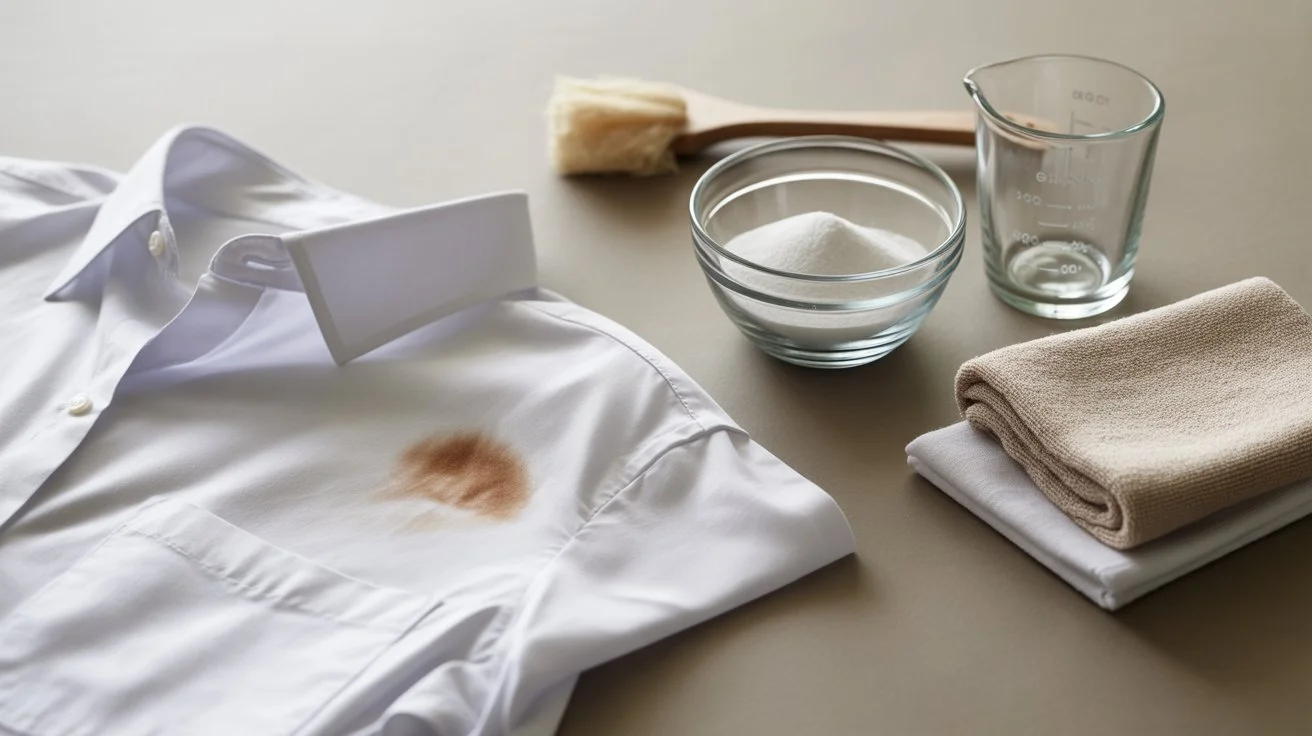
Learning how to get stains out of clothes starts with one rule: treat the stain before heat sets it. Most stains can improve if you use the right method for the stain type, fabric, and color. But the wrong step can make the mark harder to remove.
This guide explains how to remove stains from clothes without damaging the fabric. You will learn what to do first, which water temperature to use, how to treat fresh, old, dried, and unknown stains, and when a stain may need extra care.
Quick Answer: How Do You Get Stains Out of Clothes?
To get stains out of clothes, remove extra residue, rinse the stain from the back, pretreat it with the right cleaner, wash at the safest water temperature, and air dry the item before checking the stain.
| Step | What to Do | Why It Helps |
|---|---|---|
| 1 | Remove extra residue | Stops the stain from spreading |
| 2 | Rinse from the back | Pushes the stain out of the fabric |
| 3 | Pretreat the stain | Breaks down oil, protein, dye, or residue |
| 4 | Wash at the safest water temperature | Cleans without setting the stain |
| 5 | Air dry and check | Dryer heat can make stains harder to remove |
Do not put stained clothes in the dryer until the stain is gone. Heat can set many stains into the fibers.
Check These 4 Things Before Treating Any Stain
Before you use a stain remover, check the clothing first. This helps you avoid shrinking, fading, fiber damage, and set-in stains.
Check the Care Label First
The care label tells you if the item can be washed, soaked, bleached, or dried with heat. Cotton and polyester are usually easier to treat. Wool, silk, rayon, and viscose need more care.
If the label says dry clean only, do not soak the item at home. Blot the stain gently and take the garment to a cleaner.
Check If the Stain Is Fresh, Washed, or Dried
A fresh stain is usually easier to remove. A stain that has already gone through the washer may need more pretreatment. A stain that has gone through the dryer can be harder because heat may set it.
Check If the Clothing Is White, Colored, or Dark
White clothes can handle some treatments that colored clothes cannot. But strong bleach can still damage white fabric, trims, prints, and elastic.
For colored or dark clothes, test the stain remover on a hidden area first. This helps you avoid faded spots.
Test the Stain Remover First
Place a small amount of the cleaner on an inside seam or hidden area. Wait a few minutes. If the color changes or the fabric feels weak, do not use that cleaner on the stain.
Fresh, Washed, Dried, or Unknown Stain: Which Method Should You Use?
The best method depends on the condition of the stain. Do not treat every stain the same way.
| Stain Condition | Best First Step | What to Avoid |
|---|---|---|
| Fresh stain | Blot, rinse, and pretreat | Rubbing hard |
| Washed stain | Pretreat again before drying | Putting it in the dryer |
| Dried stain | Soak if safe, then repeat treatment | Scrubbing delicate fabric |
| Unknown stain | Start with cold water and mild detergent | Hot water or bleach too soon |
How to Treat a Fresh Stain
Act fast, but do not panic.
First, lift off extra food, mud, paint, or thick residue with a spoon or dull edge. Then blot liquid stains with a clean white cloth or paper towel. Do not rub hard. Rubbing can push the stain deeper.
Next, rinse from the back of the fabric with cool water. This helps move the stain out instead of driving it through the cloth.
After that, pretreat the stain. Use liquid laundry detergent for many stains. Use a small amount of dish soap for oily stains if the fabric allows it. Then wash the item based on the care label.
How to Treat a Stain After Washing
If the stain is still there after washing, do not dry the item.
Pretreat the stain again. Let the treatment sit for 10 to 15 minutes, or follow the product label. Then wash again.
If the stain is oil, makeup, paint, blood, or mold, use a stain-specific method. General detergent may not be enough.
Can You Remove Set-In Stains From Clothes?
Set-in stains are harder, but some can still fade. Start by soaking the stained area in cool or lukewarm water if the care label allows it. Then apply the right pretreatment.
Let the cleaner sit long enough to work. Wash again, then air dry. If the stain fades but does not leave, repeat the process gently.
Do not use harsh scrubbing on delicate fabrics. It can damage the fibers before the stain comes out.
Can You Remove a Stain After It Goes Through the Dryer?
Sometimes, but not always. Dryer heat can bond oil, protein, dye, and pigment stains to fabric.
Start with a stain-specific pretreatment. Let it sit, then wash again. Air dry and check the item. If the mark is lighter, repeat the process. If it does not change after a few tries, the stain may be permanent.
How to Treat an Unknown Stain
If you do not know what caused the stain, start mild.
Use cold water and a small amount of liquid laundry detergent. Blot and rinse first. Avoid hot water, bleach, strong solvents, and dryer heat until you know more about the stain.
If the stain feels greasy, treat it like oil. If it looks brown, yellow, or ring-shaped, treat it like food, drink, sweat, or residue. If it has strong color, treat it like dye or pigment.
Stain Removal Chart by Stain Type
Use this chart before choosing a cleaner. Stains come from different sources, so each type needs a different first step.
| Stain Type | Common Examples | Best First Treatment | Water Temperature |
|---|---|---|---|
| Protein stains | Blood, sweat, egg, dairy, urine | Cold rinse and enzyme detergent | Cold first |
| Oil and grease stains | Cooking oil, butter, makeup, grease | Dish soap or liquid detergent | Warm if fabric allows |
| Tannin stains | Coffee, tea, wine, juice | Rinse, detergent, or oxygen bleach | Cold or lukewarm |
| Pigment stains | Paint, ink, marker, dye | Scrape or blot, then use a stain-specific method | Depends on stain |
| Residue stains | Detergent, deodorant, fabric softener | Rinse or rewash | Cool or warm |
| Mold stains | Mold spots, mildew marks | Brush outside, then use oxygen bleach or sanitizer if safe | Hottest safe water |
This table should guide your first step. After that, follow the care label and check the stain before drying.
What Is the Best Stain Remover for Clothes?
There is no single best stain remover for every fabric or stain. The best choice depends on what caused the stain.
| Stain Remover | Best For | Avoid or Use Carefully On |
|---|---|---|
| Liquid laundry detergent | Most washable food, dirt, and body stains | Very delicate or dry-clean-only items |
| Enzyme detergent | Blood, sweat, dairy, egg, and body stains | Wool, silk, and some delicate fabrics |
| Dish soap | Small oil and grease stains | Too much can cause excess suds |
| Oxygen bleach | Many washable white and color-safe items | Wool, silk, leather, and some trims |
| Hydrogen peroxide | Some light stains on white fabrics | Colored fabrics, prints, and trims |
| Rubbing alcohol | Some ink and dye marks | Acetate, rayon, delicate dyes, and prints |
| Laundry sanitizer | Some odor and mold laundry issues | Delicate fabrics unless the label allows it |
Use a small amount of dish soap when treating oily stains. Rinse it well before putting the item in the washer. Do not pour excess dish soap into the washing machine because it can create too many suds.
Enzyme detergents work well on many protein stains, but they are not safe for every fabric. Check the care label before using them on wool, silk, or delicate items.
What Water Temperature Should You Use for Stains?
Water temperature matters. Hot water can help some laundry problems, but it can set certain stains.
Use Cold Water for Blood, Sweat, Dairy, and Protein Stains
Protein stains need cold water first. This includes blood, sweat, milk, egg, and some body stains.
Hot water can make protein stains cling to the fabric. Start cold, pretreat, then wash based on the care label.
Use Warm Water for Oil and Grease if the Fabric Allows It
Warm water can help loosen oily residue. But check the care label first. Some fabrics shrink, fade, or weaken in warm water.
For oil marks, pretreat with liquid detergent or a small amount of dish soap. Then wash at the warmest safe setting.
Use Hot Water Only When the Care Label Allows It
Hot water can help with some washable white items, towels, and mold-related laundry. But it is not safe for every fabric.
Avoid hot water on wool, silk, rayon, viscose, spandex-heavy clothes, and items that may shrink or bleed color.
Do Not Use Dryer Heat Until the Stain Is Gone
Dryer heat is one of the biggest stain mistakes. It can set oil, protein, dye, and pigment stains.
After washing, air dry the item. Check the stained area in good light. If the mark is still there, treat it again before using the dryer.
Best Ways to Remove Common Stains From Clothes
This section gives quick help for common stains. Use the method that matches the stain type, fabric, and care label.
Oil and Grease Stains
Oil stains often look dark, shiny, or wet even after washing. They may come from cooking oil, butter, salad dressing, machine grease, or body oil.
Blot extra oil first. Then apply liquid laundry detergent or a small amount of dish soap to the stain. Gently work it in with your fingers. Let it sit for a few minutes, then wash at the warmest safe temperature.
If the stain has an odor too, avoid dryer heat until both the stain and smell are gone.
Blood and Protein Stains
Blood, sweat, dairy, and egg stains need cold water first. Do not start with hot water.
Rinse the stain from the back with cold water. Then apply enzyme detergent if the fabric allows it. Let it sit, wash, and air dry.
For dried blood, you may need to soak and repeat the process. Keep the water cold at the start and avoid dryer heat until the mark is gone.
Paint, Ink, and Pigment Stains
Paint, ink, marker, and dye stains are harder because they add color to the fabric. The right method depends on whether the stain is water-based, oil-based, fresh, or dried.
For paint, remove extra paint first. Do not smear it. Rinse water-based paint before it dries. Dried paint may need careful scraping and a stain-specific cleaner.
For ink or dye, blot first. Do not spread the color. Test any solvent on a hidden area before using it on the stain.
Makeup and Foundation Stains
Makeup stains often contain oil, pigment, wax, or powder. Foundation, lipstick, mascara, and concealer can leave strong marks on collars, towels, and shirts.
Do not rub makeup deeper into the fabric. Lift off extra product first. Then pretreat with liquid detergent. For oily makeup, a small amount of dish soap may help if the fabric is washable.
Powder makeup should be shaken or brushed off gently before adding water. Adding water too soon can turn powder into a paste.
Detergent and Deodorant Residue Stains
Some stains come from laundry products, not dirt. Detergent, fabric softener, and deodorant can leave white, blue, gray, or waxy marks.
Rinse the area first. Then rewash the item with less detergent. Do not add more product to a residue stain.
If this happens often, you may be using too much detergent, overloading the washer, or washing in hard water.
Mold and Mildew Stains
Mold stains may look black, gray, green, or brown. The clothing may also smell musty.
Take moldy clothing outside before brushing it. This helps keep spores out of your indoor air. Brush loose mold away gently. Then wash with the hottest water allowed on the care label.
Some items may need oxygen bleach or laundry sanitizer. But do not use harsh chemicals on delicate fabric. If the fabric is weak, spotted, or smells musty after washing, the damage may be deeper than a surface stain.
Coffee, Tea, Wine, and Food Stains
Coffee, tea, wine, juice, fruit, and sauce stains often need quick rinsing. Start with cool water. Then pretreat with liquid detergent.
For washable white clothes, oxygen bleach may help if the care label allows it. For colored clothes, use a color-safe option and test first.
Do not use high heat until the stain is gone.
How to Remove Stains From Clothes by Color
White, colored, and dark clothes need different levels of care. A cleaner that works on plain white cotton may damage a dark shirt or printed fabric.
| Clothing Type | Safer First Choice | Avoid |
|---|---|---|
| White clothes | Liquid detergent or oxygen bleach if safe | Too much chlorine bleach |
| Colored clothes | Liquid detergent or color-safe stain remover | Chlorine bleach |
| Dark clothes | Mild detergent and cold water first | Harsh scrubbing and strong bleach |
| Printed clothes | Spot test before treating | Bleach on logos or designs |
How to Get Stains Out of White Clothes
White clothes can show stains more clearly. But that does not mean every strong cleaner is safe.
Oxygen bleach is often safer than chlorine bleach for many washable whites. Still, check the care label and product label first.
Hydrogen peroxide can help some light stains, but test it first. It may lighten dyes, trims, or prints.
Chlorine bleach should be used with care. Never mix bleach with ammonia, vinegar, acids, or other cleaners. These mixes can create dangerous fumes.
How to Get Stains Out of Colored Clothes
Colored clothes need a gentler plan. The main goal is to remove the stain without fading the dye.
First, test the cleaner on a hidden area. Then pretreat the stain with liquid detergent or a color-safe stain remover. Wash with the right water temperature for the fabric.
Avoid chlorine bleach on colored clothes. Avoid hard scrubbing too. Scrubbing can fade one spot and make it look worse than the stain.
How to Treat Stains on Dark Clothes
Dark clothes can show faded spots after strong cleaning. Start with cold water and mild detergent. Blot instead of scrubbing.
Turn dark clothes inside out before washing when possible. Air dry and check the stained area before using heat.
How to Remove Stains From Delicate Fabrics
Delicate fabrics need less force, less soaking, and fewer harsh products.
Wool and Silk
Wool and silk can weaken with harsh rubbing, strong enzymes, bleach, and high heat. Blot gently. Use cool water only if the care label allows washing.
Do not soak wool or silk for a long time unless the label says it is safe. If the garment is expensive or structured, use a professional cleaner.
Rayon and Viscose
Rayon and viscose can shrink, stretch, or lose shape when wet. Do not twist, scrub, or soak them for a long time.
If the item is expensive, lined, or labeled dry clean only, use a cleaner.
Denim and Cotton
Denim and cotton are usually stronger. But they can still fade, shrink, or hold pigment stains. Treat stains early and avoid bleach unless the label says it is safe.
Wash denim inside out when possible. This helps protect the outside surface from extra fading.
Common Stain Removal Mistakes
Small mistakes can make a stain worse. Avoid these before you wash.
Rubbing the Stain Too Hard
Rubbing spreads the stain and pushes it deeper. Blot instead. Use gentle pressure.
Using Hot Water Too Soon
Hot water can set blood, sweat, dairy, and egg stains. Start cold for protein stains.
Drying Before Checking
Do not put stained clothing in the dryer until the mark is gone. Air dry first. Then check the fabric in good light.
Mixing Cleaning Products
Never mix bleach with ammonia, vinegar, acids, or other cleaners. These mixes can create unsafe fumes.
Use one treatment at a time. Rinse well before trying another method.
Using Too Much Detergent
More detergent does not mean cleaner clothes. Too much detergent can leave residue. That residue can trap dirt and create new marks.
Use the amount listed on the detergent label. Use less for small loads and more only when the load size, soil level, or water hardness calls for it.
Ignoring the Care Label
A stain is not the only risk. You can remove a stain and still ruin the garment if you shrink it, fade it, or weaken the fibers.
Always check the care label before soaking, bleaching, or using heat.
When a Stain May Be Permanent
Some stains do not come out fully. This is more likely when the stain has been dried with heat, treated with the wrong cleaner, or left for a long time.
Heat-set stains are harder because dryer heat can bond the stain to the fabric. Old ink, dye, paint, and hair color may also leave permanent marks.
Bleach damage is different from a stain. If bleach removes the fabric color, you cannot wash the color back in.
Mold can also damage fabric. Even if washing removes the mold, dark marks may stay if the fibers were weakened.
Final Tips for Getting Stains Out of Clothes
The safest way to get stains out of clothes is to slow down and choose the right method. Identify the stain type, check the fabric, use the safest water temperature, pretreat before washing, and air dry before checking the stain. If the mark is still there, repeat the treatment gently before using heat.
