


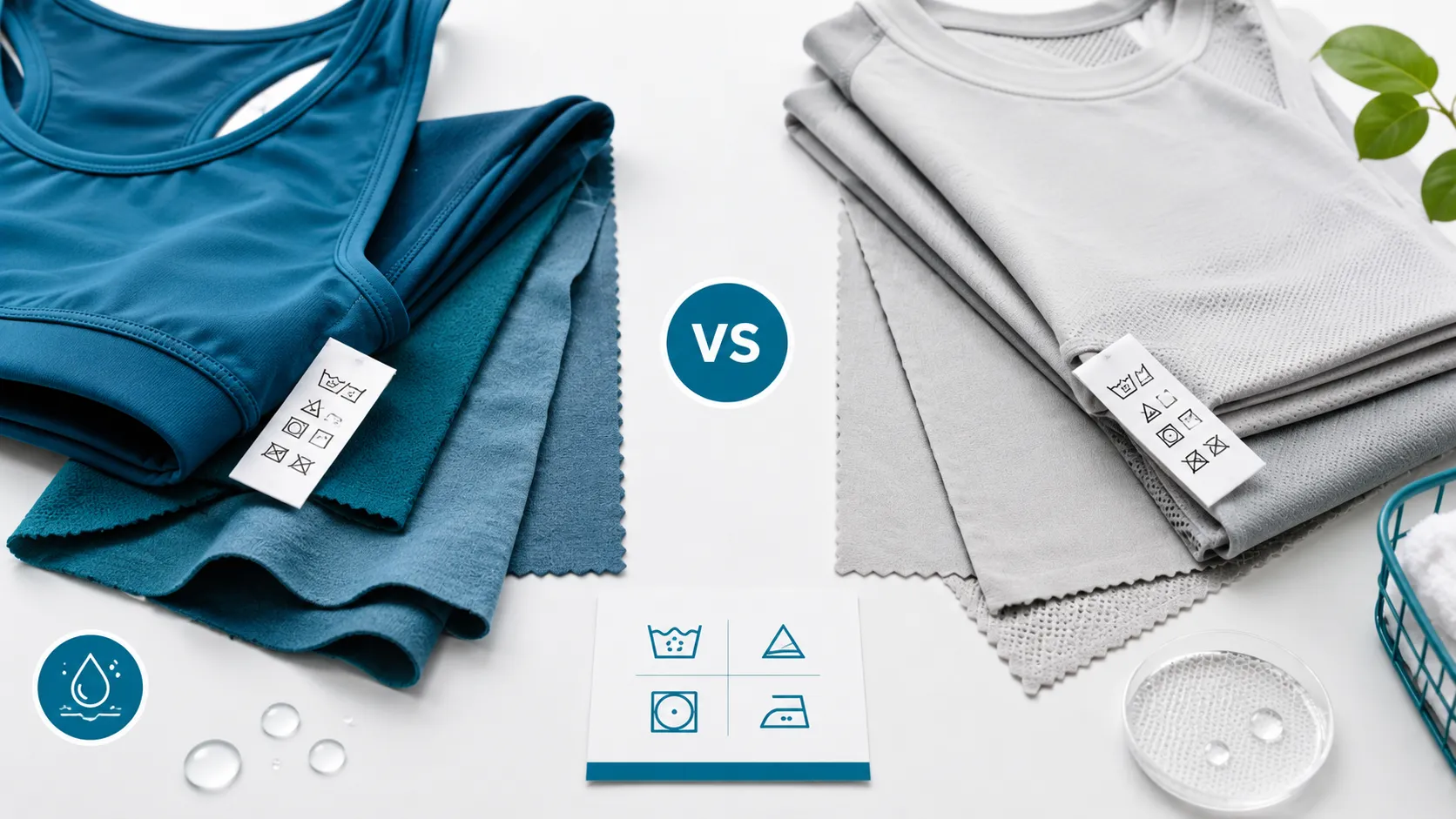
Polyamide vs polyester describes two different synthetic fiber families. In clothing, polyamide usually means nylon, while polyester usually means PET.
Polyamide often feels smoother and handles repeated rubbing well. Polyester absorbs less moisture, usually dries faster, and tends to resist wrinkles and shape changes.
Neither material is automatically better. Fabric weight, knit or weave, fit, finishing, and elastane content can matter as much as the main fiber on the care label.
Polyamide vs Polyester at a Glance
| Feature | Polyamide | Polyester |
|---|---|---|
| Common form | Nylon 6 or nylon 6.6 | PET polyester |
| Typical feel | Smooth, soft, or silky | Smooth, crisp, brushed, or textured |
| Flexibility | Often naturally more flexible | Usually depends more on knit or elastane |
| Moisture | Absorbs more into the fiber | Absorbs very little |
| Drying | Fast | Usually faster |
| Breathability | Depends on fabric construction | Depends on fabric construction |
| Abrasion | Performs well against repeated rubbing | Durable with strong shape retention |
| Wrinkles | Good resistance | Usually better resistance |
| Odor | Can build up in tight or damp clothing | Often associated with activewear odor |
| Common uses | Leggings, hosiery, underwear | Sports shirts, uniforms, jackets |
These are general tendencies rather than guarantees. A garment’s construction, blend, weight, finish, and care history can change how it performs.
Is Polyamide the Same as Polyester?
No. Polyamide and polyester are different synthetic polymers.
Polyamides contain repeating amide bonds, while polyesters contain repeating ester bonds. In apparel, polyamide commonly refers to nylon 6 or nylon 6.6. Most clothing labeled polyester is made from polyethylene terephthalate, or PET.
These structural differences influence how the fibers interact with moisture, heat, friction, dyes, and repeated wear.
Polyamide usually absorbs more moisture and performs well in applications involving friction. Polyester absorbs very little moisture and is widely valued for quick drying, wrinkle resistance, and dimensional stability.
The fiber name alone does not determine the performance of a finished garment. Yarn shape, fabric density, knitting or weaving method, finishing treatments, and additional fibers can alter the result.
Polyamide in Clothing
Polyamide is a synthetic fiber family. Nylon is the most common polyamide used in apparel.
Fine polyamide yarns can produce smooth, lightweight fabrics that sit comfortably against the skin. The fiber is also widely used where clothing experiences repeated rubbing.
Common applications include:
- Hosiery and tights
- Leggings
- Underwear
- Sports bras
- Socks
- Swimwear
- Fitted activewear
- Lightweight technical clothing
Not every polyamide fabric feels soft. A fine underwear knit may feel silky, while a tightly woven nylon shell can feel crisp or firm.
Polyester in Clothing
The polyester used in most clothing is usually PET. Manufacturers can make it feel smooth, brushed, fleece-like, crisp, or lightweight.
Common applications include:
- T-shirts
- Running tops
- Sports uniforms
- Jackets
- Linings
- Fleece
- Workwear
- Travel clothing
- Dresses and blended fabrics
Polyester is frequently blended with cotton, viscose, wool, or elastane to change its comfort, stretch, drying behavior, and care requirements.
Main Differences Between Polyamide and Polyester
Feel and Comfort
Polyamide often feels smoother against the skin, especially when it is made with fine filaments. This helps explain its use in hosiery, underwear, leggings, and other fitted garments.
Polyester can have a wider range of textures. It may feel smooth, dry, brushed, fluffy, or structured depending on the yarn and finishing process.
Fiber content is only one part of comfort. Also consider:
- Fabric weight
- Surface texture
- Seam placement
- Fit
- Elastane percentage
- Sweat and heat buildup
A high-quality polyester microfiber may feel softer than a coarse polyamide shell fabric.
Stretch and Shape Recovery
Polyamide often feels more flexible than standard polyester, but strong garment stretch usually comes from knitted construction or added elastane.
For example, an 80% polyamide and 20% elastane legging will behave differently from a 92% polyester and 8% elastane running shirt. The main fiber influences surface feel and moisture behavior, while elastane percentage and knit construction affect stretch and support.
Check the full label for terms such as:
- Elastane
- Spandex
- Lycra
- Stretch knit
- Four-way stretch
A polyester-elastane blend may stretch more than a 100% polyamide woven fabric. The complete blend is more informative than the main fiber name alone.
Moisture Absorption, Wicking, and Drying
Polyamide normally absorbs more moisture into the fiber than polyester. PET polyester absorbs very little water and therefore usually dries faster.
Absorption and wicking are not the same:
- Absorption means water enters the fiber.
- Wicking means liquid moves across or through the fabric.
- Air permeability describes how easily air passes through the material.
- Drying speed describes how quickly moisture leaves the fabric.
- Breathability describes the wearer’s overall heat and moisture comfort.
A polyester sports fabric can move sweat effectively across its surface even though the fiber absorbs little water. A polyamide fabric may absorb more moisture without automatically feeling cooler.
In practice, fabric thickness, porosity, fit, and moisture-management finishes may affect comfort more than the fiber name.
Breathability in Hot Weather
Neither polyamide nor polyester is automatically breathable.
A loose polyester mesh can allow more airflow than a thick polyamide knit, which is why nylon breathability cannot be judged from fiber content alone. By contrast, a lightweight polyamide fabric may feel comfortable during movement but warm when it is tightly woven or lined.
For hot-weather clothing, look at:
- Fabric weight
- Knit or weave openness
- Garment fit
- Lining
- Moisture-management treatments
- Intended activity
Abrasion and Everyday Durability
Polyamide is widely used where fabric experiences repeated rubbing. This includes hosiery, socks, leggings, backpacks, technical shells, and performance equipment.
Polyester is also durable, but it is particularly valued for easy care, wrinkle resistance, and shape retention.
Neither material is pill-proof. The causes of fabric pilling include loose surface fibers, friction, yarn quality, fabric construction, washing, and drying. Because synthetic fibers are strong, pills may remain attached instead of breaking away.
Wrinkles and Shape Retention
Polyester generally performs well when clothing needs to resist creasing and maintain its dimensions after washing, packing, or repeated wear.
This is one reason it is widely used in:
- Uniforms
- Travel clothing
- Shirts
- Jackets
- Linings
- Easy-care blends
Polyamide can also recover well after movement, but some polyamide garments may be more affected by heat, moisture, or prolonged stretching.
Construction still matters. A stable woven polyamide can retain its form better than a loose polyester knit.
Sunlight and Outdoor Use
Polyester is frequently used in outdoor textiles because many polyester fabrics retain their strength and shape well during repeated exposure.
However, fiber type alone does not determine UV protection or outdoor durability. Performance also depends on:
- Fabric density
- Thickness
- Color
- Stretch
- Moisture
- Stabilizers and finishes
- Tested UPF rating
A thin, pale, stretched polyester fabric may provide less UV protection than a dense polyamide fabric. Choose tested UPF clothing when sun protection is important.
Odor Retention
Polyester activewear is commonly associated with persistent body odor. Its hydrophobic surface can retain oily compounds from skin and sweat, allowing odor to return even after washing.
Polyamide garments can also develop odor, especially when they are tight, damp, or repeatedly worn. Fabric finish, washing habits, detergent residue, and drying conditions all affect the result.
To reduce odor buildup:
- Wash sweaty clothing promptly.
- Do not leave damp clothes in a gym bag.
- Measure detergent carefully.
- Avoid overloading the washer.
- Limit heavy fabric softener on activewear.
- Dry clothing completely before storage.
Shrinkage and Heat
Polyamide and polyester usually shrink less than cotton, viscose, rayon, or wool, but careful washing and drying are still needed to stop clothes shrinking or becoming distorted. If you’re wondering specifically does polyester shrink, the fiber is generally more heat-stable than natural fabrics, though high dryer heat can still affect elastane blends or printed finishes.
Which Is Better: Polyamide or Polyester?
Neither fiber is better for every use.
Choose according to the garment’s construction, intended activity, and care requirements.
| Clothing type | Often suitable | Main reason |
|---|---|---|
| Hosiery and tights | Polyamide blend | Smooth feel and resistance to rubbing |
| Leggings | Polyamide-elastane | Flexible and supportive construction |
| Running shirts | Polyester | Low moisture absorption and quick drying |
| Loose gym tops | Polyester | Lightweight and easy to maintain |
| Sports bras | Either blend | Fit and support matter most |
| Underwear | Depends on construction | Polyamide may feel smoother; polyester may dry faster |
| Fashion swimwear | Either blend | Comfort, lining, and elastane affect performance |
| Frequent pool wear | Often polyester-rich | Commonly selected for repeated chlorine exposure |
| Jackets | Either | Polyester favors shape; polyamide handles rubbing well |
| Uniforms | Polyester blend | Wrinkle resistance and easy care |
For Underwear
Polyamide is common in underwear because fine polyamide fabrics can feel smooth and flexible.
Polyester can also work well in lightweight, quick-drying underwear designed for exercise or travel.
Consider:
- Fabric texture
- Fit
- Gusset material
- Seam construction
- Drying speed
- Heat buildup
- Detergent residue
For Activewear
Both materials are widely used in sportswear.
Polyester is common in running shirts, training tops, uniforms, and loose gym clothing because it absorbs little moisture and dries quickly.
Polyamide is common in leggings, sports bras, compression clothing, and fitted garments because it can provide a smooth surface and resist repeated rubbing.
In either case, elastane percentage, fabric density, moisture-management treatment, and fit may matter more than the main fiber.
For Swimwear
Polyamide-elastane blends are common in fashion swimwear because they can feel smooth and flexible.
Polyester-rich fabrics are often selected for swimwear designed for repeated pool use. However, chlorine resistance also depends on yarn design, elastane content, construction, dyes, and exposure time.[6]
Regardless of fiber:
- Rinse swimwear after pool or saltwater use.
- Do not leave it wet in a bag.
- Avoid wringing.
- Keep it away from unnecessary dryer heat.
- Follow the care label.
For Jackets
Polyester is widely used in jackets, linings, insulated garments, and general outerwear because it offers good shape stability and easy care.
Polyamide is common in technical shells and hiking clothing where abrasion from packs or equipment is a concern.
Water resistance does not come from the fiber alone. It usually depends on fabric density, coatings, laminates, or water-repellent treatments.
Can These Fabrics Irritate Skin?
Both materials are widely used in clothing, but comfort varies between people and garments.
Discomfort blamed on a synthetic fiber may instead involve:
- Tight fit
- Heat and trapped sweat
- Rough seams
- Dyes or finishes
- Detergent residue
- Fabric softener residue
- Friction
- Poor airflow
Wash new clothing before wearing it, especially when it will sit close to the skin. Change out of damp activewear promptly and use a detergent that rinses clean.
Stop wearing a garment that repeatedly causes itching or irritation. Persistent symptoms should be discussed with a qualified medical professional.
Is Polyamide Nylon?
Nylon is a type of polyamide.
On clothing labels, “nylon” and “polyamide” often refer to closely related synthetic textile fibers. The wording may vary by manufacturer, region, or labeling convention.
Polyamide is the broader chemical family, so not every polyamide material is identical. For normal clothing care, however, a label listing polyamide can usually be treated similarly to a label listing nylon unless the garment instructions say otherwise.[1]
Sustainability and Microfiber Shedding
Conventional polyamide and polyester are commonly made from fossil-derived raw materials. Recycled forms of both are available, although recycled polyester is currently more established in the textile market.[1][2]
Recycled content does not remove every environmental impact. Manufacturing, dyeing, durability, microfiber release, recyclability, and usable lifespan still matter.
Studies show that microfiber shedding varies according to:
- Fiber and yarn type
- Fabric construction
- Surface finish
- Garment age
- Washing temperature
- Cycle length
- Detergent
- Mechanical agitation
Because so many factors affect shedding, it is inaccurate to assume that every polyester garment releases more—or less—than every polyamide garment.[4][5]
To reduce avoidable wear:
- Wash clothing only when needed.
- Use cooler, shorter cycles when appropriate.
- Avoid severe underloading or overloading.
- Turn delicate synthetic garments inside out.
- Use a gentle cycle when the label permits.
- Avoid unnecessary dryer heat.
- Repair garments instead of replacing them early.
- Consider a microfiber-catching device where available.
How to Wash Polyamide and Polyester

Both fibers are usually straightforward to wash, but trims, elastane, coatings, prints, and linings may require gentler care.
Use these general steps:
- Read the care label.
- Close zippers and fasteners.
- Turn fitted or printed garments inside out.
- Separate them from rough towels, denim, and exposed hardware.
- Use cool or warm water as permitted.
- Select a normal or gentle cycle based on construction.
- Measure detergent accurately.
- Limit fabric softener on activewear.
- Remove damp clothing promptly.
- Air-dry or use low heat when allowed.
Polyester garments containing elastane, adhesives, membranes, foam padding, or printed designs may need the lower-temperature methods used when washing polyester properly.
Final Verdict
In a polyamide vs polyester comparison, polyamide is often the stronger choice for smooth, flexible garments exposed to repeated rubbing, including hosiery, leggings, underwear, and fitted technical clothing.
Polyester is often preferable when quick drying, wrinkle resistance, shape retention, and easy care are priorities.
For many garments, the blend and construction matter more than the main fiber. Check the full label, elastane percentage, fabric weight, intended use, and care instructions before deciding.
Sources
Research on chlorine exposure and swimwear fabric performance. Polymers.
https://www.mdpi.com/2073-4360/16/21/3050
Textile Exchange. Nylon. Overview of nylon as a polyamide, its production, and textile applications.
https://textileexchange.org/nylon/
Textile Exchange. Synthetics. Overview of polyester and other synthetic textile fibers.
https://textileexchange.org/synthetics/
Callewaert C, et al. Microbial Odor Profile of Polyester and Cotton Clothes After a Fitness Session. Applied and Environmental Microbiology.
https://pmc.ncbi.nlm.nih.gov/articles/PMC4249026/
Vassilenko E, et al. Domestic Laundry and Microfiber Pollution.
https://pmc.ncbi.nlm.nih.gov/articles/PMC8270180/
Lant NJ, et al. Microfiber Release From Real Soiled Consumer Laundry.
https://pmc.ncbi.nlm.nih.gov/articles/PMC7274375/
