


If you want to know how to wash polyester without damaging it, wash most polyester clothes in cold or warm water on a gentle, synthetics, or permanent press cycle. Turn the garments inside out before washing, use a mild detergent, and avoid high heat because polyester can hold odor, build static, pill, wrinkle, or lose shape when washed or dried the wrong way.
For everyday polyester shirts, activewear, table linens, and light bedding, a careful machine wash is usually enough. Air dry when possible, or use the lowest dryer setting if the care label allows it. This guide explains how to wash 100% polyester, blends, blankets, dresses, jackets, pillows, and delicate items without heat damage, shrinking, stiffness, or trapped odor.
Key Takeaways
- Wash most polyester in cold or warm water.
- Use permanent press, synthetics, gentle, or delicate cycle.
- Turn polyester clothes inside out before washing.
- Use a measured amount of detergent.
- Do not add extra detergent for odor.
- Pretreat underarms, necklines, cuffs, oil marks, food stains, and odor areas.
- Polyester can go in the dryer when the care label allows it, but low heat is safest.
- Avoid high heat because it can damage, melt, or distort the fibers.
- Use extra care with fleece, faux fur, pleated garments, structured jackets, and dry-clean-only labels.
Can You Wash Polyester?
Can You Wash Polyester?
Yes, most polyester clothes can be washed at home. Many polyester shirts, pants, activewear items, tablecloths, and bedding pieces can go in the washing machine.
For most everyday polyester, use cold or warm water, measured detergent, a gentle or permanent press cycle, and low heat drying. Always check the care label first, especially on dresses, jackets, fleece, faux fur, pleated items, and blends.
A 100% polyester label does not always mean the item is safe for every setting. Fabric construction, trims, lining, coatings, and texture also matter. If you are unsure, use the gentlest method or spot clean first.
How to Machine Wash Polyester
Machine washing works well for most everyday polyester when you use the right settings.
Follow these steps:
- Sort the laundry by color and fabric weight.
- Turn items inside out.
- Pretreat stains, odor areas, collars, cuffs, and underarms.
- Place delicate or fluffy items in a mesh bag.
- Choose cold or warm water.
- Select permanent press, synthetics, gentle, or delicate cycle.
- Add the correct amount of detergent.
- Avoid overloading the washer.
- Use an extra rinse if residue or odor buildup is a problem.
- Remove the items soon after the cycle ends.
Do not pack the washer tightly. Polyester needs room to move and rinse. A crowded washer can leave detergent residue, trapped odor, wrinkles, and poor cleaning results.
Best Water Temperature for Washing Polyester
Cold water is the safest choice for most polyester. It protects color, reduces heat stress, and works well for routine washing.
Warm water can help with body oil, odor, and heavier soil when the care label allows it. Many sturdy items can handle warm water, but delicate blends need more caution.
Avoid hot water unless the care label clearly says it is safe. High heat can affect shape, texture, prints, stretch fibers, fleece, and delicate finishes.
| Water Temperature | Best For | Use Caution With |
|---|---|---|
| Cold water | Dark colors, activewear, delicate blends, printed items, and routine washing. | Heavy odor or oily buildup may need pretreatment first. |
| Warm water | Sturdy polyester, table linens, light odor, and heavier soil. | Spandex blends, rayon blends, pleats, trims, and bright colors. |
| Hot water | Only when the care label clearly allows it. | Most polyester clothes, fleece, activewear, and delicate items. |
| Around 30°C | Delicate or colored polyester. | Heavy stains may need pretreatment. |
| Around 40°C | Sturdier polyester when the label allows it. | Heat-sensitive blends, prints, and structured garments. |
A safe rule is simple: use cold water for routine washing, warm water for sturdy items with heavier soil, and hot water only when the label allows it. This also fits broader laundry sorting, where the right water temperature for clothes depends on fabric type, color, and soil level
Best Washer Cycle
The best washer cycle depends on the item. Permanent press works well for many everyday polyester clothes because it uses lower agitation and helps reduce wrinkles.
A gentle or delicate cycle works better for thin, lightweight, pleated, embellished, or lined polyester. Some washers also have a synthetics cycle, which can work well for polyester and other man-made fabrics.
| Washer Cycle | Best For | Avoid With |
|---|---|---|
| Permanent press | Everyday shirts, pants, uniforms, and wrinkle-prone items. | Very delicate, fluffy, or embellished pieces. |
| Gentle cycle | Blouses, dresses, activewear, blends, and delicate items. | Heavily soiled sturdy items. |
| Delicate cycle | Thin fabrics, pleats, trims, satin-like polyester, and lingerie. | Heavy loads and bulky items. |
| Synthetics cycle | Polyester and synthetic blends when your washer has this setting. | Items with special care labels. |
| Normal cycle | Sturdy everyday clothes only. | Dresses, fleece, faux fur, activewear, and delicate blends. |
| Heavy duty | Rarely needed for polyester. | Most polyester garments. |
Use lower spin for delicate, fluffy, pleated, or structured items. High spin can twist, wrinkle, or stress certain garments.

How Much Detergent to Use
Use the correct detergent amount recommended on the product label. Do not add extra detergent just because polyester smells sweaty or looks dirty.
Too much detergent can leave residue on synthetic fibers. That residue can make clothes feel stiff, slick, or less fresh after washing. It can also trap body oil and odor.
Liquid detergent often works well in cold water because it dissolves easily. Enzyme detergent can help with sweat, body oil, and food stains when the care label allows it.
Avoid enzyme detergent on wool or silk blends unless the detergent label clearly says it is safe for those fibers.
If polyester clothes smell after washing, do not keep adding more detergent. Use less detergent, rinse better, avoid overloading, and pretreat odor areas before washing.
Use an extra rinse when clothes feel soapy, stiff, or coated after washing.
How to Wash 100% Polyester
Most 100% polyester clothes wash well at home. This fabric usually resists shrinking and wrinkles better than cotton, but it still needs low to moderate heat.
To wash 100% polyester:
- Check the care label.
- Turn the item inside out.
- Pretreat stains and odor areas.
- Use cold or warm water.
- Choose permanent press, synthetics, or gentle cycle.
- Use measured detergent.
- Avoid high heat in the dryer.
- Air dry or tumble dry low.
Use extra care with fleece, faux fur, satin-like fabric, pleated garments, printed shirts, and jackets. These items may need a gentler cycle or air drying, even if the fiber content says 100% polyester.
Blends Need Different Care
Polyester blends need care based on the most delicate fiber in the mix. Do not treat every blend like 100% polyester.
| Polyester Blend | Best Washing Method | Main Risk |
|---|---|---|
| Polyester-cotton | Cold or warm water with normal or permanent press cycle. | Cotton content may shrink slightly. |
| Polyester-spandex | Cold water, gentle cycle, low heat, or air dry. | Heat can weaken stretch. |
| Polyester-rayon | Cold water, gentle cycle, and air dry when possible. | Rayon may weaken or distort when wet. |
| Polyester-wool | Follow the wool care label. | Wool can shrink, felt, or lose shape. |
| Polyester fleece | Cold water, gentle cycle, low heat, or air dry. | Pilling, matting, and static. |
| Polyester microfiber | Cold or warm water, low heat, and light detergent. | Coating, lint, and reduced performance from excess softener. |
When the label lists several fibers, choose the safest method. A small amount of spandex, rayon, or wool can change how the item should be washed.
Hand-Washing Steps
Hand washing works well for delicate polyester, small items, lightweight blouses, and garments with trims or uncertain labels.
Follow these steps:
- Fill a basin with cool water.
- Add a small amount of mild detergent.
- Place the garment in the water.
- Gently move it through the water.
- Soak for 5 to 10 minutes.
- Rinse until the water runs clear.
- Press out water without wringing.
- Roll the item in a clean towel if needed.
- Air dry flat or hang based on the garment shape.
Do not twist or wring delicate polyester. Twisting can stretch seams, damage trims, and leave deep wrinkles.
Washing by Item Type
Use the care label first, then adjust the method by item type. A polyester gym shirt, dress, jacket, pillow, and blanket do not need the same wash routine.
Polyester Clothes and Shirts
Turn shirts, pants, uniforms, and everyday clothes inside out. Use cold or warm water and permanent press or gentle cycle.
Pretreat underarms, collars, cuffs, and oily marks before washing. Dry on low heat or air dry.
Polyester Activewear
Activewear often holds sweat, body oil, and deodorant buildup, which can lead to body odor in clothes after washing if residue stays trapped.
Use cold or warm water, measured detergent, and a gentle or synthetics cycle. Avoid heavy fabric softener because it can leave a coating that traps odor and affects moisture-wicking performance.
Dry activewear fully before storing it. Damp gym clothes can develop odor quickly.
Polyester Dresses
Polyester dresses need care based on the fabric and construction. A plain dress may handle gentle machine washing, but a lined, pleated, satin-like, lace-trimmed, or embellished dress may need hand washing or dry cleaning.
Use cold water, gentle cycle, and a mesh bag when the label allows machine washing. Air dry when possible to protect shape and finish.
Polyester Jackets
Zip the jacket and close fasteners before washing. Turn it inside out if the design allows it.
Use cold water and a gentle or synthetics cycle. Lightweight jackets may need a mesh bag. Structured, lined, coated, or padded jackets may need spot cleaning or professional care.
Air dry or tumble dry low only if the care label allows it.
Polyester Blankets, Fleece, and Faux Fur
Use cold water, mild detergent, gentle cycle, and low spin for polyester blankets, fleece, and faux fur. Wash bulky items alone or with similar soft items.
Avoid high heat. Heat can mat fleece, flatten faux fur, reduce softness, and create rough texture.
Shake the blanket after washing. Air dry or use the lowest dryer setting if the label allows it. Brush faux fur only when the care label says it is safe.
Polyester Pillows and Filling
Check the label before washing pillows. Some can go in the washer, while others need spot cleaning
Use gentle cycle, mild detergent, and an extra rinse. Dry pillows fully before use or storage. Trapped moisture can cause odor or mildew.
For bulky pillows, use a large washer so the filling can move and rinse well.
Polyester Tablecloths and Table Linens
Pretreat food, oil, makeup, and grease marks before washing. Use cold or warm water based on the care label and stain type.
Remove tablecloths quickly after the cycle ends to reduce wrinkles. Tumble dry low or air dry, then smooth or press on low heat if the label allows it.

Pretreating Stains
Polyester can hold oily stains because synthetic fibers may attract body oils, grease, and residue. Pretreat stains before washing, especially if the mark comes from sweat, food, makeup, or oil. For a broader stain process, use a safe stain removal routine before drying the garment.
Apply a small amount of detergent or stain remover to the stained area. Gently work it in with your fingers or a soft brush. Let it sit for the time recommended on the product label.
Do not use chlorine bleach unless the care label clearly allows it. For white or sturdy polyester, oxygen bleach is usually the safer option when the product label says it suits the fabric. Never mix bleach with vinegar, ammonia, or other cleaners.
Do not use high heat before the stain is gone. Heat can make some stains harder to remove.
| Stain Type | What to Do First | What to Avoid |
|---|---|---|
| Sweat and underarm stains | Pretreat underarms with detergent or enzyme stain remover. | Drying before checking the stain. |
| Body oil | Pretreat neckline, cuffs, and oily areas. | Extra detergent without better rinsing. |
| Grease or oil | Spot treat before laundering. | Hot dryer heat before removal. |
| Food stains | Remove solids, rinse if safe, then pretreat. | Rubbing hard on delicate fabric. |
| Makeup | Pretreat gently with liquid detergent or stain remover. | Smearing the stain deeper. |
| Mud or dirt | Let dry, brush off excess, then wash. | Scrubbing wet mud into fibers. |
| Deodorant buildup | Pretreat underarms and rinse well. | Heavy fabric softener. |
Always check stained or smelly areas before drying. If the mark or odor remains, treat and wash again before using heat.
Odor Removal
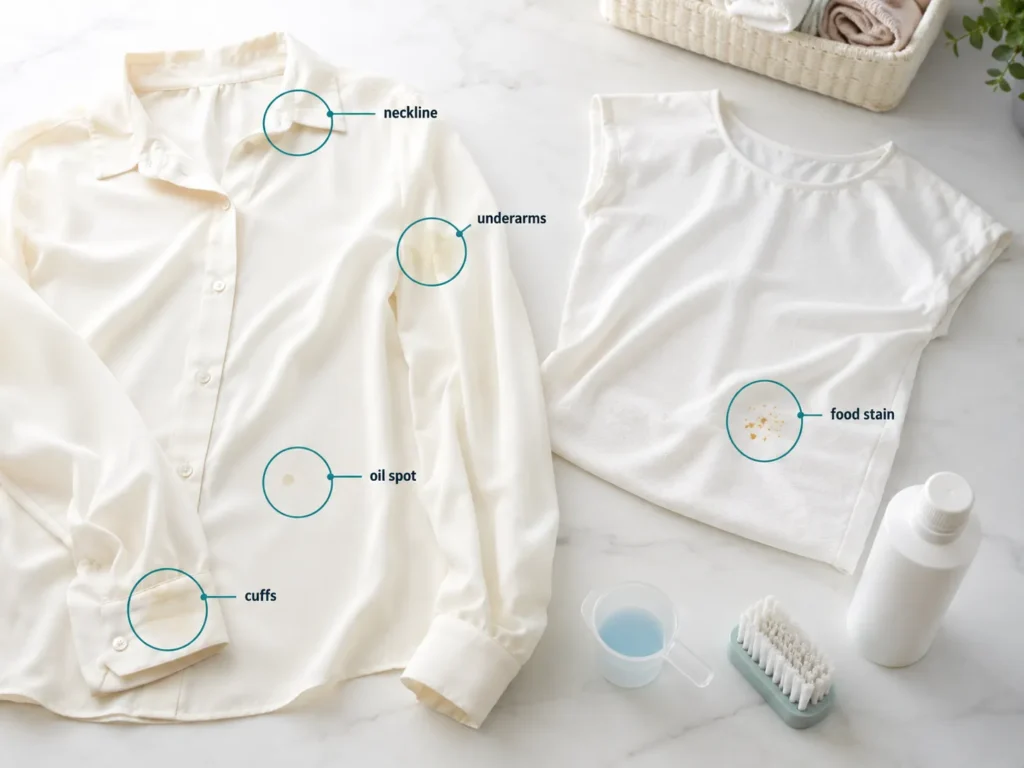
Polyester can hold odor because it does not absorb water like cotton. It dries quickly, but body oil, sweat residue, and deodorant buildup can cling to the fiber surface.
Odor often comes from four problems:
- oily body soil
- detergent residue
- fabric softener coating
- poor drying
Pretreat underarms, necklines, and cuffs before washing. Use enzyme detergent when the care label allows it. Wash with enough water movement, and avoid overloading the machine.
For sturdy odor-prone polyester, a short vinegar presoak can help. Mix cool or warm water with white vinegar, soak the item for about 20 to 30 minutes, then wash as usual. Do not use vinegar on delicate trims, special finishes, or items with labels that warn against soaking.
Do not mix vinegar with bleach, oxygen bleach, ammonia, or other cleaning products.
Rinse well and dry completely before storage. Storing damp polyester can make odor return.
Drying Steps
Polyester can go in the dryer when the care label allows it, but low heat is the safest setting.
Air drying is the safest drying method. It protects shape, reduces heat risk, and helps delicate pieces last longer. For indoor or outdoor drying, use a fabric-safe air-drying setup that lets polyester dry fully without high heat.
If the care label allows machine drying, use low heat. Remove clothes while slightly damp to reduce wrinkles, then hang or lay them flat to finish drying.
Avoid high dryer heat. High heat can damage fibers, weaken stretch, flatten fleece, mat faux fur, distort shape, and make wrinkles harder to remove.
Do not over-dry polyester. Over-drying can increase static and make the fabric feel rough.
Dry thick items, pillows, jackets, and blankets fully before storage. Trapped moisture can lead to odor.

Shrinkage and Heat Risk
100% polyester rarely shrinks in normal washing, but heat can still damage it. High dryer heat, hot water, or a hot iron can distort the fibers and affect the shape.
Blends may shrink more than 100% polyester. A polyester-cotton blend can shrink because of the cotton. A polyester-rayon or polyester-wool blend may need gentler care, especially if you are trying to prevent shrinkage in clothes.
To reduce shrinkage risk, use cold or warm water, avoid high heat, and follow the care label.
Can You Iron or Steam Polyester?
You can iron some polyester, but use low heat. High heat can melt, shine, scorch, or distort the fabric.
Turn the garment inside out before ironing. Use a press cloth between the iron and the fabric. Keep the iron moving, and test a hidden area first.
Steam often works better than dry heat for light wrinkles. Hang the garment and use gentle steam, but do not press hot metal directly onto the fabric unless the label allows it.
For pleated, coated, satin-like, or delicate polyester, avoid ironing unless the care label gives clear instructions.
What If the Label Says Dry Clean Only, Do Not Wash, or Do Not Immerse?
The care label matters more than the fiber name. A 100% polyester item may still say dry clean only, do not wash, spot clean only, or do not immerse in water.
This can happen because of the item’s construction. Linings, padding, coatings, pleats, trims, dyes, glue, faux fur, or embellishments may not handle washing well.
Follow the label for expensive, structured, lined, coated, pleated, embellished, or fluffy items. If you choose to test a risky item, spot test a hidden area first. Then use the gentlest method and accept that damage may still happen.
For uncertain washable items, use cold water, a mesh bag, delicate cycle, and air drying. Avoid soaking, twisting, hot water, and dryer heat.
When the item has value or a strict label, professional cleaning is safer.
Keeping Polyester Soft and Fresh
Polyester can feel stiff, rough, or less fresh when detergent, body oil, fabric softener, or hard-water minerals build up.
Use measured detergent and rinse well. Do not overload the washer. Wash with similar fabrics to reduce friction and lint.
Use softener lightly on regular polyester if the care label allows it, but avoid heavy softener on activewear and microfiber. It can coat the fibers and reduce freshness or moisture movement.
For fleece and faux fur, use cold water, gentle cycle, and low heat or air drying. High heat can damage softness. Shake blankets after washing to loosen the pile.
Store polyester only when it is fully dry and clean. Odor and mildew are more likely when fabric sits damp or dirty.
Common Washing Mistakes
Avoid these common mistakes when washing polyester:
- using hot water without checking the care label
- adding too much detergent
- skipping stain pretreatment
- overusing fabric softener on activewear
- washing delicate polyester with towels or denim
- overloading the washer
- drying on high heat
- ironing with high heat
- storing clothes before they are fully dry
- ignoring dry clean only or do not wash labels
- mixing vinegar with bleach or other cleaners
These mistakes can cause odor, residue, fabric pilling, static, wrinkles, shrinkage in blends, and heat damage
Eco Note: Polyester and Microfiber Shedding
Polyester is a synthetic fabric. Like other synthetic textiles, it can release tiny fibers during washing.
You can reduce shedding by washing only when needed, using gentle cycles when suitable, avoiding unnecessary high heat, and keeping clothes longer. A microfiber-catching laundry bag or filter may also help reduce fibers leaving the washer.
This note does not mean you should avoid washing dirty clothes. It means washing with care can protect both the garment and the water system.
Final Takeaway
Polyester is usually easy to wash, but the safest method depends on the care label, item type, blend, soil level, and heat sensitivity. Most polyester clothes do well in cold or warm water with measured detergent, a gentle or permanent press cycle, and low-heat drying.
For best results, pretreat stains and odor areas, avoid extra detergent, skip high heat, and dry items fully before storage. Use extra care with fleece, faux fur, jackets, dresses, pillows, activewear, table linens, and any polyester item with a strict care label.
