


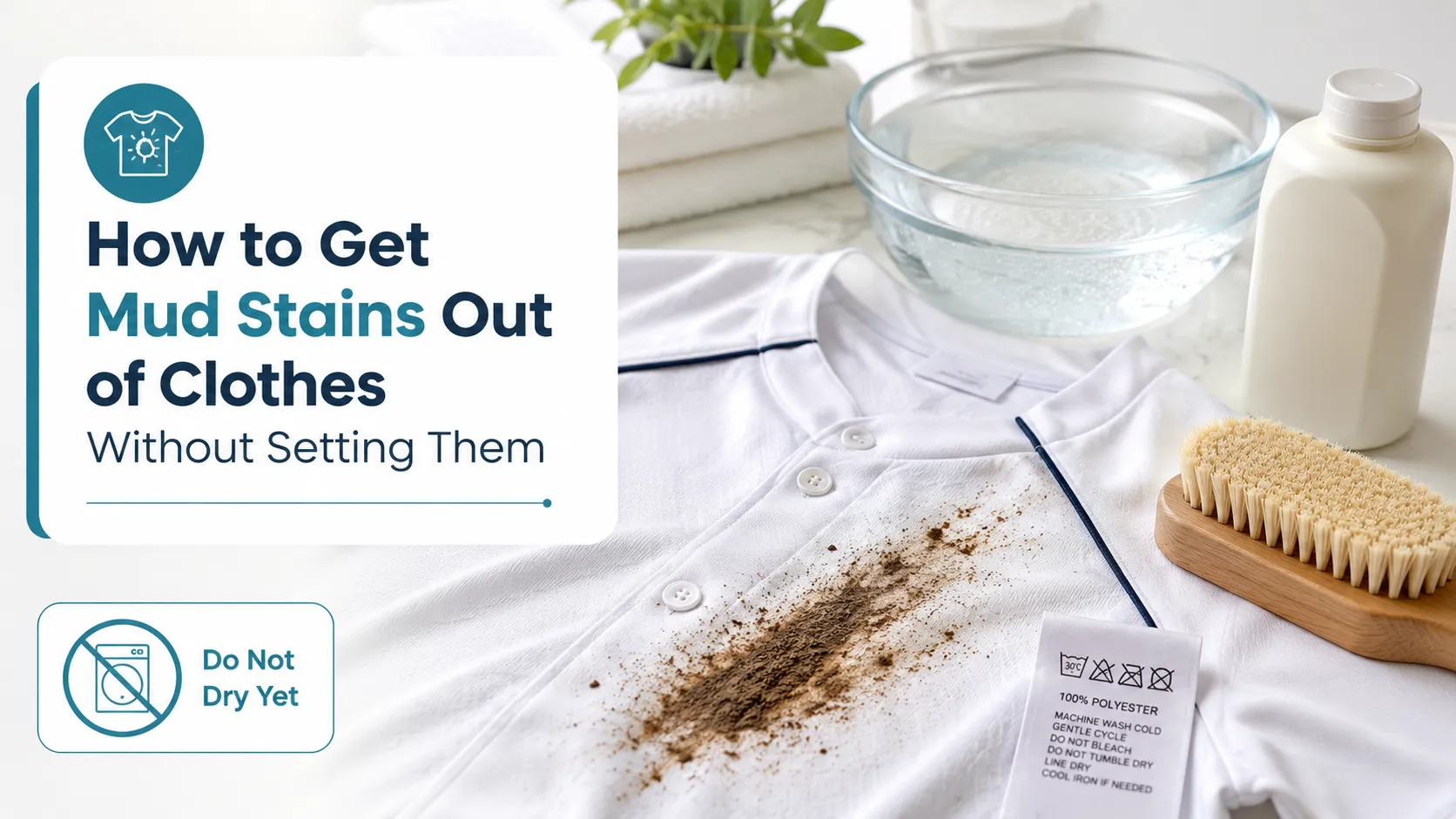
Mud stains on clothes can look messy, especially on white fabric, jeans, school uniforms, and sportswear. The biggest mistake is rubbing wet mud deeper into the fabric or drying the clothing before the mark is gone.
This guide explains how to get mud stains out of clothes safely and how to remove mud stains from clothes without setting them with dryer heat. You will learn when to let mud dry, how to brush off loose dirt, what to use for dried or set-in marks, and how to treat white clothes, jeans, sports uniforms, and red clay.
- Let thick wet mud dry before brushing it off.
- Do not rub wet mud into the fabric.
- Brush off dry dirt before rinsing or pretreating.
- Use cold water after loose soil is removed.
- Pretreat with enzyme detergent or liquid laundry detergent.
- Do not use the dryer until the mark is fully gone.
- Use oxygen bleach only on washable, color-safe fabrics.
Should You Let Mud Dry Before Washing Clothes?
Yes, in many cases, you should let thick mud dry before washing clothes. This may sound strange, but it helps prevent smearing.
Mud can include soil, clay, silt, sand, grass, and outdoor grime. When it is wet and thick, rubbing can spread that mix across the fabric. It can also push dirt deeper into the fibers.
When the mud dries, you can brush off the loose dirt first. This makes the leftover stain easier to treat.
There is one exception. If the mark is only a light dirt stain with no thick layer, you can rinse it with cold water and pretreat it right away.
What to Do First Before Treating Mud Stains
Before using any stain remover, check the care label. This tells you how much water, heat, and treatment the fabric can handle.
If the clothing has thick mud on it, let it dry. Then use a soft brush, spoon edge, or old toothbrush to remove loose dirt. Do not scrape hard because this can damage fabric fibers.
After brushing, rinse the back of the stained area with cold water if the fabric allows it. This helps push dirt out instead of driving it deeper.
If you plan to use oxygen bleach, white vinegar, baking soda, or any stronger cleaner, test it on a hidden seam first. This is important for dark colors, delicate fabric, jeans, and activewear.
A safe first checklist looks like this:
- Check the garment label.
- Let thick mud dry.
- Brush off loose dirt.
- Rinse with cold water.
- Pretreat before washing.
- Wash by the label.
- Check the stain before drying.
Dryer Warning: Do Not Dry Yet
Do not put muddy clothes in the dryer until the stain is fully gone. Dryer heat can set leftover soil, clay, or pigment deeper into the fabric. If the mark is still visible after washing, pretreat it again and rewash before using heat.
How to Get Fresh Mud Stains Out of Clothes
Fresh mud is easier to remove when you handle it carefully. The goal is to remove loose dirt first, then treat the mark that remains.
Step 1: Let Thick Mud Dry
If the mud is thick and wet, let it dry before touching it. Place the clothing somewhere safe and let the mud harden naturally. Do not use dryer heat to speed this up.
Step 2: Brush Off Loose Dirt
Once the mud is dry, brush off as much dirt as possible. Use a soft brush, an old toothbrush, or your fingers.
Work gently. You want to lift loose soil, not grind it deeper into the fabric.
Step 3: Rinse With Cold Water
After removing dry dirt, rinse the stained area with cold water. If possible, rinse from the back of the fabric.
Cold water helps loosen the remaining dirt without using heat too early.
Step 4: Pretreat the Stain
Apply liquid laundry detergent, enzyme detergent, or a stain remover to the muddy area. Gently work it into the fabric with your fingers or a soft brush.
Let it sit for 10 to 30 minutes if the care label allows it. Enzyme cleaners need contact time, so do not rush this step.
Step 5: Wash and Check Before Drying
Wash the clothing in the warmest water allowed by the care label. After washing, check the stained area under good light.
If the mark is gone, dry as usual. If it is still visible, keep the item out of the dryer. Pretreat again and rewash.
How to Remove Dried Mud Stains
Dried muddy marks often look worse than they are. In some ways, they are easier to start with because the dry soil can be brushed off before water is added.
Shake the clothing outside or over a trash bin. Then brush the dried mud gently with a soft brush or old toothbrush.
Next, rinse the stained area with cold water. Apply liquid detergent or enzyme detergent and let it sit for 15 to 30 minutes.
Wash the item based on the care label. Check the fabric before drying. If any brown, gray, or red mark remains, repeat the pretreatment.
How to Remove Set-In Mud Stains
Set-in stains need more patience. They may have already gone through a wash cycle or sat on the fabric for a long time.
Start by brushing away any dry dirt. Then apply enzyme detergent or a stain remover to the stained area. Let it sit longer than usual, up to 30 minutes if the care label allows it.
For washable white or colorfast clothes, an oxygen bleach soak may help. Mix oxygen bleach with water according to the product label. Soak the clothing only if the garment label says the fabric can handle it.
After soaking, wash the item again. Check before drying. If the mark is lighter but still there, repeat the process.
Are Mud Stains Permanent?
Mud stains are not always permanent. Fresh and dried mud often comes out with brushing, pretreatment, and washing.
Set-in mud, red clay, or dryer-set stains can be harder. These may need soaking and repeat treatment. Some delicate items may need professional cleaning instead of strong home methods.
Best Mud Stain Removers by Situation
Different muddy marks need different treatments. A light dirt mark on cotton is not the same as red clay on white pants or mud on dark denim.
Use this table to choose the safest first step.
For most everyday clothing, liquid laundry detergent or enzyme detergent is the safest starting point. Stronger treatments should come later if the stain remains.
Home Remedies for Mud Stains: What Works and What to Avoid
Home remedies can help with some stains, but they should not be used blindly. Always check the care label and test first on a hidden area.
Baking Soda for Mud Stains
Baking soda paste can help with light dirt marks on sturdy fabric. Mix baking soda with a small amount of water, apply it gently, then rinse before washing.
Avoid heavy scrubbing. Baking soda can be too rough for delicate fabric.
White Vinegar for Mud Stains
White vinegar may help loosen light dirt on sturdy washable clothes. Mix it with water and test first.
Avoid vinegar on wool, silk, leather, and delicate fabrics. Do not mix vinegar with bleach.
Oxygen Bleach for Mud Stains
Oxygen bleach can help with stubborn marks on washable whites and colorfast clothes. It is useful for set-in dirt, white pants, and some sports uniforms.
Do not use it on wool, silk, leather, or dry-clean-only clothing. Always follow the product label and garment label.
Liquid Detergent for Mud Stains
Liquid laundry detergent is the best everyday option. You can apply it directly to the stained area before washing.
Use enough to cover the mark, but do not overdo it. Too much detergent can leave residue and make rinsing harder.
How to Get Mud Stains Out of White Clothes
White clothes show muddy marks clearly, especially brown dirt, red clay, and gray soil stains. The key is to remove loose dirt first and avoid heat until the stain is gone.
Let thick mud dry. Brush off the dry soil. Rinse the stained area with cold water, then apply liquid detergent or enzyme detergent.
For washable white clothes, oxygen bleach may help if the care label allows it. Soak the item based on the product directions, then wash again.
Avoid chlorine bleach unless the label says it is safe. Chlorine bleach can damage some fabrics and may cause yellowing on certain materials.
Check the clothing before drying. If the mark remains, repeat the treatment.
How to Get Mud Stains Out of Jeans
Jeans can handle more brushing than delicate fabric, but dark denim can fade if treated too strongly.
Let mud dry first if it is thick. Brush off loose dirt. Rinse the stain with cold water from the back of the fabric.
Apply liquid detergent or enzyme detergent and let it sit for 15 to 30 minutes. Wash jeans inside out to protect the color.
Avoid strong bleach on dark denim. For black or dark clothes, avoid peroxide and strong bleaching products unless the fabric label allows it and a hidden test looks safe.
If the jeans are light-colored and the care label allows it, oxygen bleach may help with a stubborn mark. Air dry first so you can check the fabric before using heat.
How to Get Mud Stains Out of Baseball Pants or Sports Uniforms
Baseball pants and sports uniforms often collect mud, grass, sweat, and clay at the same time. White pants can show every mark, so they may need more than one round of treatment.
Let thick mud dry first. Brush off loose dirt. Pretreat the stained area with enzyme detergent or a detergent-based stain remover.
For white or colorfast baseball pants, follow the white-clothes method and use oxygen bleach only if the care label allows it. Soak the pants according to the product directions, then wash.
Avoid fabric softener on performance sportswear. It can affect stretch and sweat-wicking. Also avoid high heat until the stain is gone.
If the pants still look stained after washing, pretreat again before drying.
How to Remove Red Mud or Clay Stains
Red mud and clay stains can be more stubborn than normal dirt. Clay particles can cling tightly to fabric, and red soil can leave color behind even after loose dirt is gone.
Let red mud dry before brushing. Remove as much dry clay as possible. Then rinse with cold water and apply enzyme detergent or liquid laundry detergent.
Let the pretreatment sit longer than usual. For white or colorfast washable fabric, an oxygen bleach soak may help if the care label allows it.
Do not dry the clothing until the red or orange mark is gone. Red clay stains often need repeat treatment.
What If the Mud Stain Also Has Grass?
Mud and grass often appear together on kids’ clothes, sports uniforms, and outdoor clothing.
Start with the mud. Let thick mud dry, then brush off loose dirt. After that, treat the green grass stain underneath.
Use cold water and enzyme detergent. Let the treatment sit before washing. Check the fabric before drying.
For green grass marks, see our guide on how to get grass stains out of clothes.
If you still see green or brown marks, repeat the treatment. Do not use the dryer until both stains are gone.
Can You Remove Mud Stains After Washing?
Yes, you can often remove a muddy stain after washing if the clothing was not dried with heat.
Do not put the item in the dryer. Pretreat the stained area again with liquid detergent, enzyme detergent, or stain remover. Let it sit for 15 to 30 minutes.
If the fabric is white or colorfast and the label allows it, soak it in oxygen bleach before rewashing.
Check the stain again after washing. If it is still visible, repeat the process before drying.
Can You Remove Mud Stains After Drying?
You can sometimes remove a muddy mark after drying, but it is harder. Dryer heat can set leftover soil or clay deeper into the fibers.
Start with a longer pretreatment. Apply enzyme detergent or stain remover and let it sit if the care label allows it.
For washable white or colorfast clothing, try an oxygen bleach soak. Then wash again and air dry.
Do not use high heat again until the stain is fully gone. If the item is delicate or expensive, take it to a professional cleaner.
What Not to Use on Mud Stains
Some cleaning habits can make the mark worse or damage clothing.
Avoid these mistakes:
- Rubbing thick wet mud into the fabric
- Using the dryer before the stain is gone
- Using chlorine bleach on colored clothes
- Using strong products on wool, silk, leather, or dry-clean-only clothing
- Scrubbing delicate fabric with a hard brush
- Scraping dried mud with a knife
- Mixing bleach with vinegar, ammonia, or other cleaners
- Using fabric softener on activewear while treating stains
Fabric Safety Guide for Mud Stains
The safest method depends on the fabric. Always check the care label before using stronger treatments.
When in doubt, use the mildest method first. Stronger stain treatments should only be used when the fabric can handle them.
Mud Stain Mistakes and How to Fix Them
Mud stains become harder to remove when they are treated the wrong way. Use this table to avoid the most common mistakes.
Bottom Line: Treat Mud Stains Before They Set
The safest way to get mud stains out of clothes is to let thick mud dry, brush off loose dirt, pretreat the stained area, and wash by the care label. Do not use the dryer until the stain is fully gone. For white clothes, jeans, baseball pants, red clay, or set-in mud, use stronger treatments only if the fabric can handle them. If the item is wool, silk, leather, or dry-clean-only, use gentle care or take it to a professional cleaner.
