


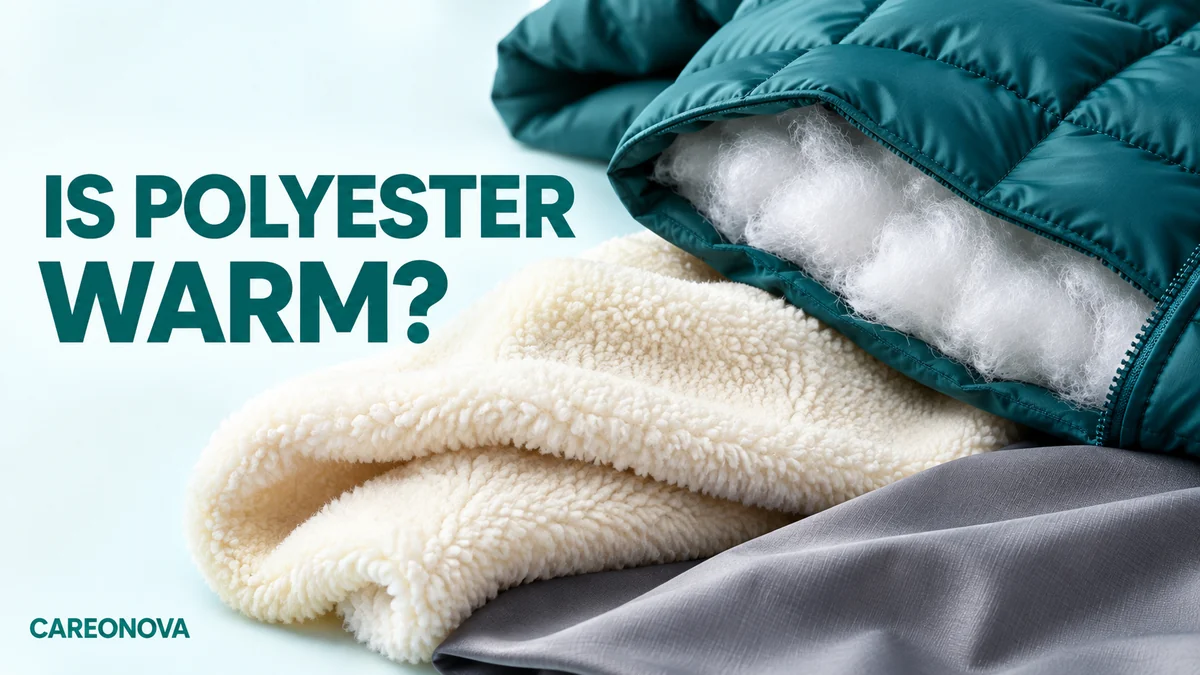
If you are standing in a store looking at a winter coat tag that says “100% Polyester,” you likely have one question. Will this plastic fabric actually keep you warm, or will you freeze? The answer depends entirely on how the fabric is built.
The Quick Verdict
- Yes, polyester is incredibly warm when it is brushed into fluffy fleece or puffed into thick jacket filling. These styles trap your body heat perfectly.
- No, polyester is not warm when it is tightly woven into a thin, flat sheet (like a cheap dress shirt or a light windbreaker). This style will leave you freezing and sweaty.
Polyester is a synthetic polymer (plastic). The raw fiber does not generate heat. Instead, it provides thermal insulation by trapping “dead air space.” Your body heats up the small pockets of air caught inside the fabric. If the polyester is thick and fluffy, it holds a lot of warm air. If it is flat and thin, it holds nothing.
The 3 Types of Winter Polyester
Understanding polyester requires looking past the chemical name. You must look at the “form factor” of the fabric. The exact same plastic is used to make three very different winter layers.
- Outer Shells (The Wind Blocker): Factories weave polyester fabric tightly to create slick, flat fabrics like taffeta and ripstop. These shells block cold wind and repel rain. However, they provide zero insulation on their own.
- Brushed Fleece (The Heat Trapper): Machines knit the polyester and brush it with wire rollers. This creates millions of tiny loops. These loops trap massive amounts of dead air space, making it a perfect, cozy mid-layer.
- Fiberfill and Batting (The Puffer Coat): Polyester is spun into hollow, fluffy fibers that mimic goose down. This “synthetic down” fills winter parkas. When you compare fabric warmth ratings, remember that synthetic batting is measured in GSM (grams per square meter). A 60g fill is for crisp fall days, while a 150g to 200g fill is required for sub-freezing winter weather.
Daniel’s Winter Coat Tag Decoder:
Do not buy a jacket just because it looks thick. Read the tag. If the tag says Shell: 100% Polyester, Lining: 100% Polyester but lists no fill material, it is just a windbreaker. You will freeze in the snow. A true winter coat must list a specific fill or insulation layer.
The “Fleece Paradox”: Disambiguating the Ultimate Mid-Layer
Many shoppers ask if fleece is warmer than polyester. This question is a trap. Polar fleece is 100% polyester.
Fleece is simply a texture, not a different raw material. You cannot compare the two. Asking if fleece is warmer than polyester is like asking if ice is colder than water. If you want the warmest, softest version of polyester for a sweater, you want polar fleece.
The Danger of the “Sweat Chill” in Winter
Polyester has one major flaw. It is heavily hydrophobic (water-repelling). While natural fibers absorb moisture, polyester has a moisture regain rate of just 0.4%. It absorbs almost nothing.
This creates a dangerous problem called the “sweat chill.” Because polyester lacks vapor breathability, it traps your sweat directly against your skin. If you wear a tight, non-wicking polyester shirt while shoveling snow, you will sweat. When you stop moving, that trapped liquid cools down rapidly. It pulls heat away from your body, causing sudden shivering and hypothermia risks.
The 3-Layer Rule: Never wear flat, cheap polyester directly against your skin in the winter. Wear a moisture-wicking base layer. Add a polyester fleece mid-layer for warmth. Finally, wear a polyester shell on the outside to block the wind.
Head-to-Head: Polyester vs. Cotton, Wool, and Down
When deciding what to wear in the cold, you must compare polyester against other common winter fabrics.
| Fabric | Dry Warmth | Wet Warmth | Breathability | The Final Verdict |
|---|---|---|---|---|
| Polyester | Excellent (if lofted) | Excellent | Poor | The best all-around, affordable winter insulator. |
| Cotton | Poor | Dangerous | High | Easily beaten by polyester. Cotton absorbs water and freezes. |
| Wool | Excellent | Very Good | Excellent | Wool wins on breathability, but polyester is lighter and cheaper. |
| Down | Superior | Fails | Good | Down is the warmest dry fiber. Polyester wins in the rain. |
When comparing polyester versus cotton for cold weather, the synthetic easily wins. In the outdoor industry, there is a saying: "cotton kills." Cotton is highly hydrophilic. It absorbs freezing sweat and rain, causing your body temperature to plummet. Polyester stays warm even when it is soaking wet.
Laundry Science: Why Improper Washing Makes Polyester Cold
If your polyester puffer jacket or fleece sweater used to be warm but now leaves you freezing, you likely used the wrong polyester washing method. Thermal insulation relies entirely on fabric structure.
- Heat Melting: Washing polyester on hot cycles or using high dryer heat melts the synthetic fibers. Just as you must use extremely low settings if you ever need to iron polyester, you must keep winter coats away from high laundry heat to protect the fluffy dead-air pockets.
- Fiber Clumping: Heavy washing machine agitation causes synthetic batting inside puffer coats to tear and clump together. This creates empty "cold spots" where wind blows right through the jacket.
- Chemical Coating: Coating your fleece in liquid fabric softener covers the plastic in a waxy residue. This completely destroys whatever minor breathability the fabric had.
Polyester also builds up severe static electricity in dry winter air. To stop the static cling, skip the chemical softeners. Instead, toss a clean, damp washcloth into the dryer for the last ten minutes of the cycle. The slight humidity safely breaks the triboelectric static charge.
Beyond Coats: Polyester Bedding and Blankets
The same rules apply to your bed. A thick comforter stuffed with polyester fiberfill is fantastic for trapping body heat on a freezing night.
However, you should avoid 100% polyester microfiber bed sheets. Because flat-woven polyester traps heat and blocks moisture vapor, microfiber sheets create a sealed microclimate under the blankets. This is the leading cause of intense night sweats.
If you want to stay perfectly warm without waking up in a pool of sweat, pair a heavy polyester comforter with breathable cotton or lyocell bed sheets. This gives you the heavy insulation of the synthetic fill while allowing your skin to breathe against the natural sheets.
