


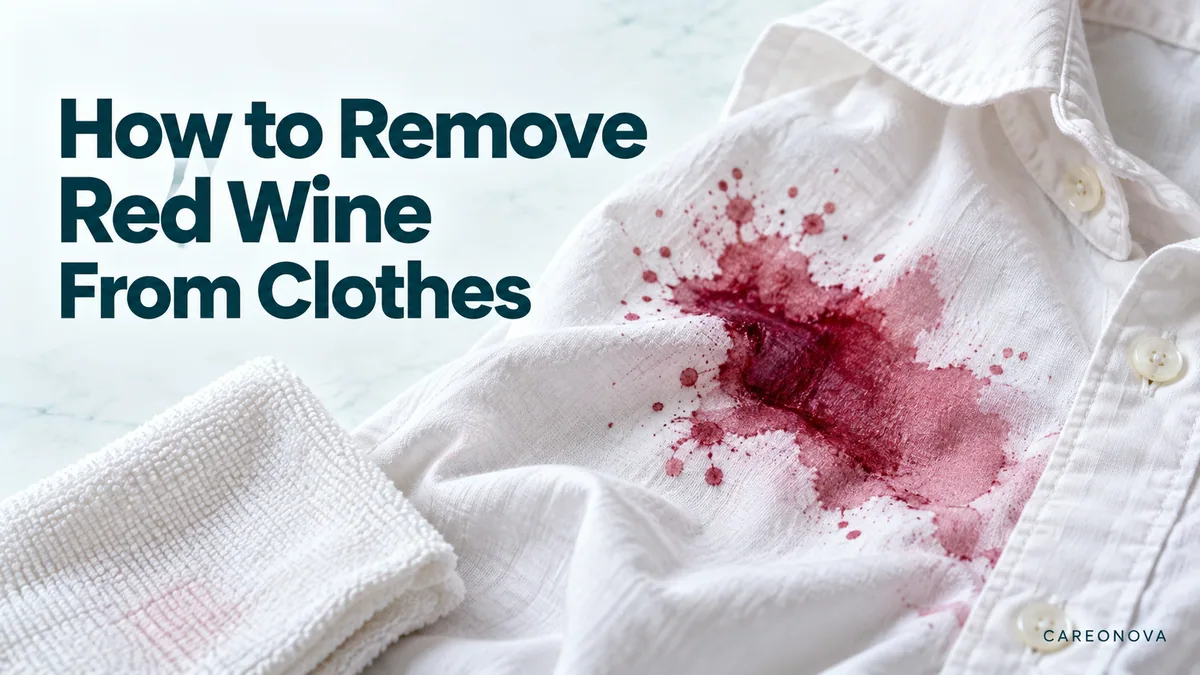
To remove red wine from clothes, blot the spill immediately, rinse the stained area with cool water, and pretreat it with liquid laundry detergent or a suitable stain remover. Wash according to the garment’s care label, then check the stain before putting the clothes in the dryer.
Fresh red wine stains are usually easier to remove, but dried stains may also respond to treatment. The right method depends on how long the wine has been on the fabric, the garment’s color, and its care instructions.
How to Get Red Wine Out of Clothes While the Stain Is Fresh
Red wine contains natural pigments called anthocyanins, which give it much of its red and purple color. When wine spills onto clothing, the liquid can penetrate the fibers and leave visible discoloration.
For ordinary, machine-washable clothing, follow these five steps.
Step 1: Blot the Excess Wine
Press a clean white cloth or paper towel gently against the stain to absorb as much wine as possible.
Start at the outer edge and work toward the center to avoid spreading the liquid.
Don’t scrub. Aggressive rubbing can spread the stain and damage the fabric surface.
If the wine has soaked through the garment, place an absorbent towel underneath to prevent it from transferring to another layer.
Step 2: Rinse With Cool Water
If the garment is washable, hold the stained area under gently running cool water.
Whenever practical, rinse from the back of the stain. This helps push wine out through the side where it entered instead of carrying it further through the fabric.
Continue rinsing until the water runs clearer or the visible color transfer decreases.
Cool water is a sensible first treatment because it helps dilute and flush away excess wine without exposing the garment to unnecessary heat.
Avoid pouring boiling water onto clothing. Heat-sensitive fibers, dyes, and finishes may not tolerate that treatment.

Step 3: Apply Laundry Detergent or Stain Remover
Apply a small amount of liquid laundry detergent or a prewash stain remover suitable for the garment.
Gently spread it over the affected area with your fingers. Let it work for the time specified on the product label.
Detergent and stain-removal products contain cleaning ingredients that help loosen staining material so it can be carried away during rinsing and washing.
Don’t scrub aggressively or leave a product on the fabric longer than recommended.
Step 4: Wash According to the Care Label
Wash the garment with a suitable detergent at the temperature permitted by its care instructions.
The initial cool-water rinse and the later machine wash serve different purposes. Some garments can tolerate warmer washing after pretreatment, while others require cool or cold settings.
For persistent discoloration, an oxygen-based laundry stain remover may help if both the garment and product instructions permit it.
The American Cleaning Institute’s stain removal guide recommends cool-water treatment, suitable pretreatment, and laundering according to fabric-care instructions.
Step 5: Check Before Drying
Inspect the stained area in good light after washing.
If a pink, purple, or brownish mark remains, repeat an appropriate treatment before using the dryer.
Dryer heat and ironing can make remaining stains more difficult to remove.
If you’re uncertain whether the stain is completely gone, let the garment air-dry and inspect it again.
What if You’re Away From Home?
If wine spills onto your shirt at a restaurant or event, blot it gently with a clean napkin or cloth.
You can dab the area with cool water if the material allows it.
Avoid rubbing, soaking unfamiliar delicate fabrics, or applying household chemicals without checking whether they’re suitable.
Treat the stain properly once you can access the garment’s care instructions and appropriate laundry products.
How to Remove Dried or Set-In Red Wine Stains
Dried red wine stains can be more stubborn because the remaining pigments have had more time to interact with the fabric.
However, a dried stain isn’t automatically permanent.
The main difference from treating a fresh spill is that you may need more time for pretreatment or soaking.
For washable clothes:
- Rewet the stain. Apply cool water to moisten the affected area.
- Apply a suitable stain remover. Use liquid detergent or a prewash treatment compatible with the fabric.
- Allow adequate treatment time. Follow the product instructions so the cleaner has time to act.
- Soak if needed. For stubborn stains, use a suitable laundry detergent or oxygen-based stain remover in a soaking solution, provided the fabric permits it.
- Wash and inspect. Launder according to the care label, then assess the remaining discoloration before drying.
If the stain becomes lighter but doesn’t disappear, repeating a suitable treatment may help.
A product-directed soak can be useful for older stains, but the treatment must be compatible with the material. Don’t assume that a stronger concentration or longer soaking time will produce better results.
Avoid aggressive bleaching on delicate or unstable dyes.
For valuable garments, silk, wool, or clothing labeled dry-clean-only, professional cleaning may be a safer choice than repeated home treatment.
How to Remove Red Wine From White and Colored Clothes
White and colored garments may need different treatments because some stain removers can affect dyes or damage certain fibers.
Check the care label and test unfamiliar treatments on a hidden area when the product instructions recommend it.
| Clothing Type | Recommended Approach |
|---|---|
| White cotton | Start with cool water and detergent. Consider a compatible oxygen-based or chlorine bleach treatment if permitted. |
| Colored clothes | Use a suitable detergent or color-safe stain remover. Check colorfastness before applying unfamiliar products. |
| Dark-colored clothes | Avoid aggressive bleaching treatments that could leave faded patches. |
| White clothing containing spandex | Avoid chlorine bleach. Consider a compatible non-chlorine treatment if permitted. |
| Delicate white clothing | Check fiber content and care instructions before using any bleaching product. |
Removing Red Wine From White Clothes
White cotton shirts may tolerate stain treatments that are unsuitable for delicate or stretch fabrics.
After rinsing and pretreating, you can consider a suitable oxygen-based stain remover or chlorine bleach if the garment label allows it.
White doesn’t automatically mean bleach-safe. Clothing containing spandex, silk, wool, or certain decorative finishes may be damaged by products suitable for ordinary white cotton.

Never apply full-strength chlorine bleach directly to clothing. Follow the product’s dilution and washing instructions.
Removing Red Wine From Colored Clothes
For colored garments, start with a compatible detergent or color-safe stain remover.
Some oxidizing products, including hydrogen peroxide, can lighten certain dyes. Even products marketed as color-safe may not suit every material or finish.
Test unfamiliar treatments as directed and stop if the garment begins losing its original color.
Which Household Remedies Actually Help Remove Red Wine?
Household methods often involve salt, club soda, baking soda, vinegar, or hydrogen peroxide.
These substances work differently, and some have limited value once wine has soaked into the fibers.
| Treatment | What It May Help With | Important Limitation |
|---|---|---|
| Cool water | Dilutes and flushes away fresh wine. | May not remove established discoloration alone. |
| Liquid laundry detergent | Helps loosen staining material before washing. | Results depend on the formula, fabric, and stain condition. |
| Oxygen-based stain remover | May reduce remaining discoloration on compatible washable fabrics. | Not suitable for every fiber or dye. |
| Salt | Absorbs some liquid from a fresh spill. | Doesn’t reliably remove pigment already deposited in the fabric. |
| Club soda | Can help dilute and flush fresh wine. | No strong evidence establishes consistent superiority over plain water. |
| Baking soda | May absorb moisture and is used in some household treatments. | Not equivalent to oxygen bleach or a dedicated stain remover. |
| White vinegar | Appears in some household stain-removal methods. | Can affect certain dyes or finishes and isn’t usually necessary. |
| Hydrogen peroxide | Can help reduce some discoloration through oxidation. | May lighten dyes or damage unsuitable materials. |
| White wine | May dilute a fresh red wine spill. | Adds more liquid and offers no clear advantage over appropriate water treatment. |
Does Salt Remove Red Wine Stains?
Salt can absorb some liquid when sprinkled onto a fresh spill, but it doesn’t reliably remove wine pigments already deposited within the fabric.
If you’ve used salt, carefully remove the crystals before rinsing and pretreating.
It shouldn’t replace a suitable laundry stain remover.
Does Club Soda Work Better Than Water?
Club soda can help dilute a fresh wine spill, particularly if ordinary water isn’t available.
However, reliable comparative evidence establishing that club soda consistently works better than plain water is limited.
Cool water remains a simple first choice for washable clothing.
Can Hydrogen Peroxide Remove Red Wine?
Hydrogen peroxide is an oxidizing agent that can help reduce certain types of discoloration.
It can also lighten dyes and may be unsuitable for delicate materials.
Some household recipes combine peroxide with dishwashing liquid, but such mixtures shouldn’t be assumed safe for every garment. A labeled laundry stain remover provides clearer compatibility and application instructions.
Never mix chlorine bleach with vinegar, ammonia, hydrogen peroxide, or other cleaning products. Mixing bleach with acids or ammonia can release dangerous gases, as explained by Poison Control.
Red Wine Stain Removal by Fabric Type
The appropriate treatment depends on the fiber content, dye, finish, and construction of the garment.
Cotton
Washable cotton generally tolerates ordinary detergent pretreatment and machine washing.
White cotton may allow additional bleaching options when permitted by its care label. Colored cotton needs greater attention to dye stability.
Polyester and Synthetic Blends
Many polyester garments can be treated with cool water and a compatible laundry detergent.
Check the care instructions for stretch fabrics, activewear, and garments with special finishes before adding stronger stain removers.
Denim
Blot and rinse the stain, then apply a suitable detergent.
Dark or heavily dyed denim can fade when exposed to aggressive rubbing or bleaching agents, potentially leaving a lighter patch even if the wine disappears.
Linen
Washable linen can often be treated with cool water and a suitable detergent.
Dyed linen, decorative finishes, and structured garments may need more caution. Avoid vigorous rubbing that could affect the fabric surface.
Silk and Wool
Silk and wool are sensitive to unsuitable cleaning agents, friction, and prolonged soaking.
Use only treatments approved for the garment and compatible with the fiber. Enzyme-containing detergents and oxidizing stain removers aren’t automatically suitable for these materials.
For valuable or delicate pieces, consult a professional cleaner.
Dry-Clean-Only Clothing
Avoid soaking or applying household stain mixtures to dry-clean-only garments.
Gently blot excess wine with a clean, dry cloth, then seek professional cleaning advice.
Tell the cleaner what caused the stain and whether you have already applied anything.
What if the Red Wine Stain Remains After Washing?
A stain that survives washing may need another treatment, but the next step depends on what has happened to the garment.
If the stain remains after one wash: Repeat an appropriate pretreatment and wash again before using dryer heat.
If the garment has air-dried: A suitable stain remover may still improve the discoloration. Follow its instructions and inspect the results.
If the garment has been tumble-dried or ironed: Heat may make the stain harder to remove, although it doesn’t always make removal impossible.
Stop treatment if the fabric starts fading, weakening, or changing texture.
If repeated appropriate treatments no longer improve the mark, professional cleaning may be the safer next step.
Red Wine Stain Removal Mistakes to Avoid
Avoid these common mistakes:
- Scrubbing aggressively: Rubbing can spread the stain and disturb the fabric surface.
- Using incompatible bleach: Check both the fiber content and care label.
- Mixing household cleaners: Chemical combinations can create dangerous reactions.
- Applying dryer heat too soon: Check for remaining discoloration before tumble drying or ironing.
- Overtreating delicate clothing: Repeated soaking or strong chemicals can cause damage that is harder to address than the stain itself.
Using a suitable method carefully is generally preferable to trying several household remedies in succession.
Final Thoughts
Fresh red wine stains are often easier to treat. Blot the spill, rinse with cool water, pretreat with a suitable product, and wash according to the garment’s care label.
Dried stains may require more time or repeated treatment. Colored and delicate clothing need extra care, especially when bleaching agents are involved.
Always inspect the fabric before using dryer heat. The aim is to remove the wine while keeping the garment in good condition.
