

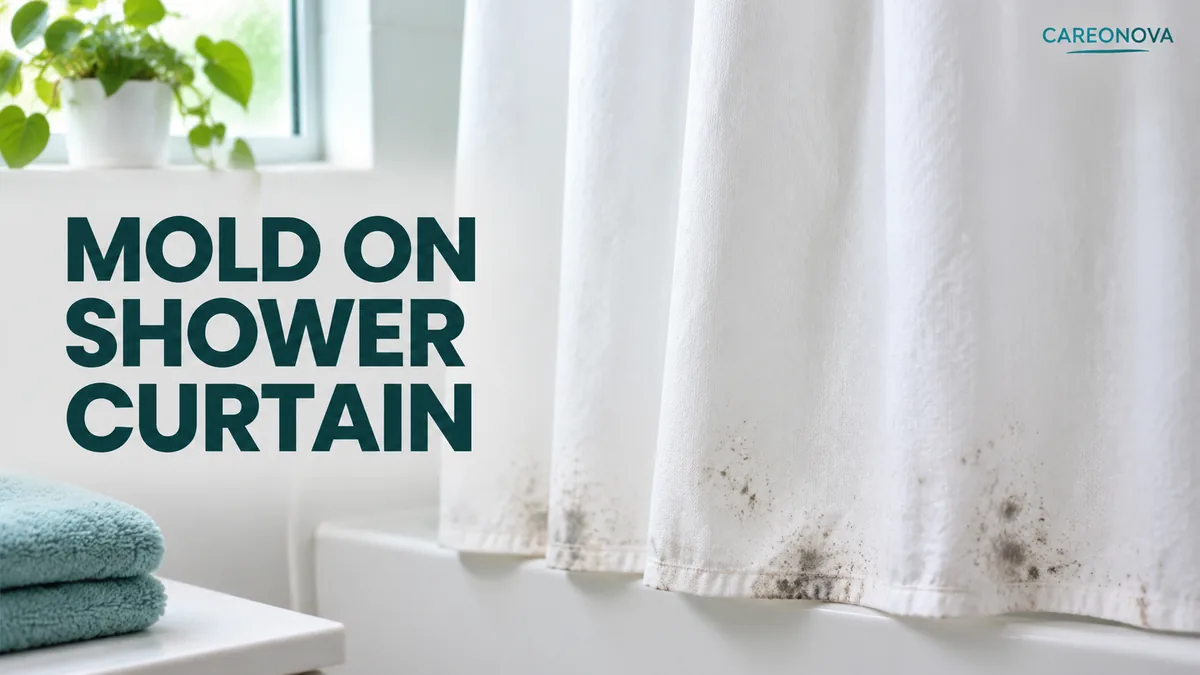
Dark spots along the bottom of a shower curtain, pink film around the folds, or a musty smell can all be signs of buildup. But these marks do not always have the same cause: some may be mold, while others can be bacterial residue, soap scum, or mineral deposits.
Whether you can clean the curtain depends mainly on its material and condition. Washable fabric curtains may be cleaned according to their care labels, while plastic and vinyl liners usually need gentle surface cleaning. Here’s how to identify the problem, choose a safe cleaning method, and decide when replacement makes more sense.
Quick Answer: Can You Remove Mold From a Shower Curtain?
Yes, many moldy shower curtains can be cleaned, but the method depends on the material and how badly it is affected.
- Fabric curtains: Machine-wash only when the care label permits it, using a compatible laundry detergent.
- Plastic and PEVA liners: Gently wipe with a compatible cleaner and soft, non-scratch sponge.
- Persistent mold or damage: Consider replacement if growth keeps returning, the material deteriorates, or odor remains after appropriate cleaning.
- Prevent recurrence: Spread the curtain after every shower and keep the bathroom ventilated.
What Does Mold on a Shower Curtain Look Like?
Mold on a shower curtain can appear as small dark spots, irregular patches, or discolored areas around the bottom hem, folds, and seams. It may look black, gray, green, or brown and sometimes produces a musty smell.
However, not every mark is mold. Pink residue, soap scum, and mineral deposits can also develop on shower curtains, and their appearance can sometimes be confusing.

Black Spots and Pink Residue
Dark or fuzzy patches may indicate mold growth, particularly when accompanied by a musty smell. However, black coloration alone cannot identify a mold species or establish whether it is toxic.
Pink or orange residue is different. One possible cause is Serratia marcescens, a bacterium that produces a reddish pigment. This is why bathroom buildup commonly called pink mold is not necessarily fungal growth.
Color alone cannot confirm what is growing on a curtain. The practical response is to clean the affected area using a method suitable for the material.
How to Distinguish Mold, Mildew, Soap Scum, and Mineral Stains
Some bathroom deposits look similar, but they do not all have the same cause.
| What You Notice | Possible Explanation |
|---|---|
| Irregular dark or fuzzy patches | Possible mold growth, particularly around damp folds and seams |
| Flat or powdery discoloration | Possible mildew or other surface growth |
| Pink, orange, or reddish film | Possible bacterial buildup, including Serratia marcescens |
| White or cloudy residue | Soap scum or mineral deposits |
| Yellowish or brown marks | Staining, accumulated residue, or possible biological growth |
Mildew is commonly used to describe certain types of mold or fungal growth, rather than a completely separate category. See our guide to mildew vs. mold for more detail.
Why Does Mold Grow on Shower Curtains?
Shower curtains remain exposed to water, warm air, and bathroom humidity. When they stay damp for extended periods, conditions become more favorable for mold growth.
Three factors commonly contribute:
- Trapped moisture: Bunched-up curtains and wet bottom hems take longer to dry.
- Poor ventilation: Humid bathroom air and condensation keep surfaces damp.
- Accumulated residue: Soap scum and body oils collect around folds and lower edges.
The same moisture problems can affect bath towels when they remain damp between uses.
Spreading the curtain after showering and allowing bathroom humidity to clear can help reduce these conditions.
Is Mold on a Shower Curtain Dangerous?
Mold should be addressed, but finding a few spots does not automatically mean your bathroom is dangerous.
Exposure to mold can cause reactions such as sneezing, coughing, irritated eyes, skin irritation, and respiratory symptoms. People with asthma or mold allergies may be more sensitive, while those with weakened immune systems or chronic lung conditions may face additional risks.
Avoid handling substantial mold growth yourself if you have an underlying condition that makes exposure more concerning. Consider professional assistance when contamination is extensive or the source of moisture is unclear.ance when contamination is extensive or the source of moisture is unclear.
How to Clean Mold From a Shower Curtain Safely
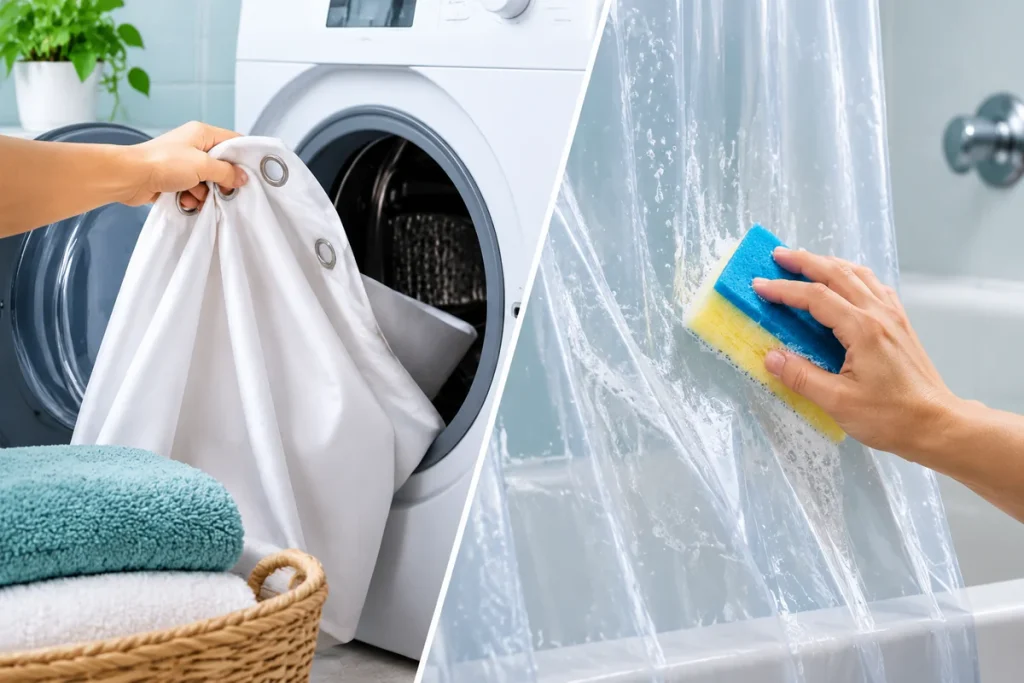
The cleaning method depends on the shower curtain material. A washable polyester curtain can often be cleaned in a washing machine, while plastic and vinyl liners generally require a different approach.
Before using any cleaning product, check the manufacturer's instructions. A method that works for one curtain may damage another.
As an Amazon Associate I earn from qualifying purchases. This article contains affiliate links.
Products for Cleaning Shower Curtains
Compare a laundry detergent for compatible washable fabric curtains and a non-scratch sponge for suitable plastic liners. Always follow the manufacturer's care instructions.
A fragrance-free laundry detergent option for machine-washable fabric curtains. Use according to the curtain's care label.
A useful cleaning accessory for gently wiping compatible plastic shower liners without using an abrasive scrubber. Test a small area first.
Before Cleaning, Identify the Material and Check the Care Label
Start by checking the care label or product instructions. Look for the material composition, permitted washing method, temperature restrictions, and warnings about cleaning products.
| Material | Cleaning Approach | What to Check First |
|---|---|---|
| Polyester | Machine wash if the care label permits | Water temperature and drying restrictions |
| Cotton | Follow the recommended fabric washing method | Shrinkage and colorfastness |
| Nylon | Use the manufacturer-approved washing method | Heat and washing-cycle restrictions |
| PEVA / EVA | Gentle surface cleaning when permitted | Cleaner compatibility and abrasion restrictions |
| Vinyl / PVC | Gentle surface cleaning when permitted | Machine-washing and chemical restrictions |
A removable shower curtain is not automatically machine-washable. Also inspect it for cracks, peeling, weakened stitching, or other damage before cleaning.
Wear suitable gloves and provide adequate ventilation. Never mix bleach with vinegar, ammonia, or other cleaning products. Use only products compatible with the curtain material.
How to Clean a Machine-Washable Fabric Shower Curtain
Washable polyester and cotton curtains may be suitable for machine cleaning when their care labels allow it.
- Remove the curtain: Take it off the hooks and inspect the bottom hem, folds, and seams. Avoid shaking visible contamination indoors.
- Check the washing instructions: Confirm the permitted temperature, cycle, and detergent requirements.
- Add suitable laundry detergent: Use a detergent appropriate for the fabric and follow its dosing instructions.
- Choose the recommended cycle: Use the washing temperature and cycle specified by the manufacturer. Do not assume hotter water is always better.
- Inspect after washing: Check for remaining buildup, staining, and material damage.
- Dry completely: Follow the manufacturer's drying instructions before putting the curtain back.
A remaining stain does not necessarily mean active mold is still present. However, persistent growth or odor deserves further attention.
How to Clean Plastic, Vinyl, PEVA, or EVA Liners
Plastic and vinyl liners usually require gentler surface cleaning. Some can be wiped clean, but the correct method depends on the manufacturer's instructions.
- Remove the liner if the manufacturer permits it.
- Prepare a compatible cleaning solution.
- Gently wipe affected areas with a soft, non-scratch sponge.
- Pay attention to folds, seams, and the bottom edge.
- Rinse away cleaning residue as directed.
- Hang the liner fully open and allow it to dry.
Avoid abrasive scrubbing that could scratch or damage the surface. Do not put plastic liners in a washing machine or dryer unless the manufacturer specifically permits it.
What If Mold Stains or Musty Odors Remain After Cleaning?
A shower curtain may look cleaner after washing but still have discoloration or an unpleasant smell.
That does not automatically mean the cleaning process failed. Some stains remain even after surface residue has been removed.
Consider what you are seeing:
- Remaining discoloration: The original growth or residue may have left a stain.
- Persistent musty odor: There may still be buildup, moisture, or contamination that needs attention.
- Recurring spots: The bathroom conditions may still be allowing growth to develop.
- Damaged material: Cracked liners and weakened fabric may be difficult to clean adequately.
Do not automatically respond with stronger chemicals. First assess the material and determine whether another manufacturer-approved cleaning attempt is reasonable.
Cleaning, Stain Removal, and Disinfection Are Not the Same
These terms describe different processes.
- Cleaning removes dirt, residue, and visible material from a surface.
- Stain removal addresses discoloration that may remain after cleaning.
- Disinfection uses an appropriate product or process intended to reduce or destroy certain microorganisms.
Killing mold is not the same as removing it. Dead mold can still cause allergic reactions in susceptible people, so applying a disinfectant without removing the remaining material is not a complete solution.
For shower curtains, prioritize appropriate cleaning, removal of visible contamination, and thorough drying. Do not assume that a product labeled as a disinfectant is suitable for every curtain material.
When Should You Replace a Moldy Shower Curtain?
Not every moldy shower curtain needs to be thrown away. Some washable curtains and liners can be cleaned successfully, while others may be too damaged or difficult to restore.
The decision depends on the material, extent of contamination, condition of the curtain, and whether appropriate cleaning improves it.
When a Moldy Shower Curtain May Still Be Worth Cleaning
Cleaning may be reasonable when:
- The curtain is designed to be washable.
- Visible growth is limited.
- The material remains structurally sound.
- The manufacturer's instructions permit cleaning.
- The curtain can be rinsed and dried completely.
For example, a washable polyester curtain with limited surface buildup may be worth cleaning instead of replacing immediately.
However, do not judge the result by appearance alone if a persistent musty odor remains or the material continues to deteriorate.
Signs That Replacing the Curtain Is the Better Choice
Replacement may be more practical when:
- Growth repeatedly returns despite appropriate cleaning.
- The material has become cracked, brittle, or damaged.
- A persistent musty odor remains.
- Contamination appears embedded in areas that cannot be cleaned adequately.
- Seams or the liner's surface have deteriorated.
The EPA explains that mold can be difficult or impossible to remove completely from some porous materials because it can grow within their spaces and crevices. This is a general cleaning principle, not a rule that every fabric shower curtain must be discarded.
There is no universal percentage of visible mold that automatically means a curtain must be thrown away. Its condition and ability to be cleaned properly matter more.
What Type of Shower Curtain or Liner Should You Choose Instead?
If replacement makes more sense, consider how easily the new product can be maintained.
Replacement Shower Curtains and Liners
If your existing curtain is damaged or difficult to clean, compare these fabric and liner options before choosing a replacement.
A polyester curtain option for bathrooms. Check its washing instructions, dimensions and construction before purchasing.
A PEVA liner option for readers who prefer a wipe-clean surface. Follow the manufacturer's cleaning instructions.
WWashable polyester curtains
A machine-washable polyester curtain can be a practical option for households that prefer regular laundry cleaning. Look for clear washing instructions, durable stitching, and reinforced hems.
PEVA and EVA liners
These liners have smooth, water-resistant surfaces that can often be wiped clean. Check the material composition, construction, and manufacturer cleaning instructions before purchasing.
Mold-resistant and antimicrobial claims
Some products are advertised as mold-resistant or antimicrobial. These claims do not mean a curtain can never develop mold. Check what the treatment actually does and whether the manufacturer provides supporting information.
No curtain material eliminates the need for ventilation and moisture control.
How to Prevent Mold From Coming Back on Your Shower Curtain
Preventing mold is easier when the curtain can dry properly between showers.
What to Do After Every Shower
- Inspect regularly: Check the lower hem, folds, and seams for early signs of buildup.
- Spread the curtain out: Avoid leaving it tightly gathered at one end.
- Allow the bottom edge to drain: Make sure it is not folded against the bathtub.
- Clear bathroom humidity: Use an exhaust fan or suitable ventilation.
- Remove visible residue: Clean soap buildup before it accumulates.
Maintain Bathroom Ventilation and a Regular Cleaning Routine
Bathroom ventilation helps remove moisture from the air. Use an exhaust fan that vents outdoors when available, and allow it to run long enough to clear humid air after showering.
The CDC recommends keeping indoor humidity no higher than 50% throughout the day. A hygrometer can help you monitor indoor humidity.
A simple maintenance routine is usually sufficient:
| When | What to Do |
|---|---|
| After every shower | Spread the curtain out and allow the bottom edge to drain |
| During bathroom cleaning | Remove accumulated soap residue and inspect damp areas |
| Periodically | Check the bottom hem, folds, and seams for buildup |
| When visible buildup appears | Clean using the manufacturer's recommended method |
| When material deteriorates | Consider replacing the curtain or liner |
If the bathroom remains humid despite ventilation, investigate possible condensation, plumbing leaks, or inadequate airflow.
Final Thoughts
A few dark spots or pink marks on a shower curtain do not always mean it needs to be replaced. Many washable fabric curtains and compatible plastic liners can be cleaned, provided the material is still in good condition and the manufacturer permits the cleaning method.
Start by identifying the material, clean it appropriately, and allow it to dry completely. If growth repeatedly returns, the surface deteriorates, or an unpleasant odor persists, replacement may be the more practical choice. Keeping the bathroom ventilated and spreading the curtain after every shower can help prevent the same problem from returning.
Sources and Further Reading
- U.S. Environmental Protection Agency — What Are the Basic Mold Cleanup Steps?
https://www.epa.gov/mold/what-are-basic-mold-cleanup-steps - Centers for Disease Control and Prevention — About Mold
https://www.cdc.gov/mold-health/about/index.html - Centers for Disease Control and Prevention — Etymologia: Serratia marcescens, Emerging Infectious Diseases, 2019
https://wwwnc.cdc.gov/eid/article/25/11/ET-2511_article
