


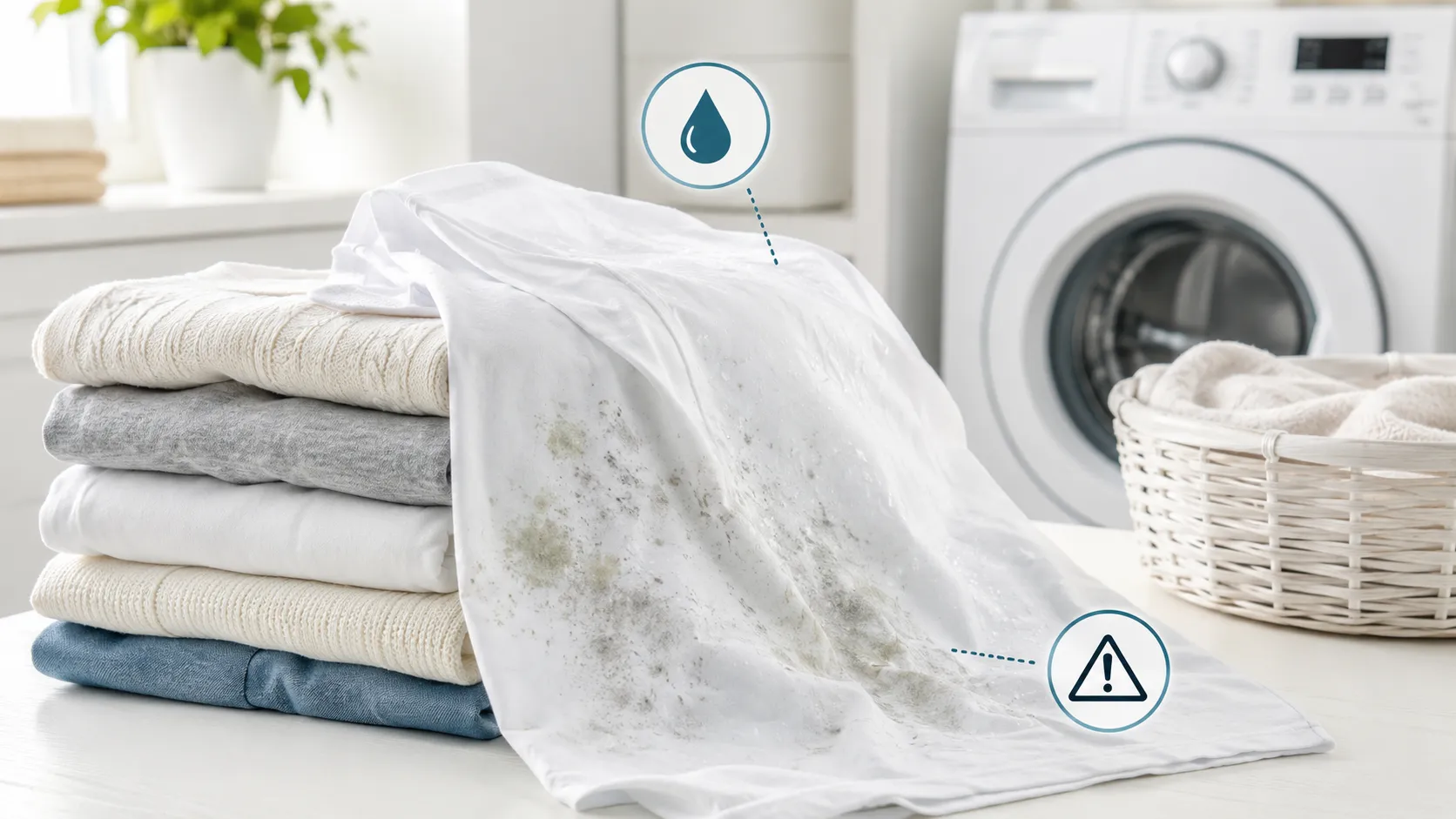
Mildew vs mold on clothes usually mean fabric stayed damp for too long. This can happen in a wet laundry basket, a closed washer, a humid closet, or a storage box with poor airflow.
The right fix depends on what you see or smell. Musty odor, visible mold, mildew patches, and leftover stains all need different care. This guide helps you identify the problem, act safely, and choose the best next step without guessing.
Quick Takeaways
- Mildew and Mold grow when clothes stay damp with poor airflow.
- Mildew is often flatter or powdery.
- Mold may look fuzzy, spotted, dark, white, green, or gray.
- Treat visible growth, stains, and musty smell differently.
- Do not wear visibly moldy clothes before cleaning.
- Do not use dryer heat until odor and marks are gone.
- Heavy growth, weak fabric, or a smell that keeps coming back may mean the item is not worth saving.
Mold vs Mildew on Clothes
Mold and mildew are closely related. Both are types of fungal growth that can appear when fabric stays damp.
Mildew is often used for flatter, powdery surface growth. It may look white, gray, or light-colored. Mold on clothes may look fuzzy, spotted, darker, green, black, white, or gray.
Black mold on clothes may look like dark spots or fuzzy patches. White mold on clothes can look powdery, dusty, or fuzzy. Mildew spots are often flatter, while mold spots may look thicker or more spread into the fabric.
On clothes, the exact name matters less than the next step. If you see visible growth, treat the item carefully. If you only smell a musty odor, focus on odor removal and full drying. If stains remain after washing, treat them as mold or mildew stains.
What Are You Dealing With?
Use what you see or smell to choose the right direction.
| What You Notice | What It Likely Means | What To Do |
|---|---|---|
| Musty smell only | Damp storage or mildew odor | Treat as odor |
| White or gray powdery patches | Possible mildew | Brush outside and wash safely |
| Black, green, or fuzzy spots | Active mold growth | Separate and treat carefully |
| Brown, yellow, or dark marks | Mold or mildew stains | Treat as stains after cleaning |
| Spots that wipe off like dust | Lint, residue, or mildew | Identify before treating |
| Smell returns after washing | Washer, storage, or drying issue | Fix the source |
| Heavy growth or weak fabric | Possible deep damage | Consider discarding |
Mold spots may not wipe away as easily as lint, dust, or detergent residue. If the mark spreads, smells musty, or returns after washing, treat it like a mold or mildew problem.
Safety First: What Not To Do
Moldy clothes should be handled with care, especially when growth is visible.
Do not shake moldy clothes indoors. Shaking can spread loose mold spores into the air and onto nearby surfaces. Take the item outside if you need to brush off dry growth.
Do not wear clothes with visible mold. Wash and dry them fully first. Also, do not wash moldy clothes with clean laundry because the smell and loose growth can spread.
Wear gloves and a mask if the item has visible mold or a strong musty smell. People with asthma, allergies, or a weakened immune system should avoid handling moldy clothes when possible.
Never mix bleach with vinegar or ammonia. That can create dangerous fumes. Also, do not use dryer heat until the marks and odor are gone because heat can make stains and smells harder to remove.
What To Do First
Start with a simple safety check before using any cleaner.
- Separate affected clothes from clean laundry.
- Take visibly moldy clothes outside.
- Brush loose growth gently if the fabric can handle it.
- Check the fabric care label.
- Wash affected items separately.
- Air-dry and inspect before using dryer heat.
- Choose a deeper fix if odor, stains, or spots remain.
This first step matters because mold & mildew problems are not always the same. A musty towel, a shirt with black spots, and stored clothes with yellow stains should not be treated in the same way.

Choose the Right Fix
This article is a starting point. Once you know the problem, choose the right cleaning direction.
| Problem | Best Direction |
|---|---|
| Active mold on washable clothes | Use a mold removal method |
| Fungus-like growth | Treat as clothing fungus |
| Musty or mildew smell | Use an odor removal method |
| Leftover stains | Treat as mold or mildew stains |
| Unsure what the marks are | Identify the spots first |
| Wondering if washing is enough | Check whether washing kills mold |
| Closet or storage problem | Fix humidity and airflow |
| Clean clothes smell musty after washing | Check the washer and drying routine |
Do not keep adding random cleaners. First decide whether you are dealing with odor, stains, visible growth, or a storage problem. That makes the fix safer and more effective.
Common Cleaning Directions
The best cleaner depends on the fabric and the problem. Regular detergent may help with light odor or fresh dampness. Oxygen bleach can help many washable fabrics when the care label allows it. Chlorine bleach should only be used on white, bleach-safe items. Laundry sanitizer may also help when the product label says it is safe for the fabric.
White vinegar and baking soda are often used for odor problems, but they should not be mixed with bleach. Always check the care label first, test colored fabrics when needed, and avoid harsh products on wool, silk, leather, suede, or dry-clean-only items.
Mold Smell vs Mold Stains vs Visible Mold
Mold and mildew on clothes can show up in different ways.
A musty smell means the fabric may have stayed damp too long. The item may not have visible spots, but it still needs washing and full drying. If the smell comes back, the source may be a washer, closet, hamper, or damp storage area.
Mold or mildew stains are marks left behind after growth or moisture damage. They may look yellow, brown, gray, or dark. These marks often need stain treatment after the active growth is removed.
Visible mold means you can see fuzzy, powdery, spotted, or colored growth on the fabric. In this case, separate the item, handle it carefully, and wash it apart from clean clothes.
Is It Safe to Wear Moldy Clothes?
Do not wear clothes with visible mold or a strong mildew smell. The item should be cleaned and fully dried before it touches your skin again.
Light mildew odor on washable clothes can often be fixed. Small spots may also be treatable if the fabric is strong and the care label allows washing.
Still, some items are not worth the risk. If mold covers a large area, the fabric feels weak, or the odor remains after proper cleaning, it may be safer to throw away moldy clothes. For dry-clean-only clothes, leather, suede, silk, or structured garments, professional cleaning is often safer than home washing.
What Causes Mold and Mildew on Clothes?
Mold and mildew are usually moisture problems first. Damp clothes, poor airflow, and warm or humid storage can create the right conditions for growth.
Common causes include:
- Wet clothes left in the washer
- Damp towels left in a hamper
- Sweaty gym clothes left balled up
- Clothes stored before fully dry
- Humid closets
- Poor airflow around hanging clothes
- Basement or storage moisture
- Dirty washer parts
- Front-load washer gasket buildup
- Detergent buildup or fabric softener buildup
If the same clothes keep smelling musty after washing, the issue may not be the clothes alone. The washer, closet, indoor humidity, or drying routine may be causing the smell to return.
When Clothes May Not Be Worth Saving
Some moldy clothes can be cleaned. Others may be too damaged or unsafe to keep.
Consider discarding the item when:
- Mold covers a large area
- Fabric feels weak, rough, rotten, or damaged
- A strong smell remains after proper washing
- Mold keeps returning after storage fixes
- The item touched floodwater or sewage-contaminated water
- The item is leather, suede, silk, structured, or dry-clean-only and cannot be cleaned safely
If the item is expensive or special, ask a professional cleaner before trying harsh products at home.
How To Prevent Mold vs Mildew From Coming Back
The best way to stop mold and mildew on clothes is to control moisture.
Move wet laundry out of the washer quickly. Do not let damp towels sit in a pile. Hang towels and sweaty gym clothes so they can dry before they go into the hamper.
Make sure clothes are fully dry before folding or storing them. A slightly damp shirt in a drawer or storage bin can develop a musty smell later.
Keep closets ventilated. Avoid packing clothes too tightly. If the room has high humidity, use a dehumidifier or improve airflow.
Clean the washer if clean laundry starts to smell musty. Front-load washer seals, detergent drawers, and damp drums can hold residue and moisture.
Also avoid using too much detergent or fabric softener. Extra product can leave buildup in fabric and inside the washer, which may trap odor.
Final Verdict
Mold and mildew on clothes usually start with moisture. A light musty smell or small spots on washable fabric can often be treated. Visible growth, deep stains, weak fabric, or odor that keeps coming back need more care.
Do not wear visibly moldy clothes. Separate affected items, check the care label, wash them safely, and air-dry before using dryer heat. If the mold is heavy, the fabric is damaged, or the smell will not leave, the safer choice may be professional cleaning or discarding the item.
