


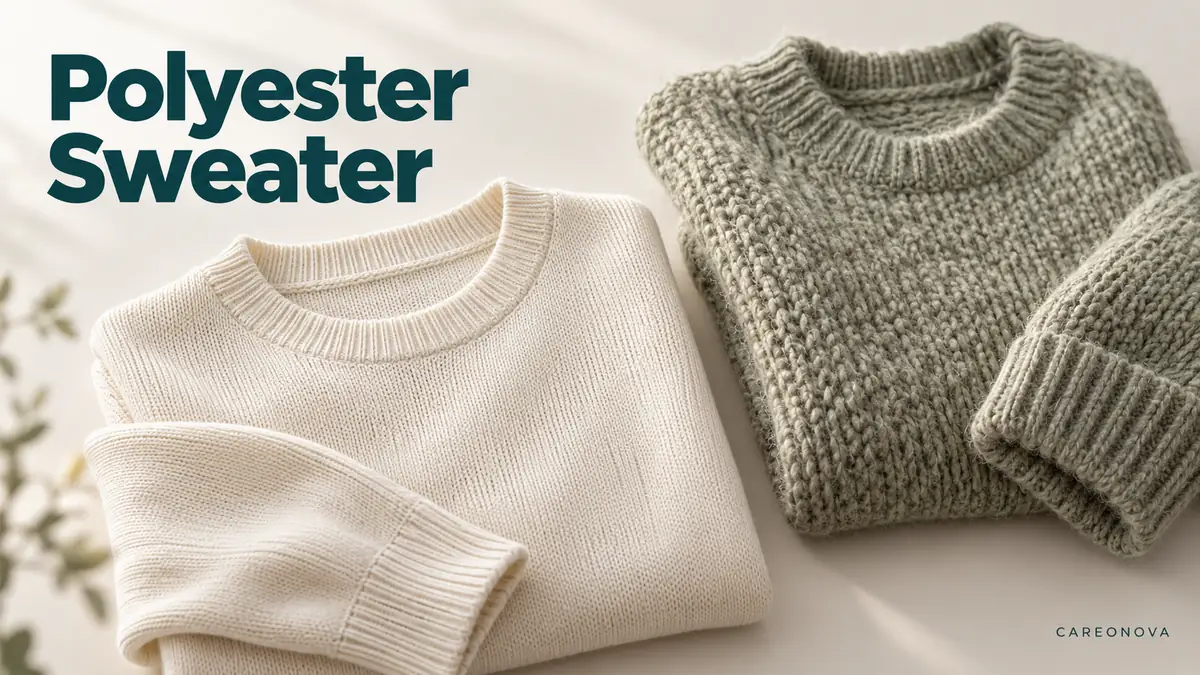
A polyester sweater can be a good choice if you want practical warmth, easy maintenance, and clothing that keeps its shape reasonably well. But the fiber alone doesn’t guarantee quality. Some knits feel soft and wear well; others pill, trap heat, or look worn sooner than expected. Yarn, knit structure, finishing, and fit all matter.
Key Takeaways
- Worth buying? Often, especially for everyday layers and easy-care wardrobes.
- Warm and comfortable? That depends on thickness, trapped air, airflow, and surface texture.
- Best buying check: Inspect the knit, seams, cuffs, fit, and care label—not just price.
Are Polyester Sweaters Good? Pros, Cons, and Realistic Expectations
Yes. They can be practical, wrinkle-resistant, and relatively quick to dry. However, breathability, comfort, and resistance to surface wear vary widely among garments.
Polyester is a synthetic fiber commonly made from polyethylene terephthalate (PET). It absorbs relatively little water into the fiber itself, which contributes to its drying behavior. It also tends to resist wrinkling and dimensional changes when cared for appropriately. For more background on these characteristics, see the site’s explanation of polyester fabric properties.
| Potential Advantage | What to Keep in Mind |
|---|---|
| Useful warmth without excessive weight | Insulation depends on fabric thickness, loft, and airflow. |
| Often resists wrinkles and major shrinkage | Heat or unstable knitting can still change the garment’s shape. |
| Relatively quick drying | Thick knits may still take considerable time to dry. |
| Available in smooth, soft, or fuzzy finishes | Some surfaces develop pilling or static with wear. |
| Usually convenient to maintain | Oil-based residues and odors can require extra attention. |
The practical verdict: a well-constructed knit may be a sensible purchase, but a poor finish or uncomfortable fit can outweigh the benefits of the fiber.
Are Polyester Sweaters Warm, Breathable, and Comfortable?
They can be warm and comfortable, but those qualities depend more on the fabric and wearing conditions than on the label alone. Warmth, airflow, and moisture management are different properties.
How Warm Is a Polyester Sweater?
A thick, lofty knit can be warm enough for winter layering. Insulation comes partly from relatively still air trapped within the fabric and between clothing layers.
Compare a thin, open-knit pullover with a thicker brushed garment. The first may let air move freely and suit a heated room; the second may trap more air and feel warmer under a coat. Both can be made entirely of the same fiber. Bulk isn’t a guarantee of warmth, either: a chunky open knit can still let cold wind through.

Do They Breathe, Feel Soft, or Cause Itching?
Some knitted garments allow plenty of airflow, while dense or brushed styles can feel stuffy in warm conditions. Polyester absorbs little moisture into its fibers, but that is not the same as saying it cannot wick sweat. Wicking depends on yarn design, fabric construction, and finishes; an ordinary pullover isn’t automatically a technical moisture-wicking garment.
Softness depends on yarn fineness, surface finishing, seams, and fit. A smooth fabric may feel pleasant, while coarse textures or stiff seams may rub against skin. Itching may result from friction, perspiration, dyes, or finishing chemicals; it does not necessarily indicate an allergy to the fiber. If clothing repeatedly causes a rash or marked irritation, stop wearing it and seek medical advice when appropriate. The site’s discussion of polyester and skin concerns addresses the broader health question.
Static can also develop, especially in dry weather. For someone who overheats easily, trying on the garment—or checking close-up photos and the return policy—is more useful than relying on vague claims such as “breathable” or “luxuriously soft.”
What Do 100% Polyester, Blends, and Sweater Types Actually Mean?
Fiber percentages tell you what the garment contains, not exactly how it will feel or perform. Two pieces with identical labels can have different yarns, knits, and finishes.
Is 100% Polyester Better Than a Blend?
Neither is automatically better. A cotton blend may add some moisture absorption and a familiar hand feel; a wool blend may offer different moisture-buffering and texture characteristics; an acrylic blend may produce a lightweight, wool-like surface. The result depends on proportions and construction rather than a simple formula.
In the United States, covered textiles must disclose fiber composition by weight under the FTC Textile Fiber Rule. That makes the label useful for identifying materials, but it is not a garment-quality certificate.
Why Does a Knit Feel Different From Fleece?
A fine knit generally looks smooth and may suit indoor layering. A chunky or cable knit has larger yarns or raised patterns, but its appearance doesn’t guarantee extra insulation. Brushed or fuzzy finishes create a plush surface that may change with rubbing. Sweater-knit fleece often combines a sweater-like exterior with a fleece-style inner surface.
Those are construction and finishing differences, not entirely different base fibers. If product terminology is confusing, the distinction between a sweater and sweatshirt can help clarify what type of garment is being sold.
How Can You Tell if a Polyester Sweater Is Good Quality?
Look at the knit, seams, cuffs, drape, and care information together. A quick inspection cannot predict years of wear, but it can reveal obvious defects and help you compare two options fairly.
What Should You Check Before Buying?
Start with the fabric surface. A fine knit should look reasonably consistent, without unexpected holes, snagged yarns, or thin patches. A textured pattern will naturally vary, so judge it against the intended design. Check shoulder, underarm, and side seams for secure joins without obvious gaps or loose joining threads.
Gently stretch and release a ribbed cuff. It should return toward its original shape; don’t pull hard or treat this as a laboratory durability test. Try the garment on, if possible. A sharply twisting side seam or uncomfortable inner join deserves a closer look, although some asymmetry may be intentional.

A quick quality inspection checklist
| What to Check | What to Look For |
|---|---|
| Knit surface | No unexplained holes, snags, or irregular thin areas. |
| Seams | Secure joins without obvious gaps or loose threads. |
| Cuffs and neckline | Reasonable recovery after gentle stretching. |
| Fit and drape | Comfortable shape without unwanted twisting. |
| Fabric feel | Comfortable inner and outer surfaces. |
| Product details | Clear composition, care instructions, and measurements. |
Online, look for close-up photos, actual measurements, and reviews discussing wear after repeated use or washing. Reviews are individual reports, not controlled tests. A reasonable return policy matters when you cannot inspect the fabric in person. If the material is uncertain, understanding fabric identification can also help you interpret labels and appearance.
Will It Pill, Stretch, or Lose Its Shape?
It can, but neither pilling nor distortion is inevitable. Pilling happens when loose surface fibers tangle into small balls. It often appears in high-friction areas such as underarms, sides, and places rubbed by bag straps. Strong polyester fibers may hold onto pills rather than letting them break away, but yarn design, knitting, and finishing also affect the result.
The active ASTM D3512/D3512M-22 standard describes a method for evaluating pilling and related surface changes. Its existence does not mean an untested sweater has a known pilling rating. For more about the mechanism and prevention, see fabric pilling causes.
Shape changes are a separate concern. Even when the fiber itself is dimensionally stable, knitted loops can relax or stretch, especially in a heavy garment hung for long periods. A fuzzy finish is not automatically defective, and a smooth new surface is not a guarantee of long-term durability.

Is an Expensive Sweater Worth the Price?
Sometimes—but the extra cost should buy something meaningful to you: better fit, more consistent knitting, secure seams, comfortable finishing, or distinctive design. Price alone doesn’t prove durability.
Imagine a modestly priced pullover with neat joins and cuffs that recover well beside a costly one with loose neckline threads and poor drape. Without further evidence, the more expensive option has not demonstrated better quality. Compare observable details and credible product information, not just labels such as “premium” or “luxury.”
Polyester vs Wool, Cotton, and Acrylic: Which Sweater Should You Choose?
Choose according to your climate, comfort preferences, care tolerance, and the garment’s construction. No single fiber wins every category.
| Material | Strengths | Limitations | Consider For |
|---|---|---|---|
| Polyester | Easy care; relatively quick drying | Static, pilling, or heat buildup in some knits | Everyday layers and travel |
| Wool | Insulation and moisture buffering | Some types feel prickly or need delicate care | Cold-weather comfort and wool texture |
| Cotton | Familiar feel and moisture absorption | May stay damp longer or stretch in some knits | Mild weather and casual indoor wear |
| Acrylic | Lightweight, often wool-like feel | Static and pilling may occur | Soft-feeling synthetic knitwear |
Wool can absorb water vapor into its fibers and help buffer moisture near the skin. Cotton also absorbs more water than polyester, which can affect drying time. Acrylic is often used for soft, wool-like yarns. These are broad tendencies, not promises about every finished garment. For a wider view of fabric comparisons, consider how construction changes performance.
For travel and low-maintenance outfits, a well-made synthetic pullover may be convenient. For cold-weather layering, prioritize loft, fit, and wind protection. For a heated office, a lighter knit may matter more than fiber type. If skin comfort is your top concern, choose by feel whenever possible.
How Should You Care for a Polyester Sweater?
Follow the garment label, limit unnecessary friction, and avoid excessive heat. Knitted clothing can need gentler handling than sturdy woven garments made from the same fiber.
- Wash gently when permitted. Turn the garment inside out and use a suitable cycle; a mesh bag can protect delicate knits from snagging.
- Control heat. Follow the stated washing and drying temperatures. Excessive heat can damage finishes or distort the garment.
- Support it while drying. Heavy or stretch-prone knits may benefit from flat drying if the label permits.
- Fold heavier pieces. Long-term hanging may stretch shoulders or lengthen a loose knit.
If you need settings for different garments, consult washing polyester properly. For temperature-related size changes, the explanation of polyester shrinkage provides more detail. Don’t assume that every knit tolerates tumble drying simply because its fiber is synthetic.
Is a Polyester Sweater Worth Buying?
It can be a worthwhile purchase when it feels comfortable, fits well, suits your climate, and has construction that matches its price. Easy care and useful warmth are genuine advantages, but a fiber percentage alone cannot promise durability or softness.
Before choosing, check the knit, seams, cuffs, drape, and care instructions. The label tells you what the sweater contains; the whole garment tells you whether it is worth buying.
