


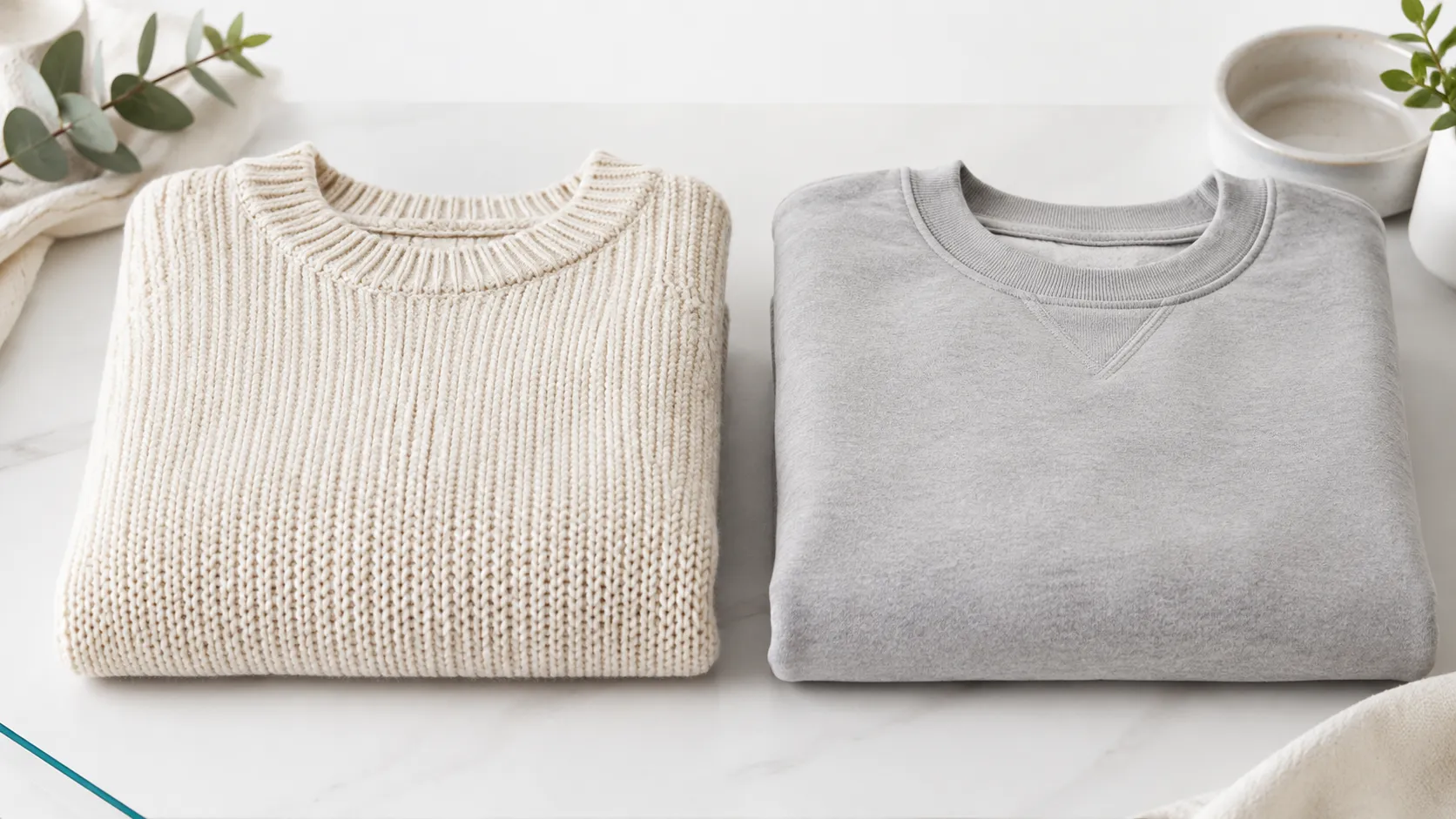
A sweatshirt can look like a sweater at first glance, especially when both are pullovers. But the real difference is not the neckline, the fit, or whether it has a hood. It is how the fabric is made.
A sweater is usually made from knitted or crocheted yarn. A sweatshirt is usually made from fleece, French terry, or cotton jersey fabric that is cut and sewn into shape. This affects warmth, style, washing, shrinkage, pilling, and shape.
Here’s how to tell the difference and choose the right one.
What Is a Sweater?
A sweater is an upper-body garment made from knitted or crocheted yarn. The yarn may be wool, cotton, acrylic, cashmere, alpaca, or a blend of fibers.
Most sweaters have a visible knit texture. Some are thick and warm. Others are light and breathable. The feel depends on the fiber, yarn weight, and knit pattern.
Common sweater styles include:
- Pullover sweaters
- Cardigans
- Turtleneck sweaters
- V-neck sweaters
- Crewneck sweaters
- Sweater vests
A sweater can look casual or smart casual. A fine-knit sweater can work for the office, dinner, or a clean winter outfit. A chunky knit sweater feels more relaxed and cozy.
The important part is this: a sweater behaves like knitwear. It can stretch, pill, shrink, or lose shape if washed or dried the wrong way.
What Is a Sweatshirt?
A sweatshirt is a casual top usually made from cotton fleece, French terry, jersey, polyester, or a cotton-polyester blend. It is often softer and heavier than a basic T-shirt.
A sweatshirt may have ribbed cuffs, a ribbed waistband, and a soft inside layer. Some sweatshirts are smooth on the outside and fuzzy inside. Others use French terry, which has small loops on the inside instead of a fluffy fleece feel.
French terry usually has small loops on the inside, while fleece is often brushed to feel softer and fuzzier.
Common sweatshirt styles include:
- Crewneck sweatshirt
- Pullover sweatshirt
- Zip-up sweatshirt
- Hoodie
- Oversized sweatshirt
A sweatshirt does not need a hood. A hoodie is usually a sweatshirt with a hood. A crewneck sweatshirt has a round neck and no hood.
Sweatshirts are made for comfort. They work well for lounging, errands, travel, warm-ups, cool-downs, and casual layering. Cotton sweatshirts are comfortable for casual wear, but they can hold moisture during heavy exercise. They are also usually easier to machine wash than delicate sweaters.
How to Tell If It’s a Sweater or Sweatshirt
The easiest way to tell the difference is to look at the fabric.
A sweater usually has visible yarn loops or a knitted pattern. You may see ribs, cables, open stitches, or a textured knit surface. Even smooth sweaters still look like they are made from yarn.
A sweatshirt usually looks more like a soft, heavy shirt. The outside may be smooth. The inside may feel fuzzy, fleecy, or looped like French terry.
Use these simple checks:
| What to Check | Sweater | Sweatshirt |
|---|---|---|
| Fabric look | Yarn loops or knit texture | Smooth, fleece, jersey, or terry |
| Inside feel | Same knit structure inside | Fuzzy or looped inside |
| Stretch | Comes from yarn loops and knit structure | Comes from the fabric blend and knit fabric |
| Shape | May drape or stretch more | Usually holds a casual shape |
| Hood | Possible, but less common | Common in hoodies |
| Care needs | Often more delicate | Usually easier to wash |
Ribbed cuffs do not always mean it is a sweatshirt. Some sweaters also have ribbed cuffs. A crewneck shape does not decide the garment type either. The fabric and construction matter more.
Sweater vs Sweatshirt: Main Differences
| Feature | Sweater | Sweatshirt |
|---|---|---|
| Construction | Knit or crocheted from yarn | Cut and sewn from fleece, French terry, or jersey |
| Common materials | Wool, cotton, acrylic, cashmere, blends | Cotton, polyester, cotton-poly blends |
| Texture | Yarn texture or knit pattern | Smooth outside, soft or looped inside |
| Warmth | Depends on fiber and knit thickness | Depends on fleece weight and lining |
| Style | Casual to smart casual | Casual, sporty, lounge-focused |
| Fit | Can be fitted, loose, or structured | Usually relaxed and roomy |
| Washing | Often needs gentle care | Usually easier to machine wash |
| Shrink risk | Wool can shrink or felt | Cotton fleece can shrink in heat |
| Pilling risk | Common with wool and acrylic | Common on fleece with wear |
| Best use | Work, dinner, layering, cold outfits | Lounging, errands, travel, casual wear |
The sweater and sweatshirt difference is not only about style. It is also about how the fabric reacts to wear and washing.
A sweater is built from yarn. A sweatshirt is usually made from pre-made knit fabric, then cut and sewn. That is why a sweatshirt can still feel soft and stretchy without being the same as a sweater.

Is a Sweatshirt a Sweater?
A sweatshirt is not technically the same as a sweater. In everyday speech, some people may use “sweater” in a broad way. But in clothing and fabric terms, they are different.
A sweater is usually knitted or crocheted from yarn. A sweatshirt is usually made from fleece, French terry, or jersey fabric.
So, if someone calls a sweatshirt a sweater casually, you may know what they mean. But if you are talking about fabric, care, and garment type, a sweatshirt is different from a sweater.
Is a Hoodie a Sweater or a Sweatshirt?
A hoodie is usually a sweatshirt with a hood. Most hoodies are made from fleece, French terry, or cotton-blend sweatshirt fabric.
Not every sweatshirt is a hoodie. A crewneck sweatshirt has no hood. A zip-up sweatshirt may or may not have a hood.
Some hooded sweaters do exist. These are usually made from knitted yarn. But most everyday hoodies are closer to sweatshirts than sweaters.
Here is the simple rule:
- If it is made from fleece or French terry and has a hood, it is usually a hoodie.
- If it is knitted from yarn and has a hood, it may be a hooded sweater.
- If it has no hood but is made from sweatshirt fabric, it is still a sweatshirt.
Which Is Warmer: a Sweater or a Sweatshirt?
A sweater is not always warmer than a sweatshirt. A sweatshirt is not always warmer than a sweater either.
Warmth depends on fiber content, fabric weight, knit density, lining, and layering.
A thick wool or cashmere sweater can be warmer than a thin cotton sweatshirt. But a heavyweight fleece sweatshirt can feel warmer than a light cotton or acrylic sweater.
| Situation | Better Choice |
|---|---|
| Cold dry weather | Wool or cashmere sweater |
| Mild cool weather | Fleece sweatshirt |
| Indoor layering | Lightweight sweater |
| Casual errands | Sweatshirt under a jacket |
| Smart casual winter outfit | Sweater under a coat |
Wool and cashmere can hold warmth well. That is why many sweaters work well in cold weather. Fleece sweatshirts feel cozy because of their soft inner layer. They are great for casual warmth, but they may not look as polished.
For winter, the best choice depends on what you are doing. A sweater is better when you want warmth and a cleaner outfit. A sweatshirt is better when you want comfort and easy casual wear.
Which Looks More Formal or Casual?
Sweaters usually look more polished than sweatshirts. A fine-knit sweater can work with jeans, trousers, skirts, coats, and boots. It can fit into a smart casual outfit without much effort.
Sweatshirts are more casual. They are linked with sportswear, loungewear, college wear, streetwear, and relaxed outfits.
That does not mean sweatshirts always look messy. A plain, clean sweatshirt can look neat. A high-quality crewneck sweatshirt can work well for casual daily wear. But it still feels more relaxed than a sweater.
In most cases, choose a sweater when you want a cleaner outfit or a smarter layer. Choose a sweatshirt when you want comfort, easy washing, and relaxed warmth.
Which Is Easier to Wash and Care For?
A sweatshirt is usually easier to wash than a sweater. Most cotton or cotton-poly sweatshirts can handle machine washing better than delicate knit sweaters.
Still, the care label matters more than the clothing name. Fiber content decides how safely you can wash, dry, and store the garment.
From a fabric-care point of view, a wool sweater and a cotton sweatshirt may both feel warm, but they react very differently to water, heat, and agitation.
| Garment | Safer Care Method |
|---|---|
| Wool sweater | Cold water, gentle wash, lay flat to dry |
| Cashmere sweater | Hand wash or delicate cycle, lay flat to dry |
| Acrylic sweater | Gentle cycle, avoid heat, reduce friction |
| Cotton sweatshirt | Cold or warm wash, tumble dry low |
| Fleece sweatshirt | Wash inside out, tumble dry low or air dry |
| French terry sweatshirt | Cold wash, low heat or air dry |
Cold water is safer for both sweaters and sweatshirts. It helps reduce shrinkage, fading, and fabric stress.
Avoid hanging wet sweaters. Wet knitwear can stretch under its own weight. This can cause long sleeves, stretched hems, and shoulder bumps. Lay sweaters flat on a towel instead.
Sweatshirts are usually stronger in the wash, but high dryer heat can still cause problems. Cotton fleece can shrink. Fleece can also lose softness when overdried.
Do Sweaters or Sweatshirts Shrink More?
Both sweaters and sweatshirts can shrink, but they shrink in different ways.
Wool sweaters can shrink badly when exposed to heat, agitation, or the wrong wash cycle. In some cases, wool can also felt. Felting happens when wool fibers lock together and make the fabric tighter, smaller, and stiffer.
Cotton sweatshirts can shrink too. This is more likely if you wash them in hot water or dry them on high heat. A cotton fleece sweatshirt may shrink in length, sleeve size, or overall fit.
Polyester-blend sweatshirts usually shrink less than 100% cotton sweatshirts. But some polyester blends may hold odor more easily if sweat or detergent residue remains trapped in the fibers. They may also pill over time.
The safest rule is simple. Wash sweaters gently and dry them flat. Wash sweatshirts in cold or warm water and avoid high dryer heat.
Drying Rules for Sweaters and Sweatshirts
Drying is where many sweaters and sweatshirts get damaged.
Always follow the care label before using the dryer, especially on wool, cashmere, printed sweatshirts, or blended fabrics.
Most sweaters should not go in the dryer, especially wool, cashmere, and delicate knits. Dryer heat and tumbling can shrink, felt, stretch, or damage the fabric. Even if the sweater does not shrink, it may lose shape.
Lay sweaters flat to dry. This helps protect the fit and keeps the shoulders from stretching.
Many sweatshirts can go in the dryer on low heat. But high heat is risky. Cotton sweatshirts can shrink in the dryer. Fleece sweatshirts can lose softness if they are overdried. Printed sweatshirts may also crack or fade faster with too much heat.
For best results, tumble dry sweatshirts on low or air dry them. Remove the sweatshirt while it is slightly damp if you want to reduce shrinkage and stiffness.
Which One Pills or Loses Shape Faster?
Sweaters can pill because yarn fibers rub together during wear and washing. Wool, acrylic, and blended sweaters are more likely to show pills in high-friction areas.
Common pilling spots include:
- Underarms
- Sleeves
- Side seams
- Front of the body
- Cuffs
Sweatshirts can pill too, especially fleece sweatshirts. Pilling often appears where fabric rubs against bags, jackets, seats, or arms.
Sweaters are usually more likely to lose shape than sweatshirts. Loose knit sweaters can stretch at the shoulders, cuffs, and hem. Hanging a sweater on a hanger can also create shoulder bumps.
Fold sweaters instead of hanging them if you want to avoid shoulder bumps and stretching.
Sweatshirts usually hold their basic shape better. They are often made from sturdier fabric. But they can still shrink, twist, fade, or lose softness if washed with too much heat.
Can You Wash Sweaters and Sweatshirts Together?
It is usually better not to wash delicate sweaters with heavy sweatshirts.
Sweatshirts can create friction, lint, and extra weight in the wash. That can be rough on delicate sweaters. Knit sweaters may stretch, snag, or pill when washed with heavier items.
Avoid washing wool, cashmere, loose knits, or delicate sweaters with heavy fleece sweatshirts.
If you must wash them together, follow these rules:
- Use cold water.
- Choose a gentle cycle.
- Turn both garments inside out.
- Put sweaters in a mesh laundry bag.
- Do not overload the washer.
- Skip high heat drying.
- Lay sweaters flat to dry.
A mesh laundry bag helps reduce friction on delicate sweaters during machine washing.
For everyday cotton or acrylic sweaters, you may have more flexibility. But delicate knitwear should always get gentler treatment.
Sweater vs Sweatshirt vs Hoodie vs Pullover vs Crewneck
A lot of confusion comes from clothing terms that overlap. Some words describe fabric. Others describe shape, neckline, or how the garment is worn.
| Term | What It Usually Means |
|---|---|
| Sweater | A knit or crocheted upper-body garment |
| Sweatshirt | A casual fleece, French terry, or jersey top |
| Hoodie | Usually a sweatshirt with a hood |
| Pullover | Any top pulled over the head |
| Crewneck | A round neckline style |
| Cardigan | A front-opening sweater |
| Jacket | An outer layer, often woven or insulated |
A crewneck can be a sweater or a sweatshirt. A crewneck sweatshirt is made from sweatshirt fabric and has a round neckline. A crewneck sweater is made from knitted yarn and has the same neckline.
A pullover is not always a sweatshirt. It only means the garment is pulled over the head. A pullover can be a sweater, sweatshirt, hoodie, or fleece top.
A cardigan is different because it opens at the front. Most cardigans are sweaters, not sweatshirts.
Quick Choice Guide
| Need | Better Choice |
|---|---|
| Smart casual outfit | Sweater |
| Easy machine washing | Sweatshirt |
| Cold dry weather | Wool or cashmere sweater |
| Casual warmth | Fleece sweatshirt |
| No hood | Crewneck sweater or crewneck sweatshirt |
| Travel comfort | Sweatshirt |
| Cleaner winter layering | Sweater |
| Lower shrink risk | Cotton-poly sweatshirt or suitable synthetic blend |
This table is a starting point, not a strict rule. Always check the fiber content and care label before washing or drying either garment.
When Should You Choose a Sweater?
Choose a sweater when you want a cleaner outfit or a warmer knit layer. Sweaters work well when you want comfort without looking too casual.
A sweater is a good choice for:
- Work outfits
- Dinner plans
- Smart casual outfits
- Cold dry weather
- Layering under a coat
- A more polished winter look
- Soft texture and knit detail
Choose wool or cashmere for more warmth. Choose cotton or lightweight knits for mild weather. Choose acrylic if you want a budget-friendly option, but expect more pilling in some cases.
A cardigan is useful when you want an easy layer you can remove. A pullover sweater is better when you want a simple, clean look.
When Should You Choose a Sweatshirt?
Choose a sweatshirt when comfort matters most. Sweatshirts are easy, casual, and simple to style.
A sweatshirt is a good choice for:
- Lounging at home
- Running errands
- Travel days
- Warm-ups and cool-downs
- Casual layering
- Cool evenings
- Easy machine washing
Choose fleece if you want a cozy feel. Choose French terry if you want something lighter and more breathable. Choose a crewneck sweatshirt if you do not want a hood. Choose a cotton-poly blend if you want less shrink risk than 100% cotton.
A sweatshirt is also a good everyday layer under a casual jacket. It may not look as polished as a sweater, but it is often easier to wear and care for.
Final Verdict: Sweater or Sweatshirt?
The best choice depends on what you need. Choose a sweater when you want knit texture, a cleaner outfit, and cold-weather layering. Choose a sweatshirt when you want casual comfort, easy washing, and relaxed warmth.
The real difference is fabric structure. A sweater behaves like knitwear. A sweatshirt behaves more like a heavier cotton, fleece, or French terry top. That difference affects warmth, style, washing, shrinkage, pilling, and how the garment holds its shape.
