


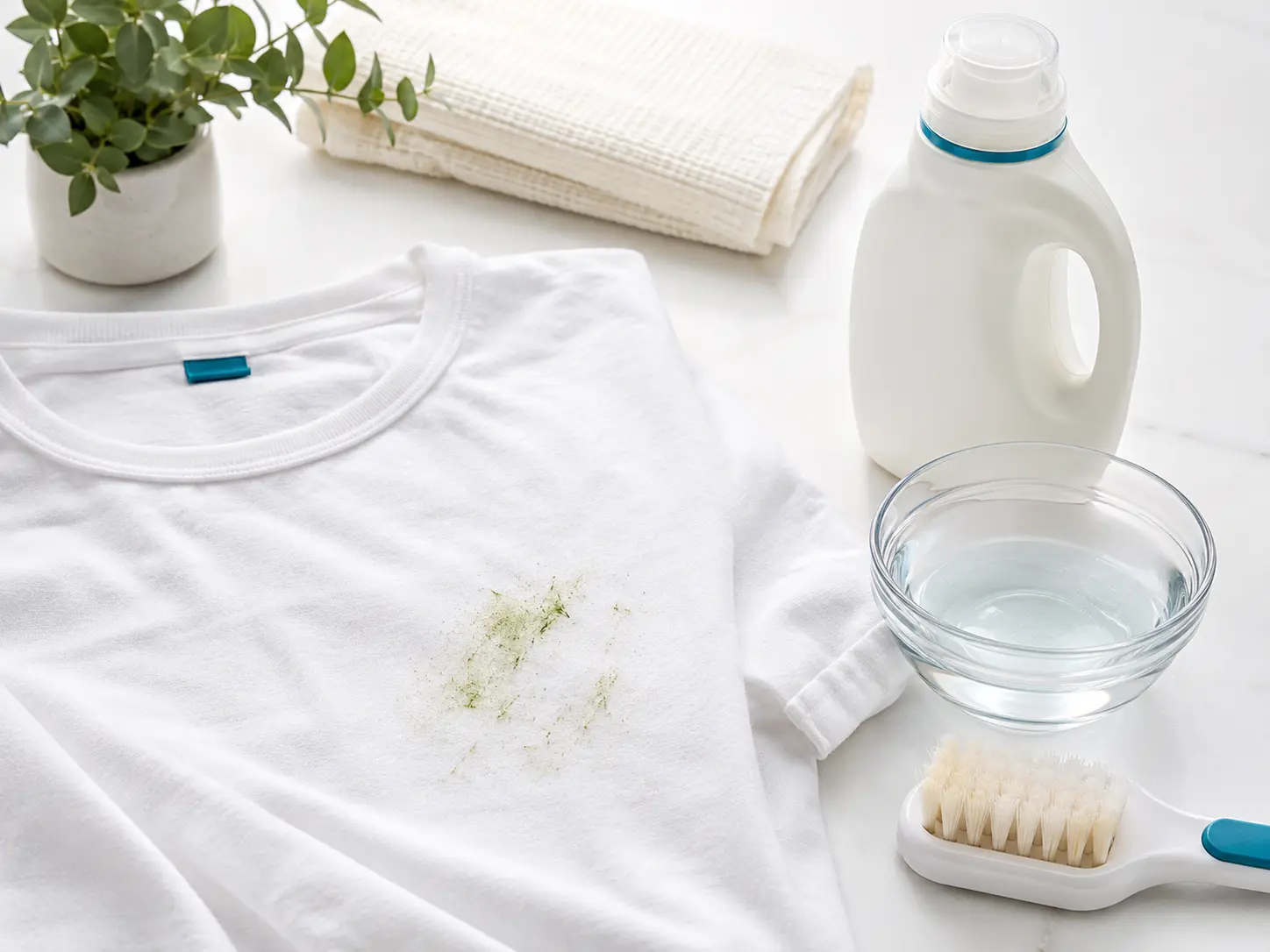
To remove grass stains from clothes, brush off loose grass or dirt first. Then rinse the back of the stain with cold water, apply enzyme detergent or a fabric-safe stain remover, let it sit for 10 to 15 minutes, and wash according to the care label.
- Remove loose grass or dirt.
- Rinse the back of the stain with cold water.
- Apply liquid detergent, enzyme detergent, or stain remover.
- Let it sit for 10 to 15 minutes.
- Wash on the care-label setting.
- Air-dry and check before using dryer heat.
If the green mark is still visible after washing, treat it again before drying. Heat can make grass stains harder to remove.
Do Grass Stains Come Out?
Most grass stains come out if you treat them before dryer heat. Fresh grass stains are easier to remove, while dried or heat-set grass stains may need repeat treatment.
If the mark has already gone through the dryer, it may be harder to lift. Still, do not scrub harder right away. Use a slower fabric-safe treatment instead.
Do Not Dry Grass-Stained Clothes Too Early
The biggest mistake is putting grass-stained clothes in the dryer too soon. Dryer heat can set the stain into the fabric. Once that happens, the green mark may become harder to lift.
After washing, check the stained area in natural light. If the stain is still there, repeat the pre-treatment. Then wash again before using heat.
This step matters most for white clothes, jeans, baseball pants, sports uniforms, and cotton shirts because the green mark can stay very visible after drying.
First, Check the Grass Stain Situation
Grass stains do not all need the same treatment. A fresh stain is easier to remove than a dried or heat-set stain.
| Situation | Best First Step | Avoid |
|---|---|---|
| Fresh grass stain | Cold rinse and detergent | Dryer heat |
| Dried grass stain | Cold soak and stain remover | Hard scrubbing |
| After washing | Treat again before drying | Heat |
| Jeans or pants | Detergent and soft brush | Bleach misuse |
| White clothes | Oxygen bleach if safe | Chlorine bleach without label |
| Colored clothes | Detergent and hidden seam test | Chlorine bleach |
| Activewear | Gentle pre-treatment | Harsh scrubbing |
| Mud plus grass | Remove dried mud first | Rubbing wet mud deeper |
Use this check before choosing a cleaner. It helps you avoid using a strong product when a simple pre-treatment is enough.
Why Grass Stains Stick to Fabric
Grass stains are not just dirt. They contain chlorophyll, plant pigments, plant residue, and moisture from crushed grass. These can cling to cotton, denim, polyester, and sports fabrics.
Chlorophyll can behave like a dye-like stain. That is why water alone often does not remove the green mark fully.
A detergent or enzyme-based stain remover often works better because it helps loosen the stain from the fibers. For tough marks, oxygen bleach may help if the care label and product label allow it.

How to Remove Fresh Grass Stains From Clothes
Fresh grass stains are the easiest to treat. Start before the stain dries if possible.
Remove Loose Grass First
Shake or brush off loose grass and dirt. If there is mud on the fabric, let the mud dry first. Then brush it away before treating the green stain.
Do not rub wet mud into the fabric. That can push soil and grass pigment deeper.
Rinse From the Back With Cold Water
Hold the back of the stained fabric under cold running water. This helps push the stain out instead of driving it farther into the cloth.
Do not use hot water at the start. Cold water is safer for most fabrics and helps prevent the mark from setting.
Apply Detergent or Stain Remover
Apply liquid laundry detergent, enzyme detergent, or a fabric-safe stain remover to the affected area. Work it in gently with your fingers or a soft brush.
Let it sit for 10 to 15 minutes. This gives the cleaner time to loosen the grass stain.
Always follow the product label as well as the clothing care label. Some cleaners are not safe for wool, silk, leather, spandex blends, or dry-clean-only fabric.
Wash and Air-Dry
Wash the item according to the care label. Use the normal amount of detergent so the cleaner can lift the stain without leaving residue behind.
After washing, air-dry the clothing first. Check the stained area before using the dryer. If the mark remains, repeat the pre-treatment.
How to Remove Dried Grass Stains
Dried grass stains need more time because the green pigment has had longer to bond with the fabric.
First, soak the stained area in cold water. Then apply enzyme detergent or stain remover to the mark. Let it sit longer than you would for a fresh stain.
Gently work the cleaner into the fabric with a soft brush if the fabric can handle it. Do not scrub thin cotton, activewear, wool, silk, or delicate blends too hard.
Wash the item according to the care label. Then air-dry and check the stain. If the stain is lighter but still visible, repeat the treatment once before trying anything stronger.
What If Grass Stains Remain After Washing?
If grass stains after washing are still visible, do not put the item in the dryer. Treat the stain again while the fabric is still safe from heat.
Apply enzyme detergent or stain remover to the affected area. Let it sit for 10 to 15 minutes. For white or colorfast washable fabric, oxygen bleach may help if the care label allows it.
Then wash again and air-dry. If the stain keeps coming back, check whether you are using enough detergent, rinsing well, and treating the stain before each wash.
Best Grass Stain Removers and When to Use Them
The best grass stain remover depends on the fabric, color, and age of the stain. Start with a mild option first.
| Remover | Best For | Avoid On |
|---|---|---|
| Cold water | Fresh grass stains | No major risk |
| Liquid detergent | Most washable clothes | Dry-clean-only items |
| Enzyme detergent | Grass stains and plant residue | Wool or silk unless label-safe |
| Oxygen bleach | White or colorfast clothes | Wool, silk, leather |
| Diluted vinegar | Light fresh stains | Delicate or untested fabric |
| Soft brush | Denim and pants | Thin delicate fabric |
For most clothes, liquid detergent or enzyme detergent should be the first choice. Home remedies can help in some cases, but they should not replace proper pre-treatment for deep green stains.
Before using oxygen bleach, vinegar, or a strong stain remover, test a hidden seam first. This helps protect colored clothes and dark fabrics from fading.
Does Vinegar Work on Grass Stains?
Vinegar for grass stains may help when the mark is light and fresh. It is not the strongest choice for deep green stains on denim, white sports pants, or dried-in marks.
Mix vinegar with water before using it on fabric. Then test a hidden seam before treating the stain.
Do not use vinegar on delicate fabric without testing. Also, do not mix vinegar with bleach. Mixing cleaners can create unsafe fumes or damage fabric.
For deep grass stains, detergent or enzyme stain remover is usually more reliable than vinegar alone.
How to Get Grass Stains Out of Jeans and Pants

To get grass stains out of jeans, start with cold water and detergent. If the pants also have soil or outdoor dirt on them, remove the mud stain first before treating the green grass mark.
Denim is stronger than many fabrics, but it can still fade if you scrub too hard or use harsh cleaners. Rinse the stain from the back with cold water. Then apply detergent or stain remover.
Use a soft brush if needed, but work gently. Let the treatment sit for 10 to 15 minutes. Then wash according to the care label and air-dry before checking the stain.
For baseball pants or sports pants, check the fabric blend first. Many sports pants contain polyester or spandex, so avoid harsh bleach unless the label clearly allows it.
How to Remove Grass Stains From White Clothes and Baseball Pants
To remove grass stains from white clothes, start with cold water and detergent before using stronger cleaners. Grass stains are more visible on white fabric, but bleach is not always the safest first step, especially if you are unsure about the right wash temperature for white clothes.
If the stain remains, use oxygen bleach only if the care label allows it. Oxygen bleach can help with green marks on white cotton, white socks, and some white sports uniforms.
Be careful with baseball pants that contain spandex or elastic. Strong bleach can weaken stretch fibers or cause yellowing. Always test first and air-dry before checking the final result.
Grass Stains on Colored Clothes
Colored clothes need a careful approach because strong cleaners can fade dye. Start with cold water and liquid detergent or enzyme stain remover.
Before using oxygen bleach or vinegar, test a hidden seam. If the color changes, do not use that cleaner.
Avoid chlorine bleach on colored clothes unless the care label clearly says it is safe. If the item is dark, use a hidden seam test first and follow safe washing steps for dark clothes before using stronger stain removers.
Grass Stains on Activewear and Stretch Fabric
Activewear needs gentle treatment. Many workout clothes and sports uniforms use polyester, nylon, spandex, or blended stretch fabric, so it helps to understand how to wash different fabrics before using strong stain removers.
Use cool water and a fabric-safe stain remover. Work the cleaner in gently with your fingers instead of scrubbing hard.
Avoid chlorine bleach unless the care label clearly allows it. Also, avoid high dryer heat because it can set stains, weaken stretch fibers, and trap odor.
Air-drying is usually safer for activewear after stain treatment.
How to Remove Grass Stains From Fabric Safely
To remove grass stains from fabric safely, match the cleaner to the fabric type. Cotton and denim can usually handle more treatment than wool, silk, rayon, or dry-clean-only fabric.
Before using oxygen bleach, vinegar, hydrogen peroxide, or a strong stain remover, test a hidden area first. This is important for colored clothes, dark clothes, activewear, and delicate fabric.
Follow these fabric rules:
- Use cold water first on most grass stains.
- Check the care label before using bleach.
- Follow the product label before using stain removers.
- Avoid hard scrubbing on thin or delicate fabric.
- Do not use enzyme detergent on wool or silk unless the label says it is safe.
- Take dry-clean-only clothing to a professional cleaner.
If the fabric starts to fade, stretch, roughen, or weaken, stop treating it.
Grass Stains Mixed With Mud
Grass and mud need a slightly different order. If the mud is wet, let it dry first. Then brush away the dry soil before treating the green stain.
After the mud is removed, rinse the grass-stained area with cold water. Then apply detergent or stain remover and wash as usual.
Do not rub wet mud into the cloth. That can make both the dirt and the grass stain harder to remove.
What Not to Use on Grass Stains
Some cleaning mistakes can make grass stains worse or damage the fabric.
Avoid these mistakes:
- Using dryer heat before checking the stain
- Scrubbing delicate fabric hard
- Using chlorine bleach on colored clothes
- Mixing vinegar with bleach
- Using oxygen bleach on wool, silk, or leather
- Treating activewear like heavy cotton
- Adding more detergent without rinsing well
- Using strong cleaners on dry-clean-only fabric
Use one method at a time. Rinse the fabric well before trying a different cleaner.
When Grass Stains May Be Permanent
Most grass stains can improve with the right treatment. Still, some marks may not fully come out.
A grass stain may be harder to remove if:
- it went through the dryer
- it stayed on the fabric for days
- the fabric is delicate or damaged
- the color has already changed
- the stain remains after careful repeat treatment
- strong cleaners start fading the item
At that point, more scrubbing may damage the clothing. It is better to stop than to ruin the fabric.
Final Answer
The best way to remove grass stains is to treat them before heat touches the fabric. Start with cold water, use detergent or enzyme stain remover, let it sit, wash according to the care label, and air-dry before checking the mark. For jeans, white clothes, baseball pants, colored clothes, and activewear, adjust the cleaner to the fabric so you lift the stain without fading color or weakening fibers, just as you would with any careful clothing stain-removal method.
