


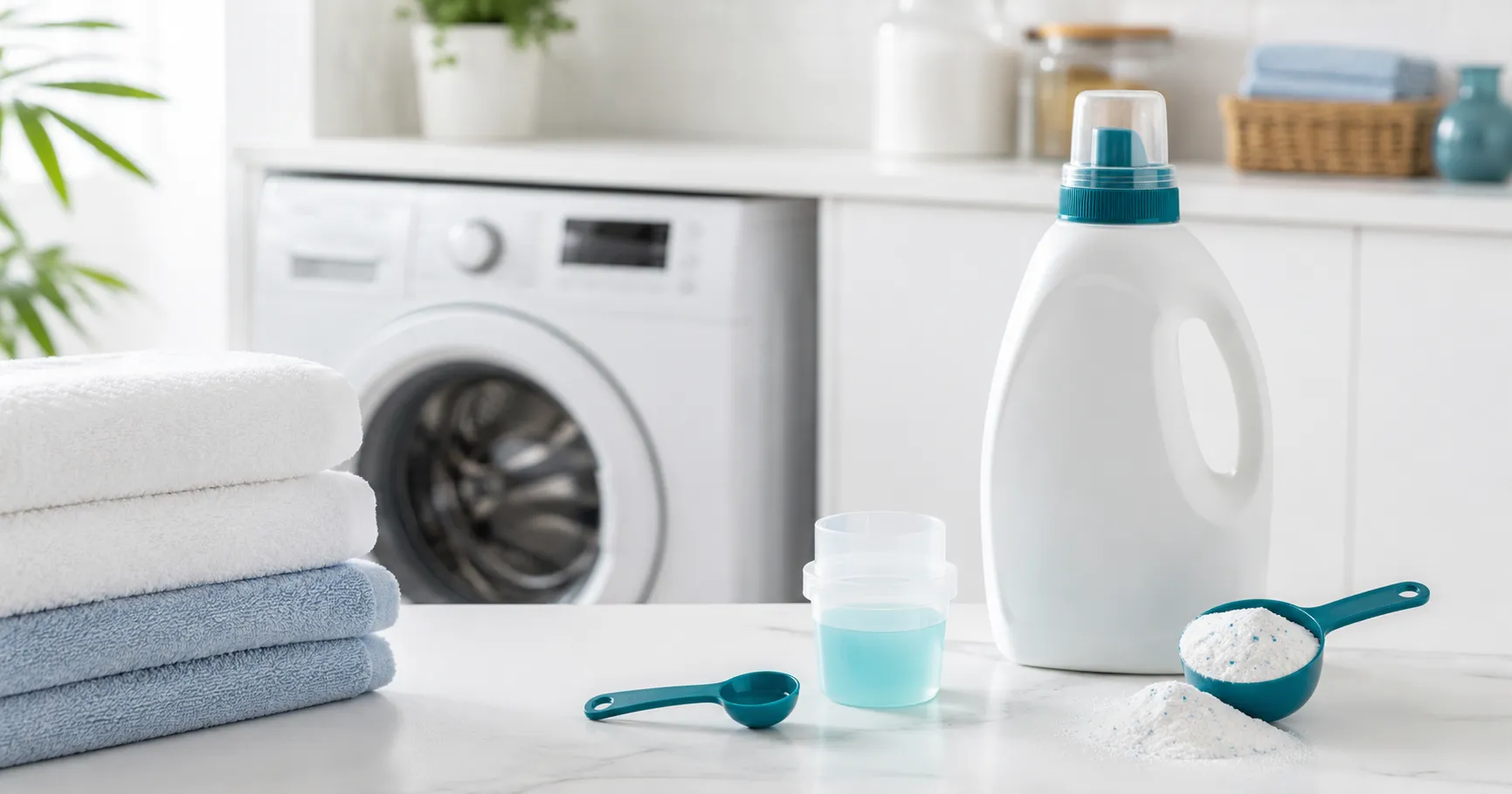
Knowing how much detergent to use can prevent residue, odor, and wasted product.
Too little detergent can leave sweat, body oil, and dirt behind. But too much detergent can also cause problems. It can leave residue on clothes, make towels stiff, and create buildup inside your washer.
For most regular laundry loads, use 1 to 2 tablespoons of detergent. However, the right amount depends on your washer type, load size, soil level, water hardness, and detergent formula.
This guide explains how much detergent to use per load for liquid detergent, powder detergent, HE washers, and regular washers.
Quick Answer: How Much Laundry Detergent Should You Use?
For most everyday loads, use 1 to 2 tablespoons of laundry detergent.
Small loads need less. Large or heavily soiled loads may need slightly more. If you have a high-efficiency washer, start with about 1 tablespoon of HE detergent, unless your product label recommends a smaller amount.
Here is a simple starting point:
- Small load: 1 teaspoon to 1 tablespoon
- Medium load: 1 to 2 tablespoons
- Large load: 2 to 3 tablespoons
- HE washer: 1 to 2 tablespoons of HE detergent
- Very dirty clothes: up to 3 tablespoons, but pre-treat stains first
This is a practical starting point, not a fixed rule for every detergent. Always check the detergent label instructions because concentrated formulas, washer type, and water hardness can change the correct dose.
Laundry Detergent Dosage Chart
Use this chart as a starting point. Then adjust based on your washer, clothes, and water type.
| Load Type | Liquid Detergent | Powder Detergent | Best Use |
|---|---|---|---|
| Small load | 1 tsp–1 tbsp | 1 tsp–1 tbsp | Few clothes or light soil |
| Medium load | 1–2 tbsp | 1–2 tbsp | Normal everyday laundry |
| Large load | 2–3 tbsp | 2–3 tbsp | Full drum, towels, bedding |
| HE washer load | 1–2 tbsp HE detergent | 1–2 tbsp HE powder | Front-load or HE top-load washer |
| Very dirty load | Up to 3 tbsp | Up to 3 tbsp | Work clothes, gym clothes, mud |
| Soft water load | Use less | Use less | Soft water creates more suds |
| Hard water load | Slightly more may help | Slightly more may help | Use only if clothes still feel dirty |

Do not fill the detergent cap without checking the lines. Many caps are larger than the amount you really need. In many cases, a full cap is too much detergent for one load.
Measurement note: 1 tablespoon equals about 0.5 fluid ounces or 15 ml. So, 2 tablespoons equal about 1 fluid ounce or 30 ml.
Should You Follow the Detergent Cap Lines?
You can use the detergent cap, but do not fill it blindly.
Many detergent caps are larger than the amount needed for one regular load. Some caps also have small measuring lines that are hard to see. This can make it easy to use too much detergent without noticing.
First, read the label. Then find the line for your load size. If the cap is confusing, measure with a tablespoon instead. This gives you better control and helps prevent detergent residue.
In most cases, a full cap is more than you need.
This is especially important with concentrated detergent. A 2X, 4X, or 8X formula may need much less than a regular formula. So, always measure based on the label, not the size of the cap.
How Much Liquid Laundry Detergent to Use Per Load
For most loads, use 1 to 2 tablespoons of liquid laundry detergent.
Liquid detergent is easy to measure. It also works well on sweat, body oil, grease, and food stains. You can also use a small amount to pre-treat stains before washing.
Here is a simple liquid detergent guide:
- Small load: 1 teaspoon to 1 tablespoon
- Medium load: 1 to 2 tablespoons
- Large load: 2 to 3 tablespoons
- HE washer: 1 to 2 tablespoons of HE liquid detergent
However, do not rely only on the cap. Detergent caps often have several lines. Some are hard to see. Also, concentrated liquid detergent needs a smaller amount.
If your clothes feel sticky, stiff, or too scented after washing, add less liquid detergent next time. If they still smell sweaty, use a little more or pre-treat the problem areas.
How Much Powder Detergent to Use
For most regular loads, use 1 to 2 tablespoons of powder detergent.
Powder detergent can work well for dirt, mud, clay, and everyday laundry soil. It is also useful for white clothes and towels. But powder must dissolve well. If it does not dissolve, it can leave white marks or gritty residue on fabric.
Use this powder detergent guide:
- Small load: 1 teaspoon to 1 tablespoon
- Medium load: 1 to 2 tablespoons
- Large load: 2 to 3 tablespoons
- Cold water load: use less and make sure it dissolves
- Very dirty load: up to 3 tablespoons, if needed
Powder detergent may leave residue if it does not dissolve fully, especially in cold water or overloaded washers.
If you wash in cold water, avoid adding too much powder. You can also add powder to the washer before clothes, depending on your machine instructions.
If you see powder marks on dark clothes, reduce the amount. You may also need a warmer wash or an extra rinse.
How Much Detergent to Use in an HE Washer
For most HE washer loads, start with about 1 tablespoon of HE detergent, unless your product label recommends a smaller amount.
HE means high efficiency. These washers use less water than older regular washers. Because of that, they need less detergent. If you use too much detergent in an HE washer, the machine may not rinse it out fully.
This can lead to:
- Extra suds
- Sticky clothes
- Detergent residue
- Musty washer smell
- Poor rinsing
- Buildup in the drum or gasket
Choose detergent marked HE for a high-efficiency washer. HE detergent is made to create fewer suds. This helps the washer clean and rinse clothes better with less water.
For a normal HE load, use about 1 tablespoon. For a larger or dirtier HE load, use up to 2 tablespoons. Only add more if the detergent label says so or if your clothes are very dirty.
If you are using a concentrated formula, you may need even less. For example, 4X or 8X detergents are stronger than regular formulas. So, do not measure all detergents the same way.
What If Your Washer Has Auto-Dispense?
Some newer washers measure detergent automatically.
If your washer has an auto-dispense system, fill the detergent tank with the correct detergent. Then choose the right cycle and soil level on the machine. The washer will release detergent based on the settings.
Still, check your washer manual. Some auto-dose systems need HE detergent. Others may need a specific detergent type or concentration.
Also, clean the dispenser regularly. Detergent can build up inside the tank, drawer, or dispenser path over time.
If clothes feel sticky or smell too strongly of detergent, check the auto-dose setting. It may be releasing too much detergent for your load size.
How Much Detergent to Use in a Regular Washer
A regular top-load washer may need a little more detergent than an HE washer.
This is because older top-load washers usually use more water. More water can handle a slightly larger detergent dose. Still, that does not mean you should fill the cap.
For a regular washer, follow this guide:
- Small load: about 1 tablespoon or less
- Medium load: 1 to 2 tablespoons
- Large load: 2 to 3 tablespoons
- Very dirty load: up to 3 tablespoons
Start with less detergent first. Then increase only if clothes are not getting clean.
If your washer has a large drum, do not judge detergent by drum size alone. Judge by how full the drum is. A medium load is usually around half full. A large load is around three-quarters full. Clothes should still move freely.
What Changes How Much Detergent You Need?
The right detergent amount is not the same for every load. Several things can change how much laundry detergent to use.
Load Size
Load size is one of the biggest factors.
A small load does not need the same amount as a large load. If you add too much detergent to a small load, the washer may not rinse it out. This can leave residue on clothes.
Add less detergent when the drum is only partly full. Increase the amount only when the washer is full and clothes can still move.
A good rule is:
- Small load: one-third of the drum
- Medium load: about half the drum
- Large load: about three-quarters of the drum
Do not pack the washer tightly. If clothes cannot move, they will not clean well.
If the washer is packed tightly, adding more detergent will not fix the problem. Clothes need space to move so water and detergent can reach the fabric.
Soil Level
Soil level means how dirty your clothes are.
Lightly worn shirts need less detergent. Gym clothes, towels, baby clothes, workwear, and muddy clothes may need more.
However, more detergent is not always the best fix. For stains, pre-treat first. Rub a small amount of liquid detergent into the stain. Let it sit for a few minutes. Then wash as normal.
This usually cleans better than adding extra detergent to the whole load.
Water Hardness
Water hardness also matters.
Hard water has more minerals. These minerals can make detergent work less well. Because of this, hard water may need slightly more detergent.
Soft water is different. It makes suds more easily. So, if you have soft water, you may need less detergent.
If your clothes feel slimy, stiff, or soapy after washing, you may be using too much detergent for your water type.
Detergent Concentration
Not all detergents are equal.
Some detergent bottles say 2X, 4X, or 8X. These are concentrated formulas. A small amount can clean a full load.
This is why cap lines can be confusing. One cap from one brand is not the same as another cap from a different brand.
Always check the label first. Then start with the smallest suggested amount. You can increase later if needed.
Signs You Are Using Too Much Detergent
Using too much detergent does not make clothes cleaner. In fact, it can make laundry worse.
Here are common signs you are using too much detergent:
- Clothes feel stiff after washing
- Towels feel rough or less absorbent
- Dark clothes have white streaks
- Clothes feel sticky or waxy
- The washer smells musty
- You see too many suds during the cycle
- The detergent drawer has buildup
- Clothes smell too strongly of detergent
Too much detergent can trap dirt and body oil in fabric. It can also leave a film on clothes. Over time, this film can make towels less soft and shirts less fresh.
If this happens, reduce your detergent amount by half for the next few loads. You can also run an extra rinse cycle.
Signs You Are Not Using Enough Detergent
Too little detergent can also cause problems.
Here are signs you may not be using enough:
- Clothes still smell sweaty
- Armpit odor stays in shirts
- Grease or body oil remains
- Stains do not lift
- Whites look dull
- Towels still smell musty
- Work clothes do not feel clean
If clothes still smell after washing, first check the load size. You may have overloaded the washer. Also check your washer. A dirty washer can make clean clothes smell bad.
If the load size is normal and the washer is clean, try adding a little more detergent. You can also pre-treat sweaty areas before washing.
How to Fix Detergent Buildup on Clothes and in the Washer
If you used too much detergent, do not worry. You can fix it.
First, rewash the clothes without adding detergent. Use warm water if the fabric care label allows it. Then run an extra rinse cycle.
If clothes still feel soapy, run one more rinse cycle before drying them.
For towels or stiff clothes, you may need to wash them again without detergent. This helps remove the leftover film.
You should also clean your washer. Detergent buildup can stay inside the drum, drawer, and rubber gasket.
Try these steps:
- Wipe the detergent drawer.
- Clean the rubber gasket if you have a front-load washer.
- Run a washer cleaning cycle.
- Leave the washer door open after washing.
- Use less detergent in the next few loads.
If your clothes still smell after washing, the problem may not be detergent alone. Washer buildup, trapped sweat, and wet clothes left too long can also cause odor.
Liquid vs Powder vs Pods: Does the Amount Change?
Yes, the amount can change based on detergent type.
Liquid Detergent
Liquid detergent is easy to measure. It works well for oily stains, sweat, and body soil. You can also use it as a stain pre-treatment.
Use 1 to 2 tablespoons for most loads.
Powder Detergent
Powder detergent works well for dirt and everyday laundry. But it must dissolve fully. If you add too much powder, it may leave white marks.
Use 1 to 2 tablespoons for most regular loads.
Detergent Pods
Pods are pre-measured. They are easy to use, but they are not flexible. One pod may be too much for a small load. It may not be enough for a very large or dirty load.
One pod is enough only when the package says it matches your load size.
Detergent Sheets
Laundry sheets are also pre-measured. They are simple, but you may need half a sheet for a small load or more than one for a large load. Follow the product label.
The best detergent type depends on your clothes, washer, and washing habits.
Can You Use Dishwasher Detergent for Laundry?
No. Do not use dishwasher detergent in a washing machine.
Dishwasher detergent and laundry detergent are made for different jobs. Dishwasher detergent is designed for dishes, grease, and hard surfaces. Laundry detergent is made for fabric.
Using dishwasher detergent in laundry can cause residue, poor rinsing, or fabric damage. It may also create problems inside your washer.
If you want to know how much dishwasher detergent to use, read a separate dishwasher detergent guide. It is not the same as laundry detergent dosage.
Common Mistakes When Measuring Detergent
Many laundry problems start with small measuring mistakes.
Here are the most common ones:
- Filling the cap every time
- Using the same amount for every load
- Ignoring HE washer instructions
- Using regular detergent in an HE washer
- Adding more detergent instead of pre-treating stains
- Using too much powder in cold water
- Using pods for very small loads
- Not adjusting for hard or soft water
The best habit is simple. Start with less detergent. Then adjust only when needed.
Most loads do not need a full cap.
Best Detergent Amount by Laundry Type
Different laundry loads may need different amounts.
| Laundry Type | Recommended Amount | Notes |
|---|---|---|
| Everyday clothes | 1–2 tbsp | Normal shirts, pants, and light soil |
| Gym clothes | 2 tbsp | Pre-treat strong odor areas |
| Towels | 1–2 tbsp | Avoid too much detergent |
| Bedding | 2–3 tbsp | Use more only for large loads |
| Baby clothes | 1 tbsp | Use gentle detergent if needed |
| Work clothes | 2–3 tbsp | Pre-treat stains first |
| Delicates | 1 tsp–1 tbsp | Use gentle cycle and mild detergent |
Towels are easy to overload with detergent. If you use too much, they can become stiff and less absorbent. So, use a moderate amount and rinse well.
FAQs About How Much Detergent to Use
How much detergent should I use per load?
For most loads, use 1 to 2 tablespoons of detergent. Use less for small loads and more only for large or heavily soiled loads.ch
Is 2 tablespoons of detergent enough?
Yes, 2 tablespoons is enough for most regular laundry loads. In an HE washer, you may need only 1 tablespoon.
How much liquid detergent should I use?
Use 1 to 2 tablespoons of liquid detergent for a normal load. Use up to 3 tablespoons for a large or very dirty load.
How much powder detergent should I use?
Use 1 to 2 tablespoons of powder detergent for most loads. Use less in cold water if the powder does not dissolve well.
How much HE detergent should I use?
Use about 1 tablespoon of HE detergent for a normal HE washer load. Use up to 2 tablespoons for a larger or dirtier load.
Should I use more detergent for hard water?
You may need slightly more detergent if you have hard water. However, do not use too much. If clothes still feel dirty, consider a laundry booster or water softening product.
What happens if I use too much detergent?
Too much detergent can leave residue on clothes. It can also cause stiff fabric, white streaks, extra suds, musty washer odor, and buildup inside the machine.
Why do my clothes still smell after washing?
Clothes may still smell because of too little detergent, too much detergent, washer buildup, trapped sweat, or overloading the machine. Start by using the right detergent amount and cleaning your washer.
