


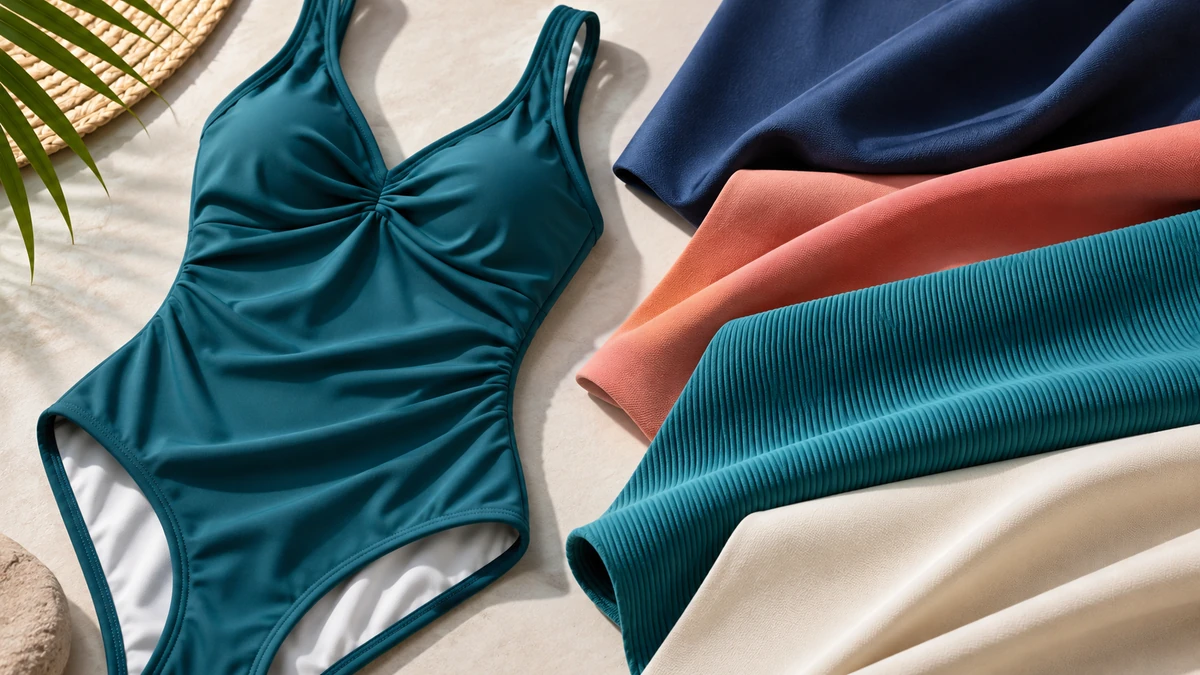
Swimwear fabric is usually a nylon or polyester knit blended with spandex so a swimsuit stretches and returns to shape. Some training suits use polyester and PBT instead. For frequent pool use, choose a fabric designed for chlorine exposure; for beachwear, prioritize comfort, fit, and coverage.
A suitable swimsuit material should move comfortably when wet and retain its fit. The fiber label is a useful starting point, but the knit, lining, and stretch recovery matter just as much when choosing a suit or sewing one yourself.
What Is Swimwear Fabric? What Are Swimsuits Made Of?
Most fitted bathing suits are made from synthetic stretch knits, commonly called swimwear knit or swim-grade stretch fabric. Swim trunks and boardshorts may instead use woven nylon or polyester with little or no stretch.
A swimsuit label tells you which fibers it contains. To understand the material, distinguish these three features:
- Base fiber: Nylon (a type of polyamide) or polyester forms much of the textile.
- Stretch fiber: Spandex, also called elastane, helps the garment recover after stretching. LYCRA is a brand of elastane, not a separate generic fiber.
- Construction: The arrangement of yarns determines how the finished fabric behaves. Tricot, for example, is a type of warp knit rather than a fiber.
Some swimsuits contain PBT, a member of the polyester family used in certain performance fabrics. The outer shell and inner lining can also have different compositions, so read both labels when available.
Among the many types of fabric, swim-grade textiles are designed for movement in water. A stretchy knit sold for leggings may not have suitable wet coverage or resistance to pool exposure.
Main Types of Swimwear Fabric
The most useful choices are nylon-spandex, polyester-spandex, and polyester-PBT. Even two knits with identical fiber percentages can differ in stretch, weight, and durability.
Nylon (Polyamide) and Spandex
Nylon-spandex is common in fitted bikinis and one-pieces because it can feel smooth and flexible. The nylon fibers form the base of the knit; spandex helps it return to shape.
For frequent pool use, choose a nylon blend specifically designed for chlorine exposure. A soft feel alone tells you little about how well it will retain elasticity.
Polyester and Spandex
Polyester is widely used in printed swimwear and training suits. Blending it with elastane adds flexibility and recovery for close-fitting styles.
Polyester absorbs relatively little moisture into the fiber, but drying time still depends on fabric thickness, construction, lining, and airflow. A thick, lined polyester swimsuit may dry more slowly than a lightweight nylon one.
Polyester-PBT
PBT stands for polybutylene terephthalate. It is a polyester-family polymer used in some swim fabrics designed for regular pool training. Certain polyester-PBT knits achieve useful stretch without elastane in their declared composition.
PBT blends are worth considering for regular lap swimming, but they may feel firmer than a highly elastic fashion swimsuit. Check the actual stretch and pool-use rating or guidance. PBT does not make a suit immune to chemical damage.
Recycled and Alternative Swimwear Fabrics
Recycled nylon and recycled polyester can replace virgin base fibers in swimwear. Their recycled origin does not, by itself, establish better durability, lower overall environmental impact, or improved stretch.
Cotton blends are generally better suited to beach cover-ups than fitted swimsuits because cotton can retain water and feel heavy when wet. Neoprene wetsuits serve a different purpose: their foam construction helps provide thermal insulation.
What Is the Best Fabric for Swimwear? Nylon vs. Polyester
For frequent pool training, start with a chlorine-resistant polyester-rich or polyester-PBT suit. For beachwear, a swim-grade nylon-spandex knit is often a comfortable choice. Neither base fiber guarantees better performance.
- Feel and fit: Nylon-spandex often feels smooth and flexible; polyester training knits may feel firmer.
- Pool durability: Compare documented chlorine resistance and recovery rather than assuming every polyester blend lasts longer.
- Coverage and drying: Check the knit, lining, and wet fit. Either fiber can work well with suitable construction.
Use the table to compare options by activity, not fiber alone. On smaller screens, scroll the tables sideways to see all columns.
| Intended use | Material to consider | What matters most |
|---|---|---|
| Frequent pool training | Pool-grade polyester or polyester-PBT | Verified suitability for repeated chlorine exposure |
| Occasional beach swimming | Nylon-spandex or polyester-spandex | Comfortable wet fit, recovery, and drying |
| Fashion bikinis | Swim-grade stretch knit | Wet opacity and secure fit |
| Supportive one-piece | Supportive nylon or polyester stretch knit | Lining, panel design, and recovery |
| Competitive swimming | Purpose-designed performance swim fabric | Fit, movement, and intended competition use |
| Rash guards | Swim-grade nylon or polyester blend | Coverage and verified UPF if needed |
| Swim trunks and boardshorts | Suitable woven polyester or nylon | Comfortable movement and drying |
When comparing polyamide and polyester, feel the material against your skin and check how easily you can move in it. Nylon blends often feel smooth; polyester training knits may feel firmer. Neither label guarantees a better fit.
A nylon suit with chlorine-resistant elastane may suit pool use better than a polyester fashion suit with ordinary elastane. Conversely, a firm training suit may be unsuitable if it restricts your movement. Compare the actual garment rather than assuming its base fiber determines performance.
How to Judge Swimwear Fabric Quality
Check whether the material stretches enough for your movements, returns to shape, and stays opaque at a comfortable fit. Fiber percentages alone cannot tell you whether a swimsuit will sag or become see-through.
Four-Way Stretch and Recovery
Four-way stretch means the knit extends along both its length and width. Most close-fitting swimsuits benefit from stretch in both directions. Two-way stretch may suit some patterns, and woven swim shorts can rely on a looser fit instead.
Stretch describes how far the textile extends. Recovery describes how well it returns after the tension is released. A high percentage of spandex does not guarantee either a specific stretch percentage or greater support.
Example: checking a fabric swatch
Mark four inches on a relaxed swatch. If it extends to six inches under gentle, usable tension, its elongation is 50% in that direction: (6 − 4) ÷ 4 × 100. Repeat across the width or length, then release the swatch.
If it remains longer than its original length after relaxing, it has residual extension under those conditions. Compare samples with similar tension and relaxation time; avoid pulling them to their breaking point.
This is a simple swatch assessment, not a standardized test. Follow your sewing pattern’s required stretch in both directions; 50% is an example, not a universal target.
Fabric Weight (GSM) and Knit Construction
GSM means grams per square meter. There is no single best GSM for swimwear: a 190 GSM knit weighs 190 grams per square meter, but weight alone cannot establish opacity, support, or durability.
Different knit structures change the feel and fit. Tricot is a warp knit often used for smooth outer fabrics or linings. Ribbed, crinkle, and terry textures describe the structure or surface, not separate fiber types.
A lightweight dense knit with compatible lining can cover better than a heavier knit stretched too tightly. If choosing textured fabric, check for comfortable movement, drying time, and snagging rather than judging quality by appearance.
Swimwear Lining Fabric: Coverage, Support, and Wet Opacity
Swimwear lining fabric is the inner layer of a suit. It helps provide coverage and comfort, particularly in pale colors or areas under tension. Some suits use targeted support panels; others provide adequate coverage without a full lining.
Types of Swimsuit Lining Materials
Swimsuit lining material is often a lightweight nylon or polyester swim knit, sometimes blended with elastane. Choose a lining with compatible stretch in the directions needed for the design. If it stretches less than the shell, it can restrict movement or distort the suit.
| Layer or material | Main purpose | What to check |
|---|---|---|
| Outer swim fabric | Appearance, fit, and coverage | Recovery, wet opacity, and intended use |
| Dedicated stretch lining | Additional coverage and comfort | Compatible stretch and smooth contact with skin |
| Self-lining | Second layer of the outer fabric | Added weight, bulk, and drying time |
| Power mesh | Targeted support | Recovery, placement, and comfort |

Not every swimsuit needs all these layers. Power mesh can reinforce specific areas, but its open structure may still require an opaque layer for coverage. A skin-tone lining may be less visible under pale outer fabric; check the two together when wet.
How to Check Whether Swimwear Becomes See-Through
Test a spare swatch under conditions that resemble wear. Wet fabric, light colors, tension, and lining can all affect coverage.
- Place the dry swatch over contrasting light and dark backgrounds in good light.
- Wet it with clean water and gently remove excess water.
- Stretch it to realistic wearing tension without forcing it beyond its usable range.
- Repeat with the intended lining behind it, using the same lighting and tension.
If the background becomes easier to see, try a compatible lining or another fabric. Check the assembled layers again rather than assuming a thicker fabric solves the problem.
For a finished swimsuit, check coverage privately when fitting it and when wet, if appropriate. Pay particular attention to areas under greater tension. If a seller does not provide swatches, ask about lining placement and wet coverage before buying.
This visual check helps assess transparency; it cannot establish a UV protection rating or guarantee coverage under every lighting condition.
Chlorine Resistance, Sun Protection, and Swimsuit Durability
Chlorinated water, sunlight, and repeated stretching can change how a swimsuit performs. For regular training, look for evidence of resistance to pool exposure rather than relying on a generic “durable” label.
Which Swimwear Fabrics Hold Up in Chlorinated Pools?
Pool-grade polyester-PBT and blends with chlorine-resistant elastane are useful options. Ask which property was tested and under what exposure conditions: color retention, strength, or stretch recovery. These are different properties, and a colorfastness result alone cannot show how long a suit will retain its fit.
A 2024 study of swimwear durability found that prolonged chlorine exposure reduced the breaking force of the tested fabrics, with different results by knit direction and exposure time. It does not predict an individual swimsuit’s lifespan or measure elastic recovery directly.
Two examples of published fabric specifications
| Material | Declared composition | Weight |
|---|---|---|
| Carvico Vita | 78% recycled polyamide, 22% elastane | 190 GSM |
| Carvico Sydney Eco | 51% recycled polyester, 49% PBT | 170 GSM |
Carvico publishes these specifications; they are not Careonova test results or product endorsements. Sydney Eco illustrates that a sports swim knit can contain no declared elastane. Neither its lower weight nor its composition proves superior durability.
UPF Protection and Saltwater Exposure
UPF (ultraviolet protection factor) describes how much ultraviolet radiation a textile transmits under test conditions. A UPF of 50 means about 1/50 of the relevant UV passes through under those conditions. UV resistance concerns the material’s own deterioration in sunlight, not protection for the wearer.
Choose garments with a documented UPF rating when sun protection is important. The Skin Cancer Foundation’s clothing guidance explains that stretching and wetness can affect protection. A swimsuit’s visible opacity or polyester content does not establish its UPF.
Saltwater, sand, sunscreen, and sunlight can also contribute to wear. Rinse the suit with fresh water after swimming and follow its care label. Use sunscreen on exposed skin and consider a protective rash guard when greater coverage is needed.
How to Choose Swimwear Fabric Before You Buy
Start with your swimming routine, then compare fit, construction, and documented performance. If a brand provides only a fiber label, do not assume the missing specifications meet your needs.
Use this checklist to narrow your options:
- Activity: Is the suit intended for regular pool training, beachwear, or another use?
- Composition: Are the outer fabric and lining materials disclosed?
- Recovery: Does the textile return toward its original shape after gentle stretching?
- Coverage: Is the lining appropriate, especially in lighter colors or areas of tension?
- Performance: Are chlorine resistance and UPF claims supported by relevant product information?
- Care: Can you follow the garment’s washing and drying requirements?
When buying online, ask about lining placement and intended pool use if those details are missing. If specifications are unavailable, compare fit and coverage information and check the return policy before ordering.
If sewing your own swimsuit, match the pattern’s stretch requirements, including the direction of greatest stretch. Choose swim-grade lining and elastic. Test a small sewn sample to check whether the layers and seam move together before cutting the garment.
Signs Your Swimsuit Fabric Is Wearing Out
Inspect your swimsuit when its fit, coverage, or surface changes. These signs can help identify a possible problem:
- Sagging or baggy areas: Reduced elastic recovery or stretched components.
- Exposed or broken elastic strands: Possible stretch-fiber deterioration.
- Thin or transparent patches: Localized wear or excessive tension.
- Fuzzy surfaces or fading: Abrasion or color degradation.
- Distorted seams or lining: Construction damage or uneven recovery between layers.
Appearance alone does not establish the cause. If the suit no longer provides adequate coverage or secure fit, consider replacing it.
Choose chlorine-resistant polyester-rich or polyester-PBT blends for frequent pool training, and consider nylon-spandex for soft, flexible beachwear. Whatever the material, check stretch recovery, lining, and wet coverage before buying.
