


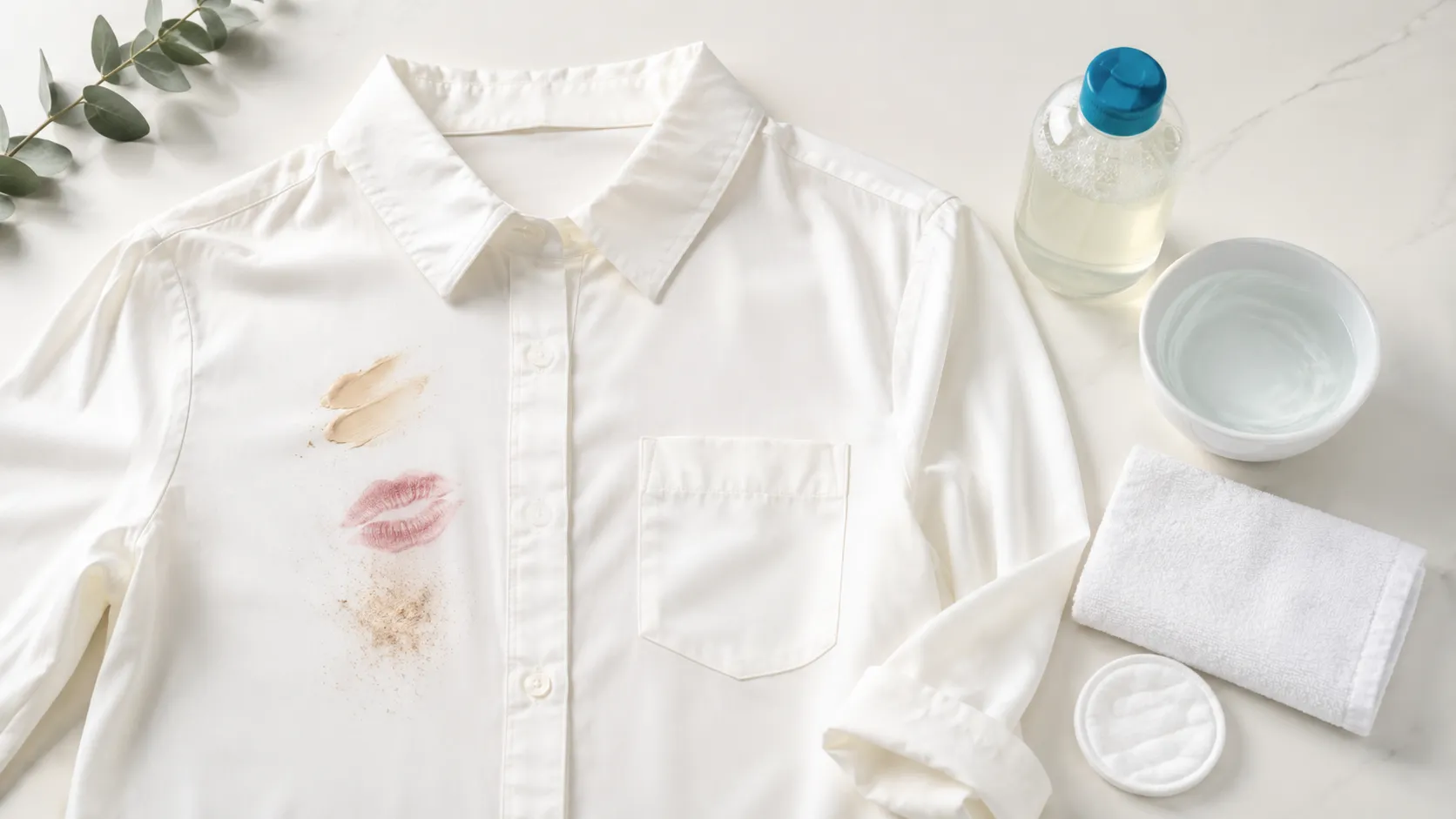
How to Get Makeup Stains Out of Clothes
Makeup stains on clothes can be frustrating because every product behaves a little differently. Foundation, lipstick, mascara, concealer, and powder makeup do not leave the same kind of stain. Some stains are oily. Some are waxy. Some contain strong pigment. Some sit on the fabric surface until you accidentally rub them deeper.
The safest way to remove makeup stains from clothes is to match the treatment to the makeup type and the fabric care label. Start gently, avoid rubbing, and never use dryer heat until the stain is fully gone. Heat can set leftover makeup residue and make the stain harder to remove.
Quick Answer
Remove excess makeup first, blot instead of rubbing, rinse from the back when possible, then pre-treat with liquid detergent, dish soap, or a fabric-safe stain remover. Wash by the care label and check the stain before drying.
Before You Start: Check the Makeup Type and Fabric
Before treating the stain, look at two things: the makeup and the fabric.
Makeup stains can come from liquid foundation, powder foundation, lipstick, lip gloss, mascara, eyeliner, concealer, blush, bronzer, or waterproof makeup. Each one may need a slightly different first step.
Fabric matters too. A cotton T-shirt can usually handle more treatment than silk, wool, satin, or dry-clean-only clothing. A white cotton shirt may allow oxygen bleach if the care label says it is safe. A delicate blouse may need professional cleaning instead.
Check these before you treat the stain:
- Is the makeup liquid, powder, waxy, oily, or waterproof?
- Is the fabric cotton, polyester, denim, silk, wool, satin, or dry-clean-only?
- What does the care label say?
- Is the fabric colorfast?
- Can you test the stain remover on a hidden seam first?
Fabric-Safety Note
The care label matters more than the stain-removal hack. Test detergent, stain remover, micellar water, makeup remover, or alcohol on a hidden seam first, especially on dark, bright, delicate, or non-colorfast fabric.
Test detergent, stain remover, micellar water, makeup remover, or alcohol on a hidden seam first, especially on dark, bright, delicate, or non-colorfast fabric.
The care label matters more than the stain-removal hack. A method that works on a white cotton shirt may damage silk, wool, or dyed fabric.
Makeup Type vs Best First Treatment
Different makeup formulas need different first steps.
| Makeup Type | Main Stain Problem | Best First Move |
|---|---|---|
| Liquid foundation | Pigment and oil | Blot, then use detergent or dish soap |
| Oil-free foundation | Pigment | Use detergent or stain remover |
| Powder makeup | Loose pigment | Lift dry first, do not rub |
| Lipstick | Wax, oil, and pigment | Scrape gently, then use dish soap or tested alcohol |
| Mascara | Pigment, wax, or polymer | Blot, then use detergent or oil-free remover |
| Waterproof makeup | Film-forming residue | Pre-treat longer before washing |
| Concealer | Pigment, oil, or silicone | Blot, pre-treat, then wash |
This table gives you the first move. The full method still depends on the fabric and care label.
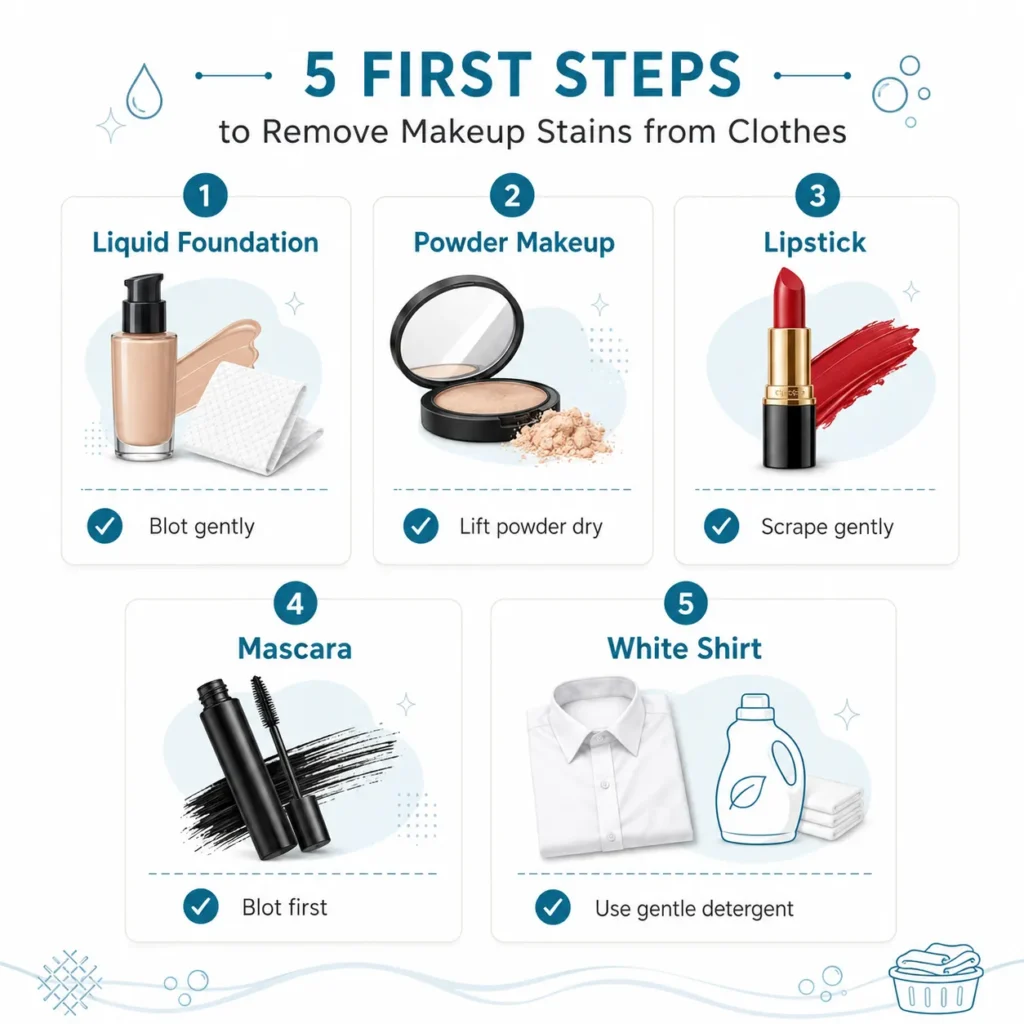
Quick Method for Most Washable Clothes
Use this method for many washable cotton, polyester, denim, and blend fabrics. Do not use this method without extra care on silk, wool, satin, or dry-clean-only clothes.
- Remove excess makeup.
Use a dull edge, spoon, clean cloth, or soft brush. Do not press the makeup deeper into the fabric. - Blot, don’t rub.
Rubbing spreads makeup and pushes pigment into the fibers. - Rinse from the back of the stain if possible.
This helps push residue out instead of driving it further in. Start with cool water when you are unsure, then follow the warmest safe water temperature on the care label during washing. - Apply a treatment.
Use liquid laundry detergent, dish soap, or a fabric-safe stain remover. Dish soap can help with oily makeup residue. - Let it sit for 10 to 15 minutes.
Give the cleaner time to loosen the stain. Do not let strong products dry on delicate fabrics. - Wash according to the care label.
Use the safest water temperature for the garment. - Check before drying.
Look closely at the stained area while it is still damp. - Repeat if needed.
If the stain remains, treat it again before drying.
Do not apply stain remover, alcohol, or strong detergent while wearing the garment. Remove the clothing first so you can control the treatment and rinse it properly.
Never put the clothing in the dryer until the makeup stain is fully gone. Dryer heat can set leftover makeup residue.
How to Remove Liquid Foundation and Concealer Stains
Liquid foundation and concealer can spread quickly. Many formulas contain pigment, oil, silicone, or long-wear ingredients. That is why rubbing can make the stain larger.
Start by lifting off any extra product with a dull edge or clean cloth. Blot the stain gently. If the fabric is washable, rinse from the back of the stain with cool water.
For oil-free foundation, apply liquid laundry detergent or a fabric-safe stain remover. Work it in gently with your fingers or a soft cloth. Let it sit for 10 to 15 minutes, then wash by the care label.
For oil-based foundation, dish soap can help break down oily residue. Apply a small amount to the stained area. Gently tap or rub with your fingers, then rinse well before washing.
Avoid oily makeup remover unless you have tested it first. It may remove the makeup but leave a second oil stain on the fabric.
How to Remove Powder Makeup from Clothes
Powder makeup needs a different first step. This includes powder foundation, blush, bronzer, setting powder, and eyeshadow.
Do not wet powder makeup right away. Water can turn loose powder into a smeared paste. Rubbing can push pigment deeper into the fabric.
First, lift the dry powder.
You can:
- Shake the garment gently.
- Blow off loose powder.
- Use a soft brush.
- Use a piece of tape to lift surface powder.
- Hold the fabric so the powder falls away from the garment.
Once the loose powder is removed, rinse from the back of the fabric if the garment is washable. Then pre-treat with liquid detergent or stain remover and wash by the care label.
With powder makeup, the first goal is to lift the dry pigment before it turns into a smeared stain.
How to Remove Lipstick or Lip Gloss Stains
Lipstick and lip gloss stains can be stubborn because they often contain wax, oil, and strong pigment. A lipstick smear on a collar, sleeve, or white shirt needs careful treatment.
First, gently scrape away extra lipstick with a dull edge. Do not grind it into the fabric.
Next, place the stained area on a clean white cloth or paper towel. Apply a small amount of dish soap to the back of the stain or directly on the stain if needed. Dish soap helps loosen oily and waxy residue.
Blot from the outside of the stain toward the center. This helps stop the stain from spreading.
For some washable fabrics, rubbing alcohol may help lift lipstick pigment. But test it first on a hidden seam. Do not use alcohol on delicate, dyed, or non-colorfast fabrics without testing.
After treatment, rinse well. Wash the garment by the care label and check the stain before drying.
How to Remove Mascara and Eyeliner Stains
Mascara and eyeliner can contain pigment, wax, oil, and waterproof film. The stain may look small, but it can smear quickly if you rub it.
Start by blotting the mark with a clean cloth. Do not drag the cloth across the fabric.
For washable clothing, apply liquid detergent or an oil-free makeup remover. Let it sit for a few minutes. For waterproof mascara or eyeliner, you may need a longer pre-treatment time.
Rinse well so no cleaner or makeup residue stays in the fabric. Then wash according to the care label.
If the stain is still visible after washing, repeat the treatment. Do not put the garment in the dryer until the stain is gone.
How to Remove Makeup from a White Shirt
Makeup on a white shirt can look worse because the stain is easier to see. But that does not mean you should jump straight to harsh bleach.
Start with the safest method first.
Blot the stain. Remove excess makeup. Apply dish soap or liquid laundry detergent. Let it sit for 10 to 15 minutes, then wash according to the care label.
If the stain remains and the shirt is washable, oxygen bleach may help. Use it only if the fabric allows it. Follow the product instructions and avoid using it on fabrics that are not bleach-safe.
Be careful with chlorine bleach. It can damage some fabrics, weaken fibers, or cause yellowing if used the wrong way. Only use it when the care label clearly allows it.
For collar makeup transfer, treat the area early. Foundation, sunscreen, powder, and skin oils can build up around collars and necklines. A small pre-treatment before washing can stop the stain from becoming set-in.
Air dry the shirt until you are sure the stain is gone.
What If the Makeup Stain Is Already Dry?
A dry makeup stain may take more work, but it is not always permanent.
First, brush or scrape away dry residue. Be gentle. Do not damage the fabric surface.
Next, apply liquid detergent, dish soap, or a fabric-safe stain remover. Let it sit longer than you would for a fresh stain. For washable fabric, 15 to 30 minutes may help.
If the fabric allows soaking, soak the garment in cool or warm water with detergent. For white or colorfast washable clothing, oxygen bleach may help with stubborn pigment. Always check the care label first.
Wash the garment again. Check the stain while the fabric is still damp. If you can still see makeup, repeat the treatment.
If the garment already went through the dryer, the stain may need repeated treatment or professional cleaning.
Do not use dryer heat on a dry stain that is still visible. Heat can make the stain harder to remove.
What Not to Do With Makeup Stains
Some common stain-removal mistakes can make makeup stains worse.
Do not rub powder makeup into the fabric. Lift the dry powder first.
Do not use oily makeup remover without testing it. It may leave a new oil mark.
Do not put stained clothes in the dryer. Heat can set makeup residue.
Do not use alcohol or acetone without a colorfast test. These can damage dyes and some fabrics.
Do not scrub silk, wool, satin, or delicate fabrics. Scrubbing can roughen the surface or distort the weave.
Do not treat dry-clean-only clothes like cotton. If the label says dry clean only, blot gently and take the garment to a professional cleaner.
Do not mix strong chemicals. More product does not always mean better stain removal.
What About Silk, Wool, or Dry-Clean-Only Clothes?
Delicate fabric damage can be harder to fix than the makeup stain itself.
Delicate Fabric Warning
If the label says dry clean only, do not rinse, soak, or pre-treat heavily at home. Blot gently and take the garment to a professional cleaner, especially for silk, wool, satin, or expensive clothing.
If makeup gets on silk, wool, satin, or dry-clean-only clothing, start with blotting only. Use a clean white cloth. Do not rub. Do not soak unless the care label says the fabric can be washed.
If the label says dry clean only, do not rinse, soak, or pre-treat heavily at home.
Avoid alcohol, acetone, strong stain removers, and heavy scrubbing on delicate fabrics. These can cause color loss, water marks, fiber damage, or texture changes.
For expensive, delicate, or dry-clean-only garments, take the item to a professional cleaner. Tell them what type of makeup caused the stain if you know. Foundation, lipstick, mascara, and powder may need different treatment.
How to Prevent Makeup Stains on Clothes
You cannot prevent every stain, but a few small habits can help.
Let makeup set before dressing. If you use foundation, sunscreen, setting spray, or cream products, give them time to dry before pulling on a tight shirt.
Use a robe, towel, or old shirt while applying makeup. This protects your clothes from loose powder, foundation drips, and mascara smudges.
Pull tight collars away from your face when dressing. This helps avoid foundation and lipstick transfer.
Wash pillowcases, scarves, and shirt collars often. Makeup, skin oil, and sunscreen can build up over time.
Keep a small stain wipe or detergent pen in your bag when traveling. Treating a fresh stain early is usually easier than removing a dry one later.
Final Takeaway
Makeup stains are easier to remove when you match the treatment to the makeup type. Powder, foundation, lipstick, mascara, and concealer behave differently on fabric. Remove excess makeup first, blot instead of rubbing, pre-treat with a fabric-safe product, wash by the care label, and never use dryer heat until the stain is gone.
