


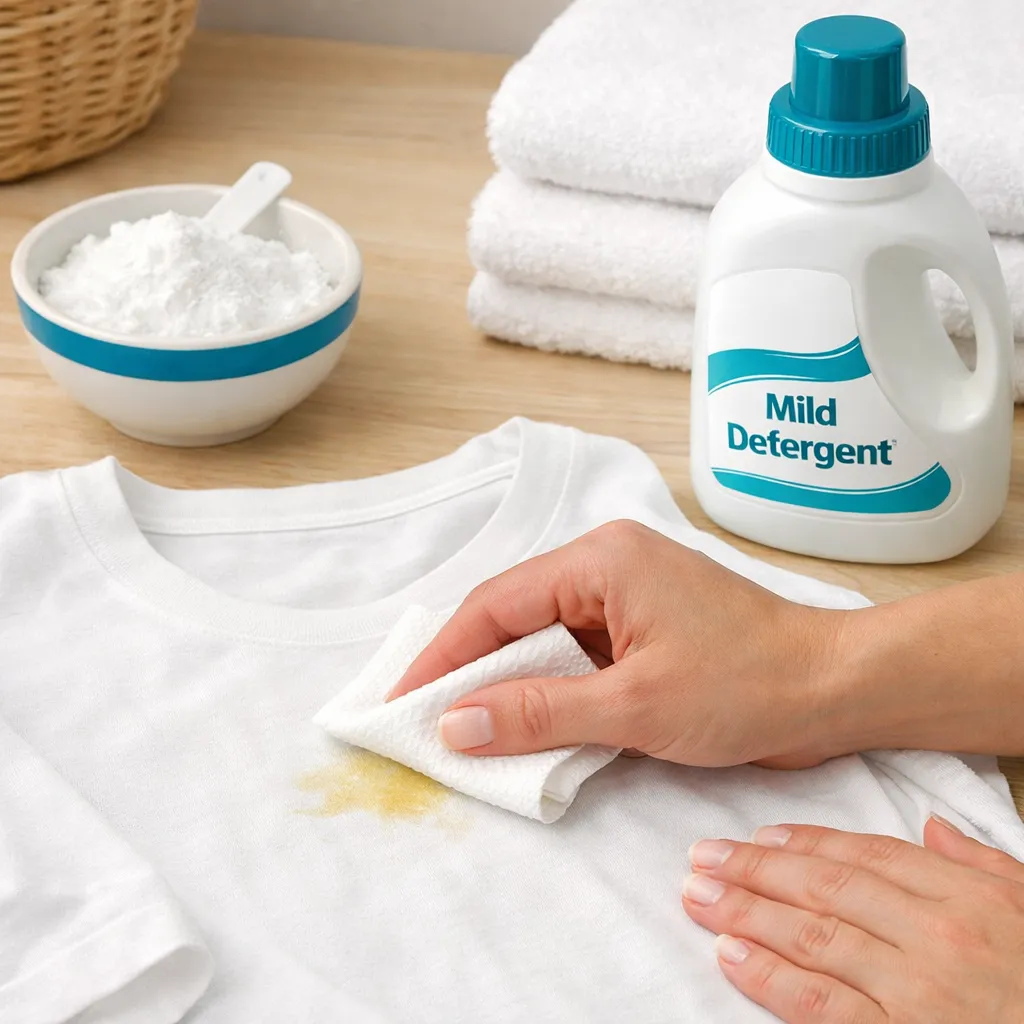
Oil stains need pre-treatment before washing because water alone does not lift oily residue well. To remove oil stains from clothes, blot the excess oil, use an absorbent powder if the stain is fresh, apply dish soap or liquid detergent, wash in the warmest water safe for the fabric, and air-dry before checking the stain.
This guide covers fresh oil stains, dried oil stains, oil stains after washing, oil stains after drying, grease stains, cooking oil, butter, motor oil, cotton, polyester, denim, colored clothes, delicate fabrics, and the mistakes that can make oily marks harder to remove.
Quick Answer: How to Remove Oil Stains From Clothes
The safest way to get oil stains out of clothes is to blot first, pre-treat the oily area, and air-dry before checking. If the oil is still wet, cover it with baking soda or cornstarch to absorb extra oil. Then brush off the powder, apply dish soap or liquid laundry detergent, let it sit for 10 to 15 minutes, and wash according to the care label.
- Blot excess oil with a clean paper towel.
- Sprinkle baking soda or cornstarch on fresh wet oil.
- Let the powder sit for 10 to 30 minutes.
- Brush off the powder.
- Apply dish soap, liquid detergent, or stain remover.
- Let it sit for 10 to 15 minutes.
- Wash in the warmest water safe for the fabric.
- Air-dry and check before using dryer heat.
Do not pour dish soap into the washing machine. Use it only as a spot treatment, then rinse it well before machine washing. Too much dish soap can create excess suds in a washer.
Do Oil Stains Come Out of Clothes?
Most oil stains can come out of clothes if you treat them before dryer heat sets the stain. Fresh oil stains are easier because the oil is still sitting closer to the surface of the fabric.
Dried oil stains, old grease stains, and dryer-set oil stains need more time. They may also need repeat treatment. If the stain has already gone through the dryer, it may not come out in one wash.
Still, do not scrub harder right away. Use a slower fabric-safe method so you remove the oily residue without damaging the fabric.
Do Not Dry Oil-Stained Clothes Too Early
Dryer heat can set oil stains into fabric. This makes the mark harder to remove, especially on cotton, polyester, jeans, and light-colored clothes.
After washing, check the stained area in natural light. Oil stains can look faint when fabric is wet, then become visible again after drying.
Air-dry the item first. If the stain is still visible, treat it again before using dryer heat.
First, Check the Oil Stain Situation
Different oil stains need different first steps. A fresh cooking oil stain is not the same as a dried motor oil stain or a stain that already went through the dryer.
| Situation | Best First Step | Avoid |
|---|---|---|
| Fresh oil stain | Blot and use absorbent powder | Rubbing hard |
| Dried oil stain | Dish soap or detergent pre-treatment | Dryer heat |
| Oil stain after washing | Treat again before drying | Rewashing without pre-treatment |
| Oil stain after drying | Longer pre-treatment | Strong bleach first |
| Grease stain | Grease-cutting dish soap | Too much dish soap |
| Motor oil | Heavy-duty detergent if fabric-safe | Treating delicate fabric the same way |
| Delicate fabric | Cornstarch and gentle blotting | Scrubbing or hot water |
Use this check before choosing a cleaner. It helps you avoid making the stain worse.
Why Oil Stains Are Hard to Remove
Oil stains are hard to remove because oil repels water. That means a normal rinse often spreads the oil instead of lifting it out.
Oil can also sit inside fabric fibers. On polyester and other synthetic fabrics, oily residue can cling strongly and come back after washing. This is why an oil stain can still look dark after a normal wash.
Dish soap and laundry detergent help because they contain surfactants. Surfactants help loosen oily residue so water can carry it away during washing.
This is why pre-treatment matters. If you skip pre-treatment and wash the item right away, the stain may stay on the fabric or become harder to remove after drying.

How to Remove Fresh Oil Stains From Clothes
Fresh oil stains are the easiest to treat. Act quickly, but do not rub the stain.
Blot the Oil First
Place a clean paper towel or cloth over the stain. Blot gently to absorb extra oil.
Do not rub. Rubbing can spread the oil and push it deeper into the fabric.
If the stain is thick, scrape off extra grease with a dull spoon or card before blotting.
Use Baking Soda or Cornstarch
If the oil is still wet, cover the stain with baking soda or cornstarch. These powders help absorb extra oil before you wash the fabric.
Let the powder sit for 10 to 30 minutes. For heavier stains, leave it longer. Then brush off the powder gently.
This step works well for cooking oil, olive oil, butter, salad dressing, and fresh food grease. Baking soda absorbs fresh oil, but it does not replace dish soap, detergent, or stain remover for old or dryer-set stains.
Apply Dish Soap or Liquid Detergent
Apply a small amount of dish soap or liquid laundry detergent directly to the stain. Work it in gently with your fingers or a soft brush.
Let it sit for 10 to 15 minutes. This gives the cleaner time to loosen the oily residue.
Use dish soap only on the stained spot. Rinse it well before machine washing so it does not create too many suds.
Wash in the Warmest Water Safe for the Fabric
Check the clothing care label. Wash the item in the warmest water the fabric can safely handle.
Warm water can help loosen oil, but hot water is not safe for every fabric. Delicate fabrics, dark clothes, wool, silk, and some stretch blends may need cooler water.
Air-Dry and Check
After washing, air-dry the clothing. Do not use dryer heat until the stain is gone.
If the oil mark is still there, repeat the pre-treatment before washing again.
How to Remove Oil Stains After Washing
Oil stains after washing are common because oil does not dissolve well in plain water. If the mark is still visible, do not dry the item.
Apply dish soap, liquid detergent, or stain remover directly to the stained area. Let it sit for 15 to 30 minutes. Then wash again according to the care label.
If the fabric is white or colorfast, an oxygen bleach product may help if the care label and product label allow it. Always follow the product label and test colored fabric first.
Air-dry the item after washing. Check the stain before using heat.
How to Get Oil Out of Clothes After Drying
Oil stains after drying are harder to remove because heat can set oily residue into the fabric. However, the stain may still improve with careful treatment.
Apply dish soap or liquid laundry detergent directly to the dry stain. Work it in gently. Let it sit for 20 to 30 minutes.
For a stubborn mark, sprinkle baking soda over the treated area and gently work it into the stain. Brush away the powder before washing.
Wash the item again in the warmest water safe for the fabric. Then air-dry and check. You may need to repeat the process.
Do not use strong bleach as the first fix. Bleach does not remove oil well and can damage color or fabric.
How to Get Dried Oil Stains Out of Clothes
Dried oil stains need longer pre-treatment because the oil has had more time to cling to the fibers.
Start by applying dish soap, liquid detergent, or a fabric-safe stain remover to the dry stain. Let it sit for at least 20 minutes.
If the fabric can handle gentle brushing, use a soft brush to work the cleaner into the oily area. Do not scrub thin, delicate, or stretchy fabric too hard.
Wash according to the care label. If the mark is lighter but still visible, repeat the treatment once before trying a stronger cleaner.
Best Oil Stain Removers and When to Use Them
The best oil stain remover depends on the fabric and the type of oil. Start with the mildest method that fits the stain.
| Remover | Best For | Avoid On |
|---|---|---|
| Paper towel | Fresh excess oil | Rubbing or spreading |
| Baking soda | Fresh oily residue | Wet delicate fabric without testing |
| Cornstarch | Fresh oil on delicate fabric | Deep set-in stains alone |
| Dish soap | Cooking oil and grease | Pouring into the washer |
| Liquid laundry detergent | Most washable clothes | Dry-clean-only items |
| Stain remover | Dried or stubborn oil stains | Untested colored fabric |
| Oxygen bleach | White or colorfast washable fabric | Wool, silk, leather |
For most washable clothes, dish soap or liquid laundry detergent is the best first treatment. Baking soda and cornstarch help absorb oil, but they do not always remove the full stain by themselves.
Does Dish Soap Remove Oil Stains?
Dish soap can help remove oil stains because it is made to cut grease. It works well as a spot treatment for cooking oil, butter, salad dressing, and food grease.
Use only a small amount on the stain. Work it in gently and rinse it before washing.
Do not add dish soap directly to the washing machine. It can create too many suds and may leave residue if used like laundry detergent.
Does Baking Soda Remove Oil Stains?
Baking soda can help absorb fresh oil from fabric. It is most useful when the oil is still wet or greasy.
Sprinkle baking soda over the stain and let it sit. Then brush it off before applying dish soap or detergent.
Baking soda is not always enough for old, dried, or dryer-set oil stains. In those cases, use it as a support step, not the main treatment.
How to Get Grease Out of Clothes
Grease stains on clothes are oily stains, so they need pre-treatment before washing. Food grease, butter, cooking oil, and mechanical grease can all leave dark marks on fabric.
Blot the grease first. Then apply dish soap or liquid laundry detergent to the stain. Let it sit for 10 to 15 minutes before washing.
For thick grease, use baking soda or cornstarch first to absorb extra oil. Then pre-treat with detergent and wash in the warmest water safe for the fabric.
If the grease mark remains, repeat the treatment before using dryer heat.
Cooking Oil, Butter, and Food Grease Stains
Cooking oil, olive oil, vegetable oil, butter, salad dressing, and fried food grease all need quick treatment.
Start by blotting the oil. Then use baking soda or cornstarch if the stain is fresh. Brush off the powder and apply dish soap or detergent.
Let the cleaner sit before washing. Food grease can leave both oily residue and color, so check the stain carefully after washing.
If a yellow or dark mark remains, treat it again before drying.
Motor Oil and Heavy Grease Stains
Motor oil and heavy grease are harder to remove than cooking oil. They can be dark, thick, and dirty.
Blot or scrape off as much oil as possible. Then apply heavy-duty liquid detergent or a fabric-safe degreasing stain remover.
Do not treat delicate fabric with harsh cleaners. If the item is wool, silk, rayon, or dry-clean-only, blot the stain and take it to a professional cleaner.
Wash heavily stained work clothes separately. Air-dry and check before using heat.
Oil Stains on Cotton, Polyester, Jeans, and Delicates

Different fabrics need different care. Always check the care label before using warm water, stain remover, oxygen bleach, or heavy detergent.
Cotton
Cotton can usually handle dish soap spot treatment, liquid detergent, and warmer water if the care label allows it. White cotton may also handle oxygen bleach if the product label says it is safe.
Polyester
Polyester can hold oily residue strongly. Pre-treat the stain before washing and avoid high heat until the mark is gone.
Use detergent or dish soap spot treatment, then wash according to the label. Air-dry first because dryer heat can make oil marks harder to remove.
Colored and Dark Clothes
Oil stains on colored and dark clothes need careful treatment because strong cleaners can fade dye. Start with dish soap or liquid detergent before using stronger stain removers.
Test stain remover, oxygen bleach, or any stronger cleaner on a hidden seam first. If the color changes, do not use that product.
Avoid chlorine bleach unless the care label clearly says it is safe. Also avoid high heat until the stain is gone.
Jeans and Denim
Denim can usually handle gentle brushing. Apply dish soap or detergent to the stain and work it in with a soft brush.
Avoid chlorine bleach unless the care label clearly allows it. Bleach can fade denim unevenly.
Wool and Silk
Wool and silk need extra care. Avoid hot water, hard scrubbing, strong stain removers, and enzyme detergents unless the label says they are safe.
For fresh oil, use cornstarch lightly to absorb the oil. Then take the item to a professional cleaner if the stain remains.
Dry-Clean-Only Clothes
Do not wash dry-clean-only clothes at home. Blot the stain gently and take the item to a cleaner.
Tell the cleaner what caused the stain, such as cooking oil, butter, motor oil, or grease.
What Not to Use on Oil Stains
Some mistakes can make oil stains worse or damage the fabric.
Avoid these mistakes:
- using dryer heat before checking the stain
- rubbing oil deeper into fabric
- rinsing with water only
- pouring dish soap into the washer
- using too much dish soap
- using bleach as the first oil-stain treatment
- using vinegar as the main oil remover
- using hot water on delicate fabric
- mixing cleaners
- treating oil smell and oil stains as the same problem
Use one cleaner at a time. Rinse well before trying another method.
What If the Stain Is Gone but the Oil Smell Remains?
Sometimes the visible oil stain comes out, but the fabric still smells greasy. That means you are dealing with odor, not only a stain, so the next step is to treat the oil smell in clothes instead of adding more stain remover.
Wash the item again with the right amount of detergent. Air-dry it fully. If the oily smell remains, treat it as a fabric odor problem instead of adding more stain remover.
Do not keep adding dish soap or detergent without rinsing well. Too much cleaner can leave residue and make the fabric feel stiff or dull.
When Oil Stains May Be Permanent
Most oil stains can improve with the right treatment. Still, some stains may not fully come out.
An oil stain may be harder to remove if:
- it went through the dryer
- it stayed on the fabric for a long time
- the fabric is delicate or damaged
- the oil caused discoloration
- the stain was treated with the wrong cleaner
- strong cleaners already weakened the fabric
If the fabric starts to fade, stretch, roughen, or weaken, stop treating it. More scrubbing may damage the clothing more than the stain itself.
Final Answer
The safest way to remove oil stains is to treat the mark before washing and keep it away from dryer heat until it is gone. Blot fresh oil, use baking soda or cornstarch if needed, pre-treat with dish soap or liquid detergent, wash in the warmest water safe for the care label, and air-dry before checking. For dried, washed, or dryer-set oil stains, repeat the treatment slowly instead of using harsh cleaners first.
