


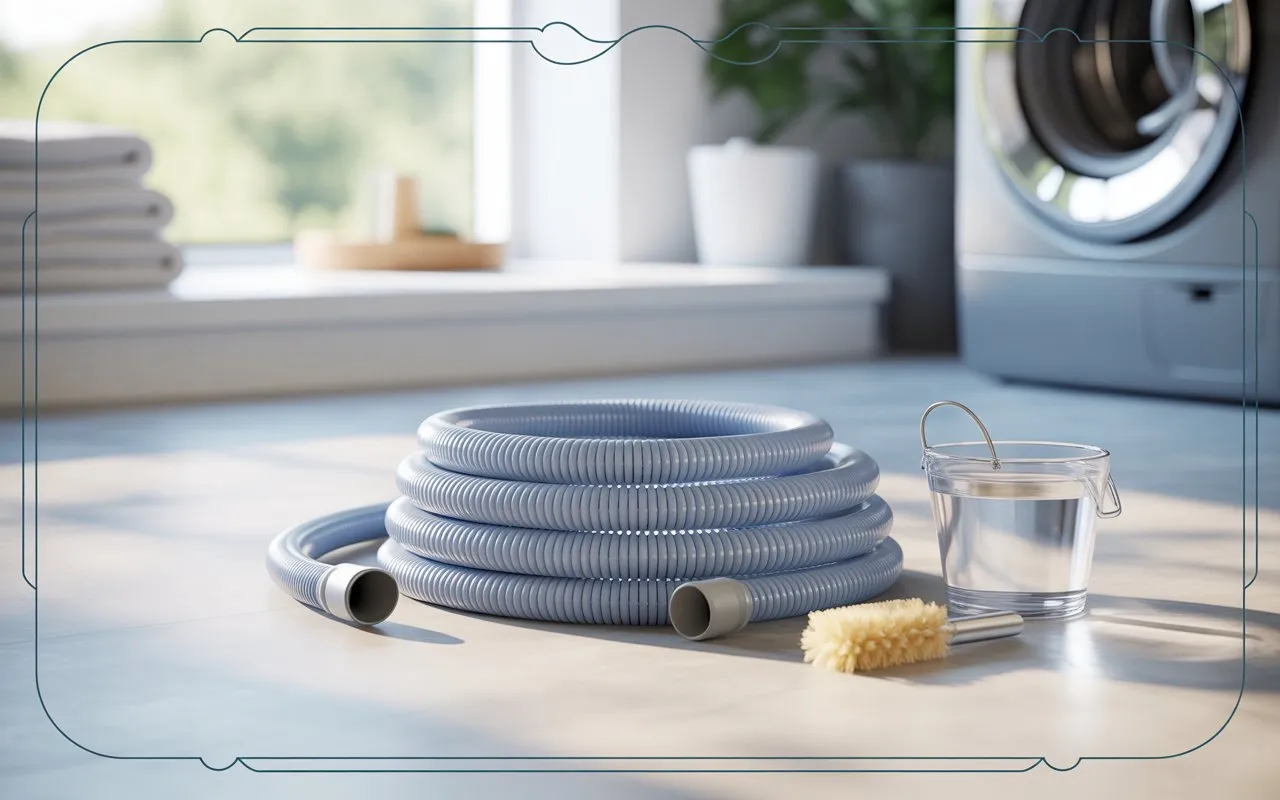
Learning how to clean a washer drain hose can help prevent slow drainage, standing water, and persistent washer odors. Many homeowners don’t realize that lint, detergent residue, and fabric fibers can build up inside the hose until water begins backing up or unpleasant smells appear.
I first noticed this issue after sour smells and water backed up during the spin cycle. After testing common fixes and reviewing appliance care guidance, cleaning the drain hose resolved the problem. This guide explains the safest way to flush and clear the hose—and when it’s better to call a professional.
A washing machine drain hose can be cleaned by unplugging the washer, draining any remaining water, disconnecting the hose, and flushing it with warm water. If buildup remains, gently remove it using a soft brush. Allow the hose to dry completely before reconnecting it. This helps restore proper drainage and eliminate unpleasant washer odors.
For complete washer maintenance beyond the drain hose, see our full guide on how to clean a washing machine.
Why the Washing Machine Drain Hose Gets Dirty
The drain hose carries dirty water out of the washer. Over time, it can collect:
- Lint
- Detergent residue
- Fabric fibers
- Mold and bacteria
When buildup blocks water flow, it causes slow draining, bad smells, and even leaks.
Signs Your Washing Machine Drain Hose Needs Cleaning
You may need to clean your washing machine drain hose if you notice:
- Water draining slowly or not at all
- Sewer-like or musty smells from the washer
- Clothes smelling bad after washing
- Standing water inside the drum
- Washer drain or error codes
These signs often point to a clogged drain hose, not a broken machine.
If these symptoms continue after cleaning the hose, the issue may be deeper inside the washer system. See our guide on why washing machines smell bad for further troubleshooting.
Is It Safe to Clean a Washing Machine Drain Hose Yourself?
Yes. In most cases, homeowners and renters can safely clean a washing machine drain hose without special tools.
Before you start:
- Unplug the washer
- Turn off the water supply
- Keep towels or a bucket nearby
If the hose is cracked, leaking, or hard to reach, stop and contact a professional.
How to Clean a Washing Machine Drain Hose (Step-by-Step Guide)

Step 1: Unplug and Prepare the Washer
Disconnect the washer from power and turn off the water valves.
Step 2: Drain Remaining Water
Place towels or a shallow container under the hose to catch water.
Step 3: Disconnect the Drain Hose
Carefully loosen the clamp and remove the hose from the washer or the household drain pipe.
Before removing it completely, take a quick photo of the hose routing and clamp position. This can make reinstallation easier later.
Step 4: Flush the Hose
Run warm water through the hose to remove loose buildup.
Step 5: Remove Stubborn Buildup
Use a soft brush or flexible cleaning tool if needed. Do not force it.
Step 6: Dry and Reconnect
Let the hose dry fully before reconnecting it securely.

Safety Tips Before Cleaning a Washer Drain Hose
- Before cleaning the hose, keep these safety precautions in mind:
- Never clean the washer while it is plugged in
- Expect some water to spill when removing the hose
- Avoid bending or forcing the hose
- Replace the hose if it feels brittle or cracked
- Also avoid using sharp tools such as metal coat hangers, which can puncture the hose.
When to Call a Professional
DIY cleaning works for most clogs. Call a technician if:
- Water still won’t drain after cleaning
- The hose is damaged or leaking
- Flooding keeps happening
- Mold growth is visible inside the washer
This helps prevent water damage and costly repairs.
How Often Should You Clean the Drain Hose?
How to Prevent Future Drain Hose Clogs
A few simple habits can help keep the washer drain system clear:
- Avoid overloading the washer
- Use the correct amount of detergent
- Run a washer cleaning cycle once a month
- Leave the washer door open after use to allow airflow
Small maintenance habits can significantly extend the life of your washing machine.
Key Takeaways for Washer Drain Maintenance
- A dirty drain hose can cause slow draining and bad smells.
- Most homeowners can clean it safely themselves.
- Regular maintenance prevents expensive repairs.
- Know when to stop and call a professional.
Conclusion
Based on appliance maintenance guidelines and real-world washer troubleshooting experience, cleaning a washing machine drain hose is one of the simplest ways to fix slow drainage and odor problems. In many cases, this quick maintenance task saves money and prevents mold and water damage. By cleaning the drain hose regularly and watching for early warning signs, your washer will work better and your laundry will smell fresh again. And when the problem goes beyond basic cleaning, knowing when to call a professional is just as important.
FAQ About Washing Machine Drain Cleaning
A washing machine drain pipe usually backs up due to a clog in the drain line. Lint, detergent residue, hair, and debris can build up inside the pipe over time, restricting water flow and causing water to rise back through the standpipe.
Signs of a clogged washer drain include slow draining, water rising in the standpipe, gurgling sounds from nearby drains, or water backing up during the drain cycle.
You can unclog a washer drain by removing visible debris, flushing the pipe with hot water, and using a drain snake to break up deeper lint or soap buildup.
Yes. Excess detergent creates soap residue that builds up inside the drain hose and pipes, which can eventually slow drainage or cause blockages.
No. If the household drain pipe is clogged, the washing machine cannot drain properly. Water will often back up into the standpipe or overflow during the drain cycle.
