


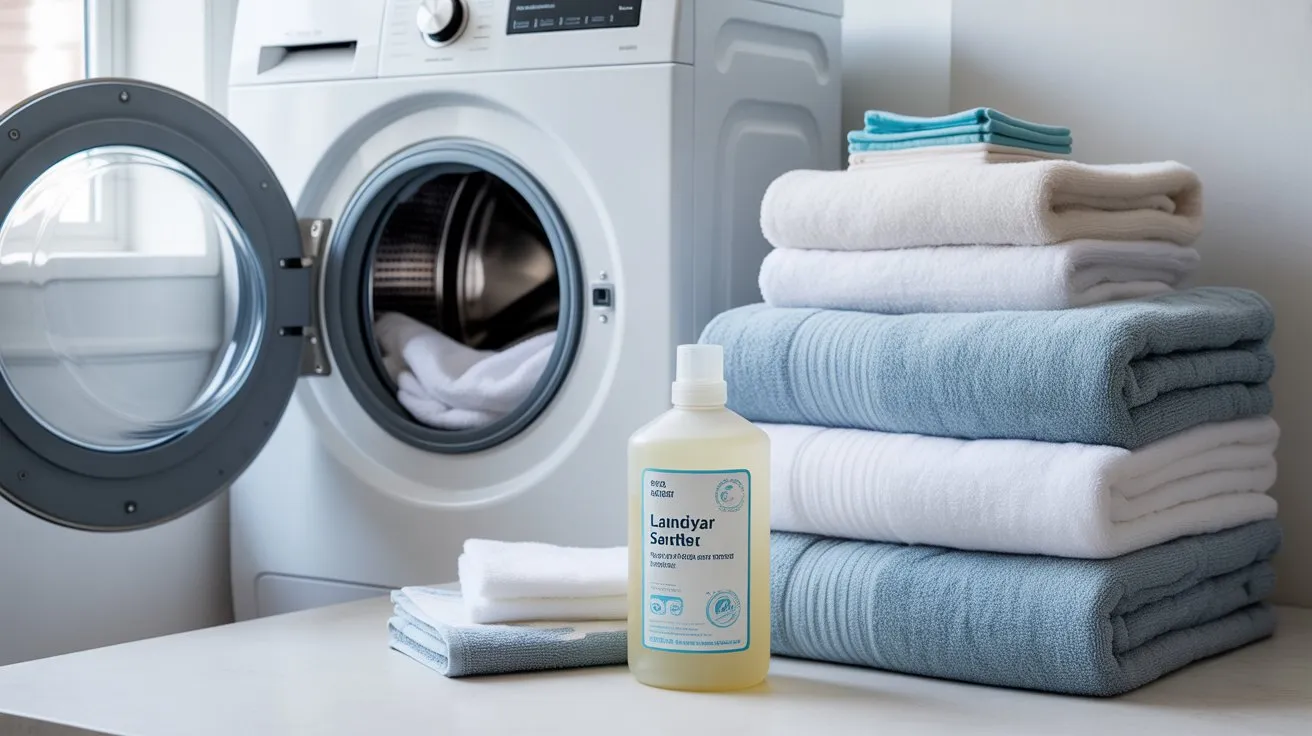
Laundry sanitizer is a fabric-care product that can help reduce certain bacteria on washable items when used as directed. It is most useful for towels, gym clothes, bedding, underwear, and illness-related laundry, but many households do not need it for every load. This guide explains what laundry sanitizer does, when it makes sense, how to use it correctly, and whether laundry sanitizer is necessary for your routine.
Laundry sanitizer is an extra laundry step used for certain loads that need more than routine cleaning. Many liquid laundry sanitizers are designed to be added during the rinse cycle, often through the softener dispenser, and are best used for odor-prone, damp, shared, or illness-related fabrics rather than everyday clothing.
- Laundry sanitizer can help reduce certain bacteria on fabrics when used as directed.
- It is most useful for towels, activewear, bedding, underwear, pet fabrics, and illness-related laundry.
- Many households do not need it for every load of routine clothing.
- Many liquid products are designed for the rinse cycle, often through the softener dispenser.
- It supports detergent, but it does not replace detergent.
What Is Laundry Sanitizer?
It is a laundry additive or fabric sanitizer that can help reduce certain bacteria on fabrics when used according to its label.
In practical terms, it is not the same thing as regular detergent. Detergent removes dirt, sweat, body oils, and everyday grime. It is meant for loads that may need extra hygiene support, especially when odor, moisture, or contamination is part of the problem. That does not mean it belongs in every wash. For many everyday loads, detergent, a proper wash cycle, and full drying are enough. If odor keeps coming back even after a normal wash, the issue may be deeper than the product you are using, especially if you are dealing with clothes that still smell after washing.
What laundry sanitizer does
It may be useful for:
- towels and washcloths
- gym clothes and synthetic activewear
- bedding and pillowcases
- underwear and socks
- baby items after messy use
- pet bedding
- reusable cleaning cloths
- laundry exposed to body fluids
What laundry sanitizer does not do
It does not replace detergent. It is also not the same as bleach.
Detergent does the main cleaning work. Bleach may whiten and disinfect some bleach-safe fabrics, but it is not suitable for every fabric or color. This type of product often fills the gap between normal washing and harsher treatment.
Do You Really Need Laundry Sanitizer?
No, not for most routine laundry. Laundry sanitizer is usually most helpful for specific loads that are odor-prone, moisture-heavy, heavily shared, or linked to illness or contamination.
This is the most important part of the topic. Many homes do well with good detergent, correct wash settings, and fully dried laundry. Laundry sanitizer becomes more useful when those basics are not enough for the type of load you are washing.
When laundry sanitizer makes sense
It may be worth considering when:
- towels stay damp and develop musty odor
- gym clothes keep holding onto sweat smell
- bedding is being used during illness
- underwear or heavily worn basics need extra hygiene attention
- fabrics have been exposed to vomit, diarrhea, or body fluids
- workwear has higher contamination exposure
- pet bedding gets frequent heavy use
- a load still smells unpleasant after proper washing
When you can usually skip it
You can often skip laundry sanitizer for:
- lightly soiled daily clothing
- routine household laundry in a healthy home
- loads that already wash and dry well with detergent
- fabrics that do not have odor or hygiene concerns
- delicate items that require minimal treatment unless the label allows it
Quick checklist: use it or skip it?
Use laundry sanitizer if the load is:
- damp-smelling
- sweat-heavy
- used during sickness
- exposed to body fluids
- hard to freshen with detergent alone
- washed for extra hygiene reasons
Skip it if the load is:
- routine daily clothing
- lightly worn
- already cleaning well with detergent
- not holding odor
- not connected to illness or contamination concerns
Laundry Sanitizer vs Detergent vs Bleach
Detergent cleans, laundry sanitizer adds extra hygiene support for certain loads, and bleach may whiten or disinfect compatible fabrics. These products are not interchangeable, so use the laundry care products guide when you need to compare what each type does and when it belongs in a load.
Laundry sanitizer vs detergent
Detergent is the foundation of normal laundry care. It removes dirt, oil, sweat, and general buildup from fabric.
Laundry sanitizer is an add-on. It may help reduce certain bacteria on specific loads when used as directed. It is most useful when the goal is not just routine cleaning, but added hygiene support.
Use detergent for:
- regular laundry
- visible soil
- everyday clothes
- most normal wash loads
Consider it for:
- odor-prone fabrics
- towels and bedding
- gym wear
- underwear and socks
- illness-related laundry
- loads that need extra hygiene attention
Laundry sanitizer vs bleach
Bleach can be useful, but it is more limited. It may fade colors, weaken some fabrics over time, and should only be used where the fabric label and product instructions allow it.
A bleach-free laundry sanitizer or color-safe sanitizer is often a better fit for:
- colored clothes
- dark fabrics
- mixed household loads
- people who want a bleach-free option
- fabrics that need extra care
Comparison table
| Option | Main Job | Best For | Main Limitation |
|---|---|---|---|
| Detergent | Removes dirt, sweat, oils, and grime | Everyday laundry | Does not serve the same purpose as a laundry sanitizer |
| Laundry Sanitizer | Adds hygiene support and may help reduce certain bacteria | Towels, activewear, bedding, underwear, illness-related loads | Not needed for every load and directions vary by product |
| Bleach | Whitens and may disinfect some bleach-safe fabrics | White, bleach-safe items | Can damage colors and delicate fabrics |

When Should You Use Laundry Sanitizer?
Use laundry sanitizer for loads that need more than basic cleaning, especially when fabrics are damp, odor-prone, shared, or connected to illness or contamination.
If you want the best way to sanitize laundry, start by using detergent correctly, then add it only for loads that truly need extra hygiene support.
Best laundry items to sanitize
Some items collect more moisture, odor, or repeated skin contact than others.
These are the most common examples:
- towels
- washcloths
- gym clothes
- socks
- underwear
- bed sheets
- pillowcases
- baby bibs and burp cloths
- pet blankets
- reusable mop heads or cleaning cloths
Best situations to use it
Laundry sanitizer may be useful:
- when regular washing is not solving odor
- when someone in the home has been sick
- after exposure to body fluids
- during high-sweat periods
- when fabrics are used by more than one person
- when work clothes face higher contamination risk
Quick-reference table
| Item | Should you sanitize it often? | Why |
|---|---|---|
| Towels | Often | They stay damp and can hold odor |
| Gym clothes | Often | Sweat and synthetic fibers can trap smell |
| Bedding | Sometimes | Useful during illness or heavy sweating |
| Everyday shirts | Usually no | Regular washing is often enough |
| Underwear | Sometimes | Depends on use, odor, and household needs |
| Baby items | Sometimes | Useful after heavy messes |
| Workwear | Sometimes yes | Depends on exposure and contamination |
How Does Laundry Sanitizer Work?
Laundry sanitizer works by treating fabric during washing or fabric care to add a hygiene-focused step beyond normal cleaning. The exact method depends on the product, which is why label directions matter.
This matters most for fabrics that tend to hold moisture or odor, such as towels and synthetic sportswear. A load can look clean and still smell unpleasant if odor is coming from trapped moisture, buildup, or odor-causing bacteria that tend to linger in certain fabrics.
It is not the answer to every smell problem, though. Sometimes the real issue is:
- clothes sitting wet too long
- a washer that needs cleaning
- too much or too little detergent
- overloaded loads
- poor drying habits
That is why it helps to treat laundry sanitizer as one tool, not the whole toolbox.
How to Use Laundry Sanitizer Correctly
Use it with detergent, not instead of it. Many liquid laundry sanitizers are designed to be added during the rinse cycle, often through the softener dispenser, but you should always follow the product label.
This is where many people make mistakes. If you use the product in the wrong stage or compartment, it may not work as intended.
Step 1: Sort the laundry
Separate clothes by:
- color
- fabric type
- level of soiling
- whether the load needs extra hygiene attention
Try not to mix heavily soiled items with lightly worn basics.
Step 2: Wash with detergent as usual
Detergent still does the main cleaning job. Start with a normal wash setup based on the care labels and the fabric type.
Laundry sanitizer is an added step, not a replacement for detergent.
Step 3: Add the sanitizer in the correct place
Many liquid products are meant to go into the softener compartment so they enter during the rinse cycle.
Do not assume every product works the same way. Some may have different instructions depending on washer type or intended use. Always check the label.
If your washer has a softener dispenser, check whether the sanitizer label tells you to use it. Many liquid laundry sanitizers are designed to work during the rinse cycle, not the main wash.
Step 4: Run the right cycle
Choose the cycle that fits the fabric and load. Hotter is not always better. Fabric care labels still matter, and the right cycle depends on what you are washing.
Step 5: Dry items completely
Drying matters more than many people think. Even properly washed items can develop odor if they stay damp too long.
Dry items fully according to the care label before storing or reusing them.
Step-by-step checklist
- Sort the load properly
- Add detergent to the main wash
- Add laundry sanitizer only as directed
- Use the correct washer compartment if required
- Run the full cycle
- Dry items completely
Where Do You Put Laundry Sanitizer in the Washer?
You usually put liquid laundry sanitizer in the softener dispenser so it enters during the rinse cycle, but the correct placement depends on the product directions.
This is one of the most common questions about the topic. The reason placement matters is simple: many liquid laundry sanitizer products are designed to work at a specific stage rather than during the main detergent wash.
If your washer does not have a softener dispenser, check the product instructions before adding it manually.
Do not assume every laundry sanitizer works the same way. Product directions, washer types, and fabric-care labels can vary, so check the label before adding the product manually or using it on delicate or specialty fabrics.
Can Laundry Sanitizer Replace Detergent?
No. It cannot replace detergent.
Detergent removes dirt, body oils, and everyday buildup. Laundry sanitizer is an extra hygiene step for certain loads. If clothes are visibly dirty, sweaty, or stained, detergent is still the first requirement.
Can You Use Laundry Sanitizer Instead of Bleach?
Sometimes, yes, especially when you want a bleach-free option for colored fabrics or everyday items that need extra hygiene support.
Laundry sanitizer often makes more sense than bleach when:
- the load contains colors
- the fabric is delicate
- you want to avoid fading
- the goal is hygiene support rather than whitening
Bleach still has a place for certain white, bleach-safe fabrics, but it is not the default answer for every load.
Can You Sanitize Clothes Without Bleach?
Yes. Many bleach-free laundry sanitizer products are designed to add hygiene support without using bleach.
That is one reason laundry sanitizer is popular for:
- dark activewear
- mixed-color loads
- everyday bedding
- colored towels
- fabrics that should not be bleached
As always, follow the product instructions and the care label on the fabric.
Can You Sanitize Fabric Without Washing It?
Sometimes. Some fabric sanitizer or fabric-care products are made for refreshing or treating certain items between washes, but laundering is still the better choice for dirty, sweaty, or contaminated fabrics.
This approach may make sense for:
- outerwear
- upholstery
- shoes
- bags
- soft items that cannot be washed immediately
If a fabric is visibly dirty or has been exposed to body fluids, a proper wash is the safer next step whenever possible.
How to Handle Laundry After Someone Has Been Sick
Handle illness-related laundry carefully, wash it promptly, and use laundry sanitizer only if it fits the fabric and the product directions.
This is one of the clearest situations where laundry sanitizer may be useful, but the basics still matter most.
What to do
- Avoid shaking dirty laundry
- Keep soiled items separate if possible
- Wash hands after handling contaminated fabrics
- Use detergent as usual
- Add it if appropriate for the item
- Dry everything fully before reuse
Why this matters
The most important steps are practical:
- wash promptly
- clean thoroughly
- handle soiled fabrics carefully
- dry items completely
Laundry sanitizer can support that process, but it should not be treated as the only hygiene step.
Quick checklist for illness-related laundry
- Separate sick laundry if possible
- Handle it gently
- Wash it promptly
- Use detergent first
- Add sanitizer only if appropriate
- Dry thoroughly before reuse
Common Laundry Sanitizer Mistakes to Avoid
The biggest mistakes are using it in the wrong compartment, using it instead of detergent, and adding it to every load without a clear reason.
Avoiding these mistakes makes laundry simpler and more effective.
1. Using it for every load
Many households do not need laundry sanitizer for normal daily clothing. Overusing it adds cost and complexity without much benefit.
2. Replacing detergent with sanitizer
This is the most common misunderstanding. Sanitizer supports cleaning; it does not replace it.
3. Adding it in the wrong place
Many liquid products are designed for the rinse cycle. If you place them incorrectly, they may not work as intended.
4. Ignoring fabric care labels
Some items need gentle handling or limited product use. Always check the label before adding extra products.
5. Assuming every odor problem needs sanitizer
Sometimes the real issue is:
- washer buildup
- clothes left wet too long
- overloaded loads
- poor drying
- too little detergent
- synthetic fabrics holding odor
How to Choose a Laundry Sanitizer
Choose one based on fabric safety, intended use, washer compatibility, and clear directions.
You do not need the most complicated product. You need one that fits the type of laundry you actually wash.
Look for these basics
- clear directions for use
- compatibility with your washer type
- color-safe or bleach-free labeling if needed
- instructions for rinse-cycle use, if applicable
- suitability for the fabrics you wash most often
Match the product to the problem
Choose based on your actual need:
- for towels and bedding, focus on hygiene support
- for gym clothes, look for products suited to odor-prone synthetic fabrics
- for mixed-color loads, choose a bleach-free option if needed
- for non-washable items, use only fabric-care products made for that purpose
if odor is the main problem, it also helps to understand how to remove odor from clothes before adding extra laundry products
FAQs
1. What does laundry sanitizer do?
Laundry sanitizer adds an extra hygiene-focused step to certain loads and may help reduce certain bacteria on fabrics when used as directed. It is most useful for items like towels, activewear, bedding, and illness-related laundry.
2. Do you need laundry sanitizer for every load?
No. Many everyday loads can be cleaned well with detergent, a proper wash cycle, and complete drying. Laundry sanitizer is usually most helpful for odor-prone, damp, shared, or illness-related items.
3. Where do you put laundry sanitizer in the washer?
Many liquid laundry sanitizers are designed to go into the softener dispenser so they enter during the rinse cycle. The correct placement depends on the product directions, so always check the label.
4. Can laundry sanitizer replace detergent?
No. Detergent removes dirt, oils, and everyday buildup. Laundry sanitizer is an extra step for certain loads and should not be used as a replacement for normal cleaning.
5. Is laundry sanitizer the same as bleach?
No. Bleach may whiten and disinfect some bleach-safe fabrics, while laundry sanitizer is often used as a gentler, bleach-free option for many washable items.
6. Can you sanitize clothes without bleach?
Yes. Many laundry sanitizer products are bleach-free and designed for colored or mixed loads that need extra hygiene support without the fading risk bleach can cause.
7. Can laundry sanitizer help with bad smells?
It can help when odor is linked to moisture, buildup, or bacteria-related issues on fabrics. It works best alongside proper washing, a clean washer, and complete drying.
8. Is laundry sanitizer safe for colored clothes?
Many products are made for colored fabrics, but safety depends on the product instructions and the garment care label. Always check both before use.
Final Takeaway
Laundry sanitizer is useful, but it is not necessary for every load and it does not replace good laundry basics. It works best as an extra step for towels, activewear, bedding, underwear, baby items, pet fabrics, and illness-related laundry when odor or hygiene is a real concern.
For everything else, the basics still do most of the work: use the right detergent, wash properly, dry completely, and follow the product label and fabric care instructions.
