

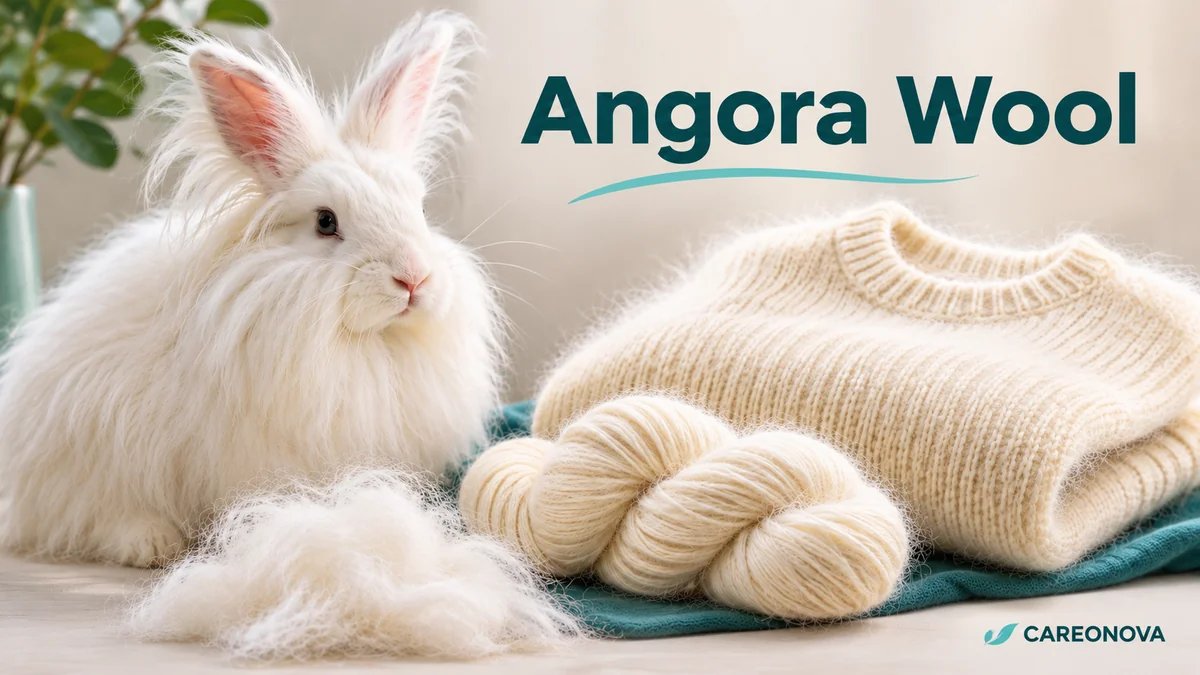
Angora wool is a soft, lightweight fiber that comes from Angora rabbits. Its fine hairs give sweaters, scarves, and other knitwear a fluffy surface that feels gentle and holds warmth without much weight.
That softness comes with a few trade-offs. Angora clothing can shed onto other fabrics, and some pieces need more careful handling than everyday knitwear. Two sweaters with the same Angora content may even behave differently because of how their yarns are made.
If you are thinking about buying Angora, the fiber percentage is only part of the story. The yarn, fabric construction, care label, and sourcing information all help determine whether a garment is a good choice.
Angora Wool at a Glance
| Feature | What to know |
|---|---|
| Source | Hair from Angora rabbits |
| Fiber type | Natural animal protein fiber |
| Texture | Fine, soft, and often fluffy |
| Warmth | Good insulation for its weight |
| Main benefits | Softness, loft, and lightweight comfort |
| Main drawbacks | Shedding, possible pilling, and delicate care |
| Common uses | Sweaters, scarves, hats, gloves, and specialty yarn |
| Care | Follow the label; gentle handling is often required |
What Is Angora Wool?
Angora wool is a textile fiber made from the hair of Angora rabbits. Their coats contain fine down and other hair types, including some coarser guard hairs. Once collected and prepared, the usable fibers can be spun into yarn for knitted or woven fabrics.
The fine down gives Angora its familiar cloud-like appearance. Small hairs extend beyond the yarn, forming a soft surface known as a halo. This is one reason Angora sweaters can look fuller than their weight suggests.
Not every Angora fiber has the same diameter or length. Some fleece contains more coarse hair, while selected fine fibers can produce a smoother, softer yarn. Sorting and processing help determine what reaches the finished garment.
Angora sits alongside several other animal-derived types of wool, but the name can be confusing. In everyday clothing descriptions, Angora wool usually means rabbit hair rather than sheep wool.
US textile labels make this distinction more precise. The Federal Trade Commission's labeling guidance treats rabbit hair differently from fibers legally classified as wool. A garment may list its content as Angora Rabbit Hair.
Quick answer: Angora wool is rabbit hair used as a textile fiber. It is not the same material as sheep wool or mohair, even though all three appear in winter clothing.
Angora vs. Mohair: Are They the Same Fiber?
Angora and mohair are different materials with similar names. Angora comes from Angora rabbits, while mohair comes from Angora goats.
Rabbit Angora is valued for its fine down and fluffy appearance. Mohair is often chosen for its shine, strength, and smooth feel. Both can produce soft, fuzzy knitwear, depending on the yarn and finishing method.
| Feature | Angora rabbit hair | Mohair |
|---|---|---|
| Animal source | Angora rabbit | Angora goat |
| Typical feel | Fine, soft, and downy | Smooth, often silky and lustrous |
| Surface | Usually has a fluffy halo | May be smooth or brushed and fuzzy |
| Common products | Sweaters, scarves, hats, and yarn | Sweaters, scarves, suits, and upholstery |
| Main consideration | Fiber shedding and gentle care | Fiber grade, comfort, and construction |
A brushed mohair sweater may look similar to an Angora sweater in a photograph. The fiber-content label is a more reliable way to tell them apart.
How Is Angora Wool Made?
Angora production starts with collecting hair from Angora rabbits. The fibers then go through sorting, cleaning, spinning, and fabric-making before becoming clothing or yarn products.
Collection can involve shearing or carefully combing loose hair. The way rabbits are handled matters, since poor collection practices can cause pain or injury. Animal welfare is an important part of evaluating Angora production.
After collection, the fibers are sorted by properties such as length, fineness, and the amount of coarse hair. Unwanted matter is removed, and the usable fibers are prepared for spinning.
Spinning twists loose fibers together to form yarn. Manufacturers may use Angora alone or combine it with sheep wool, nylon, or other materials.
The yarn is then knitted or woven into fabric. A loose, airy knit gives a different result from a dense, firm fabric, even when both use similar raw fibers.

What Makes Angora Yarn Difficult to Spin?
Angora fibers are often smooth and fine. This makes them more difficult to hold together in a yarn than some other animal fibers.
The Food and Agriculture Organization describes how Angora fibers can slip out of yarn during textile production and wear. This helps explain why fiber retention is an important part of Angora garment quality.
Fiber length, spinning method, and yarn twist affect how securely the hairs remain together. A yarn designed for a fluffy surface may have more visible hairs than one made with a firmer structure.
The difference between a yarn's structure and the finished textile matters. As with other forms of wool fabric construction, knitting and finishing can change the feel, stretch, and appearance of the material.
This is why Angora cannot be judged by fiber content alone.
How Does Angora Feel and Perform?
Angora is best known for its softness, warmth, and light weight. These qualities make it popular in delicate knitwear, but the same fluffy structure can create problems during daily use.
A fine scarf may feel wonderfully soft against the neck, while a loosely made sweater may leave visible fibers on a coat. Both results are possible with Angora.
Is Angora Soft or Itchy?
Angora is usually soft, but it is not guaranteed to be itch-free.
Its fine down fibers bend easily and can create a smooth surface against the skin. This makes Angora attractive for clothing worn close to the body.
Coarser guard hairs may change that experience. If a garment contains enough stiff hairs, some wearers may notice a prickly feeling around the neck, wrists, or other sensitive areas.
Blended fibers also affect comfort. A yarn containing Angora and coarse sheep wool will not necessarily feel like one made with finer fibers.
The knit itself makes a difference. An open fabric may allow individual hairs to reach the skin, while another yarn structure may feel more even.
Does softness mean Angora is hypoallergenic?
No. A soft fabric can still irritate the skin, and comfort is not proof that a material is allergy-safe.
Prickling is usually a physical response to fibers touching the skin. An allergic reaction involves the body's immune response and should not be confused with ordinary fabric discomfort.
People with known animal-hair allergies or repeated skin reactions should not rely on claims such as naturally hypoallergenic when deciding whether a garment is safe for them.
Is Angora Wool Warm and Breathable?
Angora can provide substantial warmth for a lightweight material. Much of this insulation comes from the air held within its fluffy yarn and fabric structure.
Still air slows heat transfer. The more effectively a garment holds that air, the better it may insulate under suitable conditions.
A soft Angora sweater can therefore feel warm without being especially thick.
That does not mean Angora is always warmer than sheep wool, cashmere, or other fibers. A thin Angora knit and a thick wool coat are very different garments.
Thickness, stitch density, fit, and wind exposure matter more than the fiber name alone.
Breathability works in a similar way. An open knit allows more air to pass through it, while a dense fabric may block airflow.
Moisture-vapor movement is also important, but it is not identical to airflow. A garment's comfort depends on how these properties work together.
Practical note: For a sweater worn indoors, a lighter knit may feel more comfortable than a very warm, dense one. For outdoor use, wind protection and layering may matter just as much as the fiber.
Does Angora Wool Shed, Pill, or Stretch?
Yes. Angora garments can shed loose fibers, develop pills, or lose their shape. The extent depends on the yarn and how the clothing is worn and cared for.
These problems are related to fabric behavior, but they are not the same thing.
Why Angora Sheds
Shedding happens when individual hairs work their way out of the yarn.
Angora's smooth fibers can make this more noticeable, especially in loose or highly fluffy yarns. Rubbing against jackets, bags, and other clothing may release additional hairs.
Picture wearing a pale Angora sweater under a dark coat. A few visible fibers on the coat may come from its fuzzy surface. That alone does not prove poor quality.
Heavy fiber transfer during ordinary wear is a different concern. It may point to weak fiber retention, although appearance alone cannot identify the exact cause.
Pilling, Matting, and Shape Changes
Pilling occurs when surface fibers become tangled into small balls. This often happens where fabric rubs against itself, such as under the arms or along the sides of a sweater.
Shedding removes loose hairs from the fabric. Pilling leaves tangled fiber clusters attached to the surface.
Yarn twist, fiber composition, and friction influence both problems in different ways. The same general principles behind wool pilling can help explain why certain areas of knitwear show more wear.
Matting happens when fibers become tangled and compressed. With enough moisture and movement, some textile structures may also felt and become denser.
Loose knits can stretch when wet or when stored on unsuitable hangers. A heavy sweater is especially vulnerable if its shoulders must support the weight of the garment.

Angora Wool Benefits and Limitations
| Benefits | Limitations |
|---|---|
| Fine down can feel soft against the skin | Coarse hairs or blends may cause discomfort |
| Good warmth for its weight | Insulation varies with construction |
| Distinctive fluffy surface | Loose hairs may shed |
| Suitable for lightweight knitwear | Friction can cause pilling |
| Works in different fiber blends | Quality depends on yarn and fabric structure |
| Attractive texture for specialty clothing | Care can be more demanding |
What Is Angora Wool Used For?
Angora fabric is mainly used in clothing and specialty yarns where softness and warmth matter more than heavy-duty performance.
Its fluffy surface makes it especially appealing for sweaters, scarves, and lightweight winter accessories.
A sweater may use Angora to create a soft appearance without adding much bulk. Scarves and shawls benefit from the fiber's gentle feel, although loose hairs may transfer onto other clothing.
Hats and gloves can also contain Angora or Angora blends. Their performance depends on how firmly the yarn is made and how much rubbing the item receives.
Angora yarn is used in specialty knitting projects, often to create a soft halo or add texture to a design.
| Product | Why Angora is used | Main consideration |
|---|---|---|
| Sweaters | Softness and lightweight warmth | Shedding, stretch, and cleaning |
| Scarves and shawls | Warm, fluffy appearance | Fiber transfer to other garments |
| Hats | Insulation without much bulk | Fit and shape retention |
| Gloves | Soft feel and warmth | Repeated friction |
| Specialty yarn | Distinctive surface texture | Yarn strength and shedding |
| Blankets and throws | Warmth and soft texture | Durability and cleaning needs |
Best use: Angora is generally more suitable for delicate, lower-friction knitwear than for clothing exposed to constant rubbing or rough handling.
For a frequently worn item, look beyond softness. A stable yarn and practical care instructions may offer better long-term value.
Is 100% Angora Better Than an Angora Blend?
Not always. A garment made with 100% Angora may feel very soft, but a well-designed blend can offer a better balance of properties for some uses.
Pure Angora and blended Angora serve different purposes. Neither option is automatically higher quality.
The right choice depends on how you want the fabric to feel, how often you will wear it, and how much care you are willing to give it.
What Changes When Angora Is Blended?
Blending combines Angora with one or more other fibers.
Sheep wool may help change how a yarn holds together because of its natural fiber structure. Fine merino wool can also contribute its own softness and wool characteristics.
Nylon may improve strength in certain yarn designs. Its effect depends on the amount used and how the yarn is made.
A blended fabric can still be fluffy. A pure-Angora garment can also be carefully spun and well constructed. Fiber content does not settle the question on its own.
100% Angora vs. Angora Blend
| Feature | 100% Angora | Angora blend |
|---|---|---|
| Fiber content | Only Angora rabbit hair | Angora plus other fibers |
| Typical appearance | Often soft and very fluffy | Varies with fiber mix and finishing |
| Yarn stability | Depends on spinning and construction | Can be designed for added support |
| Shedding | Possible, especially in loose yarns | Also possible; depends on design |
| Durability | Varies by garment | Varies by blend and construction |
| Care | Often delicate | Follow the complete garment label |
| Best choice | When softness and texture are priorities | When balanced performance is preferred |
Imagine two sweaters. One is made from pure Angora with a loose, airy knit. The other contains Angora, sheep wool, and nylon in a firmer yarn.
The first may appeal to someone who wants a very fluffy sweater for occasional wear. The second may suit someone seeking a different balance of softness and stability.
These are examples, not tested products. The fiber percentage alone cannot prove which sweater will last longer.
Does More Angora Mean Better Quality?
A higher Angora percentage means a larger share of the garment's fiber weight comes from Angora rabbit hair. It does not tell you whether the fabric is well made.
Two sweaters with the same composition may have different levels of twist, knit density, and finishing. One could hold its shape better, while the other sheds more during wear.
Think about the garment's purpose before choosing a fiber percentage.
For an occasional scarf, a light and fluffy feel may be your main concern. For a sweater worn several times a week, stable construction and manageable cleaning may matter more.
Buying tip: Treat fiber percentage as a description of composition, not a quality score. A smaller amount of Angora can still give a garment a noticeable fuzzy surface.
How Can You Tell if Angora Wool Is Good Quality?
Good-quality Angora clothing should feel appropriate for its intended use and show sound construction. It should also have clear material information and care requirements that fit your routine.
A soft surface is a useful first impression, but it cannot tell you everything about a garment.
What to Check Before Buying Angora Clothing
Use these checks when shopping in person or reviewing product photographs online.
- Read the full fiber label. Look for the percentage of Angora rabbit hair and the other materials. Do not assume that a sweater marketed as Angora is made entirely from rabbit hair.
- Examine the knit and seams. Look for dropped stitches, broken yarns, damaged edges, or uneven seams. A fluffy surface is normal, but visible construction faults are different.
- Check the condition of the surface. Some loose-looking fibers form the intended halo. Large amounts of detached hair or thin patches may deserve closer inspection.
- Look at the shoulders, cuffs, and hem. These areas can reveal stretching or poor shape retention in used clothing. For new garments, compare the measurements with the intended fit.
- Read the care instructions. Find out whether the item allows hand washing or requires professional cleaning. A garment that is difficult to maintain may not suit frequent wear.
- Ask about sourcing. Look for clear information on the fiber's origin, collection methods, and animal-welfare practices.
Reading an Angora Fiber-Content Label
Consider this hypothetical label:
| Fiber | Content |
|---|---|
| Wool | 60% |
| Nylon | 30% |
| Angora Rabbit Hair | 10% |
This sweater is marketed as containing Angora, but most of its fiber content is sheep wool and nylon.
The 10% Angora may contribute softness or a fuzzy appearance. The label does not reveal the yarn's quality, the amount of shedding, or how long the sweater will last.
That is why construction details and care information deserve attention alongside the percentages.
For online shopping, look for close-up photographs of the knit, complete fiber details, and a clear return policy. Reviews that describe wear after several uses may be more useful than comments based only on first impressions.
Why Is Angora Wool Expensive?
Angora can cost more than common textile fibers because its production and processing involve specialized work.
Rabbit care, fiber collection, sorting, spinning, and garment construction can all influence price. The quality and amount of usable fiber also matter.
Brand reputation, fashion design, and retail markup affect the final price as well.
An expensive Angora sweater may be beautifully made, but price alone cannot prove its durability or responsible sourcing.
Value check: Before paying a premium, compare the material label, garment construction, expected care, and sourcing details. Those factors tell you more than a luxury description.
How Do You Wash and Care for Angora Wool?
Angora clothing needs gentle handling, especially when wet. Rough washing can disturb the yarn, change the fabric's shape, and increase the risk of damage.
The first rule is simple: follow the garment's care label. Some Angora pieces allow careful hand washing, while others require professional cleaning.
Washing Angora Garments Safely
If the label permits hand washing, use cool water and a small amount of suitable mild detergent.
A wool-safe detergent may be appropriate when it meets the garment maker's instructions. Avoid harsh bleach, strong alkaline cleaners, and products that are not suitable for delicate animal fibers.
Lower the garment into the water and handle it gently. Do not scrub, wring, or twist the fabric.
Rinse with water at a similar temperature, then lift the garment with both hands to support its weight. Wet knitwear can stretch when pulled from one point.
To remove excess water, place the garment on a clean towel and press gently. A towel can absorb moisture without the force of wringing.
The same basic principles used for washing wool safely can help explain why temperature, agitation, and detergent choice matter. Still, Angora garments must follow their own care labels.
Can Angora Wool Shrink?
Yes. Angora clothing can shrink if washing changes the fabric's structure.
Shrinkage is not always caused by the same process. A loose knit may tighten or relax during washing, while some fiber blends may also felt when moisture and friction cause fibers to become entangled.
Heat and heavy agitation can increase the risk of damage. The exact result depends on the garment's yarn, blend, and finish.
A cool wash alone does not make machine washing safe if the label requires hand washing or professional cleaning.
Drying and Storing Angora Clothing
When flat drying is permitted, lay the washed garment on a clean towel or suitable drying surface. Gently reshape it while damp, without pulling on the sleeves or body.
Keep the item away from direct heat and allow air to circulate.
Hanging a heavy, wet sweater can stretch its shoulders. Supporting the fabric while it dries helps reduce this risk.
Once the garment is fully dry, fold it rather than leaving heavy knitwear on a hanger.
Choose a clean, dry storage space. Protect Angora from moisture, pests, and rough objects that may catch its surface fibers.
The same principles involved in storing wool clothing are useful for many delicate animal-fiber knits: keep garments clean, prevent pest damage, and avoid long-term stretching.
Gentle care will not repair a yarn with poor fiber retention. It can, though, help prevent avoidable damage to a well-made garment.
Is Angora Wool Ethical and Sustainable?
Angora raises serious animal-welfare questions because its fiber comes from rabbits kept for textile production.
The key issue is how the animals are treated. Housing, handling, health care, and fiber collection all affect their welfare.
Different farms may use different collection practices, so a broad claim about all Angora production would be misleading.
What Does Ethical Sourcing Mean for Angora?
Fiber may be collected through shearing or by carefully removing naturally loose hair. Even these methods need skilled handling and proper animal care.
Forcefully removing attached hair can cause pain, stress, or injury. Poor housing, inadequate food, and lack of veterinary care create further welfare risks.
A soft-looking sweater reveals nothing about these conditions.
That is why a product labeled natural Angora should not automatically be treated as cruelty-free.
How Can Buyers Check an Ethical Claim?
Start with the information provided by the brand or supplier.
A useful sourcing statement should answer practical questions: Where did the rabbit hair come from? How was it collected? What animal-care standards were followed? Can the supplier trace the fiber through its supply chain?
The international standard ISO 4465:2022 addresses animal welfare in Angora rabbit fiber production. It includes requirements related to farming, fiber collection, traceability, and support for ethical claims.
Its existence does not prove that a particular supplier meets those requirements.
If a seller claims compliance with a standard or independent certification, look for supporting documentation. A logo, broad promise, or high price is not enough.
Sourcing note: When a brand cannot explain its collection method or provide meaningful traceability, its animal-welfare claims remain unverified. That does not establish misconduct, but it leaves an important question unanswered.
Is Angora Environmentally Sustainable?
Angora is a natural animal-derived fiber, but natural origin alone does not make a textile environmentally sustainable.
Its impact depends on farming practices, feed, land use, processing, dyeing, transport, and the useful life of the garment.
A sweater that remains wearable for years may offer better practical value than one that wears out quickly. Yet garment lifespan alone cannot prove a lower environmental footprint.
Alternatives have trade-offs too. Synthetic textiles may rely on fossil-based raw materials and release microfibers, while plant-based materials can require water, land, and processing chemicals.
Without comparable product-level evidence, it is not possible to say that Angora is always more sustainable than other fibers.
For someone who wants to avoid animal-derived products entirely, Angora is not an appropriate choice. For other buyers, traceable sourcing, suitable construction, and realistic care needs are the most useful details to examine.
The Bottom Line
Angora wool stands out for its softness, lightweight warmth, and fluffy appearance. It can work beautifully in scarves, sweaters, and other delicate knitwear.
Its main trade-offs are shedding, possible shape changes, careful maintenance, and animal-welfare concerns.
Choose Angora by looking beyond the fiber percentage. A clear material label, suitable construction, practical care instructions, and credible sourcing information give you a much better picture of what you are buying.
