

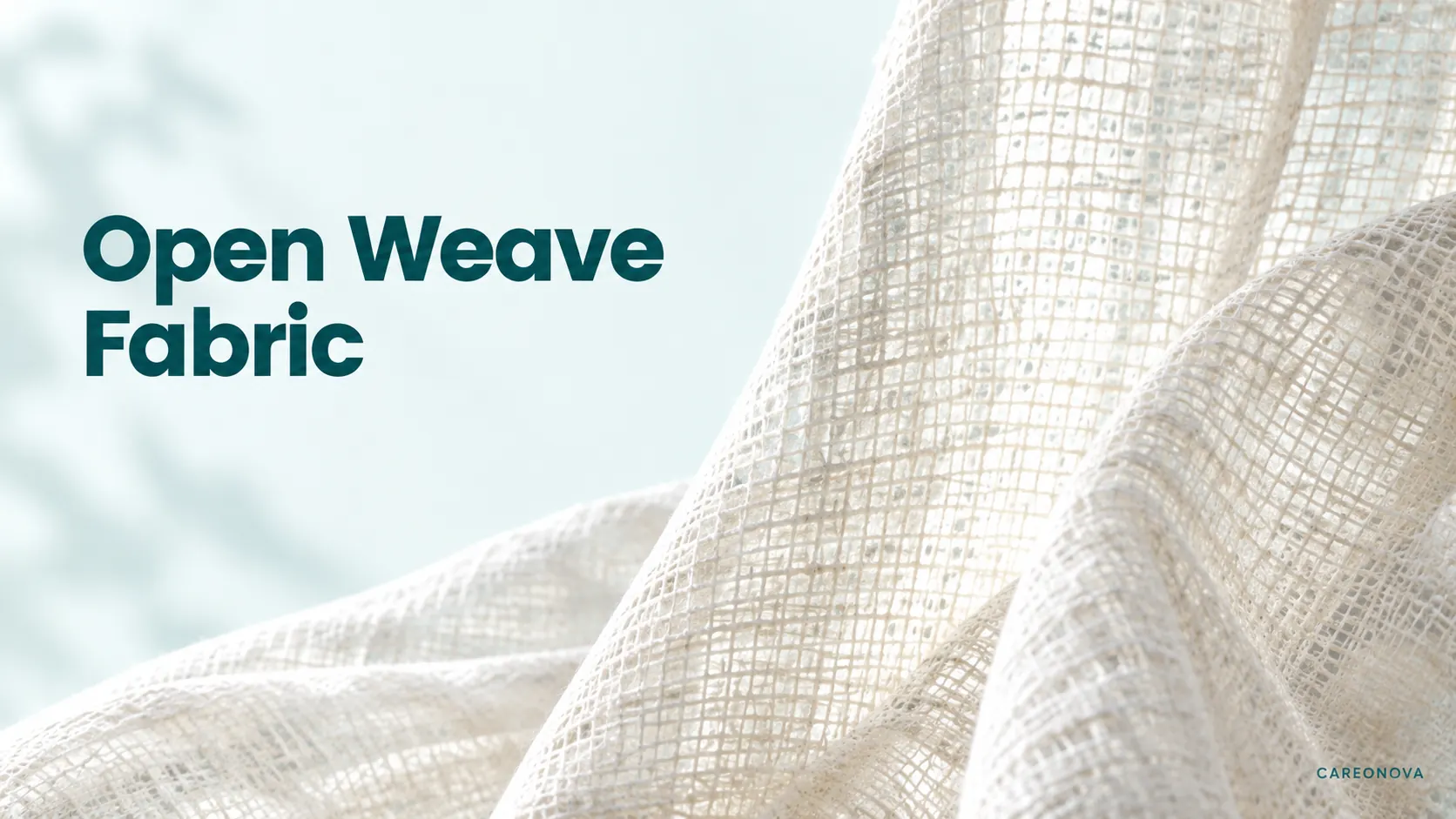
Open weave fabric is a category of woven textiles. It features deliberate, visible spacing between the warp and weft yarns. This spacing creates a porous, breathable, and light-transmissive grid. Rather than denoting a specific fiber like cotton, wool, or silk, “open weave” describes a mechanical construction method. Here, the threads do not sit flush against one another. Specifically, this geometric spacing produces open voids called interstices. These gaps allow air, light, and moisture to move freely through the matrix. Furthermore, they create distinct textural qualities prized in apparel design, counted-thread embroidery, and architectural window shading.
Understanding the engineering behind open weave fabrics is essential for textile professionals, sewists, and interior decorators. These textiles lack the dense packing friction of conventional fabrics. Consequently, they present unique structural behaviors. For instance, handlers must manage yarn slippage, pronounced bias drape, and specialized edge-finishing requirements.
What Is Open Weave Fabric? (Definition & Geometry)
At its physical core, an open weave fabric balances structural integrity against intentional empty space. Traditional weavers beat warp yarns (running lengthwise) and weft yarns (running crosswise) tightly together. This action produces a continuous, opaque barrier. In contrast, an open weave fabric deliberately limits yarn density. Makers position threads at calculated intervals to engineer a grid-like mesh.
Standard Dense Plain Weave            Open Weave Textile
   [Warp & Weft Packed]              [Engineered Interstices]
       ██████████                        █   █   █   █
       ██████████                        ─────────────
       ██████████                        █   █   █   █
       ██████████                        ─────────────
       ██████████                        █   █   █   █
The Structural Core: Interstices, Warp, and Weft
Textile experts call the spaces at the intersections of perpendicular yarns interstices. Standard cotton shirting features microscopic spaces. Therefore, the material remains wind-resistant and opaque. In open weave cloth, however, you can see the interstices with the naked eye. They often measure from 0.5 millimeters to several millimeters across.
Yarn diameter, loom tension, and reed beat-up force determine the size of these gaps. By altering the distance between adjacent threads, textile mills engineer a wide range of open weave fabrics. These range from diaphanous curtain sheers to heavy materials designed for industrial reinforcement.
Open Weave vs. Loose Weave: A Critical Distinction
People often use the terms open weave and loose weave interchangeably. However, textile engineers recognize two fundamentally different structural states:
- Open Weave Fabric: This is an intentional, mechanically controlled structure. Manufacturers space the yarns deliberately. They often utilize high-twist yarns, specialized finishes, or interlocking binding weaves to keep the threads firmly locked in place.
- Loose Weave Fabric: This condition frequently results from low-tension weaving, insufficient thread count, or under-spun yarns. In an unstable loose weave, warp and weft threads slide around haphazardly. As a result, the fabric suffers from distorted patterns, irregular gaping, and spontaneous fraying.
Grainline Stability vs. Bias Elasticity
Woven textiles behave differently depending on the direction of applied tension. Open weave fabric showcases this reality in an exaggerated way. Along the straight grain and the crossgrain, these fabrics exhibit zero mechanical stretch. The yarns pull straight against each other until reaching their tensile limit.
Conversely, tension applied along the true bias (the 45-degree diagonal) shifts the rectangular grid into diamonds. Because adjacent threads lack tight packing, open weave fabrics display dramatic elasticity along the bias. This bias stretch allows garments made of open-weave linen to contour naturally to the human body. Unfortunately, unanchored curved seams can easily stretch out of shape if you do not stabilize them during construction.
The Mechanics of the Grid: Interstices and Yarn Density
The physical performance of any open weave fabric relies on its yarn density metrics and mechanical friction.
Yarn Density Metrics: EPI, PPI, and GSM
Textile engineers classify fabrics through precise physical measurements:
- Ends Per Inch (EPI): The number of individual warp threads running parallel within one linear inch.
- Picks Per Inch (PPI): The number of weft threads inserted across one linear inch.
- Grams per Square Meter (GSM): The overall weight and density of the finished fabric.
A dense cotton broadcloth might feature an EPI and PPI of 80 to 100 threads per inch. Consequently, it forms a firm, uniform surface. An open weave fabric like cheesecloth scales those numbers down to 20 EPI by 16 PPI. This yields an ultra-lightweight fabric below 70 GSM. Conversely, a coarse weave material like burlap can feature a low thread count while using thick yarns. This produces a heavy, rugged sheet weighing up to 400 GSM.
The Friction Deficit and Yarn Slippage
The friction deficit represents the fundamental challenge of any open weave fabric. In tight weaves, high frictional resistance prevents individual threads from shifting out of alignment.
In an open weave fabric, reduced surface contact means threads slide freely across one another. Industry professionals call this vulnerability yarn slippage. If a mill constructs an open weave using a standard plain weave, normal seam tension can displace the yarns. As a result, you get permanent puckers, asymmetric holes, or frayed seams.
The Leno Weave: Locking the Open Matrix
Textile designers turn to the Leno weave to overcome yarn slippage without sacrificing breathability.
Standard Plain Weave Crossing          Leno Weave Locking Twist
   (Prone to thread slip)               (Yarns locked mechanically)
         │       │                              │ ╲   ╱ │
     ────┼───────┼────                      ────┼───╳───┼────
         │       │                              │ ╱   ╲ │
     ────┼───────┼────                      ────┼───╳───┼────
         │       │                              │ ╲   ╱ │
In a Leno weave, two warp yarns operate together. A specialized doup harness on the loom controls a crossing yarn and a ground yarn. As the loom inserts each weft pick, the crossing warp twists around the ground warp in a figure-eight configuration. This effectively locks the weft yarn into a vise-like grip.
Because the crossing threads twist before and after every pick, the weft cannot slide. Therefore, the Leno weave provides the foundational architecture for mosquito netting, thermal curtain mesh, and architectural solar fabrics.
Common Types of Open Weave Fabric
Open weave fabric spans a wide spectrum of natural, synthetic, fine, and industrial materials. Below, we group the most prevalent open weave textiles by their primary use cases.
Lightweight Apparel & Sheer Fabrics
- Gauze & Double Gauze: Gauze is an ultra-lightweight open weave cotton fabric. It utilizes low-density yarn counts to maximize air permeability. Because single-layer gauze snags easily, textile producers frequently manufacture double gauze. Here, invisible binding threads link two thin layers of open weave cotton together. Ultimately, this traps an insulating pocket of air, producing a crinkly, opaque textile.
- Cheesecloth: Cheesemakers originally developed this cloth for wrapping curd. It is a lightweight, unbleached cotton open weave fabric. Suppliers grade it based on thread density. Grades range from Grade 10 (an extremely loose open weave) to Grade 90 (dense enough for craft sewing).
- Open-Weave Linen: Manufacturers spin this fabric from natural fibers like flax. Open weave linen wicks moisture naturally and softens progressively with laundering. Furthermore, the natural yarn slubs and deliberate gaps produce a relaxed, dimensional fabric ideal for unstructured summer tailoring and flowing draperies.
- Voile and Organza: Both fabrics demonstrate how yarn twist transforms an open weave. Voile utilizes high-twist combed cotton yarns to create a semi-sheer fabric with a fluid drape. Meanwhile, organza utilizes highly twisted silk or synthetic polyester filament threads. This creates a crisp, sculptural hand that holds voluminous shapes in bridalwear.
Utility, Theatrical & Specialty Textiles
- Scrim: Scrim is a coarse, open weave fabric celebrated across set design (and a famous staple of crossword puzzles). Woven from unbleached cotton, theatrical scrim possesses unique optical properties. Specifically, it remains opaque when front-lit. However, it becomes nearly invisible when backlit because light streams unobstructed through the open interstices.
- Buckram and Tarlatan: These specialized cotton fabrics combine open-weave architecture with heavy chemical sizing. Buckram is extremely rigid. Hatmakers steam-mold it into compound curves. Tarlatan is a sheer, starched cloth. Printmakers use it extensively to wipe excess ink from copper etching plates.
- Etamine and Aida Cloth: For counted-thread needlework, stitchers rely on evenweave fabrics like Etamine and Aida cloth. Invented by the Zweigart mill in 1890, Aida cloth features multi-thread bundles. These bundles create distinct, visible square holes at regular intervals. Consequently, crafters use these grids to execute geometrically precise embroidery designs.
- Burlap / Hessian: Burlap is a heavy open weave fabric engineered for high tensile strength. Its broad interstices allow agricultural commodities to breathe in transit. Therefore, it prevents rot caused by condensation.
Open Weave Fabric for Window Treatments and Decor
The open weave fabric category extends well beyond apparel into architectural shading. In modern architecture, open weave drapery plays a critical role in interior climate control.
Decoding the Openness Factor
When selecting architectural window coverings, you must evaluate the openness factor. This percentage represents the proportion of open voids to solid fiber. Ultimately, it dictates light transmission and energy performance:
- 1% Openness: This represents a very tight open weave fabric. It provides maximum privacy day and night. Additionally, it filters out most direct ultraviolet radiation and reduces surface glare. However, it noticeably obscures the view of the outdoors.
- 3% to 5% Openness: This serves as the industry standard for commercial spaces. A 3% to 5% open weave strikes an ideal balance. It cuts radiant glare and softens sunlight while maintaining crisp optical transparency.
- 10% to 14%+ Openness: Designers use this wide-mesh grid primarily for rooms prioritizing maximum natural illumination. It provides negligible daytime privacy.

       1% Openness                  3% - 5% Openness               10%+ Openness
┌─────────────────────────┐   ┌─────────────────────────┐   ┌─────────────────────────┐
│ █ █ █ █ █ █ █ █ █ █ █ █ │   │ █  █  █  █  █  █  █  █  │   │ █   █   █   █   █   █   │
│ █ █ █ █ █ █ █ █ █ █ █ █ │   │                         │   │                         │
│ █ █ █ █ █ █ █ █ █ █ █ █ │   │ █  █  █  █  █  █  █  █  │   │ █   █   █   █   █   █   │
└─────────────────────────┘   └─────────────────────────┘   └─────────────────────────┘
Solar Heat Gain Coefficient (SHGC)
Many people mistakenly believe that all open weave fabrics leave interiors unprotected against ultraviolet radiation. In reality, UV protection depends on both the openness factor and the chemical properties of the yarn.
- Natural Fiber Linens: An untreated open weave linen curtain allows ambient UV rays to pass straight through its interstices. Indeed, direct sunlight will slowly degrade hardwood floors and bleach furniture.
- Engineered Technical Screens: Manufacturers weave commercial-grade open weave solar screens from synthetic core yarns. Typically, they coat high-tenacity fiberglass filaments in durable polyvinyl chloride (PVC). Because window coverings are critical for managing thermal energy, this specialized vinyl coating absorbs and reflects high volumes of solar radiation before it enters the room. As a result, it dramatically lowers the building’s Solar Heat Gain Coefficient (SHGC) and reduces peak cooling loads during the summer.
Fabric Selection: Natural Linens vs. Synthetics
- Open-Weave Natural Linen Drapes: Interior designers prize these for their organic texture and graceful drape. However, linen readily absorbs atmospheric moisture. Therefore, open weave linen curtains will grow longer on humid days and shrink on dry days.
- Engineered Architectural Mesh: Built from vinyl-coated fiberglass yarns, these open weave fabrics maintain dimensional stability regardless of humidity. They will not stretch, sag, or develop mold in damp environments.
How to Sew Open Weave Fabric: Cutting and Stitching
Working with open weave fabric requires different handling than tightly woven cottons. The wide spaces between yarns mean ordinary sewing techniques often fail. Consequently, you might experience dropped stitches, puckered seams, or shredded edges.
The Fingernail Seam Slippage Test
Before cutting into an unfamiliar open weave fabric, perform the fingernail scratch test to evaluate yarn stability:
- First, grasp a swatch of the fabric firmly between your thumbs and forefingers.
- Next, drag your fingernail firmly across the face of the fabric.
- Then, observe the grid. If the threads easily slip aside and leave an irregular gap, the fabric exhibits high yarn slippage.
- Finally, adjust your technique. You cannot sew a failing fabric with standard narrow seam allowances. Instead, it demands wide seam allowances and fully enclosed edge construction.
Machine Calibration: Needles and Plates
Precision machine setup prevents delicate open weave fabrics from getting damaged.
- Needle Selection: Never use a dull or universal needle. A rounded point will catch against individual threads and push them out of alignment. Always choose a sharp Microtex needle. The sharp tip pierces directly through fibers.
- The Needle Plate: Standard sewing machines ship with a wide zigzag needle plate. When sewing lightweight open weave cloth, the needle can easily jam the loose fabric down into the feed dog opening. Therefore, replace the zigzag plate with a single-hole straight stitch plate.
- Rotary Cutting: Shears can lift and pull open weave threads out of square. Instead, lay the fabric out on a self-healing mat. Then, cut using a sharp rotary cutter weighted with pattern weights.
Plaintext
       Standard Zigzag Plate                      Single-Hole Straight Stitch Plate
  ┌──────────────────────────────┐              ┌──────────────────────────────┐
  │     ││││││        ││││││     │              │     ││││││        ││││││     │
  │     ││││││ (      ) ││││││     │              │     ││││││   (o)  ││││││     │
  │     ││││││        ││││││     │              │     ││││││        ││││││     │
  └──────────────────────────────┘              └──────────────────────────────┘
    Fabric gets sucked into wide hole.            Narrow hole prevents jamming.
Enclosed Seam Construction
A standard raw seam finished with an open zigzag stitch will quickly fray out of an open weave fabric. Therefore, you must structurally encase high-stress points:
- The French Seam: Sew the pattern pieces wrong sides together with a scant 1/4-inch seam allowance. Next, trim the raw edges down, press the seam flat, and fold the fabric right sides together. Finally, sew a second line of stitching. The resulting seam is self-enclosed and clean.
- The Flat-Felled Seam: Sew pieces right sides together, trim one seam allowance, and fold the wider allowance over the narrow one. Then, topstitch it flat to the garment. This double line of stitching locks loose threads down flat.
- Hong Kong Finish: For heavy open weave fabrics, encase each raw cut edge individually using lightweight bias binding tape.
Structural Comparison: Open Weave vs. Plain, Twill, and Satin
To understand how an open weave fabric functions, you should compare it directly against the fundamental weaves. For example, comparing a breathable open cotton against a tightly woven polyester satin highlights these structural differences.
| Structural Criteria | Open Weave | Balanced Plain Weave | Twill Weave | Satin Weave |
|---|---|---|---|---|
| Interlacement Configuration | Widely spaced 1/1 grid or twisting Leno lock | Tight, balanced 1-up / 1-down alternating pattern | Diagonal float structure (2/1, 2/2, or 3/1 twill lines) | Long filament floats over 4 to 7 crossing yarns |
| Relative Yarn Density | Low to very low (often <30 threads per inch) | Medium to high (60 to 120+ threads per inch) | High to very high (tightly beaten filling picks) | Exceptionally dense packing of smooth filament yarns |
| Air & Light Permeability | Maximum airflow; high light transmission | Moderate breathability; low-to-zero transparency | Low breathability; blocks wind and light | Minimal breathability; fully opaque surface |
| Bias Drape & Malleability | High to extreme; stretches easily on diagonal | Moderate; stable and balanced across all angles | High; soft, supple, heavy diagonal drape | Very high; liquid, fluid, body-skimming drape |
| Seam Slippage & Fray Risk | Very high risk; requires enclosed seam construction | Low risk; moderate fraying at raw edges only | Low to moderate risk; stable under heavy tension | High fray risk due to long, unanchored surface floats |
| Wrinkle Resistance | High to moderate (creases fall out easily) | Low (prone to creasing) | High (diagonal ridges disguise and resist wrinkles) | High (long float structure resists creasing) |
| Common Fabric Examples | Gauze, Scrim, Open Linen, Leno Mesh, Aida Cloth | Muslin, Percale, Poplin, Canvas, Gingham | Denim, Chino, Gabardine, Houndstooth, Tweed | Duchess Satin, Charmeuse, Sateen, Crepe-back Satin |
Care, Maintenance, and Snag Restoration
Improper cleaning and handling can ruin open weave fabrics. Specifically, careless washing leads to snagged loops, thread distortion, and irreversible dimensional stretching.
Gentle Laundering
After reviewing the garment’s care label symbols, never wash an open weave piece in a standard top-loading washing machine equipped with a center agitator. The churning fins will catch against loose threads. Consequently, they will pull threads into permanent loops.
Because washing different fabrics requires careful handling, always place open weave clothing into a zippered fine-mesh wash bag before laundering. Furthermore, run the machine on a gentle cycle with a cold wash temperature. High-speed spin cycles press pliable open weaves against the drum perforations, leaving hard-set creases. Therefore, keep spin speeds low.
Flat-Drying Mechanics
Never hang a heavy, damp open weave sweater from a coat hanger. Water trapped in natural fibers adds significant physical weight. Because open weaves lack dense internal thread packing, gravity will stretch the wet garment vertically.
Instead, lay the damp garment flat on a clean, dry towel. Gently reshape the garment with your hands while the fibers remain moist. Finally, allow it to air-dry completely away from direct sunlight.
       Wrong: Line or Hanger Drying              Correct: Flat Block Drying
            ┌───────────────┐                  ┌─────────────────────────────┐
            │   ( Hanger )  │                  │  ┌───────────────────────┐  │
            └───┬───────┬───┘                  │  │   Reshaped Garment    │  │
                │       │                      │  │   Laid Flat On Towel  │  │
                │   ↓   │                      │  └───────────────────────┘  │
                │ Weight│                      └─────────────────────────────┘
                │ Pulls │                       • No vertical stretching
                │ Down  │                       • Preserves original dimensions
                └───────┘                       • Dries flat and square
Restoring Snags Without Cutting
When an open weave fabric snags on jewelry, the thread rarely breaks. Rather, an individual loop of yarn simply pulls taut.
- Never Cut the Snag: If you snip a pulled loop, you destroy the structural integrity of that yarn entirely. The severed thread will unravel outward in both directions, leaving a permanent hole.
- The Diagonal Stretch Technique: First, grasp the fabric firmly on both sides of the snag. Then, give the cloth several sharp, firm diagonal tugs. The natural elasticity of the weave will often pull the displaced loop back into its original resting channel.
- Using a Snag Repair Tool: If the loop remains exposed, insert a snag repair tool from the back of the fabric directly through the interstice. Catch the loose loop and draw it completely through to the reverse side. Once anchored on the reverse, the snag remains invisible.
