


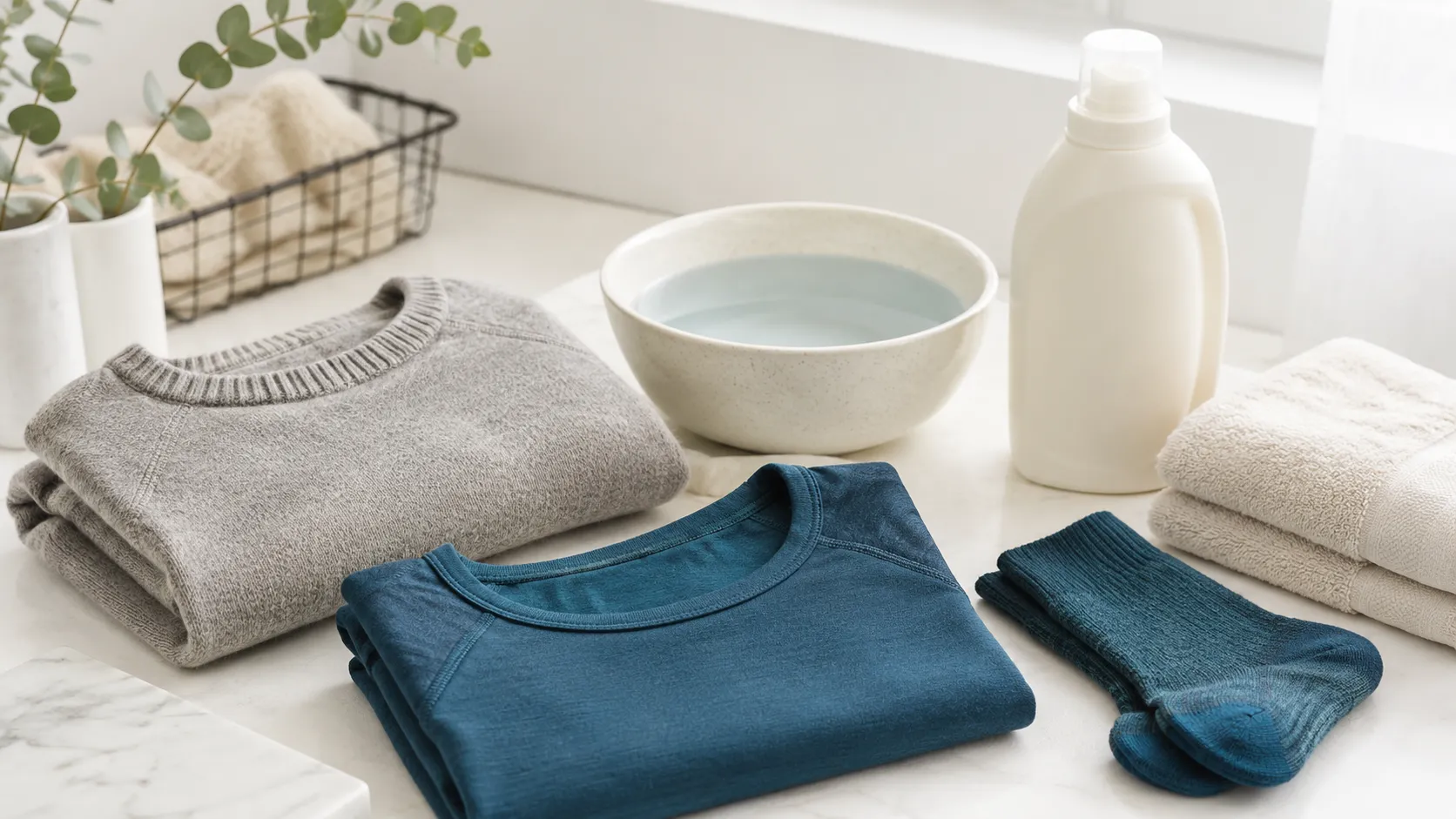
Merino wool can be machine washed, hand washed, or dry cleaned depending on the item. The mistake is treating every merino piece the same. Socks and base layers can often handle a gentle wash, but sweaters, loose knits, and expensive pieces need more control.
Before you wash merino wool, check the care label, choose the right method, and plan how you will dry it. This guide shows when to machine wash, when to hand wash, what detergent to use, how to avoid shrinking and pilling, and how to dry merino without damaging the fabric.
Can You Wash Merino Wool?
Yes, you can wash merino wool. Many merino garments are made for regular wear and can be cleaned at home. The safest method depends on the item, the knit, the fabric blend, and the care instructions.
Merino is used for socks, base layers, underwear, shirts, sweaters, outdoor clothing, and travel clothes. These items do not all need the same routine.
A pair of merino socks may be fine on a gentle machine cycle. A soft merino sweater may need hand washing. A dry-clean-only garment should go to a cleaner.
Use this simple rule:
If the item is structured, delicate, expensive, loosely knitted, or unclear in its care instructions, choose the gentler method.
How Often Should You Wash Merino Wool?
Merino wool does not need to be washed after every wear. It often handles light odor better than many synthetic fabrics. Airing it out between wears can reduce how often you need to wash it.
Merino socks, base layers, and sweaters do not need the same routine. Start with the wool item type, then check the label. Use this as a general guide, not a strict rule.
Do not overwash merino just because it touched your skin. If it smells fresh after airing, it may not need a full wash yet.
Check the Care Label First
The care label should come before general advice. Different brands use different yarns, blends, finishes, and knit structures.
Look for instructions such as:
- machine wash cold
- wool cycle
- gentle cycle
- hand wash
- dry flat
- do not tumble dry
- tumble dry low
- dry clean only
If the label says tumble dry low, follow it carefully. If it does not clearly allow tumble drying, air drying is safer.
Some merino is treated to be more machine washable, often called super wash wool. That does not mean every merino item can handle the same wash routine. The label still matters.
If the label is missing, treat the item as delicate.
Hand Wash or Machine Wash: Which Is Safer?
There is no single answer for every merino item.
Machine washing can be safe for many merino socks, base layers, shirts, and activewear pieces if the label allows it. A wool cycle or gentle cycle uses less movement than a normal cycle.
Hand washing is safer for merino sweaters, delicate knitwear, loose knits, expensive pieces, and items you cannot replace. It gives you more control over water temperature, movement, and drying.
Use this guide:

What Detergent Should You Use for Merino Wool?
Use a wool-safe detergent or a mild detergent made for delicate fabrics. You do not need a lot. Too much detergent can leave residue and make rinsing harder.
A good detergent for merino should be gentle and easy to rinse. A wool-specific wash is best for sweaters and delicate knitwear.
Avoid:
- bleach
- fabric softener
- strong stain removers
- heavy fragrance products
- enzyme-heavy detergent unless the product says it is safe for wool
- detergent with protease enzymes unless it is wool-safe
Protease enzymes are made to break down protein stains. Wool is also a protein fiber, so it is safer to avoid enzyme-heavy products unless the detergent clearly says it is safe for wool.
Fabric softener is also a bad choice. It can coat the fibers and affect how merino handles moisture.
For small stains, blot first with cool water and a tiny amount of wool-safe detergent before washing the whole garment. Do not scrub the stain hard. Friction can roughen the fabric and cause pilling.
How to Machine Wash Merino Wool

Machine washing is fine for many merino garments, but only when the label allows it.
Follow these steps:
- Turn the garment inside out.
This reduces friction on the outer surface and helps limit pilling. - Wash with similar colors.
Dark or new merino may release dye, so wash with similar colors. - Use a mesh laundry bag for delicate items.
This helps protect thin shirts, socks, and base layers from rubbing. - Choose cold water, or 30°C if allowed.
Cold water is safest. A 30°C wash may be fine if the garment label allows it. - Use a wool cycle, delicate cycle, or gentle cycle.
Avoid regular, heavy-duty, or fast cycles. - Add a small amount of wool-safe detergent.
Use less than you would for a normal load. - Avoid rough items.
Do not wash merino with jeans, towels, zippers, hooks, or Velcro. - Use low spin.
Strong spin can stretch or stress the fabric. - Remove it promptly.
Do not leave wet merino sitting in the washer.
After washing, reshape the garment gently and dry it the right way.
How to Hand Wash Merino Wool
Hand washing is best for merino sweaters, delicate knits, and items you do not want to risk in the washer.
Fill a Sink With Cool or Lukewarm Water
Use cool or lukewarm water. Do not use hot water. Try to keep the water temperature steady from wash to rinse.
Add Wool-Safe Detergent
Add a small amount of wool-safe detergent to the water. Mix it in before adding the garment. Do not pour detergent directly onto the fabric.
Submerge and Press Gently
Place the merino item in the water and let it soak. Press it gently with your hands. Do not scrub, twist, or rub the fabric against itself.
Use this rule:
Press, don’t scrub.
Squeeze, don’t twist.
Support, don’t pull.
Soak for 10–15 Minutes
A short soak is enough for most items. Very dirty clothing may need a little longer, but do not leave merino soaking for hours unless the detergent instructions allow it.
Rinse With Similar-Temperature Water
If your detergent needs rinsing, rinse with clean water at a similar temperature. Sudden temperature changes can stress wool fibers.
Press Out Water
Lift the garment carefully. Press water out with your hands. Do not wring it.
For sweaters, support the whole garment when lifting. Wet wool is heavier than it looks.
How to Dry Merino Wool
Drying is where many people damage merino. Air drying is the safest choice.
First, press out extra water. For sweaters or thicker garments, place the item on a clean towel. Roll the towel with the garment inside, then press gently. This removes water without twisting the fabric.
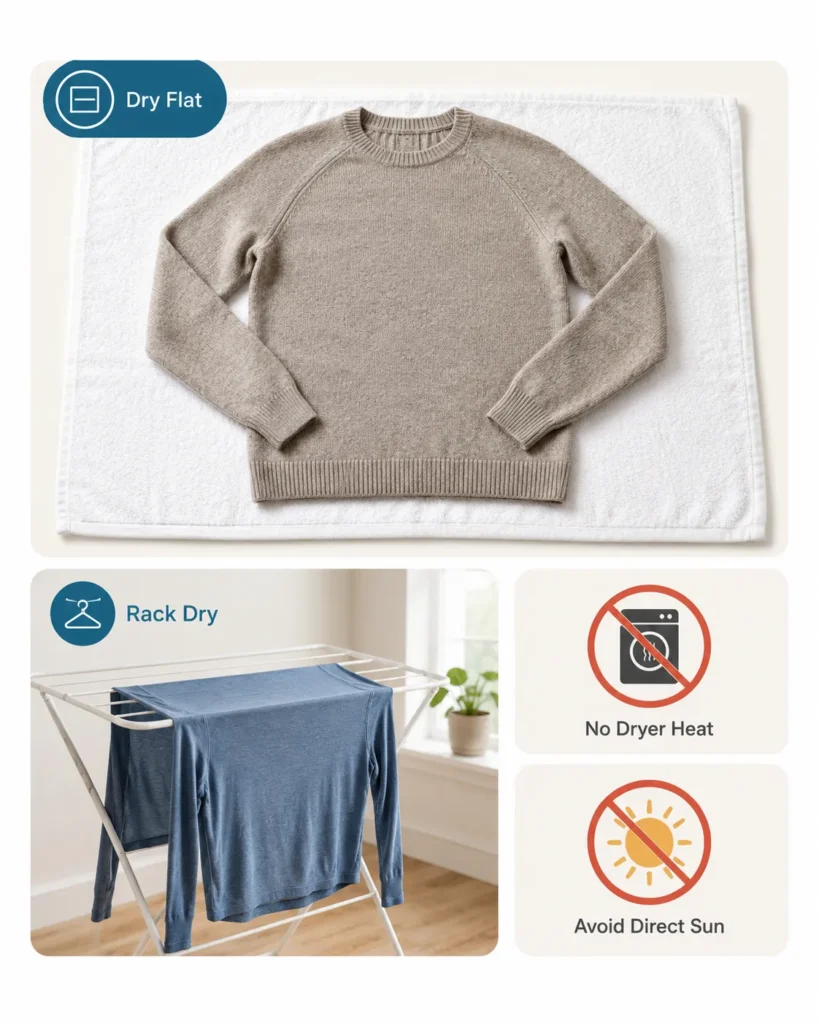
Then dry based on the item:
- sweaters and knits: lay flat and reshape
- socks: air dry flat or hang if the label allows
- base layers: air dry on a rack
- shirts: dry flat or hang if they will not stretch
- delicate items: dry flat on a towel
Keep merino away from:
- dryer heat
- radiators
- strong direct sun
- hair dryers
- hot vents
Let the garment dry fully before wearing or storing it. Thin base layers may dry overnight, but thicker sweaters can take much longer.
Can Merino Wool Go in the Dryer?
Air drying is safest. Some merino garments may allow tumble drying on low heat, but only follow that if the label clearly says it is allowed.
Dryer Safety Warning
Only tumble dry merino wool if the care label clearly allows it. If you are unsure, skip the dryer and air dry instead. Heat and friction can shrink, roughen, or weaken merino fibers.
If you are unsure, do not use the dryer.
Dryer heat and friction can shrink merino, roughen the fibers, increase pilling, or affect the garment’s fit. This matters most for sweaters, thin shirts, and expensive pieces.
For the safest result, reshape the item and air dry it.
Does Merino Wool Shrink?
Yes, merino wool can shrink. But water alone is usually not the main problem. Shrinkage is more likely when merino is exposed to heat, rough movement, strong spin, sudden temperature changes, or dryer heat.
Merino can also felt if the fibers are rubbed together too much in warm or hot conditions. Felted wool becomes denser, tighter, and harder to restore.
To reduce shrinkage risk:
- use cold or lukewarm water
- avoid hot water
- choose a wool or gentle cycle
- avoid heavy spin
- do not wring
- air dry instead of using heat
- keep the wash and rinse water similar in temperature
If a merino item already shrank badly, it may not fully return to its old size.
Fabric Care Note
Merino wool damage usually comes from a mix of heat, friction, strong spin, and poor drying. Cold water helps, but the real protection is gentle movement, steady water temperature, light pressing, and careful air drying.
How to Prevent Pilling
Pilling happens when loose fibers rub together and form small balls on the surface. Merino can pill in high-friction areas such as underarms, cuffs, sides, backpack areas, and seatbelt areas.
To reduce pilling:
- turn garments inside out before washing
- use a mesh laundry bag
- wash with soft, lightweight items
- avoid jeans, towels, zippers, and Velcro
- use a gentle cycle
- use low spin
- air dry instead of tumble drying
- avoid rubbing stains hard
If pills appear, remove them carefully with a wool comb or fabric shaver. Do not pull them off by hand. Pulling can stretch the yarn or create snags.
How to Wash Different Merino Wool Items
Merino Wool Socks
Turn socks inside out and wash with similar items. Use cold water, mild detergent, and a gentle or wool cycle. Air dry to protect fit and reduce shrinkage risk.
Merino Wool Base Layers
Base layers are often made for active use, so many can be machine washed. Use cold water, or 30°C if the label allows it, with a gentle cycle and low spin. Avoid fabric softener because it can affect moisture handling.
Merino Wool Shirts
Merino shirts can usually be washed gently, but thin fabric needs care. Turn shirts inside out, wash with soft items, and air dry. If the shirt is very light or expensive, hand washing is safer.
Merino Wool Sweaters
Sweaters need the most care. Hand wash them or use a wool cycle only if the label allows it. Use the towel roll method, reshape while damp, and dry flat.
Merino Wool Underwear
Wash underwear after each wear. Use a gentle cycle, mild detergent, and cold water. Air dry when possible.
Merino Wool Blends
A blend may be more stable than 100% merino, but the label still matters. Nylon, polyester, or elastane blends can change how the garment washes and dries.
How to Wash Merino Wool While Traveling
Merino is popular for travel because it can often be worn more than once before washing. When it does need cleaning, sink washing works well.
Use this method:
- Fill a sink with cool water.
- Add a tiny amount of mild detergent.
- Submerge the garment.
- Press gently.
- Rinse well if needed.
- Press out water without twisting.
- Roll it in a towel.
- Lay it flat or hang only if the item will not stretch.
Do not wash merino late at night if you need it early the next morning. Thick items may take longer than expected to dry.
Why Merino Wool Smells Different When Wet
Merino can smell different while damp. Some wool smells slightly sheep-like when wet, especially if it is less processed or has been stored for a while.
Do not judge odor while the item is still damp. Let it dry fully first. If it still smells after drying, air it out before washing again.
If the odor is from sweat, smoke, mildew, or storage, one gentle wash may help. Do not keep washing the same item repeatedly in one day. Too much washing can stress the fibers.
Common Mistakes to Avoid

Washing Too Often
Merino does not need constant washing. Air it out between wears when possible.
Using Hot Water
Hot water can increase shrinkage and felting risk.
Using a Regular Wash Cycle
A normal cycle may be too rough. Use a wool, delicate, or gentle cycle.
Using Too Much Detergent
Too much detergent can leave residue and make the fabric feel less soft.
Using Fabric Softener
Fabric softener can coat merino fibers and affect moisture control.
Washing With Rough Clothes
Towels, jeans, zippers, and Velcro can cause pilling and snags.
Wringing or Twisting
Twisting can distort the shape, especially in sweaters and knits.
Drying With Heat
Dryer heat, radiators, and hot vents can shrink or damage merino.
Hanging Wet Sweaters
Wet sweaters can stretch from their own weight. Dry them flat.
How to Store Merino Wool After Washing
Make sure merino is fully dry before storage. Damp wool can develop musty odor.
Fold sweaters and knits instead of hanging them. Hanging can stretch the shoulders over time. Shirts and activewear can be folded or hung if they keep their shape.
Store merino in a cool, dry place. For seasonal storage, use a clean drawer, breathable cotton bag, or sealed container if pests are a concern. Do not store dirty merino for months. Body oils and food stains can attract insects.
The Safe Rule for Washing Merino Wool
Merino wool is not hard to wash, but it does not like heat, friction, harsh detergent, strong spin, or dryer heat. Use the care label first. Wash less often when airing is enough. Machine wash sturdy items only when the label allows it. Hand wash sweaters and delicate knits when you want more control. Press, don’t twist; air dry, don’t rush with heat.
