


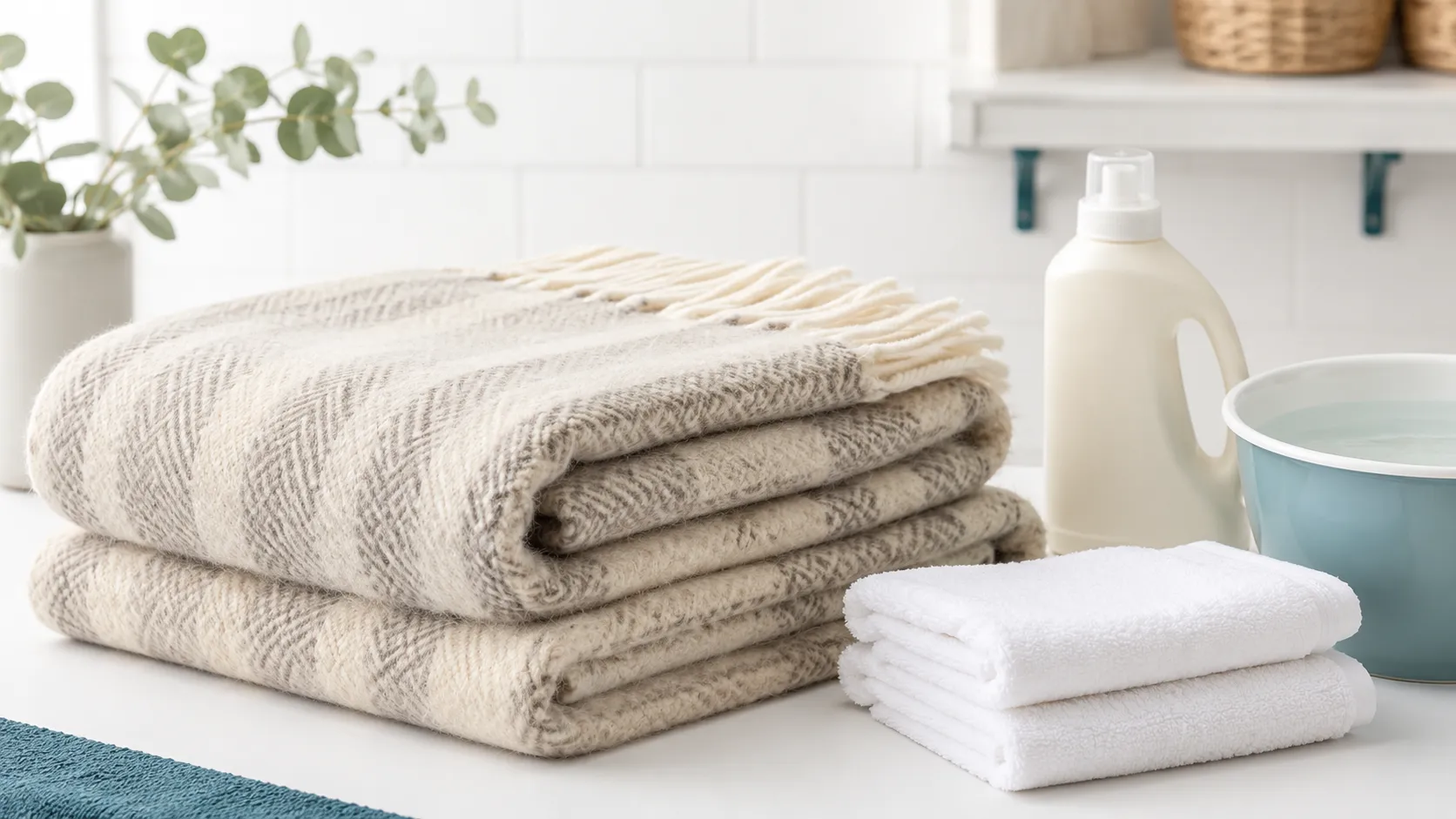
A wool blanket can sometimes be washed at home, but it should not be treated like everyday laundry. The main risks are heat, rough movement, wringing, poor support while wet, and dryer heat. These mistakes can cause shrinking, stretching, fading, shedding, or felting.
If you are worried about ruining a wool blanket, start with one question: should it be washed at home at all? If the blanket is sentimental, vintage, dry-clean-only, handmade, or too large to support while wet, dry cleaning is often safer. If the label allows home washing, keep the process slow: cool water, gentle detergent, light pressing, and careful drying.
Can You Wash a Wool Blanket at Home?
Yes, some wool blankets can be washed at home, but the care label should decide the method first. Wool does not need frequent washing, so airing, brushing, and spot cleaning may be enough unless the blanket is dirty, stained, or holding odor.
A washable wool throw is very different from an old family blanket, a heavy military blanket, or a high-value Pendleton-style blanket. The more delicate, expensive, old, or meaningful the item is, the more cautious you should be.
Use this simple decision guide before washing.
| Blanket situation | Safest option |
|---|---|
| Light dust or stale smell | Air out and brush |
| Small stain or one dirty area | Spot clean |
| Washable small wool throw | Hand wash |
| Machine-washable care label | Wool cycle |
| Sentimental, vintage, dry-clean-only, large, or unknown | Dry clean |
These instructions are for blankets that the care label allows you to clean at home. If the label says dry clean only, washing at home is a risk.

When Dry Cleaning Is the Safer Choice
Dry cleaning is often safer when damage would matter more than the cost of cleaning.
Choose dry cleaning if the blanket is:
- passed down from family
- sentimental or expensive
- vintage or fragile
- labeled dry clean only
- handmade, knitted, crocheted, or loosely woven
- very large or heavy
- affected by deep dog smell, smoke, mildew, or old storage odor
- unknown in fiber content or washing history
- too large to dry with full support at home
This is especially important for old army blankets, Hudson Bay-style blankets, Pendleton-style blankets, antique wool, and handmade pieces. If you would be upset if it changed size, color, softness, or shape, do not use it as a washing experiment.
Freshen It Before Washing
Do not rush into a full wash. Wool often responds well to fresh air and light surface cleaning.
Take the blanket outside and shake it gently to remove dust, lint, pet hair, and loose dirt. Air it in a shaded place with good airflow. Avoid long exposure to strong direct sun because it can fade colors and dry wool harshly.
Next, lay it flat and brush it with a soft-bristle garment brush. Brush in one direction instead of scrubbing back and forth. This can remove surface soil and help the fibers sit smoothly again.
If the blanket smells better after airing and brushing, you may not need to wash it.
Check the Label, Fiber, and Construction
Before water touches the blanket, check what you are working with.
Look for care label instructions such as:
- hand wash
- machine washable
- wool cycle
- cold wash
- dry flat
- do not tumble dry
- dry clean only
If the label is missing, treat the blanket as delicate.
The fiber matters too. A 100% wool blanket may not behave the same way as a wool blend, merino, alpaca, or llama blanket. Some blends are more stable, but they can still shrink or distort if washed badly.
Construction matters as well. A woven blanket may handle careful cleaning better than a loose knitted or crocheted throw. Handmade and chunky knit blankets can stretch badly when wet. If the blanket is old, branded, handmade, or hard to replace, use the safest method, not the fastest one.
What You Need
The main thing you need is not fancy equipment. You need enough space to wash and dry the blanket without pulling it out of shape.
Use:
- a bathtub, large basin, clean storage bin, or large sink
- cool or lukewarm water
- wool-safe detergent
- clean towels
- a soft-bristle garment brush
- drying racks, mesh surface, or a clean flat drying area
- enough space to support the full blanket while it dries
Avoid:
- hot water
- bleach
- harsh detergent
- strong stain removers
- heavy fragrance products
- rough scrubbing
- wringing
- heavy spin
- dryer heat
Do not start washing until you know exactly where and how you will dry it. A soaked wool blanket is much harder to manage than a sweater or shirt.
How to Spot Clean a Wool Blanket
If there is only one stain or one smelly area, spot cleaning may be safer than washing the whole thing.
First, test a hidden area with a damp white cloth. If dye transfers onto the cloth, stop and consider dry cleaning.

For a small mark, use cool or lukewarm water and a tiny amount of wool-safe detergent. Blot gently from the outside of the stain toward the center. Do not scrub. Scrubbing can roughen the fibers, spread the mark, or create a felted patch.
Use a clean damp cloth to lift away detergent, then press the area with a dry towel. Let it dry flat with airflow before deciding whether it needs a full wash.
This is often the safest way to clean a wool blanket when the problem is small and the rest of the fabric is still fresh.
How to Hand Wash a Wool Blanket Safely
Hand washing is the safest home method for many washable wool blankets, but only if the blanket is not too large, fragile, or risky to handle while wet.
Fill a Bathtub or Large Basin With Cool Water
Use a clean bathtub, large basin, or clean storage bin. Fill it with cool or lukewarm water. Avoid hot water because heat raises the risk of shrinking, felting, and texture damage.
The water should be deep enough for the blanket to soak, but not so full that it becomes hard to handle.
Add Wool-Safe Detergent
Add a small amount of wool-safe detergent and mix it into the water before adding the blanket. Do not pour concentrated detergent directly onto wool.
Use less detergent than you would for normal laundry. Too much soap is hard to rinse out of a large blanket and may leave residue.
Submerge and Press Gently
Place the blanket into the water slowly. Let it absorb water instead of forcing it down harshly.
Press the water through the fibers with your hands. Do not scrub, twist, or roughly move the fabric.
Use this rule:
Press, don’t scrub.
Squeeze, don’t twist.
Support, don’t pull.
Soak Briefly
Let the blanket soak according to the detergent instructions. A short soak is usually enough for normal cleaning. Some delicate wool washes may allow a longer soak, but do not leave wool sitting in water for hours unless the product label clearly says it is safe.
Drain and Rinse Carefully
Drain the soapy water. If your detergent requires rinsing, refill with clean water at a similar temperature. Press the blanket gently to move clean water through the fibers.
Do not blast it with strong running water. Forceful water can stretch parts of the fabric.
If you use a no-rinse wool wash, follow the product directions and avoid extra handling.
Press Out Water Without Wringing
When the blanket is clean, press out water while it is still supported. Do not twist or wring it.
Wet wool gets heavy. Lift it with both arms and support as much of the blanket as possible. Do not lift it by one corner, one edge, or one small section.
Can You Wash a Wool Blanket in the Washing Machine?
You can machine wash some wool blankets, but only when the care label says machine washing is allowed and the washer is large enough.
Use a washing machine only if:
- the label says machine washable
- the washer has a wool cycle
- the blanket fits loosely in the drum
- you can use cold water
- you can use wool-safe detergent
- you can choose the lowest practical spin
- you have a safe drying setup ready
Do not use a regular cycle. Do not use hot water. Do not use heavy spin. Do not tumble dry.
A wool cycle is safer than a normal wash cycle because it reduces movement. If your washer only has an aggressive regular cycle, hand washing or dry cleaning is safer.
Do not machine wash sentimental, vintage, handmade, loosely knitted, dry-clean-only, or unknown wool blankets. A cold cycle does not automatically make machine washing safe.
How to Remove Dog Smell or Musty Smell
Dog smell, smoke, mustiness, and old storage odor are often the reason people start thinking about washing wool in the first place. The problem is that odor can make you want to over-clean, and repeated washing can damage the fibers.
Start with the lowest-risk method. Shake the blanket outside, brush off hair and dust, and air it in a shaded, breezy place. If one area smells stronger, spot clean that area first.
If the smell remains and the care label allows washing, hand wash with cool water and wool-safe detergent. Let the blanket dry fully before judging the odor. Wool can smell stronger while damp, especially if it is old, heavy, or made from natural untreated fibers.
Avoid perfume sprays, dryer sheets, bleach, hot water, strong vinegar soaks, harsh deodorizing chemicals, and too much detergent.
If one gentle wash does not remove deep dog odor, smoke, mildew, or old storage smell, do not keep washing it repeatedly. Dry cleaning is safer.
How to Dry a Wool Blanket Without Stretching It
Drying is the hardest part of cleaning a wool blanket at home. Wet wool is heavy, and that weight can stretch the fabric if it is not supported.
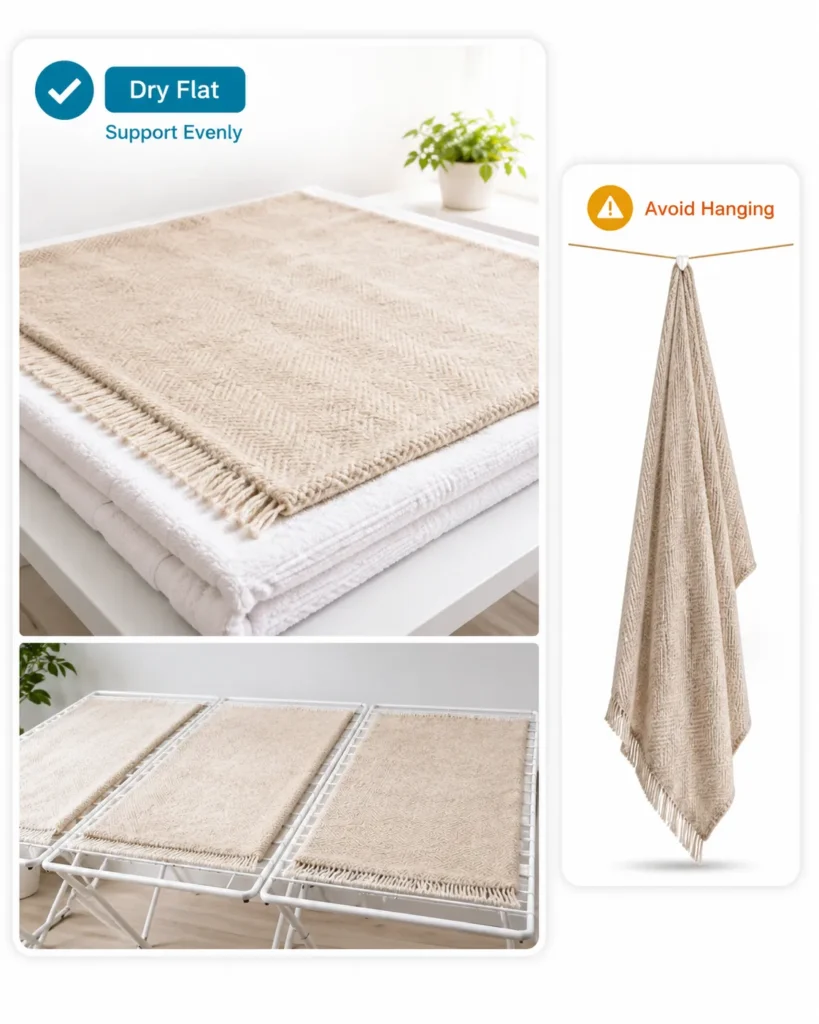
Do not hang a soaked blanket from one corner or one narrow edge. Do not throw it over a thin line while it is dripping wet. The weight can pull it out of shape.
First, press out as much water as you can without wringing. You can place the blanket between clean towels and press gently to remove more water.
Then dry it with support. The safest option is to lay it flat over clean towels, a mesh drying surface, or multiple drying racks. Reshape the edges while it is damp.
If you do not have enough flat space, fold it evenly over a sturdy rack or clothesline so the weight is spread across a wide area. Do not hang it from corners.
Keep it away from dryer heat, radiators, and strong direct sun. A thick wool blanket may take a full day or longer to dry depending on airflow, thickness, and room conditions. Make sure it is fully dry before folding or storing it.
Fabric Care Note
Wool blanket damage usually comes from a mix of heat, friction, weight, and poor drying support. The safest method is not just cold water. It is gentle movement, full support while wet, and slow air drying.
Mistakes That Shrink, Fade, Stretch, Shed, or Felt Wool
Most damage comes from a few avoidable mistakes.
Washing Too Often
Wool does not need frequent washing. Airing, brushing, and spot cleaning can often freshen it enough.
Ignoring the Care Label
The label is the first safety check. If it says dry clean only, washing at home is a risk.
Using Hot Water
Hot water can shrink wool, roughen the texture, and increase felting risk.
Using a Regular Wash Cycle
A regular cycle creates too much movement. Use a wool cycle only when the label allows machine washing.
Scrubbing Stains
Scrubbing can damage the fiber surface. Blot and press instead.
Wringing the Blanket
Wringing twists the fibers and can pull the blanket out of shape.
Hanging It While Soaked
Wet wool is heavy. Hanging it from corners or a narrow line can stretch it.
Using the Dryer
Dryer heat can shrink, felt, or roughen wool. Air drying with support is safer.
Washing Without a Drying Plan
Do not wash a large wool item unless you already know how you will dry it safely.
Special Wool Blanket Types and Safer Care Notes
Different wool blankets need different levels of caution. Use these notes as a safety filter, not as brand-specific washing rules.
Pendleton Wool Blanket
Check the care label first. If it is old, colorful, expensive, or sentimental, dry cleaning is often safer than home washing.
Hudson Bay Wool Blanket
These blankets can be heavy, valuable, and color-sensitive. If yours is vintage or inherited, avoid machine washing unless the label clearly allows it.
Military or Army Wool Blanket
Some army blankets are sturdy, but age and fiber condition matter. Use cool water, avoid heavy machine cycles, and dry with full support.
Vintage or Old Wool Blanket
Older wool may have weaker fibers or dyes that bleed. If the blanket has sentimental or resale value, dry cleaning is safer.
Handmade, Knitted, or Crochet Blanket
Handmade and knitted blankets can stretch badly when wet. Hand wash only if you can support the full piece during lifting and drying.
Alpaca, Llama, or Merino Blanket
These fibers can be soft and delicate. Avoid heat, friction, and strong spin. Use the care label as the final guide.
Wool Throw Blanket
A small throw is usually easier to clean at home than a large bed blanket. Still use cool water, wool-safe detergent, and supported drying.
How to Store It After Cleaning
Make sure the blanket is completely dry before storage. Even slight dampness can cause musty odor.
Fold it instead of hanging it long term. Store it in a cool, dry, dark place. A breathable cotton storage bag works well when moisture is a concern. An airtight container can help with pests, but only if the blanket is fully dry before it goes in.
Cedar can help deter insects, but do not place cedar directly against delicate wool if you are worried about staining or strong scent.
The Safe Rule for Washing Wool Blankets
If the blanket is sentimental, vintage, dry-clean-only, handmade, or too large to support while wet, dry clean it. If it is safe to wash at home, use cool water, wool wash-safe detergent, gentle pressing, and supported drying. Avoid hot water, rough movement, wringing, strong spin, hanging while soaked, and dryer heat. Wool should be cleaned with patience, not force.
