


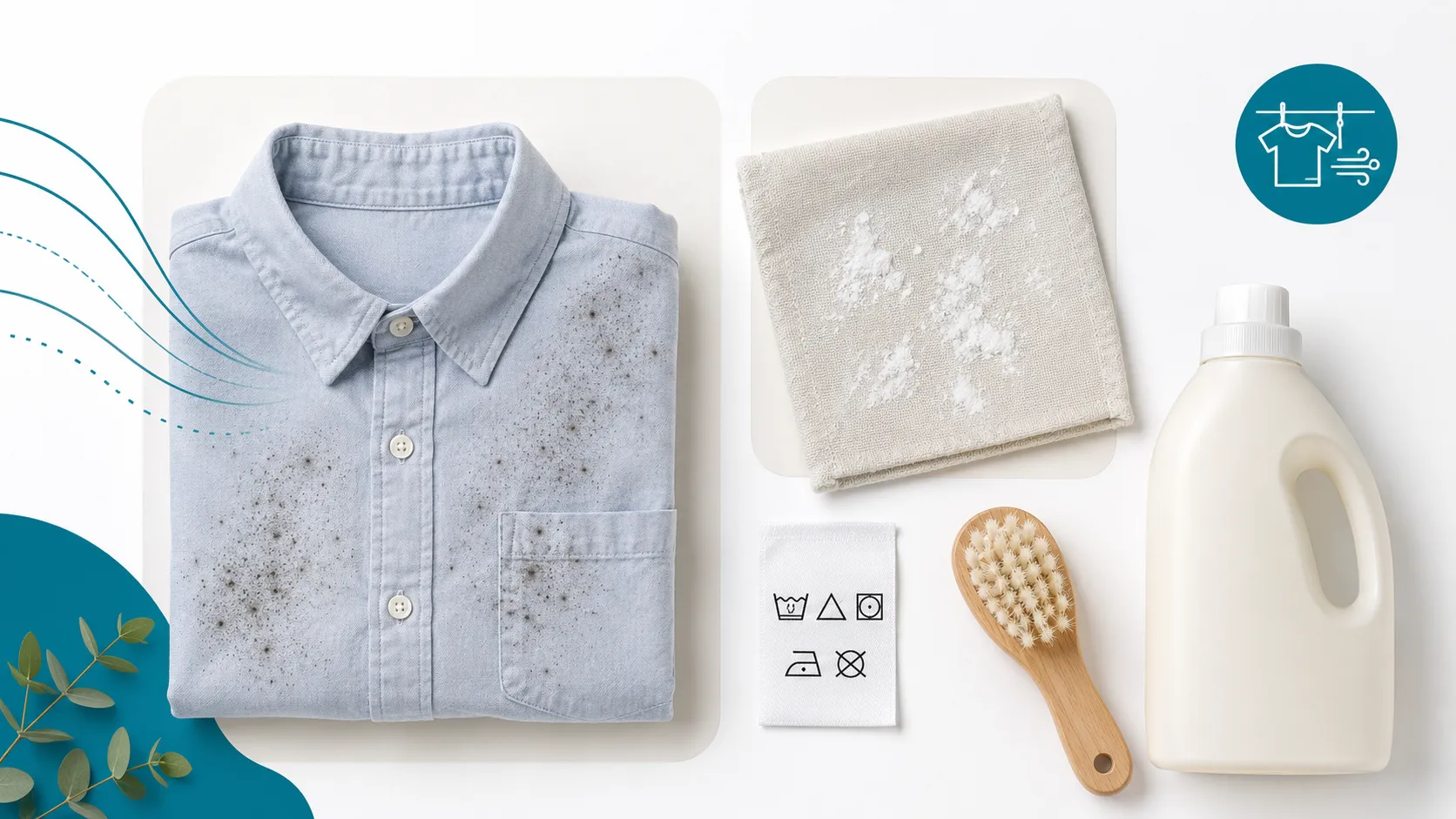
Can fungus be removed from clothes? Yes, many washable items can be saved by brushing off loose growth outdoors, pre-treating the affected area, washing the garment separately, and drying it fully. The safest method for how to remove fungus from clothes depends on the fabric, colour, care label, and severity of the growth.
Black spots, white patches, fuzzy marks, and a musty smell often develop when clothes remain damp or are stored with poor airflow. Read the full guide to choose the right cleaner, treat stains and odours safely, protect delicate fabrics, and prevent fungus from returning.
What Fungus on Clothes Usually Means
When people say fungus on clothes, they usually mean mold or mildew growing on damp fabric. Moisture, poor airflow, and time create the conditions that allow this growth to develop.
Fungus on clothes may look like:
- Black spots
- White patches
- Grey or green marks
- Fuzzy growth
- Powdery areas
- Flat mildew-like stains
- Musty-smelling fabric
You do not need to identify the exact species before cleaning. If the clothing looks or smells moldy, treat it as mold on clothes and correct the moisture problem before storing it again.
Fungus vs Mold vs Mildew on Clothes
Fungus, mold, and mildew are related words, but people often use them differently when talking about clothes.
Why Fungus Grows on Clothes
Fungus grows on clothes when fabric stays damp and does not get enough airflow. It is not just a laundry issue. It is usually a moisture issue.
Common causes include:
- Wet clothes left in a laundry basket
- Clothes forgotten in the washing machine
- Damp towels stored before drying fully
- Poor airflow in closets or drawers
- Humid rooms, basements, or storage areas
- Clothes packed in plastic bags
- Long-term storage in suitcases or bins
- Spills left on fabric
- Sweat or body oils left on clothes before storage
Fungus is more likely to grow on clothes that stay folded, packed, or pressed together while damp. This is why stored clothes, gym clothes, towels, bedding, and seasonal clothing often develop musty smells or spots.
Check the Fabric Before Cleaning
Before you clean fungus from clothes, read the care label and make sure the fabric is washable and still strong.
Check these points first:
Look for thin, weak, rough, or damaged areas.
Test the cleaner on a hidden seam.
Use only one cleaning product at a time.
Never mix bleach with vinegar, ammonia, sanitizer, or another cleaner.
Avoid hard scrubbing on delicate fabric.
Handle visible fuzzy or powdery growth carefully. Work with good airflow, wear gloves, and avoid breathing in loose material. People with asthma, serious allergies, chronic lung disease, or weakened immunity should avoid handling visibly moldy items when possible.
Take dry-clean-only clothing, wool, silk, leather, suede, suits, structured coats, and valuable garments to a professional cleaner instead of testing strong products at home.

How to Remove Fungus From Washable Clothes.
Step 1: Take the Clothes Outside First
Take the clothing outside before brushing or shaking it.
If there is loose or dry fungal growth on the surface, brushing indoors can spread particles around the room. Keep the item away from clean laundry, bedding, and towels.
Place the item on a clean outdoor surface or hold it over a bag before brushing.
Step 2: Brush Off Loose Fungus Gently
Use a soft brush, old toothbrush, or dry cloth to remove loose surface growth.
Brush gently. Do not scrub hard. Hard scrubbing can push stains deeper or damage the fabric.
If the fabric feels weak, thin, or rough, stop. The item may already be damaged.
Step 3: Pre-Treat the Affected Area
Pre-treatment helps loosen surface growth before washing.
Use a fabric-safe option such as:
- Liquid laundry detergent
- Oxygen bleach if the fabric and product label allow it
- Laundry sanitizer only when the product label says it is safe for the fabric and washer
- Vinegar for odor support in some laundry routines
Apply the cleaner to the affected area and let it sit for about 10 to 15 minutes, unless the product label gives different directions.
Vinegar should be used only as odor support, not as a disinfectant or guaranteed fungus remover. Never mix vinegar with bleach, sanitizer, or other cleaners.
Step 4: Wash the Clothes Separately
Wash fungus-affected clothes separately from clean clothes, especially when washing moldy clothes with odor or visible growth.
This helps reduce odor transfer and residue spread. It also gives you more control over the water setting and cleaner.
If you wash more than one affected item together, group them by color and care label. Do not wash dark delicate clothes with white towels just because both smell musty.
Step 5: Use the Warmest Safe Water
Use the warmest water that the care label allows.
Warm water can help clean fungus-affected clothes better than cold water, but not every fabric can handle heat. Hot water can shrink, fade, or damage some clothes.
Can fungus be washed out of clothes? In many washable items, light surface fungus can be removed or reduced with pre-treatment, proper washing, and full drying. Deep growth, stains, odor, or fabric damage may need extra care.
For delicate fabrics, use a gentler method. For dry-clean-only clothes, do not machine wash unless the care label clearly allows it.
Step 6: Dry Fully Before Wearing or Storing
Drying is one of the most important steps.
Fungus can come back if clothes stay damp after washing. Dry the clothing fully before folding, wearing, or storing it.
Use a dryer only if the care label allows it. Air drying in good airflow can also help. Sunlight and airflow can support drying, but they should not replace cleaning.
Best Cleaner for Fungus on Clothes
The best cleaner depends on the fabric, color, odor, and how deep the fungus problem is.
Use baking soda paste only on sturdy washable fabric, and do not scrub hard. Avoid using it on wool, silk, leather, suede, or delicate clothing.
How to Remove Black Fungus Spots From Clothes
Black fungus spots on clothes can be active growth, leftover stains, dirt, ink, dye transfer, or mildew marks. Color alone cannot confirm the fungus type or safety risk.
Black spots are more likely to be fungus if:
- The clothing smells musty
- The spots appeared after damp storage
- The marks are grouped or spreading
- The fabric was left wet for a long time
- The marks do not brush off like dust or dirt
To remove black fungus spots from clothes, first clean any active growth. Brush loose residue outside, pre-treat the area, wash separately, and dry fully.
If the black spots remain after washing but the fabric no longer smells musty, the issue may be staining. Treat it as fungus stains from clothes instead of active growth.
Do not keep using stronger cleaners if the fabric starts to fade, weaken, or change texture.

What About White Fungus on Clothes?
White fungus can look powdery, fuzzy, chalky, or dusty. On dark clothes, it may resemble lint or light-colored dust.
You may notice:
Small white patches
Fuzzy or powdery spots
White specks in folded areas
A musty smell
These marks often develop when clothing is stored damp in a closet, drawer, suitcase, laundry basket, or storage box.
On black clothes, lint usually brushes away easily, while mold may cling to the fibers and smell musty. Checking the texture, smell, and storage history can help you tell whether white patches are mold or laundry residue
If the marks appeared after washing and feel soapy or chalky, they may be detergent residue instead of mold.
What If Fungus Leaves Stains on Clothes?
Sometimes the fungus is gone, but mold-like stains remain on the clothes. This is common with black dots, grey marks, yellow mildew stains, and old damp-storage spots.
Active fungus and fungus stains are not the same problem. Active fungus needs cleaning first. Leftover stains need stain treatment.
If the fabric smells clean, has no fuzzy growth, and only the mark remains, treat it as a stain.
Avoid putting the item in the dryer until you check the stain. Heat can set stains and make them harder to remove.
What About Pink or Red Marks on Clothes?
Pink, red, or orange marks are not always fungus. They may come from dye transfer, rust, cosmetics, laundry-product residue, washer buildup, or microbial growth.
Check the mark’s texture, smell, location, and when it appeared. These clues can help you work out what caused the pink spots on the fabric before choosing a treatment.
What If Clothes Still Smell Like Fungus?
A fungus smell in clothes can stay even after washing. This often happens when odor is trapped in the fibers or the item did not dry fast enough.
Common reasons include:
- Clothes stayed damp too long
- The washer was overloaded
- The water was too cold
- Too much detergent was used
- The washer smells musty
- Clothes were stored before drying fully
If the fabric looks clean but still smells musty, treat it as an odor issue. Do not keep adding more detergent. Too much detergent can leave residue and make clothes smell stale.
Can Fungus Spread From One Clothing Item to Another?
Fungus-affected clothes can spread odor, residue, or loose particles to nearby items. This is more likely when damp clothes are packed tightly together.
To reduce transfer:
- Keep affected clothes away from clean laundry.
- Wash them separately.
- Do not shake them indoors.
- Dry them fully before storing.
- Check nearby clothes if they were stored together.
- Clean the storage area if it smells musty.
Fungus usually comes back because moisture is still present. Cleaning the clothes helps, but you also need to fix damp storage or poor airflow.
What Fabrics Need Extra Care?
Some fabrics can handle normal washing better than others. Some need gentle care or professional cleaning.
If the fabric is expensive, delicate, or sentimental, do not experiment with strong cleaners.
When Clothes Need Professional Cleaning or Replacement
Not every fungus-affected garment can be cleaned safely at home.
The item is dry-clean-only.
The fabric is wool, silk, leather, or suede.
The garment is structured, expensive, or sentimental.
The affected area is large.
The smell remains after careful cleaning.
The spots return after the item has been washed and dried.
Consider professional help if:
Tell the cleaner that the item has fungus, mold, or mildew marks. This helps them choose a safer treatment.
Can You Wear Clothes After Removing Fungus?
You may be able to wear clothes after cleaning if they pass a few checks.
The item should have:
- No fuzzy or powdery growth
- No strong musty smell
- No spreading spots
- Normal fabric feel
- No weak or rough areas
- Complete dryness
Do not wear the garment if it still has fuzzy or powdery material, a strong musty smell, spreading spots, weak fibers, or damp areas.
People with asthma, serious mold allergies, chronic lung disease, or weakened immunity should be more cautious with previously moldy clothing. When you are unsure whether the item has been cleaned successfully, ask a professional cleaner or replace it.
How to Stop Fungus From Coming Back
Cleaning the clothing helps, but fungus can return if moisture stays in the fabric or storage area.
To reduce the chance of fungus coming back:
- Dry clothes fully before storing.
- Do not leave wet laundry in the washer.
- Avoid storing clothes in sealed plastic bags.
- Use breathable storage when possible.
- Improve closet airflow.
- Keep clothes away from damp walls.
- Clean musty storage bins or drawers.
- Use a dehumidifier in humid rooms if needed.
- Rotate stored clothes during long storage.
If fungus keeps returning in a closet, drawer, suitcase, or storage box, inspect the area for trapped moisture, poor airflow, leaks, or condensation.
Final Fungus-Removal Checklist
Use this checklist before and after cleaning fungus from clothes:
- Check the care label.
- Keep affected clothes away from clean laundry.
- Take the item outside before brushing.
- Brush loose fungus gently.
- Test cleaners on a hidden seam.
- Pre-treat the affected area.
- Wash separately.
- Use the warmest safe water.
- Follow the product label.
- Never mix bleach with vinegar, ammonia, sanitizer, or other cleaners.
- Dry the fabric fully.
- Check for stains, smell, and fabric damage.
- Get professional help for delicate or dry-clean-only items.
- Fix the moisture problem before storing clothes again.
Fungus on clothes is usually a sign that fabric stayed damp for too long. Many washable items can be cleaned with careful steps, but not every item can be saved. Start with the safest method for the fabric, dry it fully, and stop if the clothing starts to fade, weaken, or smell worse.
