


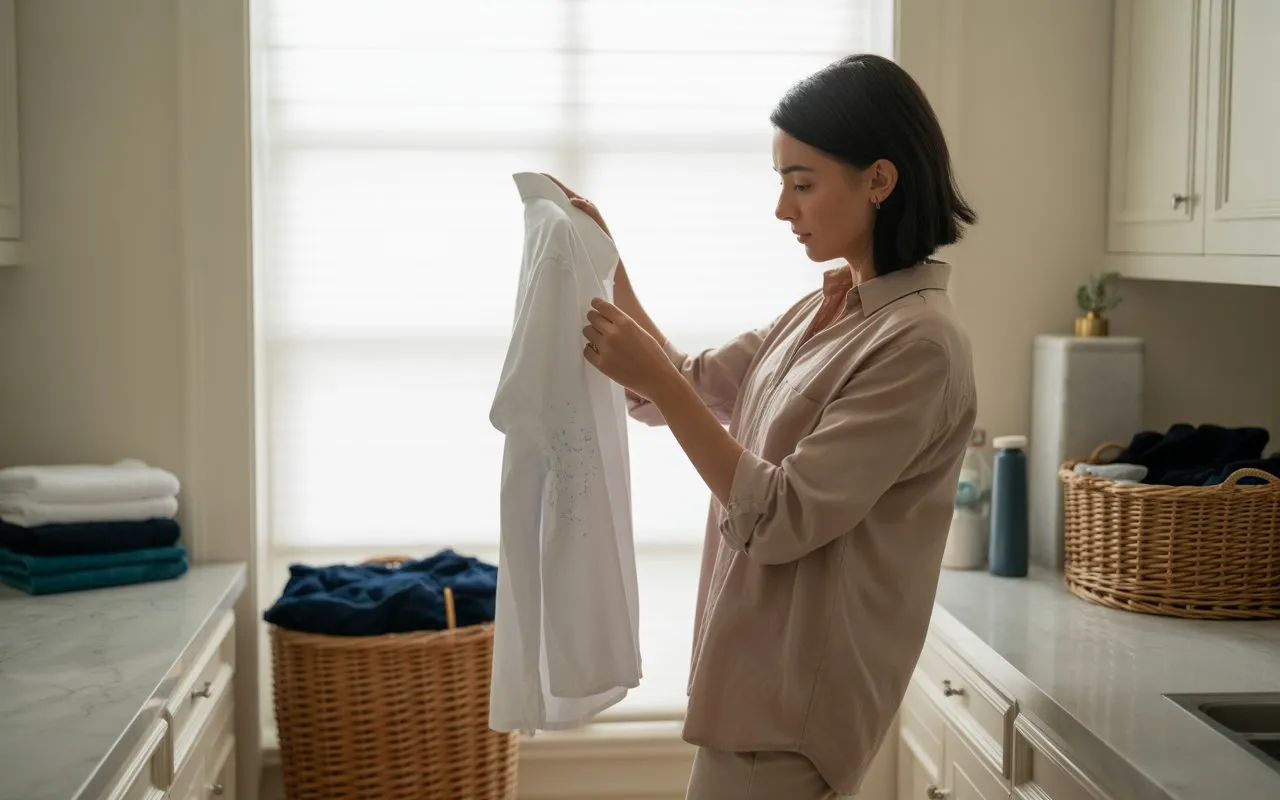
Moldy clothes create one simple question: should you throw them out or try to save them? The answer depends on how much mold you see, what the fabric is made of, whether the smell stays after cleaning, and whether the item can be cleaned safely.
The good news is that some moldy clothes can be saved. The bad news is that not every item deserves a rescue mission. This guide helps you decide what to keep, what to rewash, and what to toss before you waste time on a lost cause.
Should You Throw Out Moldy Clothes?
Yes, sometimes. Throw out moldy clothes when the mold is heavy, the smell stays strong after cleaning, the fabric feels damaged, or the item cannot be cleaned safely. Try to save them when the mold is light, the fabric is washable, and the item comes out clean, fully dry, and odor-free after proper washing.
Should You Throw Out Moldy Clothes?
Sometimes yes. Sometimes no.
Throw them out if the mold is widespread, the fabric is already weakened, the smell stays strong after proper cleaning, or the item is delicate enough that home cleaning may ruin it anyway.
Try to save them if the mold is limited, the clothing is washable, and the item looks, feels, and smells normal after proper cleaning and full drying.
The real question is not just, “Can I wash this?” It is, “Will this item still be safe, clean, and worth keeping after I do?” That is a much smarter question, even if it is less emotionally supportive to your favorite hoodie.
Can Moldy Clothes Be Saved?
Yes, many moldy clothes can be saved.
Washable cotton shirts, towels, and other sturdy basics often have a good chance if the mold is light and you catch it early. That is especially true when the item cleans up well and does not keep a strong odor afterward.
But “can be saved” does not mean “should always be saved.” If the fabric feels weak, the smell stays bad, or the mold keeps coming back, saving the item may not be worth the effort.
How to Decide Whether Moldy Clothes Are Worth Saving
Use these four checks.
1. How much mold is on the item?
A few small spots are very different from heavy, visible growth across several areas. More mold usually means more cleanup, more risk, and a lower chance that the item is worth keeping.
2. What is the fabric?
Sturdy washable fabrics are easier to save. Delicates, dry-clean-only pieces, lined garments, and older weak fabrics are harder to clean well.
3. Does the smell stay after cleaning?
If the item still smells strongly musty after proper washing and full drying, that is a major warning. At that point, the problem may not be fully gone. A shirt that still smells like a damp wall is not winning. If the odor stays even after washing, it may not be just mold, and you may need a deeper fix like this guide on
👉 how to get mildew smell out of clothes
4. Does the fabric already feel damaged?
If the fabric feels brittle, thin, rough, or clearly weakened, the item may not be worth keeping even if you manage to improve the surface problem.
Keep It, Rewash It, or Throw It Away
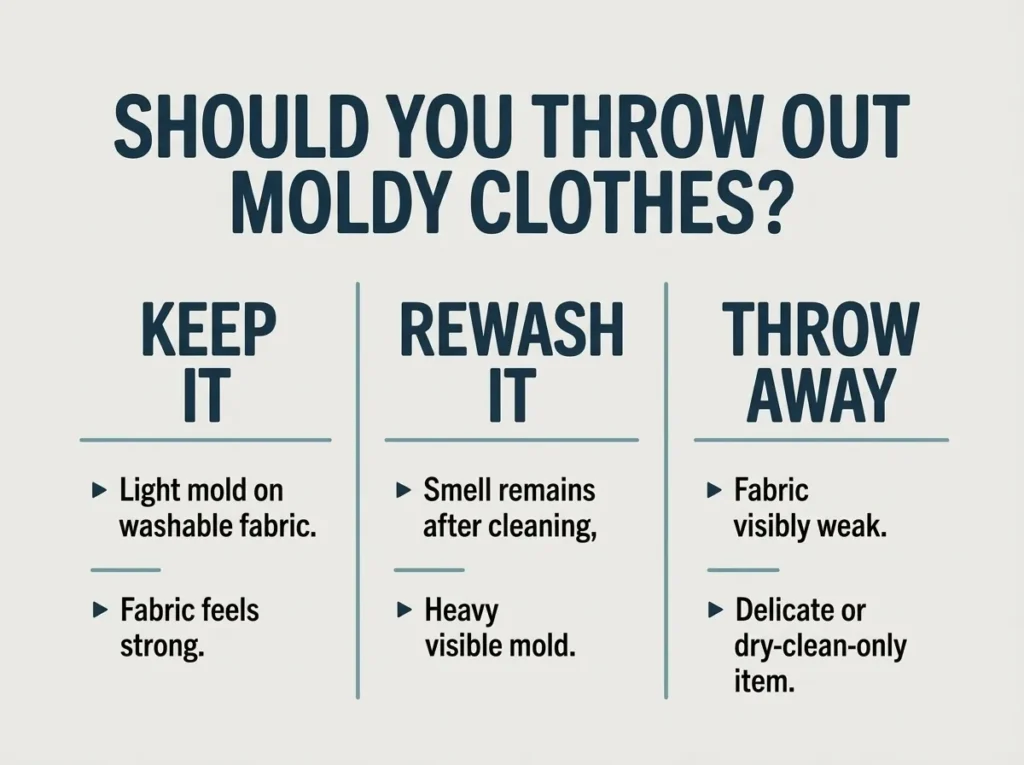
Use this quick table to decide whether a moldy clothing item is worth saving, worth one more wash, or better to discard.
| Situation | Risk Level | Best Action |
|---|---|---|
| Light mold on washable cotton | Low | Clean it properly and recheck after drying |
| Musty smell remains after first wash | Medium | Rewash once and dry fully |
| Delicate or dry-clean-only item | Medium to High | Consider professional care |
| Heavy visible mold or deep staining | High | Throw it away |
| Fabric feels weak, damaged, or still smells bad after cleaning | High | Throw it away |
Throw It Away If…
- mold is heavy or widespread
- the smell stays strong after proper cleaning
- the fabric feels weak or damaged
- the item cannot be cleaned safely
- mold keeps coming back
- the cleanup effort is bigger than the value of the item
That last point matters. You are not running a laundry charity for doomed sweaters.
When Moldy Clothes Can Usually Be Saved
Some clothes are worth the effort.
Light mold on washable fabric
Washable shirts, towels, and other everyday basics are often the best candidates.
No strong odor after cleaning
If the smell is gone after washing and drying, that is a good sign.
No clear fabric damage
If the fabric still feels strong and looks normal, the item has a better chance.
Sturdy everyday fabrics
Simple cotton basics usually give you a better chance than delicate or structured garments.
When You Should Throw Away Moldy Clothes
Throw It Away If…
Use this checklist when you are deciding whether a moldy item is still worth saving.
- The mold is heavy or widespread
- The smell stays strong after proper cleaning
- The fabric feels weak, brittle, or damaged
- The item cannot be cleaned safely at home
- Mold keeps coming back after washing
- The cleanup effort is bigger than the value of the item
Is It Safe to Wear Moldy Clothes?
No. Do not wear moldy clothes before proper cleaning.
Mold exposure can irritate the skin, eyes, nose, throat, and lungs. Some people face a higher risk than others, especially those with asthma, mold allergies, sensitive skin, or a weakened immune system.
Safe to wear again only when…
- visible mold is gone
- the item has been washed properly
- the item is fully dry
- no strong odor remains
If one of those is missing, the clothing is not ready.
What Fabrics Are Hardest to Save?
Some garments are much easier to clean than others. Fabric type plays a big role in whether a moldy item is worth saving.
| Fabric Type | How Hard It Is to Save | Best Advice |
|---|---|---|
| Washable cotton basics | Usually easier | Try cleaning first if mold is light and the fabric still feels strong |
| Delicate fabrics | Harder | Use extra caution because fibers can weaken or stain more easily |
| Dry-clean-only garments | Harder | Consider professional care instead of home washing |
| Vintage or weak fabrics | High risk | Discard if damage or odor remains after light treatment |
| Structured or padded garments | High risk | These are harder to clean deeply and may not be worth saving |
Can Mold Be Washed Out of Clothes?
Sometimes, yes.
Washing can help remove mold from washable fabrics, especially when the growth is light and the item is cleaned quickly. But one wash is not magic. If the item is washed poorly, dried badly, or stored in the same damp place again, the problem can return.
That means washing matters, but drying and storage matter just as much.
Mold vs Musty Smell: When the Problem Is Different
Visible mold and musty smell are not always the same thing.
If you see dark, fuzzy, or blotchy growth, you are dealing with visible mold contamination. If the clothing mostly smells musty but shows no clear growth, the problem may fit a mildew-smell or odor-focused article better.
This matters for your content structure too. This page should own the throw it out or save it decision for visible mold. Smell-only cases belong somewhere else.
When Cleaning Is Not Worth the Time or Risk
Sometimes the smartest choice is to let the item go.
Cleaning is often not worth it when:
- the item is low value and heavily affected
- the fabric is delicate and costly to restore
- mold keeps returning
- the home has a bigger moisture problem
- someone in the household is highly sensitive to mold
If mold keeps returning in stored clothing, fix the moisture and airflow problem to prevent mold from developing in the closet again.
That is not being dramatic. That is being efficient.
Frequently Asked Questions
Should you throw out moldy clothes?
Sometimes yes. Throw them out when mold is heavy, the smell stays after cleaning, the fabric is damaged, or the item cannot be cleaned safely.
Can moldy clothes be saved?
Yes, many washable clothes with light mold can be saved if they clean up well and dry fully.
Is it safe to wear moldy clothes?
No. Do not wear moldy clothes until the visible growth is gone, the item has been cleaned properly, and it is fully dry with no strong odor left behind.
When should you throw away moldy clothes?
Throw them away when the mold is widespread, the smell stays strong after cleaning, the fabric feels weak, or the item keeps getting moldy again.
Can mold be washed out of clothes?
Sometimes. Washing can help remove mold from many washable fabrics, but success depends on the fabric, the amount of mold, and whether the item dries fully afterward.
Can mold spread from one garment to another?
Spores can spread, especially in damp, closed spaces. That is one reason to separate affected items and fix the moisture problem.
Does dry cleaning remove mold from clothes?
It may help with delicate or dry-clean-only garments, but results depend on the fabric, the level of contamination, and how long the mold has been there.
Conclusion
You should throw out moldy clothes when the mold is heavy, the smell stays strong, the fabric feels damaged, or the item is not safe to clean. You can often save washable clothes with light mold if they come out clean, fully dry, and odor-free. The smartest rule is simple: if the item looks clean, smells clean, feels sound, and stays dry, keep it. If not, let it go.
