


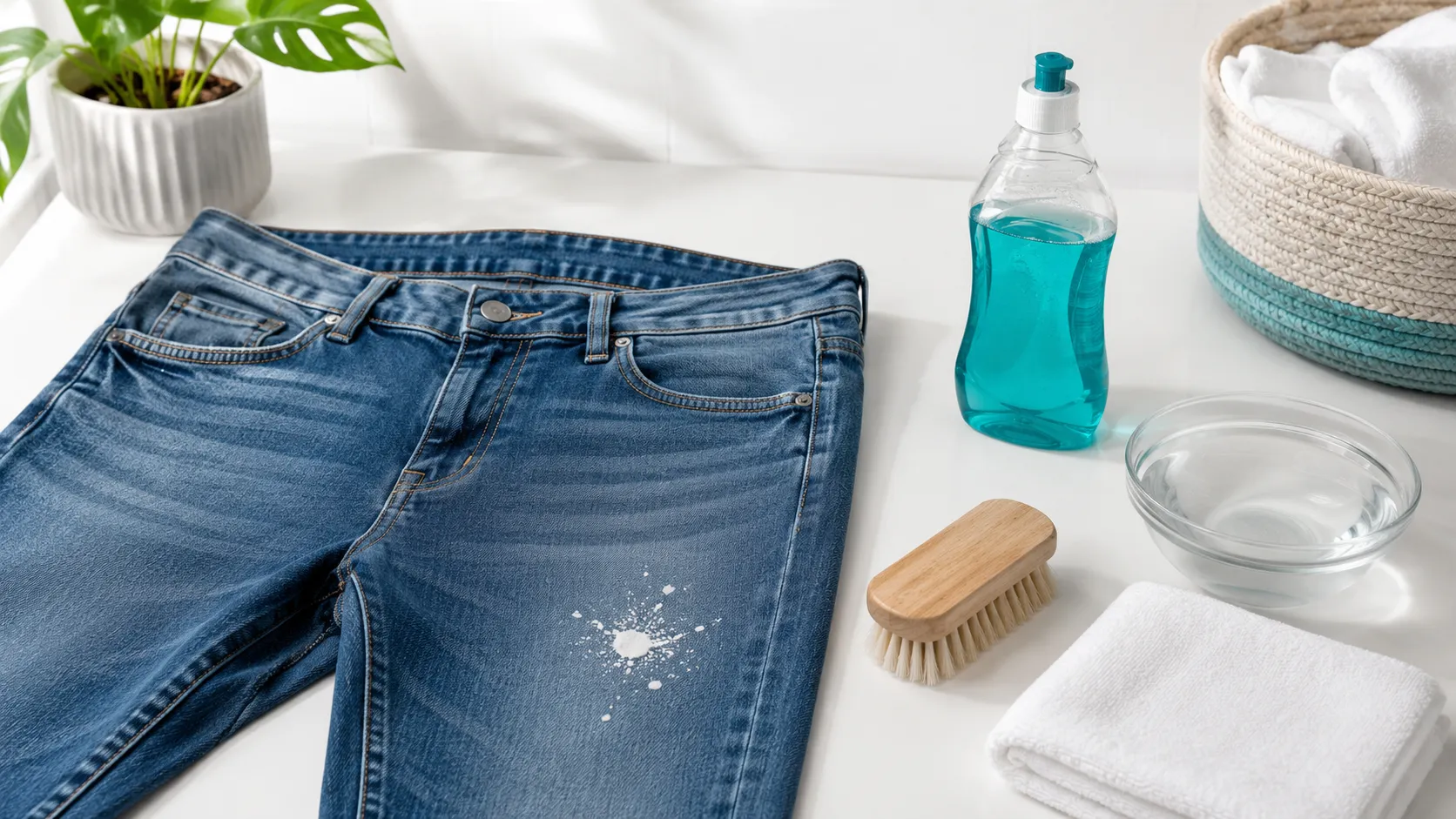
Paint on jeans can look permanent, especially after it dries. But denim is stronger than many fabrics, so you may still be able to remove or fade the stain.
The safest method depends on the paint type, the age of the stain, and the color of your jeans. Fresh water-based paint is usually easier to remove. Dried paint needs more patience. Dark denim needs extra care because rubbing alcohol or hard brushing may fade the fabric.
This guide explains how to get paint out of jeans without damaging the denim, fading the color, or setting the stain deeper.
The same gentle method can also help remove paint from jeans or get paint off jeans without causing obvious fading.
Why Denim Needs a Different Method
Denim is thick and strong, but it still needs careful treatment.
Paint can sit on top of denim or sink between the woven threads. This is why dried paint on jeans can feel stiff or raised.
Dark jeans need extra care. Black jeans and deep blue denim can fade if you scrub too hard or use strong products without testing.
Stretch denim also needs caution. Many jeans contain spandex or elastane. Strong solvents may weaken stretch fibers or affect the fabric finish.
Raw denim can bleed dye more easily than pre-washed denim. Test first and avoid soaking unless the care label allows it.
Do not treat jeans like a hard surface. Start gently. Test first. Then increase treatment only if needed.
The goal is simple: remove the paint without fading, tearing, or roughening the denim.
Denim Safety Guide
Use this table before treating the stain.
| Denim Type | Main Risk | Safer Approach |
|---|---|---|
| Dark denim | Fading | Test inside a seam first |
| Black jeans | Light patches | Avoid hard scrubbing |
| Stretch denim | Fiber damage | Avoid long solvent soaking |
| White denim | Dye transfer from cloths | Use clean white towels only |
| Raw denim | Color bleeding | Use minimal water and test first |
| Old or worn denim | Fraying | Brush gently |
This helps you choose a safer method before applying any cleaner.

Check the Paint Type First
Before you treat the stain, try to identify the paint type.
Different paints need different methods.
Water-Based Paint
Water-based paint is usually the easiest to remove from jeans. This includes many wall paints and washable craft paints.
Fresh water-based paint may come out with rinsing, dish soap, and laundry detergent.
Latex Paint
Latex paint is often water-based. It is easier to remove while wet.
Once dry, it may need gentle scraping and rubbing alcohol.
Acrylic Paint
Acrylic paint can be stubborn after drying. It may form a plastic-like layer on denim.
You may need to scrape it first and repeat treatment.
Oil-Based Paint
Oil-based paint is harder to remove. Soap and water may not be enough.
You may need the solvent listed on the paint label, but solvents can fade denim.
Spray Paint
Spray paint may be water-based, oil-based, or enamel. It can also land as many small dots.
If the stain came from aerosol paint, follow a spray-paint-specific method because spray paint can be water-based, oil-based, or enamel.
What You Need
Start with basic supplies. Use stronger products only if needed.
You may need:
- Spoon or dull knife
- Paper towels
- Clean white cloth
- Bowl of water
- Dish soap
- Liquid laundry detergent
- Rubbing alcohol
- Soft brush or old toothbrush
- Stain remover
- Gloves
For oil-based paint, you may also need the solvent recommended on the paint label. Test it inside a seam before using it on the visible stain.
Fresh Paint on Jeans
Fresh paint is easier to remove than dried paint. Treat it as soon as possible.
Step 1: Lift off extra paint
Use a spoon, dull knife, or old card to lift extra paint from the jeans.
Work gently. Try not to spread the stain.
Do not press the paint deeper into the denim.
Step 2: Blot the stain
Use a clean paper towel or white cloth to blot wet paint.
Do not rub. Rubbing can push paint between the denim threads.
If the towel picks up paint, move to a clean part of the towel.
Step 3: Rinse from the back
Turn the jeans inside out. Rinse the back of the stain with running water.
This helps push paint out of the denim instead of deeper into it.
Use cool or warm water based on the care label. If you are not sure, start with cool water.
Step 4: Apply dish soap
Add a small amount of dish soap to the stain.
Gently work it into the denim with your fingers or a soft brush. Use light pressure. Denim can handle more than delicate fabric, but hard scrubbing can still fade the area.
Rinse and check the stain.
Step 5: Pre-treat before washing
If the stain is lighter but still visible, apply liquid laundry detergent or stain remover.
Let it sit for a few minutes. Then wash the jeans inside out.
Step 6: Air dry and check
After washing, check the stain before drying.
If paint remains, do not use the dryer. Air dry the jeans and repeat the treatment.
Dryer heat can set paint into denim.
Dried Paint on Jeans
Dried paint takes more time. The goal is to loosen the paint without damaging the denim.
Step 1: Scrape dried paint gently
Use a dull knife, spoon edge, or old card.
Scrape only the paint that comes off easily. Do not dig into the denim.
If you scrape too hard, you may create a faded or worn patch.
Step 2: Brush away flakes
Use a soft brush or old toothbrush to remove loose paint flakes.
Brush in short, gentle strokes. Avoid harsh scrubbing, especially on black jeans or dark denim.
Step 3: Test rubbing alcohol inside a seam
Rubbing alcohol can help loosen dried water-based paint from jeans. But it can also affect dye.
Turn the jeans inside out. Apply a small amount of rubbing alcohol to an inside seam or hidden area.
Wait a few minutes. Blot with a white cloth.
If blue or black dye transfers to the cloth, do not use alcohol on the visible stain.
Step 4: Dab the stain
If the test is safe, apply rubbing alcohol to the dried paint.
Use a clean cloth or cotton swab. Dab the paint instead of soaking the whole area.
Let it sit for a few minutes. Then gently loosen the paint with a toothbrush or soft brush.
Step 5: Rinse and pre-treat
Rinse the area if the care label allows it.
Then apply liquid laundry detergent or stain remover. Let it sit for a few minutes before washing.
Step 6: Wash inside out
Wash the jeans inside out. This helps protect the outer color.
Use the normal cycle recommended on the care label.
Step 7: Air dry and repeat if needed
Check the stain after washing.
If paint remains, repeat the treatment. Do not use the dryer until the stain is gone or as faded as possible.
Dried paint may not come out in one round. It may take several careful attempts.
Latex and Acrylic Paint on Denim
Latex and acrylic paint are common on jeans. They may come from wall painting, crafts, school projects, or DIY work.
Fresh latex paint is often easier to remove because it is usually water-based. Rinse it from the back, then use dish soap and warm water if the care label allows it.
Dried latex paint may need scraping first. After that, rubbing alcohol can help loosen the remaining paint if your seam test is safe.
Acrylic paint can be harder after it dries. It may form a thin film on the denim. Scrape the dried layer gently before using any cleaner.
Do not scrub hard across dark denim. It may remove dye around the stain and leave a lighter patch.
On dark denim, a lighter patch can be more noticeable than a faint paint mark, so stop if the dye begins to transfer.
If the paint does not come out fully, it is better to leave a faint mark than to damage the jeans.
Oil-Based Paint on Jeans
Oil-based paint is more difficult to remove from jeans.
It does not break down well with water and soap alone. If the stain is fresh, blot it right away. Do not rub.
Check the paint can or product label for cleanup instructions. It may recommend mineral spirits, paint thinner, or another solvent.
Before using any solvent, test it inside a seam. This is very important for dark denim and stretch denim.
Do not soak stretch denim in solvents. Long exposure may affect elastic fibers or the fabric finish.
Work in a ventilated area. Wear gloves. Keep solvents away from heat, sparks, and open flames.
After treating with a solvent, use dish soap or liquid laundry detergent to help remove oily residue. Then wash the jeans inside out.
Be realistic. Dried oil-based paint may not fully come out. Strong solvents may also fade denim.
If the jeans are expensive or special, a professional cleaner may be safer.
How to Avoid Fading Dark Jeans
Dark jeans need extra care during paint removal.
Black jeans, dark blue denim, and colored denim can lose dye if you scrub too hard or use strong cleaners.
Use these tips to reduce fading:
- Test rubbing alcohol inside a seam first.
- Stop if dye transfers to a white cloth.
- Avoid bleach on colored denim.
- Do not scrub one spot too hard.
- Wash jeans inside out.
- Use cold water if the care label allows it.
- Air dry instead of using high heat.
- Treat the stain in short rounds instead of one harsh session.
Also check the fabric content. Stretch jeans may contain spandex or elastane. These fibers can be more sensitive to strong solvents.
If the paint stain is small and the jeans are dark, gentle treatment is usually better than aggressive scrubbing.
What About White Jeans?
White jeans have different risks.
Use a clean white cloth or paper towel when blotting. Colored cloths can transfer dye onto white denim.
Do not assume bleach is safe just because the jeans are white. Even on white denim, use bleach only if the care label says it is safe.
If the jeans contain stretch fibers, trims, or special finishes, avoid harsh products unless the label allows them.
Can You Get Spray Paint Out of Jeans?
Sometimes, spray paint can come out of jeans.
Fresh spray paint has a better chance than dried spray paint. If the spray paint is water-based, dish soap, detergent, and rubbing alcohol may help.
Oil-based or enamel spray paint is harder. It may need stronger treatment, but strong solvents can fade denim.
Spray paint also often lands as tiny dots. This is called overspray. Treat those dots slowly with a cotton swab or cloth after testing.
For a full method, follow a spray-paint-specific guide. Spray paint may need different care than regular wall paint.
What Not to Do
The wrong step can make paint harder to remove from denim.
Avoid these mistakes:
- Do not rub fresh paint hard.
- Do not put jeans in the dryer before the stain is gone.
- Do not bleach colored jeans.
- Do not scrub black jeans aggressively.
- Do not use acetone or paint thinner without testing first.
- Do not ignore the care label.
- Do not soak stretch denim in strong solvents.
- Do not mix cleaning chemicals.
Do not use acetone on acetate or triacetate blends. Some jeans, trims, or stretch fabrics may include synthetic fibers, so check the fabric label first.
Also avoid treating jeans for too long in one session. If the denim starts to fade, fray, or feel weak, stop.
You can repeat gentle treatment later. Damaged denim is harder to fix than a faint stain.
Paint Removal Guide for Jeans
| Situation | Best First Step | What to Avoid |
|---|---|---|
| Fresh water-based paint | Rinse from the back, then use dish soap | Hard rubbing |
| Dried water-based paint | Scrape gently, then test rubbing alcohol | Digging into denim |
| Latex paint | Treat like water-based paint | Dryer heat |
| Acrylic paint | Scrape dried film first | Aggressive scrubbing |
| Oil-based paint | Check paint label for solvent | Solvent use without testing |
| Dark denim | Test inside seam first | Bleach and hard scrubbing |
| Stretch denim | Use gentle treatment | Long solvent soaking |
| White denim | Use white cloths only | Colored cloths and unsafe bleach |
| Spray paint | Treat based on spray paint type | Treating all spray paint the same |
FAQs
Can paint come out of jeans?
Yes, paint can often come out of jeans, especially if it is fresh and water-based. Dried paint and oil-based paint are harder to remove.
How do you get dried paint out of jeans?
Gently scrape off dried paint first. Then test rubbing alcohol inside a seam. If the test is safe, dab the stain, brush gently, rinse, pre-treat, wash inside out, and air dry.
Does rubbing alcohol remove paint from denim?
Rubbing alcohol can help loosen dried water-based paint from denim. But it can also affect dye, so test it inside a seam before using it on the stain.
Can rubbing alcohol fade jeans?
Yes, rubbing alcohol may fade some jeans, especially dark denim. Always test on an inside seam first. Stop if dye transfers to your cloth.
How do you get acrylic paint out of jeans?
For fresh acrylic paint, rinse from the back and use dish soap. For dried acrylic paint, scrape the paint film gently. Then test rubbing alcohol and treat if the denim color stays safe.
How do you remove latex paint from jeans?
Fresh latex paint can often be removed with water, dish soap, and laundry detergent. Dried latex paint may need gentle scraping and rubbing alcohol after a seam test.
Can spray paint come out of jeans?
Sometimes. Fresh water-based spray paint has the best chance. Dried, oil-based, or enamel spray paint is harder and may need a spray-paint-specific method.
Should I wash jeans after treating paint?
Yes. After loosening the paint, pre-treat the area and wash the jeans inside out according to the care label. Air dry first so the stain does not set.
Final Answer
The safest way to get paint out of jeans is to start gently.
For fresh water-based paint, lift extra paint, rinse from the back, and use dish soap. For dried paint, scrape first. Then test rubbing alcohol inside a seam before using it on the stain.
Wash jeans inside out after treatment. Then air dry and check the stain again.
Do not use the dryer until the paint is gone. Also avoid bleach, harsh scrubbing, and strong solvents unless you have tested the denim first.
With patience, many paint stains can be removed or faded without ruining your jeans. For shirts, hoodies, dresses, and other fabrics, follow our full guide to remove paint from clothes safely.
