

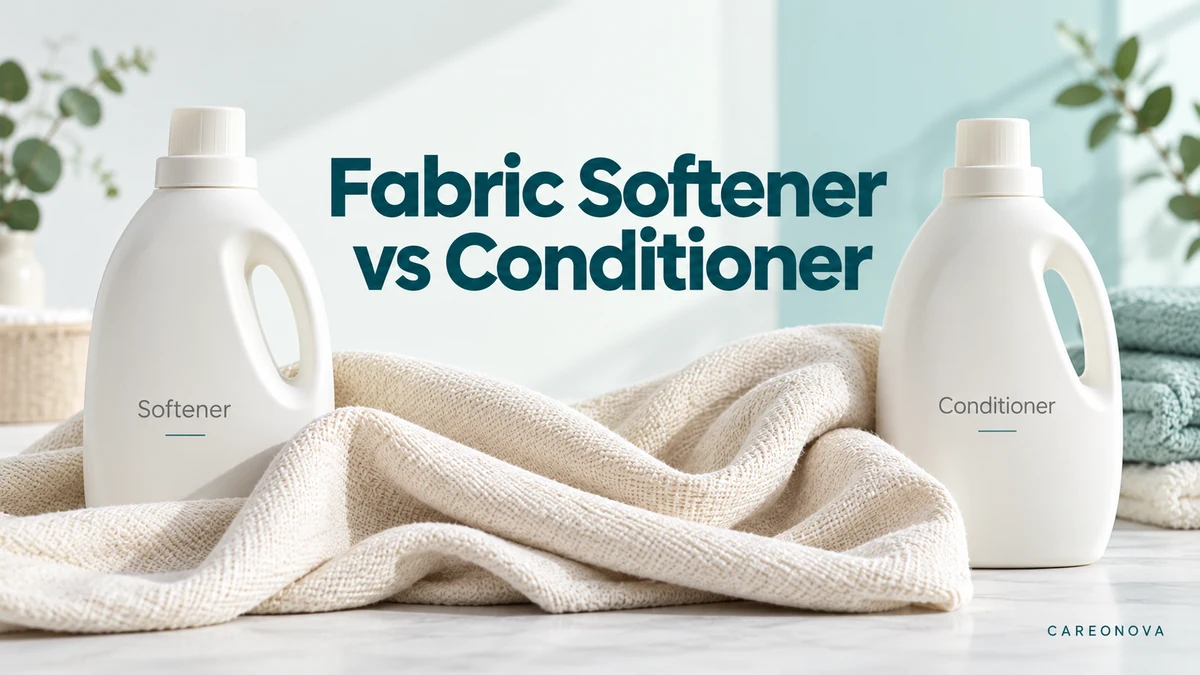
Fabric softener and fabric conditioner generally mean the same thing. Both are laundry additives designed to make clothes feel softer, reduce static cling, and improve fabric feel. Some products labeled conditioner advertise extra benefits, such as protection against fading or pilling, but the name alone does not mean they work differently.
If you’re comparing two bottles, you usually don’t need both. What matters is the actual formula, its benefits, and whether it’s suitable for your clothes.
Are Fabric Softener and Fabric Conditioner the Same?
Yes. Fabric softener and fabric conditioner are two names for essentially the same type of laundry product.
The American Cleaning Institute recognizes fabric conditioner as another name for fabric softener. Both products are designed to condition fabric fibers rather than clean them.
The terminology varies between manufacturers and markets. Some brands use fabric softener because the name clearly describes its main purpose. Others use fabric conditioner to emphasize broader fabric-care benefits.
For example, a conditioner-labeled product might advertise reduced pilling, color protection, or less stretching alongside softness.
However, these benefits depend on the specific formulation. A product labeled fabric softener may offer similar protection, while another conditioner might focus mainly on softness and fragrance.
The label doesn’t establish which product is better. You need to compare what each formula offers.
What Do Fabric Softener and Conditioner Actually Do?
Liquid fabric softeners contain conditioning ingredients that settle onto fabric fibers during the rinse cycle.
Many formulas use positively charged ingredients called cationic surfactants. These attach to fabric surfaces and help reduce friction between fibers, making clothes feel smoother and less stiff.

Depending on the formula, fabric softeners and conditioners can provide several benefits:
- Softer fabric: Conditioning ingredients reduce friction between fibers, creating a smoother feel.
- Less static cling: They can reduce the electrical buildup that causes clothes to stick together, particularly in synthetic fabrics.
- Fewer wrinkles: Some formulas may help reduce wrinkling, although results depend on the fabric and washing conditions.
- Added fragrance: Scented products can leave laundry smelling fresh after washing.
- Fabric protection: Certain formulas advertise reduced pilling, fading, or stretching, although these effects depend on the product and fabric.
These benefits don’t mean every conditioner performs equally well.
A fragrance-free formula, for example, can soften clothes without adding perfume. Another product might focus on static reduction or additional fabric-care claims.
Fabric conditioner and laundry detergent are laundry care products with different purposes. Detergent removes dirt, oils, and stains during washing. Conditioner mainly affects how clean fabrics feel and behave afterward.
Fabric Softener vs Conditioner: What Actually Differs?
The main difference isn’t the product name. It’s the formulation and the benefits each manufacturer offers.
Two bottles labeled differently might contain similar conditioning ingredients. Meanwhile, two products both called fabric conditioners could vary considerably in concentration, fragrance, and recommended usage.
Here’s what to compare when choosing between them.
| What to Compare | Why It Matters |
|---|---|
| Softening performance | Both product types are designed to soften fabrics, but results can vary by formula. |
| Static reduction | Some formulas emphasize controlling static cling more than others. |
| Fabric-protection claims | Benefits such as reduced pilling or fading depend on the specific product and supporting evidence. |
| Fragrance | Products may be strongly scented, lightly scented, or fragrance-free. |
| Concentration | Concentrated products may require smaller doses per load. |
| Fabric compatibility | Not every formula is appropriate for towels, microfiber, activewear, or specialized clothing. |
| Cost per load | Bottle size and price alone don’t show which product offers better value. |
Does Fabric Conditioner Protect Clothes Better?
Not automatically.
Some conditioners advertise additional protection against fading, stretching, and pilling. These claims may reflect particular ingredients or formulation differences, but they aren’t benefits guaranteed by the word conditioner.
Consider two products on a store shelf.
One is labeled fabric softener and promises softness and static reduction. Another is labeled fabric conditioner and advertises softness along with reduced pilling.
The second product may offer a benefit you value, but its label alone doesn’t prove it performs better. Look for specific product information or credible testing that supports the claim.
Price matters, too. A concentrated conditioner may cost more per bottle but require less product per wash. Comparing the recommended cost per load is more useful than comparing package prices.
Do You Need Both Fabric Softener and Conditioner?
No. Since they serve essentially the same purpose, using both liquid products in the same wash is generally unnecessary.
Combining them increases the amount of conditioning ingredients added to your laundry without guaranteeing better results.
Using more than the recommended amount can also leave unwanted residue on fabric, especially with repeated use or inadequate rinsing.
If your current fabric softener already gives you the softness and static control you want, there’s usually no reason to add a separate conditioner.
Is Fabric Conditioner Necessary?
Fabric conditioner is optional. Your regular detergent can clean clothes without it.
You might find conditioner useful if cotton shirts feel stiff after drying or synthetic clothes develop noticeable static cling.
On the other hand, you may prefer to skip it if your clothes already feel comfortable, you want to avoid added fragrance, or you frequently wash absorbent and performance fabrics.
Clean laundry doesn’t need to smell heavily fragranced or feel coated to be properly washed.
When Should You Use or Avoid Fabric Conditioner?
Fabric conditioners work well for many everyday washable fabrics, but some materials need extra care.
The same ingredients that improve softness can affect how certain textiles absorb water, release moisture, or maintain specialized finishes.
| Fabric or Item | Recommendation |
|---|---|
| Everyday cotton clothing | Usually suitable when the care label allows fabric softener. |
| Cotton bedsheets | Optional if you prefer a softer feel. |
| Bath towels | Use cautiously because conditioning residue may affect absorbency. |
| Microfiber cleaning cloths | Best avoided when maximum absorbency and cleaning performance matter. |
| Moisture-wicking sportswear | Check the care label because conditioning products may interfere with moisture movement. |
| Water-repellent clothing | Avoid unless the garment manufacturer permits it. |
| Flame-resistant clothing | Follow care instructions carefully. Avoid fabric softener when prohibited, particularly for flame-resistant children’s sleepwear. |
Why Are Towels and Sportswear Different?
Bath towels need to absorb water quickly. Moisture-wicking workout clothes are designed to move sweat away from your skin.
Fabric-conditioning ingredients can affect these functions, especially when residue builds up after repeated washes.
However, the impact isn’t identical across all products.
Some modern softener formulas are designed to maintain fabric performance when used at the recommended dose. Other formulations, particularly when overused, may reduce absorbency or interfere with moisture management.
The results can depend on the formula, fabric construction, amount used, and washing conditions.
If absorbency or moisture-wicking performance is your main priority, skipping conditioner is a sensible precaution.
For microfiber cleaning cloths, washing without fabric softener is generally a practical way to help preserve their cleaning performance.
Always follow the garment-care label, especially when washing specialized or protective clothing.
How to Use Liquid Fabric Softener Correctly
Fabric softener and fabric conditioner generally follow the same application process.
Most liquid formulas are intended for the final rinse cycle, after detergent has washed away dirt and oils.

For a washing machine with a dedicated fabric softener dispenser:
- Check your clothing labels to make sure fabric softener is suitable.
- Measure the amount recommended on the product packaging.
- Pour the liquid into the designated fabric softener compartment.
- Run the appropriate wash cycle and let the machine dispense the product automatically.
If your washer doesn’t have a softener dispenser, follow the machine manual and the product instructions for adding it at the correct stage.
Avoid pouring concentrated conditioner directly onto dry clothing unless the manufacturer specifically directs you to do so. Uneven application may leave visible marks or residue.
Using extra conditioner won’t necessarily make laundry softer. Too much can leave fabrics feeling coated and contribute to residue inside the washer.
If clothes begin feeling waxy or unusually stiff, try washing them without conditioner and check whether detergent or additive buildup is contributing to the problem.
Which Should You Choose: Fabric Softener or Conditioner?
Choose the formula that matches your laundry needs rather than relying on the wording on the bottle.
For everyday cotton clothing, a standard fabric softener may provide all the softness and static reduction you want.
A conditioner that advertises additional fabric protection may be worth considering if those benefits matter to you. Just check the specific claims rather than assuming the conditioner label guarantees better performance.
If you dislike strong fragrances, look for a fragrance-free formula. Softening ingredients don’t require added perfume to work.
For towels, microfiber, and athleticwear, consider whether you need a conditioning product at all. Preserving absorbency or moisture-wicking performance may matter more than getting a softer feel.
If you’re mainly trying to reduce static, wool dryer balls are another option during tumble drying. They help separate clothes, although they may not provide the same static reduction as a conditioning product.
If fragrance is your main goal, laundry scent boosters are a separate category. Their primary purpose is adding scent rather than softening fibers.
For most households, the practical choice is one suitable conditioner or softener, used at the recommended dose when needed.
Final Verdict
Fabric softener and fabric conditioner generally refer to the same type of laundry additive. Both can make clothes feel softer and reduce static, while additional benefits depend on the individual formula.
You don’t need to buy both, and neither is essential for clean laundry.
Choose based on your fabrics, the results you want, and the product’s instructions. The right formula and proper use matter more than the name on the bottle.
