


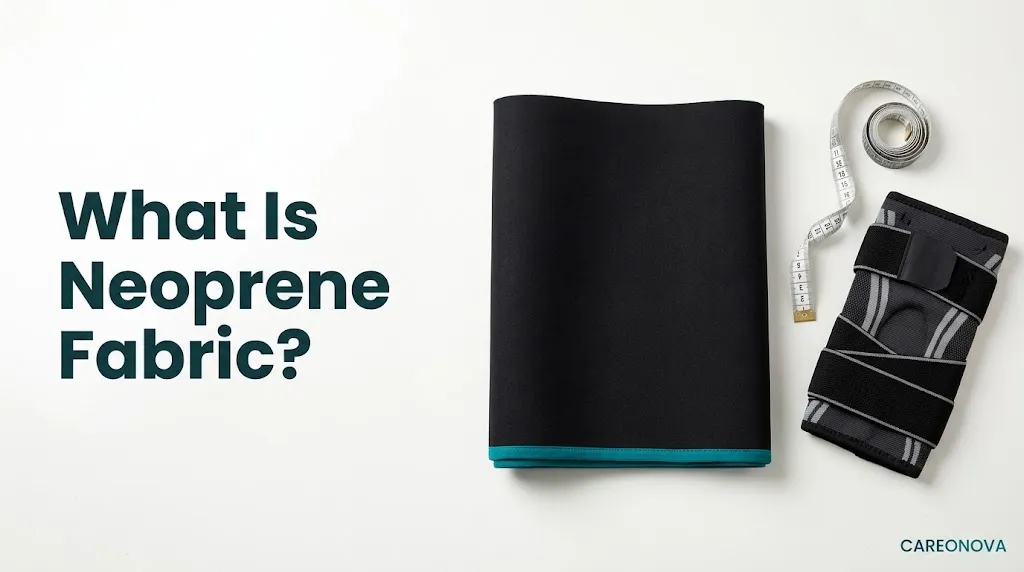
When you hear the word neoprene, you probably picture a thick, black scuba diving wetsuit. But in recent years, this heavy-duty material has made a massive jump from deep-sea gear into everyday fashion, medical supports, and protective laptop sleeves.
So, what is neoprene fabric exactly? At its core, neoprene is a synthetic rubber. When manufactured into a textile for consumer use, this rubber foam is usually sandwiched between soft layers of fabric to create a structured, highly durable material that insulates heat and blocks water.
📌 Neoprene at a Glance
- Material: A synthetic rubber (polychloroprene), not a traditional woven yarn.
- Properties: 100% waterproof, highly stretchable, and an extreme thermal insulator.
- Common Mix-Up: “Scuba Fabric” used in fast fashion only mimics neoprene; it contains no actual rubber.
- Care Warning: Heat destroys it. Never machine wash, iron, or dry in direct sunlight.
What is Neoprene Made Of? (The Technical Definition)
Neoprene is the commercial name for polychloroprene, a synthetic rubber originally invented by DuPont in the 1930s.
When we talk about neoprene in clothing or aquatic gear, we are usually talking about closed-cell foam. During manufacturing, nitrogen gas is blown into the rubber, creating millions of tiny, independent bubbles. Because these bubbles are “closed” (meaning they do not connect to one another), water and air cannot pass through the foam. This is what gives the material its signature buoyancy, impact absorption, and insulation.

Neoprene vs. Scuba Fabric: What’s the Difference?
If there is one thing worth remembering, it is this: not everything labeled “neoprene” in a clothing store is actually made of rubber. Retailers often use the terms interchangeably, which creates a lot of confusion for shoppers and home sewers.
- True Neoprene: Contains a solid sheet of synthetic rubber foam in the middle. To make it comfortable against the skin, this rubber core is almost always laminated with a nylon fabric or polyester outer layer.
- Scuba Fabric: This is a fashion textile made from a double-knit blend of polyester and spandex. It has a smooth, spongy feel that mimics the drape and structure of neoprene, but it contains absolutely zero rubber.
| Feature | True Neoprene | Scuba Fabric |
|---|---|---|
| Core Material | Synthetic rubber laminated with fabric | Polyester and spandex double-knit |
| Water Resistance | Completely waterproof | Absorbs water quickly |
| Best Used For | Wetsuits, medical braces, protective gear | Everyday dresses, skirts, lightweight pants |

The Core Properties of Neoprene
Why do industries rely so heavily on this material? It comes down to a unique combination of strength, flexibility, and physical resistance.
Is Neoprene Waterproof?
Yes. Because of its closed-cell rubber structure, water cannot penetrate the fabric. When you wear a wetsuit in the ocean, a very thin layer of water is allowed to seep between your skin and the inner lining, where your body heat warms it up. However, the thick rubber barrier itself repels water completely.
Is Neoprene Fabric Stretchable?
Absolutely. It boasts excellent tensile strength and elongation. This means it can stretch comfortably to fit the shape of a flexing knee joint or an elbow, and then seamlessly return to its original shape without sagging.
Chemical, UV, and Thermal Resistance
In practical terms, neoprene is a workhorse. It offers excellent resistance to ozone, outdoor weathering, and incidental contact with oils. Depending on the specific grade, the typical service temperature window for industrial neoprene sits roughly between -35 °C and +120 °C.
Understanding Neoprene Thickness (1.5mm to 5mm+)
Neoprene is sold in varying thicknesses, and the thickness entirely dictates what the fabric should be used for:
- 1.5mm to 2mm: Lightweight and highly flexible. Best for athletic supports, light swimwear, and fashion accessories.
- 3mm to 4mm: The standard middle ground, typically used for mild-water wetsuits, drink koozies, and laptop sleeves.
- Neoprene fabric 5mm and above: Extremely thick, stiff, and highly insulating. Used for deep-sea diving and frigid water conditions.
Neoprene Fabric in Clothing: Comfort, Climate, and Fashion
The structural, spongy look of this fabric has made it popular on fashion runways, but wearing it requires understanding its limits.
Is Neoprene Fabric Breathable?
The short answer is no. Because it is a solid sheet of rubber, it creates an impenetrable barrier. It will trap your body heat and sweat completely against your skin.
Is Neoprene Better for Summer or Winter?
Always choose winter. Its primary function is extreme thermal insulation. If you wear a thick neoprene garment in hot weather, you will quickly overheat.
Everyday Wear: Pants, Dresses, and Colors
Despite the lack of breathability, designers love using neoprene fabric for clothing because of its architectural properties. A neoprene fabric dress will hold a dramatic flare without ever wrinkling. Neoprene fabric pants offer a smoothing, structured silhouette that holds its shape all day. And while raw rubber is naturally black or gray, the nylon fabric laminated to the outside can be dyed in virtually any color—making crisp white neoprene fabric perfectly achievable for modern fashion.
Medical, Industrial, and Protective Uses
Beyond fashion and watersports, neoprene is a staple in several high-demand fields:
- Medical & Orthopedics: Its supportive stretch and heat retention make it ideal for compression knee braces and wrist supports.
- Electronics Protection: Its shock-absorbing foam core is standard for laptop and tablet sleeves.
- Industrial Settings: Because it resists oil and weather, it is frequently used for automotive hoses, gaskets, and anti-vibration machinery pads.
How to Wash and Care for Neoprene Fabric
The easy mistake here is treating this material like regular clothing. High heat and harsh chemicals will destroy the rubber, causing it to crack and crumble.
⚠️ The Golden Rules of Neoprene Care
The fastest way to destroy synthetic rubber is through heat and harsh chemicals. To prevent the foam core from cracking and crumbling:
- Never put neoprene in a washing machine or dryer.
- Never use bleach or harsh laundry detergents.
- Never leave it outside to dry in direct UV sunlight.
The Hand-Washing Protocol
Always hand wash neoprene in cool or lukewarm water (under 104°F). Heat accelerates polymer aging and weakens the glues used to laminate the fabric. Use a mild, non-alkaline soap or a specially formulated wetsuit shampoo to gently clean the surface without stripping the necessary plasticizers from the rubber.
Removing Sweat, Salt, and Odors
If you use neoprene gear at the beach or the gym, what I’d check first is how quickly you rinse it. Rinse it with fresh water immediately after use. Salt crystals are highly abrasive; if left to dry, they will slowly eat away at the nylon lining and rubber core. If your wetsuit picks up body oils or sunscreen, tackle these promptly as you would when getting oil out of clothes, using a gentle surfactant rather than aggressive solvents.
If you are dealing with a funky, wet clothes smell caused by trapped sweat and bacteria, let the item soak in cool water with wetsuit shampoo for 30 minutes before rinsing thoroughly.
How to Dry Neoprene Safely
Direct sunlight speeds up oxidation, leading to surface cracking. Always air dry neoprene in a shady, well-ventilated spot. Never use a thin wire hanger, which will create permanent shoulder creases under the weight of wet rubber. Use a wide, padded hanger, and turn the garment inside out so the interior dries fully first, preventing mold on clothes. Finally, avoid storing it in garages, as fumes from car exhaust contain ozone, which is highly damaging to neoprene.
Sewing and Crafting with Neoprene
If you are planning to sew your own projects, you will need the right tools. Standard delicate needles will break against the rubber. Use a heavy-duty needle (like a leather or denim needle) and a walking foot on your sewing machine to prevent the thick foam from sticking as it feeds through.
Most importantly: Never iron neoprene. The heat will instantly melt the synthetic rubber, ruin your iron, and release toxic fumes into the air.
💡 Careonova Expert Tip: Skipping the Pins
If you are sewing a neoprene project at home, do not use standard sewing pins to hold your fabric together. Every time a pin pierces closed-cell rubber foam, it leaves a permanent, visible hole that will not heal. Use sewing clips or heavy-duty binder clips instead to hold your seams together while you feed the fabric through your machine.
Where to Buy Neoprene Fabric (Sourcing & Availability)
When looking for neoprene fabric near me, try specialty outdoor, diving, or marine fabric suppliers. Standard big-box craft stores often stock double-knit “scuba fabric” instead of true synthetic rubber. If you are manufacturing garments, whether you are sourcing neoprene fabric in Pakistan, Taiwan, or China, global textile hubs often offer raw yardage in various foam thicknesses and outer laminations.
When buying, always check the label to ensure you are getting genuine polychloroprene foam laminated with fabric, rather than just a polyester blend.
Is Neoprene Eco-Friendly? (Limestone & Yulex Alternatives)
Traditional neoprene is made from petroleum, making it a highly energy-intensive and non-renewable product. However, the industry is making exciting shifts toward more sustainable options.
- Limestone Neoprene: Instead of petroleum, this alternative uses calcium carbonate (limestone) as its primary raw material. While it is still a synthetic rubber, limestone neoprene is prized for being incredibly lightweight, warm, and highly durable, which extends the overall lifespan of the garment.
- Yulex Natural Rubber: Yulex is a game-changing, plant-based alternative. It relies largely on natural rubber harvested from FSC-certified Hevea trees. While it often contains a small percentage of synthetic rubber for added durability and UV resistance, Yulex dramatically reduces the carbon emissions associated with raw material production.
Final Thoughts: Is Neoprene Right for Your Project?
Neoprene is an incredible feat of material science. Its ability to stretch, insulate, and block water makes it unmatched for aquatic gear and medical supports. While it isn’t breathable enough for a casual summer day, its unique architectural structure makes it a bold, durable choice for winter fashion and accessories. By understanding how to properly source, sew, and wash this unique fabric, you can ensure your neoprene gear performs perfectly and lasts for years.
