

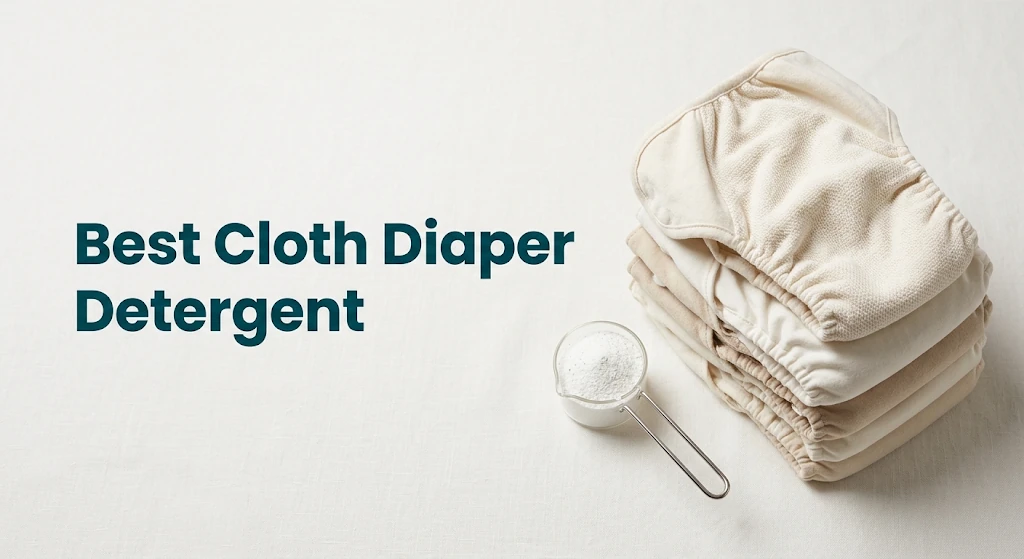
The best cloth diaper friendly detergent is a hard-working formula that uses strong surfactants and enzymes to break down human biological waste without relying on fabric softeners, scent beads, or pure soaps that leave water-repellent residues. When choosing a safe detergent, you must match the formula to your home’s specific water hardness and your washing machine type to prevent leaks, ammonia buildup, and painful skin rashes. For example, powdered detergents like Tide Original offer maximum cleaning power in hard water, while liquid formulas like Persil ProClean are highly effective for soft water setups.
This guide helps you choose the exact detergent and booster combination for your specific situation using a clear decision matrix. You will learn the difference between true detergents and natural soaps, why traditional baby detergents often fail on heavy soils, and how to read an ingredient label to spot the chemical red flags that ruin cloth diapers. We also explain how to measure your doses correctly and when to add water softeners so your cloth diapers stay clean, fresh, and fully absorbent.
The Careonova 5-Step Quick Action Plan
- Test Your Water: Use a simple hard water test strip. Your mineral levels dictate whether you need powder, liquid, or an additive.
- Pick Your Format: Match your machine and sensitivity needs to the matrix below.
- Measure Accurately: Avoid using a “full cap” of detergent. Use the manufacturer’s recommended dose for heavily soiled laundry.
- Run Two Cycles: Always run a short pre-wash to remove waste, followed by a long, warm-to-hot main wash cycle.
- The Sniff Test: Clean diapers out of the dryer should smell neutral. An ammonia sting indicates mineral buildup or overdosing.

The Cloth Diaper “Detergent Matchmaker” Matrix
Choosing a detergent shouldn’t involve guessing. Your choice depends primarily on your water hardness (PPM), your washing machine type, and whether your baby has sensitive skin.
Use this quick-reference matrix to find the exact detergent and booster combination for your home:
| Household Setup | Top Pick & Format | Water Softener Needed? | Why It Works |
|---|---|---|---|
| Hard Water (120+ PPM) Standard or HE Machine | Tide Original (Powder) | No (Built into formula) | Sodium carbonate builders neutralize mineral interference while protease enzymes break down biological waste. |
| Hard Water (120+ PPM) Sensitive Skin | All Free & Clear (Powder) | Yes (Add Calgon or Borax) | Free of perfumes and optical brighteners; prevents contact dermatitis while lifting heavy biological soil. |
| Soft Water (<60 PPM) Any Machine Type | Persil ProClean (Liquid) | No | Concentrated surfactant blend lifts soils rapidly and rinses away completely without excessive sudsing. |
| Eco-Conscious Moderate to Hard Water | Esembly (Powder) | Only in extreme hard water (>180 PPM) | Highly concentrated mineral builders and sodium percarbonate formulated specifically for multi-layered cloth. |
Top Cloth Diaper Detergent Recommendations by Category
Modern cloth diapers are made of dense, multi-layered textiles protected by an outer layer of waterproof Polyurethane Laminate (PUL). You are cleaning heavily soiled biological fabrics, which requires specific chemical profiles. Based on surfactant concentration and enzyme inclusion, here is why these top performers succeed.
1. Best Mainstream & Synthetic Detergents (Maximum Soil Removal)
Synthetic surfactants are engineered to suspend heavy organic waste in the wash water so it drains away completely during the spin cycle.
- Tide Original Powder: Across the cloth diapering community and basic wash chemistry, powdered Tide Original is the gold standard. Powder detergents naturally contain higher levels of sodium carbonate (washing soda) than liquids, actively softening hard water in the drum. It also contains a robust package of protease enzymes that target protein-based stains and urea.
- Persil ProClean (Liquid / Intense Clean): Persil offers some of the highest surfactant densities on the commercial market. If you are washing in soft-to-moderate water or using a high-efficiency (HE) front-loader, it cuts through heavy fecal and urine soils with exceptional efficiency.
2. Best Plant-Based & Eco-Friendly Detergents
The chemical catch with eco-friendly formulas is that plant-derived surfactants are generally milder than synthetics and often struggle in hard water.
- Esembly Washing Powder: Unlike generic “green” detergents, Esembly uses sodium percarbonate (oxygen bleach) alongside plant-derived surfactants and mineral-based cleaning agents to strip away organic matter without relying on petroleum surfactants or synthetic fragrances.
- Seventh Generation Free & Clear: A widely available liquid plant-based option. Because plant surfactants are less aggressive, you must wash with warm or hot water to activate the cleaning agents properly and prevent oil accumulation on natural fibers.
3. Best Free & Clear Formulas for Sensitive Skin
If your baby is prone to eczema or contact dermatitis, a fragrance-free, dye-free detergent is essential.
- Tide Free & Gentle (Liquid or Powder): Delivers the deep-cleaning surfactant power of standard Tide without added perfumes or dyes.
- All Free & Clear (Powder preferred): A dependable, hypoallergenic classic. A key distinction: If you have hard water, choose All Free & Clear Powder. The liquid version contains small amounts of sodium cocoate (a coconut-derived soap) which can react with calcium in very hard water to leave a faint residue over time.
The “Baby Detergent” Trap (Why Dreft Fails)
One of the most common mistakes new parents make is assuming they need a special “baby” detergent for cloth diapers.
Traditional baby detergents like Dreft are poorly suited for cloth diapers. They are heavily fragranced, often contain fabric conditioners, and lack the robust enzyme blends required to break down heavy feces and urine. You do not need a delicate specialty formula; you need a hard-working enzyme detergent.
The Science: What Ingredients Clean Diapers vs. What Ruins Them
Reading laundry ingredient labels allows you to evaluate any detergent on the grocery shelf yourself.
The Anatomy of a Safe Detergent
| Must-Have Ingredients (What Cleans) | Ingredients to Avoid (The “Red Flags”) |
|---|---|
| Surfactants (Anionic & Non-Ionic): Lower surface tension to penetrate dense fabric weaves and suspend biological soil. | ✕ Fabric Softeners: Coat diapers in a waxy, water-repellent layer, causing immediate leaks. |
| Protease & Amylase Enzymes: Chemically break down proteins, starches, and urea. | ✕ Scent Beads & Fragrance: Mask odors instead of cleaning them, leading to skin irritation. |
| Builders (Sodium Carbonate / Citrates): Bind with hard water minerals so surfactants can do their job. | ✕ Pure Saponified Oils (Soap): React with tap water minerals to create insoluble scum. |
| Appropriate Water Temperature: While not an ingredient, warm/hot water is required to activate surfactants and melt away organic oils. | ✕ Petroleum-Based Diaper Creams: Coats fibers in waterproof grease that standard detergents cannot wash out, causing immediate repelling and leaks. |
The “Soap vs. Detergent” Misconception (And Why DIY Recipes Fail)
In laundry science, soap and detergent are not the same thing.
- Soap is made by saponifying natural fats or oils with an alkali (like lye). Examples include Castile soap, Marseille soap, and grated bar soaps (such as Fels-Naptha or Zote).
- Detergent is an engineered blend of synthetic or plant-derived surfactants designed specifically to hold dirt in suspension without forming a precipitate when exposed to minerals.
When you use true soap or popular Pinterest DIY cloth diaper detergents made of Borax, Washing Soda and grated bar soap the soap molecules bind to the calcium and magnesium in your water. This chemical reaction produces calcium stearate (insoluble soap scum).
This soap scum coats the inside of your cloth diapers, trapping bacteria and uric acid crystals inside the core. Within weeks, the diapers begin repelling urine, your washing machine’s internal drum develops greasy buildup, and your baby is at high risk for painful chemical ammonia burns. Always use a dedicated surfactant-based detergent.

Proper Use of Laundry Additives and Dosing
As outlined in the Matchmaker Matrix, your water’s mineral content dictates your additive needs. If your setup requires a booster, here is how to use it safely alongside your detergent:
- Water Softeners (Calgon vs. Borax): If you are using a liquid or plant-based detergent in hard water, add Calgon (which chemically binds and neutralizes minerals) or Borax (which raises pH and aids softening) directly to the drum during the main wash cycle.
- Oxygen Bleach / OxiClean (Sodium Percarbonate): OxiClean is an outstanding stain-lifter and odor-prevention booster, but it is not a standalone detergent because it lacks surfactants. Add one scoop of OxiClean to your pre-wash or main wash for extra stain-fighting power on breastmilk or formula stools.
The Over-Dosing Trap
Ignore outdated internet advice that recommends using massive amounts of detergent (like a full cap per wash). Overdosing does not get diapers cleaner; it leads to severe detergent buildup, which traps bacteria and causes chemical ammonia burns on your baby’s skin. Always follow the manufacturer’s recommended dose for heavy soil, and rely on selecting the right temperature to wash clothes
and proper machine agitation to do the rest of the work.
To ensure your washing machine is delivering the best results, use the correct cycles and agitation. If your diapers have already accumulated mineral crust or detergent residues, learn how to use borax for laundry stripping
to restore their original absorbency.
Conclusion: The Bottom Line on Cloth Diaper Laundry
Keeping cloth diapers clean and fresh comes down to a simple formula: match your water hardness, use a strong enzyme powder or liquid, and avoid fabric softeners, pure soaps, and petroleum barrier creams that ruin absorbency. When you pick the right cloth diaper friendly detergent and measure your doses correctly, you protect your baby’s skin and ensure your diapers last through every stage of potty training.
